
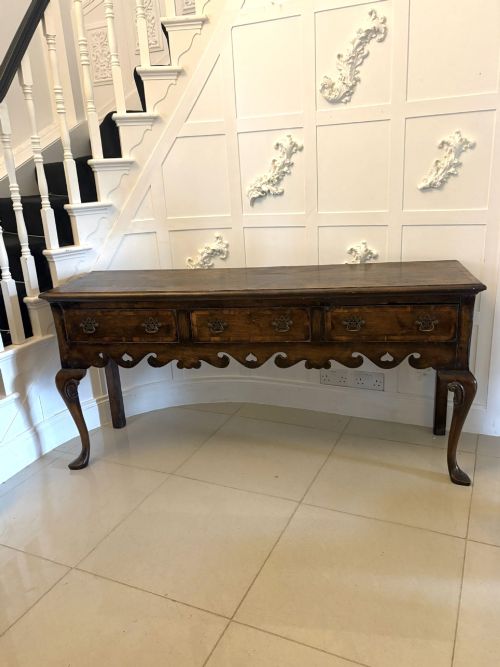
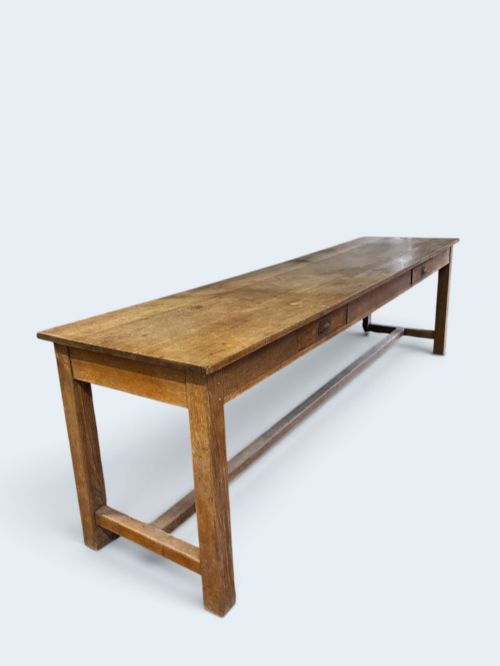
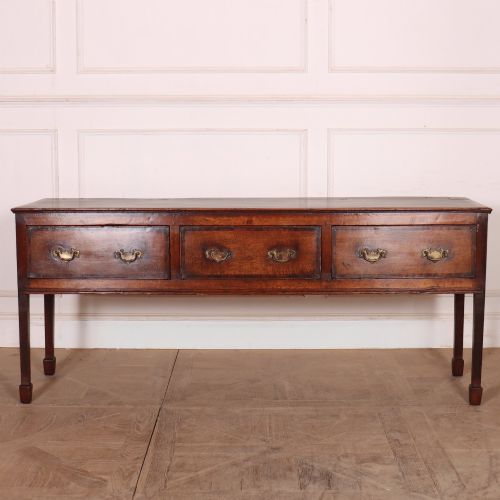
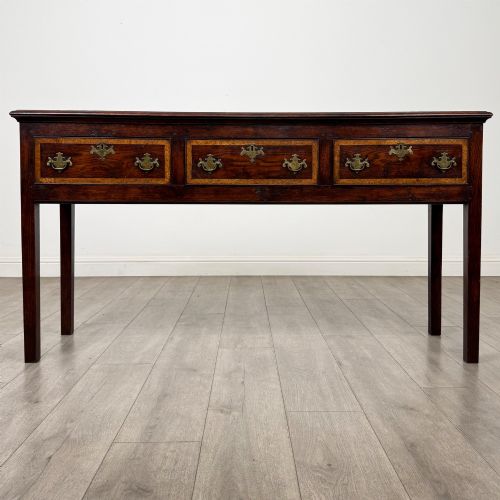
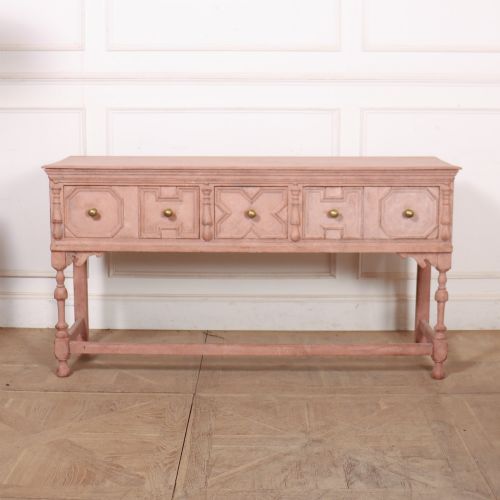
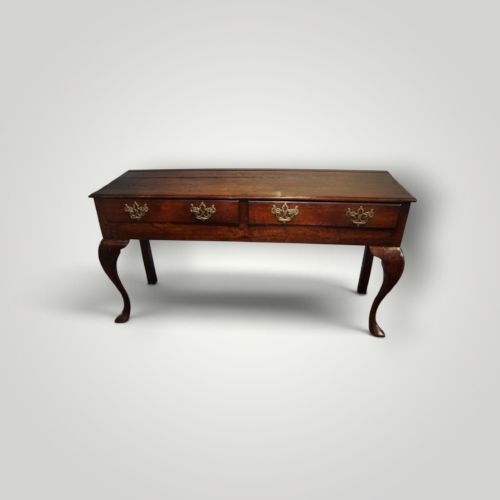
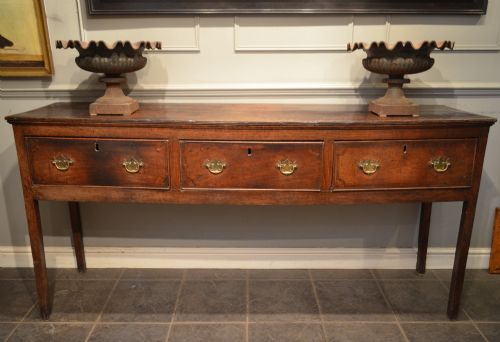
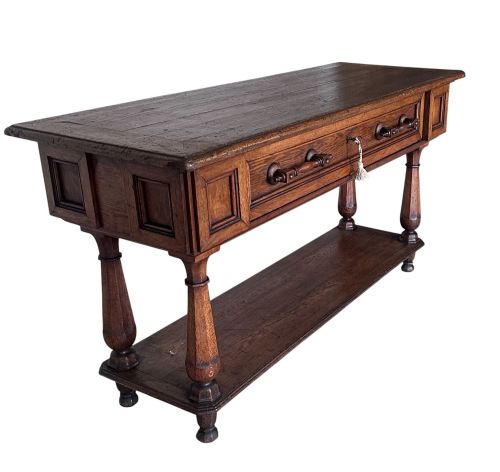
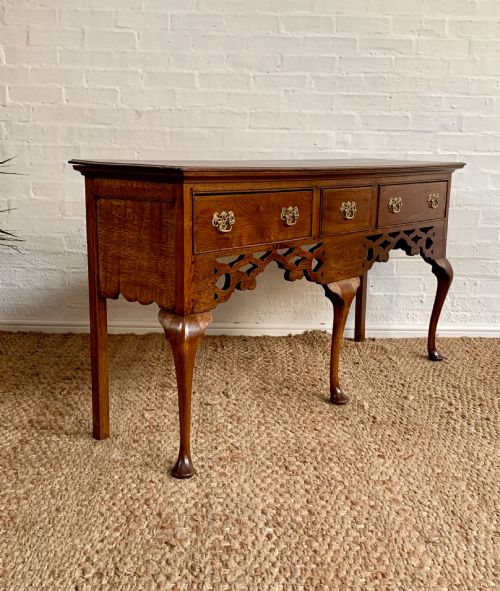
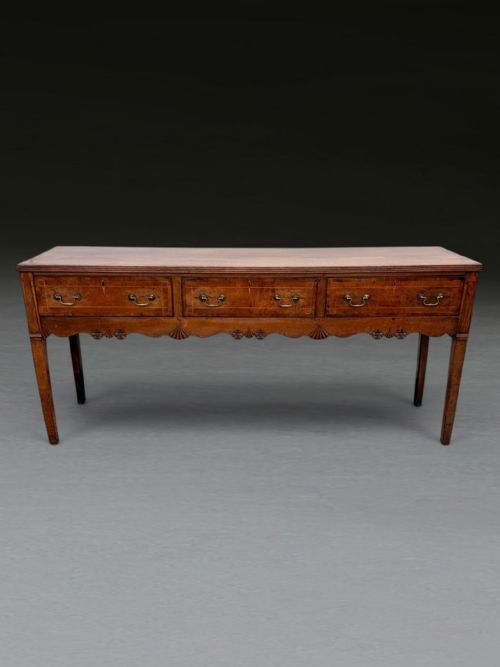

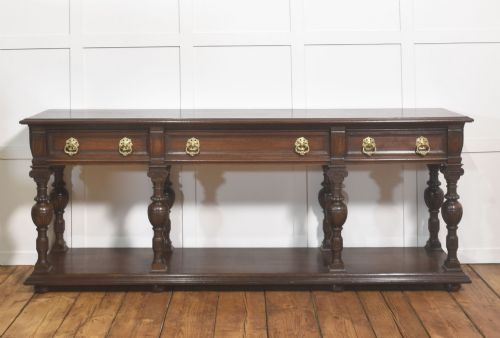
Oak Console Sideboard
An oak console sideboard offers sturdy utility and timeless character, bridging the gap between a practical server and a display surface.
Oak Console Sideboard
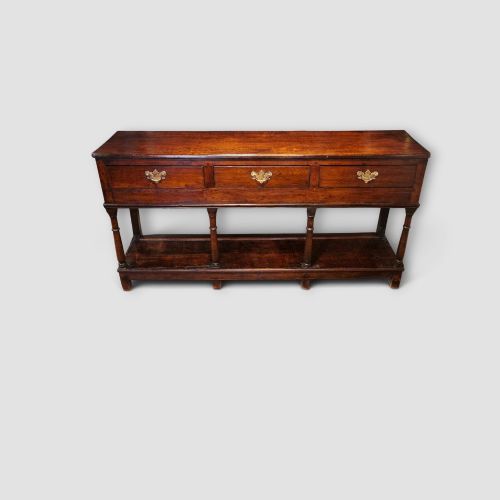
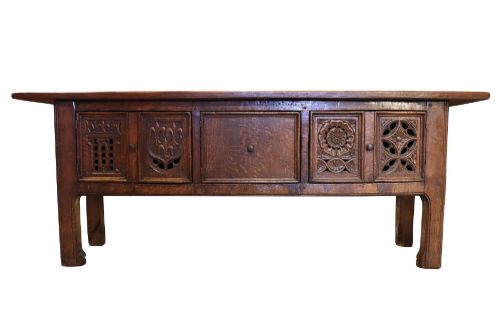
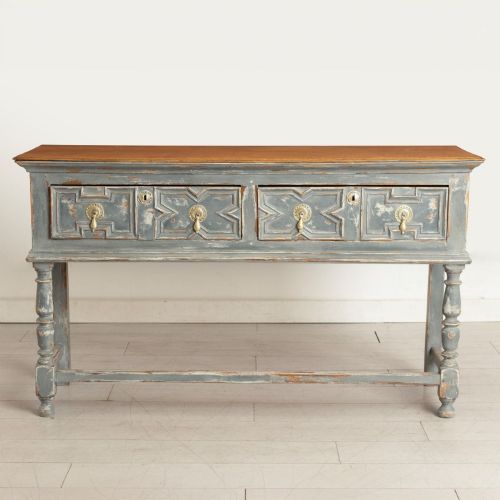
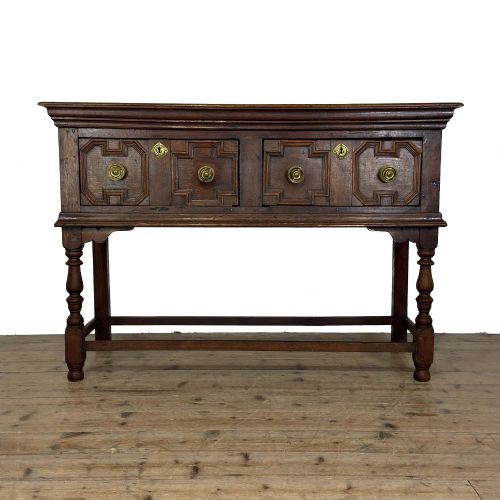
When you search for an oak console sideboard, you are looking at sturdy serving pieces, dresser bases, and narrow console tables designed for dining rooms and hallways. These forms range from utilitarian English and Welsh country pieces to formal Georgian designs featuring cabriole legs or potboards.
The versions you are most likely to meet on this page span the seventeenth, eighteenth, and nineteenth centuries, alongside revival pieces from the Edwardian era and the early twentieth century. Regional variations such as Welsh vernacular styles and French provincial servers also appear frequently among the listings.
These items function equally well as serving tables in a dining space or narrow sideboards in a hallway, offering surface display alongside practical drawer storage. Their proportions vary from deep seventeenth-century block fronts to narrow nineteenth-century Gothic Revival adaptations.
Distinguishing quality in timber and form
The distinction between standard examples and finer pieces lies in the selection of the timber and the crispness of the hand-carved detailing. Superior items display well-figured grain, intact original hardware, and balanced proportions that reflect the period of their manufacture.
Later revival pieces from the Edwardian period or the early twentieth century differ from seventeenth and eighteenth-century originals in their joinery marks and the depth of patina accumulated through age. Construction integrity, original timber boards, and untouched structural surfaces determine the standing of each piece.
Listings span three centuries of cabinetmaking, featuring solid oak, pine, and occasional marble tops alongside painted and bleached finishes.
The Oak Console Sideboard Glossary
- Dresser base
- A low, heavy table fitted with drawers across the front, historically used in kitchens and dining rooms for food preparation and serving. These pieces form the foundation of many traditional sideboards.
- Potboard
- An open lower shelf built into the base of a dresser or sideboard, originally intended for storing heavy pots and pans off the floor. This feature appears frequently on eighteenth and nineteenth-century examples.
- Block front
- A cabinet front divided vertically into three sections, with the two outer sections projecting forward and the central section recessed. This technique adds depth and shadow to seventeenth-century forms.
- Barley-twist
- A turned wooden support carved in a helical screw pattern resembling a twisted rope. This decorative turning is characteristic of seventeenth-century furniture and later Carolean revivals.
Oak Console Sideboard: Frequently Asked Questions
What is an oak console sideboard used for today?
These pieces serve as practical sideboards in dining rooms for holding tableware, or as narrow console tables in hallways and living spaces. Their surface provides an ideal display area for lamps, mirrors, and decorative objects.
Because many examples feature shallow proportions, they fit easily into modern rooms without blocking narrow walkways while still offering useful drawer storage.
How do I tell an 18th-century piece from a later revival?
Examining the construction methods, tool marks, and timber shrinkage reveals the age of the piece. Eighteenth-century items typically show hand-cut dovetails, irregular peg placements, and deep patination acquired over centuries of use.
Revival pieces made around 1900 or the Edwardian era often feature more uniform machine assistance, standardised fixings, and cleaner internal secondary woods like pine.
Are these sideboards suitable for small hallways?
Many listings specifically highlight narrow proportions, dresser bases of small scale, and serving tables designed to fit compact spaces. These slender formats provide the length of a traditional sideboard without the heavy depth.
Checking the specific depth measurements in each listing ensures the piece will clear interior doors and narrow passage walls.
What does Welsh vernacular mean in these listings?
Welsh vernacular refers to furniture built by regional craftsmen using local traditions rather than strict adherence to metropolitan fashion. These pieces often prioritize robust utility, thick oak boards, and straightforward storage.
Such items carry a distinct regional charm that differs from formal urban Georgian furniture, making them popular in country house interiors.