
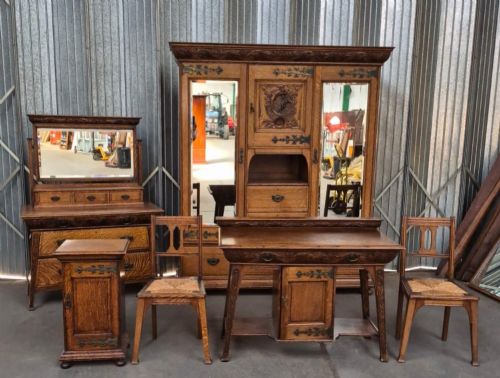
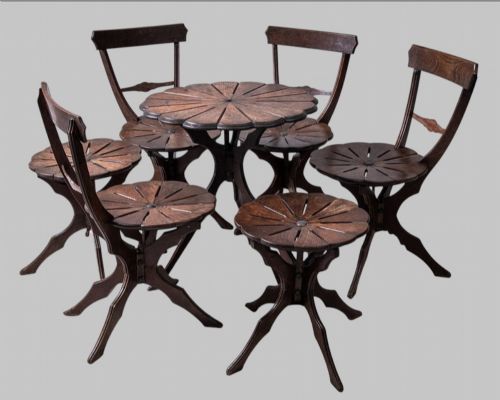


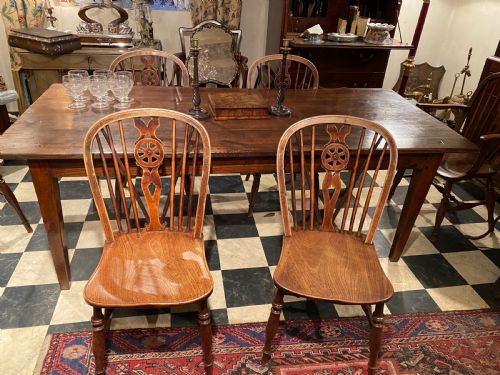


Oak Chair Table
These oak chair table pieces combine clever dual-purpose furniture with sturdy domestic history, giving buyers a space-saving marvel.
Oak Chair Table
When you search for an oak chair table, you encounter an ingenious dual-function piece of furniture that converts from a chair or settle into a table by pivoting or folding its back. Most commonly, you will meet examples from the early twentieth century or the interwar period, alongside heavier seventeenth-century precedents and revival forms.
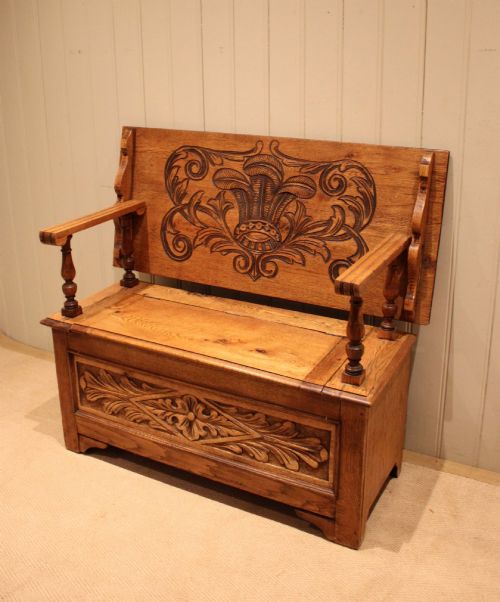
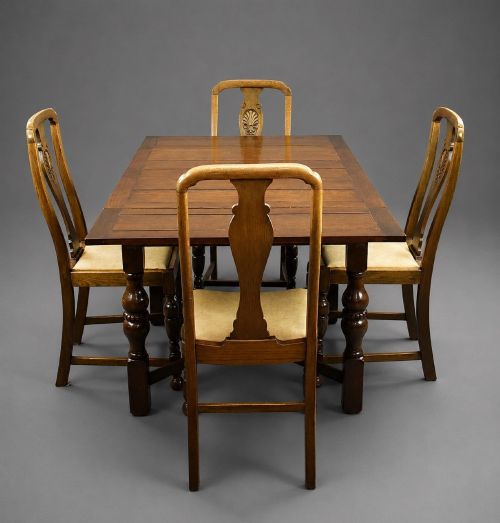
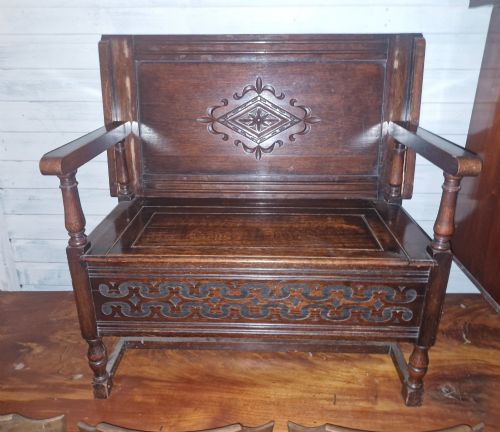
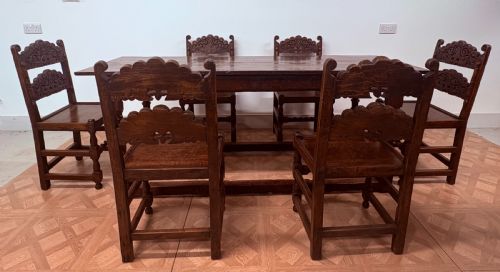
The monk's bench is the variant you are most likely to meet on this page, serving as a hall seat with a lift-up storage compartment beneath the hinged lid. These versatile items appear frequently alongside refectory tables, draw-leaf tables, and suites of matching dining chairs.
Originating in domestic spaces where floor area was at a premium, these convertible items bridge the gap between seating and surface utility. The selection spans robust country house furniture, alpine folk art interpretations, and clean-lined Arts and Crafts or Art Deco designs.
Materials and Construction
Solid oak provides the structural backbone for these pieces, chosen for its density, durability, and deep grain character. Workshops utilised quarter-sawn timber to achieve distinctive medullary ray figuring across tabletops and bench backs.
Joinery relied heavily upon traditional mortise and tenon joints secured with wooden pegs, ensuring the framework could withstand the perpetual motion of converting between seat and table. Iron and brass hinges, draw mechanisms, or latches facilitated the pivoting action without compromising stability.
Materials paired with oak across the archive include supple leather, woven cane, tweed linen, and brass hardware.
Assessing Quality and Craftsmanship
The caliber of an oak chair table rests upon the crispness of its hand-carved ornamentation and the integrity of its pivoting mechanism. Finer examples display deeply carved panel work, harmonious proportions, and tight joinery that remains firm through generations of daily conversion.
Lower tiers of the range often feature machine-produced stamping rather than hand chiselling, alongside replacement hardware or loose joints caused by excessive wear on the pivot points. The warmth and depth of the timber's finish also dictate value, with aged patination superior to flat, modern stripping.
Heals of London·Bath Cabinet Makers·Waring
The Oak Chair Table Glossary
- Chair Table
- A multi-functional piece of furniture featuring a backrest that tilts forward over the seat arms to form a flat table surface. This historic form maximised living space in compact early dwellings.
- Monk's Bench
- A sturdy wooden seat featuring a hinged tabletop back and a hollow box base for storage beneath the squab. These items frequently incorporate carved panels on the front apron.
- Draw Leaf Table
- An extending dining table with two sliding leaves concealed beneath the main top that pull out to lengthen the surface. This mechanism allows rapid adjustment for larger gatherings.
- Refectory Table
- A long, narrow dining table originally designed for communal monastic dining halls. They feature substantial legs connected by low floor stretchers for added rigidity.
- Wainscot Chair
- A heavy, stiff-backed wooden armchair constructed with panelled backboards and solid arms. They represent elite domestic seating before upholstered furniture became widespread.
- Jacobean Revival
- A nineteenth- and twentieth-century style imitating seventeenth-century English design. It typically utilises dark oak, geometric mouldings, and strapwork carving.
Oak Chair Table: Frequently Asked Questions
What is an oak chair table used for?
These convertible furnishings served dual roles as comfortable hall seats or armchairs by day and functional dining or working surfaces by night. The integrated box compartment under the seat additionally provided secure household storage.
In modern interiors, they function brilliantly as statement pieces in entryways or living rooms where space-saving utility remains desirable. They bridge decorative folk art appeal with practical everyday furniture.
How do I operate the pivoting tabletop?
The mechanism relies on wooden or metal pivot pins situated near the armrests, allowing the backrest to tilt forward smoothly through a ninety-degree arc. When lowered flat onto the arms, it rests securely to form a stable tabletop.
Users should lift the backrest gently and guide it across its arc without forcing the pivot joints. Ensuring the area is clear of obstructions prevents strain on the original hinges.
How do I tell a seventeenth-century piece from a revival piece?
Authentic seventeenth-century examples display hand-split timber, irregular tool marks from adzes, and pegged joinery that reflects primitive manual construction methods. The patination develops deep, dark tones over centuries of wax polishing and oxidation.
Revival pieces from the Victorian and Edwardian eras often feature cleaner machine-cut components, standardised hardware, and lighter golden oak finishes. Stylistic indicators like Art Deco or Edwardian proportions instantly betray a later manufacturing date.
How should I care for solid oak furniture?
Maintain the wood by applying natural beeswax periodically to nourish the grain and preserve the protective surface sheen. Avoid placing the furniture near direct heat sources or in fluctuating humidity to prevent timber splitting.
Clean surfaces simply with a soft, dry cloth rather than harsh chemical sprays that strip the historic wax finish. Gentle handling of moving parts ensures the mechanical joints remain functional.