


Oak Monk Chair
An oak monk chair brings centuries of heavy timber and convertible seating into a hallway with a fold-over top or a lift-up seat.
Oak Monk Chair
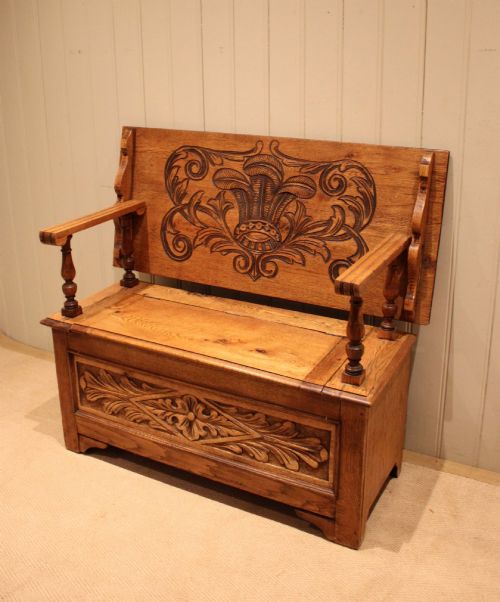
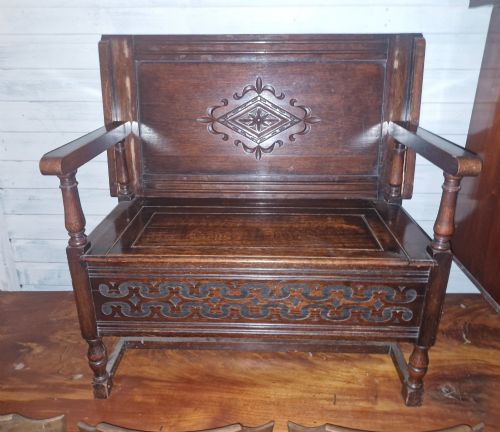
An oak monk chair sits at the junction of seating and table furniture, often taking the form of a monks bench or a chair table that transforms when the back flips forward.
Buyers seeking an oak monk chair encounter pieces spanning from the seventeenth century up through the Victorian era and the nineteen-thirties, though the early twentieth century yields many surviving examples.
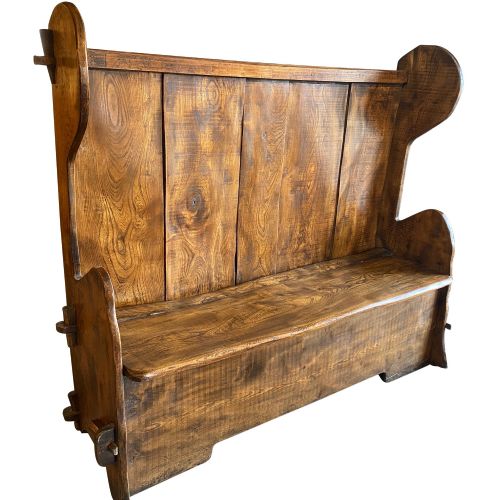
These items serve primarily as hall benches, settles, and armchairs, combining storage compartments beneath the seat with upright backs that convert into flat tabletops.
How they were made
Cabinet makers constructed these pieces predominantly from solid oak, supplemented occasionally by elm or fabric and iron fixings.
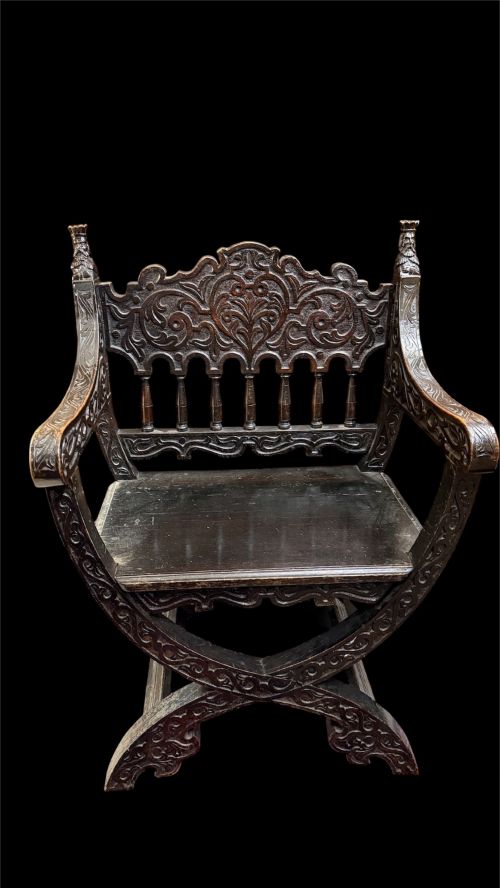
Construction methods rely on heavy framing, panelled timber, and carved details such as Jacobean revival motifs or rustic farmhouse lines.
Hinges and pivots allow the backrest to fold over smoothly onto the armrests, converting a high-backed seat into a flat surface.
What varies in quality
The degree of hand carving and the depth of relief work separate standard production from superior pieces, with crisp detailing indicating greater skill.
Proportion and timber selection dictate overall merit, particularly where solid oak boards display strong grain and sound structural integrity through decades of conversion.
The complexity of the dual-purpose mechanism, from simple box settle storage to intricate folding table tops, influences the standing of each piece.
The Oak Monk Chair Glossary
- Monks bench
- A dual-purpose piece of furniture combining a seat with a back that folds down to form a table. It provides hallway seating and a surface.
- Chair table
- An early form of convertible furniture where a large chair back pivots down onto the arms to create a table. It conserves space in smaller rooms.
- Settle
- A wooden bench with a high back, solid arms, and often a storage box beneath the seat. It blocks draughts in traditional interiors.
- Jacobean revival
- A nineteenth-century and early twentieth-century style imitating seventeenth-century British furniture. It uses dark timber, geometric paneliling, and strapwork carving.
- Wainscot chair
- A heavy wooden armchair with a panelled back, popular in the seventeenth century. It represents an early form of domestic seating.
Oak Monk Chair: Frequently Asked Questions
How do you convert a monk chair into a table?
The high backrest pivots forward on wooden pegs or iron pins located near the arms. It swings down to rest flat across the top of the armrests.
This action transforms the seating space into a horizontal surface suitable for resting objects or writing. Lift the back upright again to restore the chair function.
What is the difference between a monk chair and a settle?
A monk chair includes a movable back that converts into a table top. This dual-purpose mechanism sets it apart from standard seating.
A settle remains fixed in its posture as a bench with a high back and solid sides. Many settles include storage space beneath the seat lid, similar to the box base of a monk chair.
Where should I place a monk chair in my home?
These pieces suit entrance halls and corridors where storage and occasional surface space prove useful. The box seat holds items out of sight.
Keep the piece clear of tight corners to allow the backrest to fold over safely without striking walls. Placed against a wall, it functions as a standard hallway seat.
How can I tell a seventeenth-century monk chair from a later revival piece?
Seventeenth-century examples display construction marks from hand tools, pegged joints, and timber shrinkage consistent with centuries of age. The oak develops a deep dry patina.
Revival pieces from the nineteenth and twentieth centuries often feature machine-cut elements and more uniform timber finishes. Examine the underside and interior joints to understand how the wood was worked.