
Oak Cased Clock
An oak cased clock brings domestic timekeeping history into a room, spanning tall floor models to compact wall dials.
Oak Cased Clock
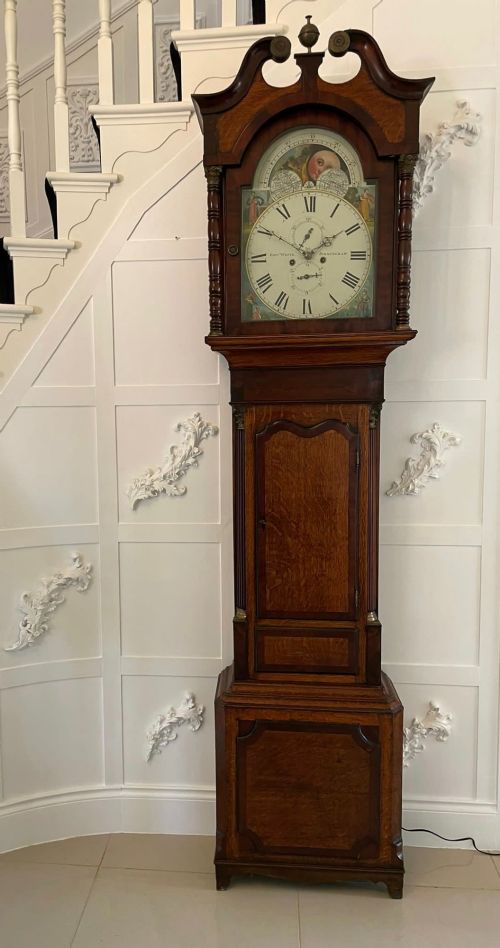
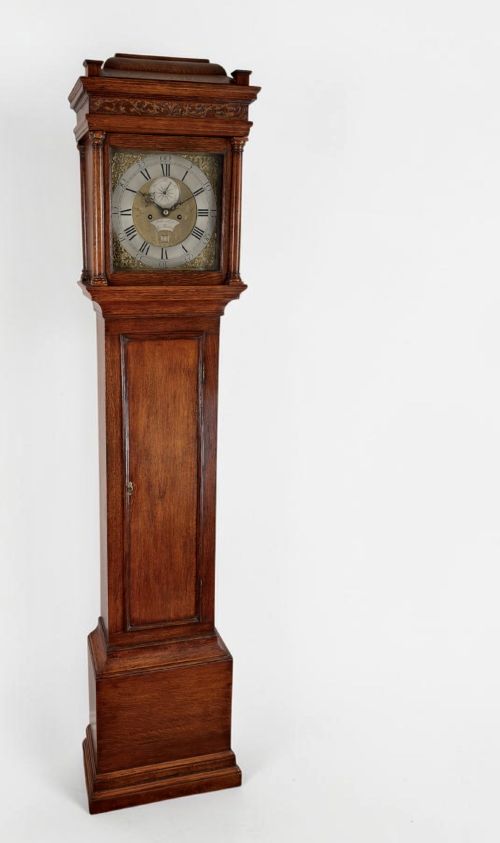
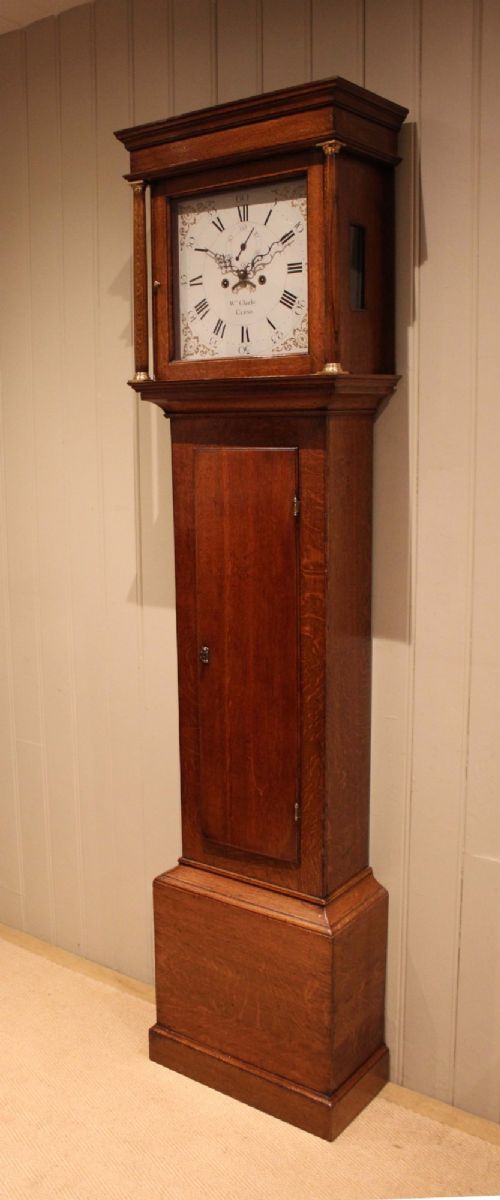
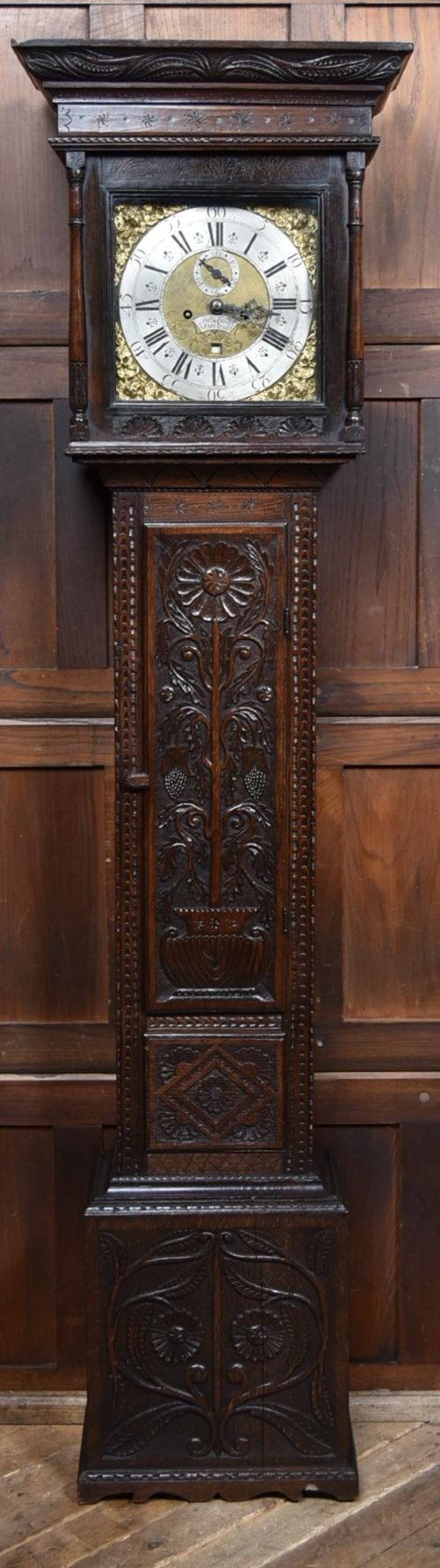
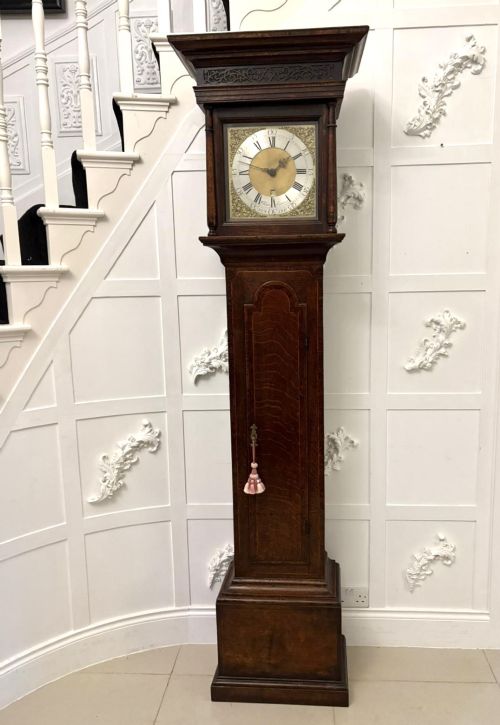
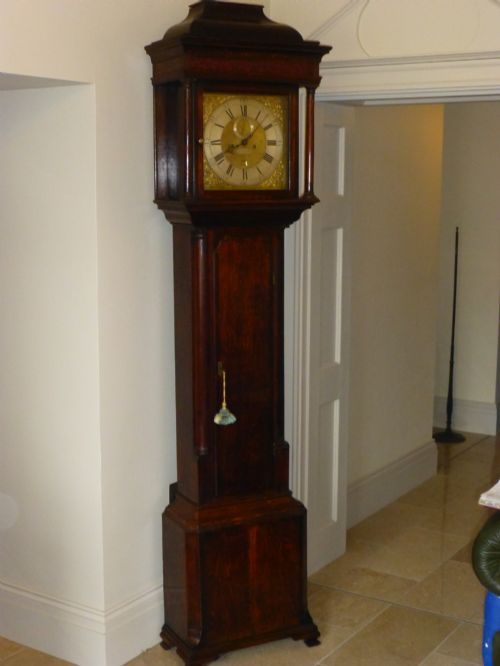
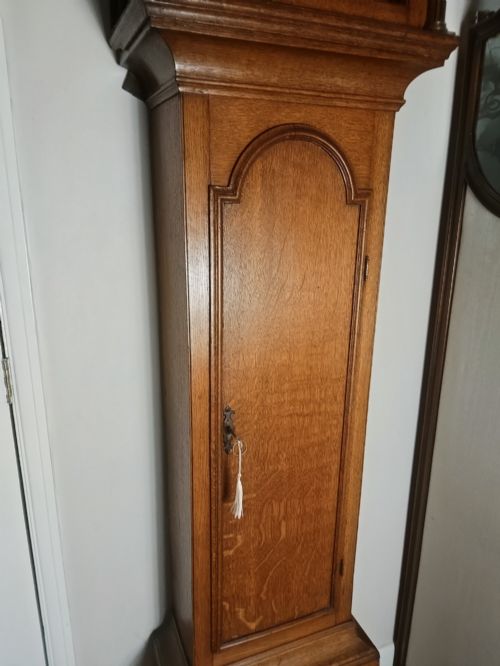
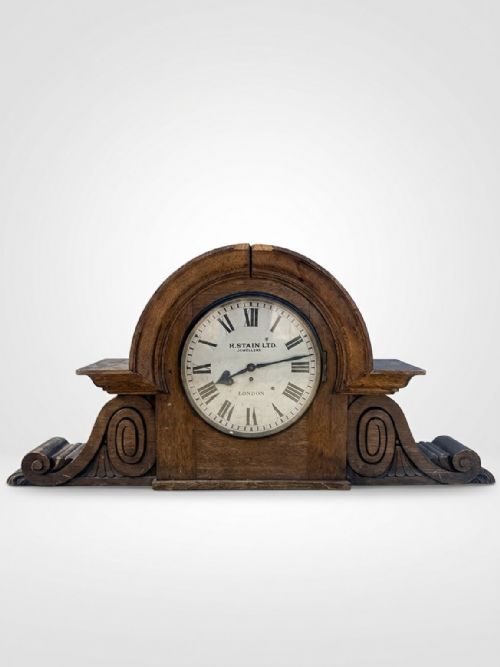
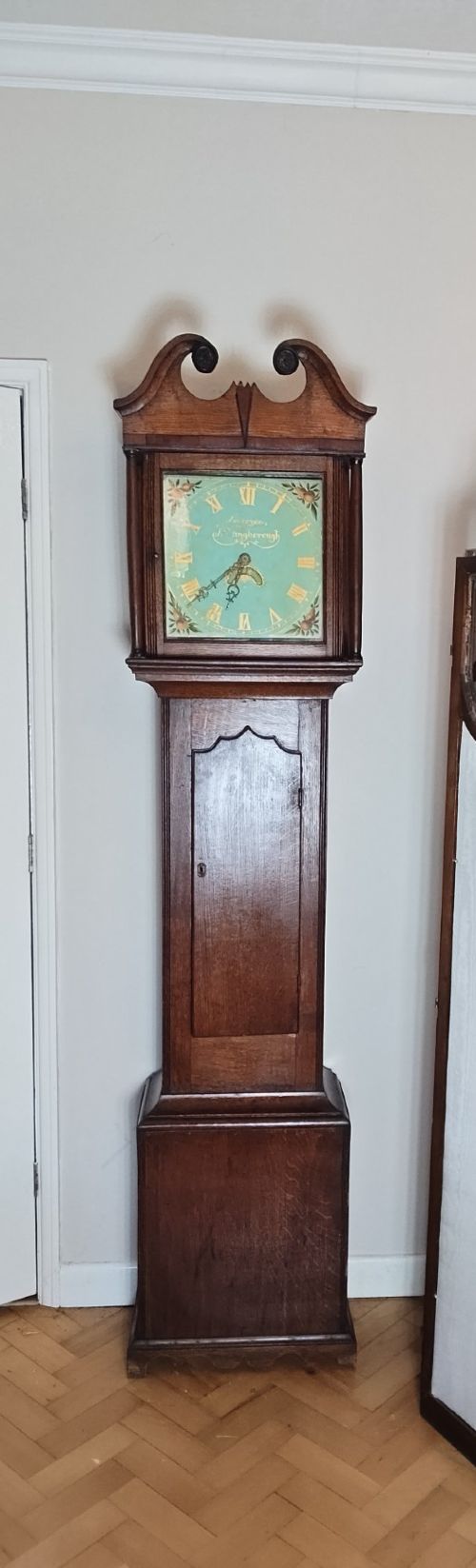
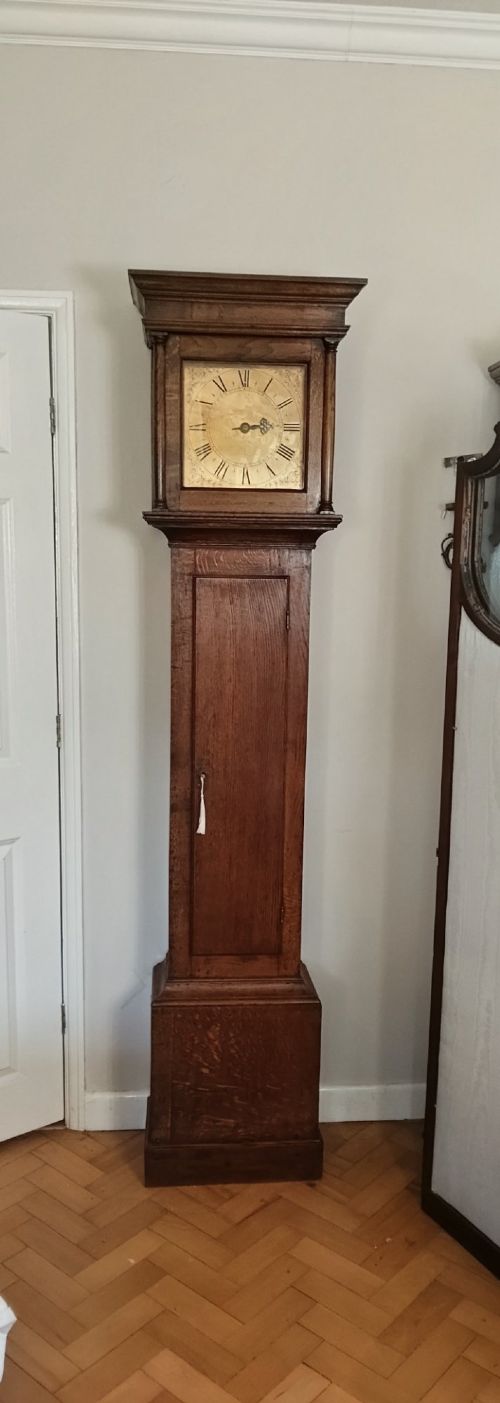
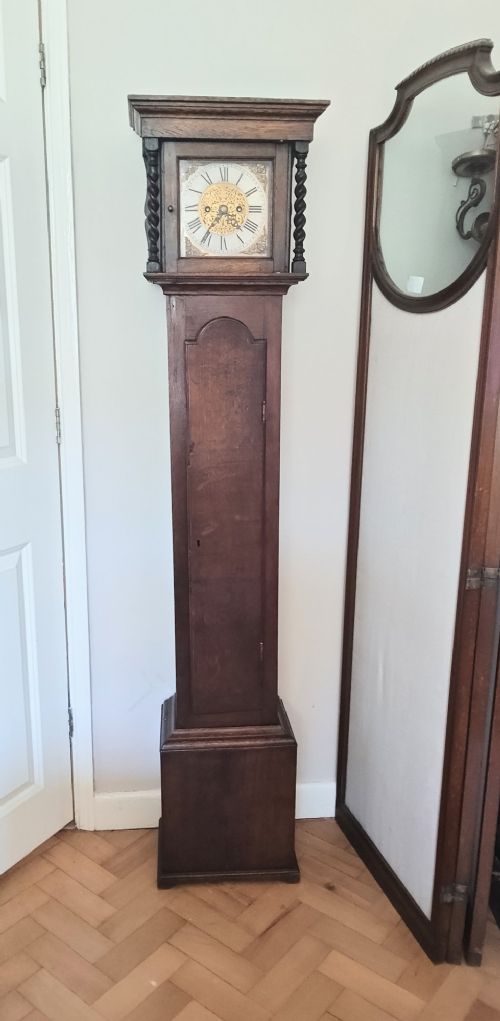
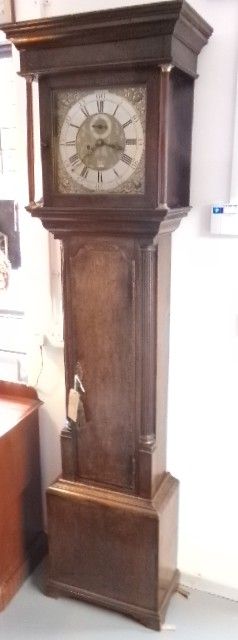
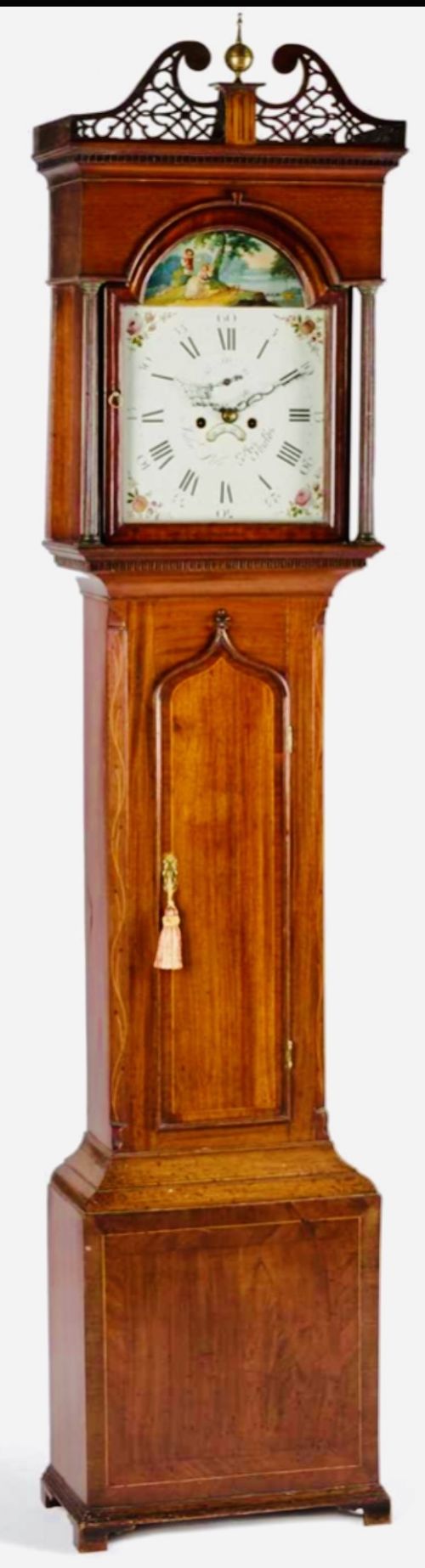
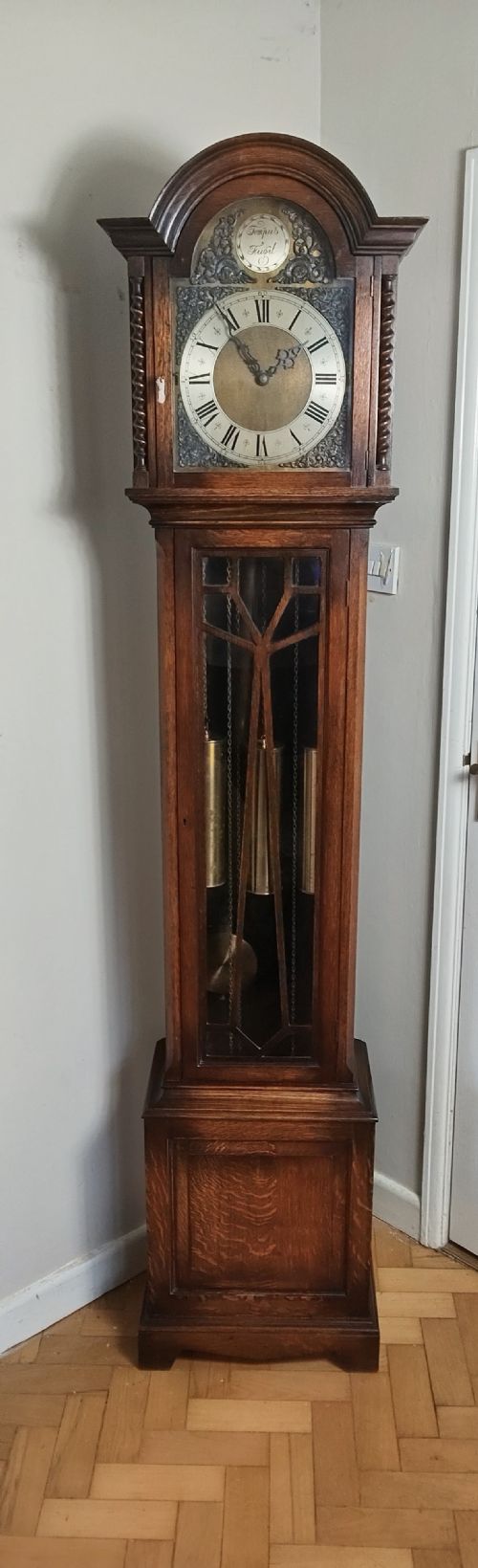
An oak cased clock encompasses tall longcase timepieces, wall dials, bracket models and smaller grandmother variants originating across Georgian, Victorian and Edwardian periods.
The longcase format dominates the selection, frequently bearing regional maker signatures from eighteenth and nineteenth century workshops.
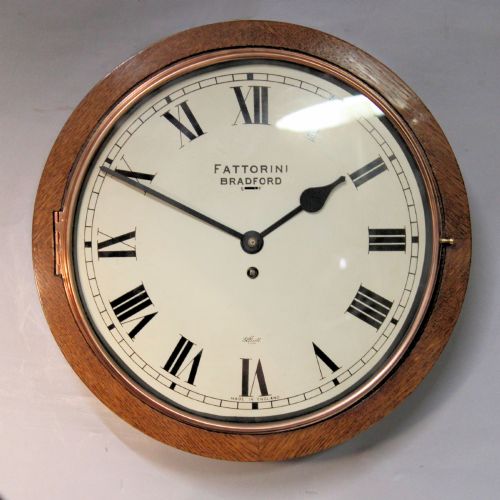
Shorter grandmother clocks and wall hanging dials provide alternative proportions suited to different domestic spaces while retaining timber housings.
Materials and Construction
Cabinetmakers utilised solid oak alongside secondary timbers like mahogany and walnut for crossbanding and decorative contrast on hoods and trunks.
Dials combine engraved brass, painted iron and silvered chapter rings protected by glazed bezels and brass framed doors.
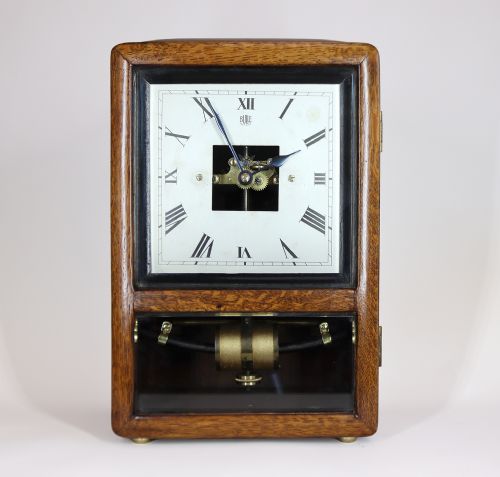
Internal movements range from weight driven brass gear trains to spring powered fusee mechanisms and later electric calibres.
Some models chime multiple tunes on gongs, turning the hallway into a private concert hall.
Defining Quality
Excellence rests in the integration of movement complexity - such as moonphase indicators, musical chiming barrels or strike silent functions - with substantial cabinet timber.
Regional maker signatures, secondary burr oak veneers and crisply cast brass spandrels distinguish standard utility pieces from exhibition grade examples.
Lee of Great Marlow·Richard Corless of Stockport·George Hallifax Of Doncaster·Thomas Webbe of New Quay·Edward White Birmingham
The Oak Cased Clock Glossary
- Longcase clock
- A tall pendulum timekeeper housed in a wooden trunk, commonly known as a grandfather clock.
- Fusee
- A conical pulley used in spring driven clocks to equalise the declining power of the mainspring as it unwinds.
- Dial
- The visible face of the timepiece bearing numerals and chapter rings, frequently constructed from brass or painted iron.
- Grandmother clock
- A scaled down version of the traditional longcase clock, typically standing under six feet tall.
- Bracket clock
- A portable timekeeper originally designed to sit on a wall bracket or table, often featuring striking or chiming trains.
Oak Cased Clock: Frequently Asked Questions
What is the difference between a grandfather and grandmother clock?
Grandfather clocks are full height longcase timepieces, whereas grandmother clocks are scaled down versions standing significantly shorter while housing similar weight driven movements.
Both styles utilise wooden housings, though smaller variations became particularly popular during the twentieth century for more modest room dimensions.
How do I wind an eight day longcase clock?
An eight day movement requires winding via the winding holes on the dial using a matching crank key, drawing the weights back up inside the trunk.
Care must be taken not to overwind the mechanism, ensuring the weights are raised gently to their upper limits.
Where were wall dial clocks typically used?
Wall dial clocks were designed primarily for utilitarian spaces such as railway stations, offices, and domestic kitchens where clear legibility was essential.
Their simple round bezels and robust fusee movements allowed for reliable timekeeping in high traffic areas.
What does a strike silent mechanism do?
A strike silent feature allows the owner to disengage the hour striking train so the clock operates in total silence overnight.
Selecting this mode pauses the hammer from hitting the bell or gong while the internal gear train continues to keep accurate time.