


Large Wooden Table Clock
A large wooden table clock commands a room with architectural presence and steady mechanical rhythm, bringing period weight to a mantel or sideboard.
Large Wooden Table Clock
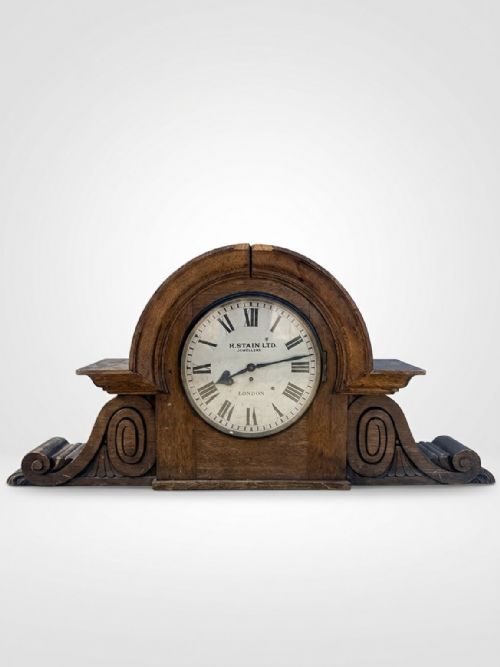
A large wooden table clock encompasses substantial bracket clocks, balloon-shaped mantel pieces, and architectural boardroom timepieces designed to anchor a room. These substantial objects typically stand out through their commanding proportions and traditional timber construction rather than delicate bedside housing.
The versions met most frequently on this page span the Victorian, Edwardian, and Art Deco eras, drawing on styles from Georgian revival to Black Forest carving. Walnut, mahogany, and oak form the primary bodies, often paired with brass details and silvered metal dials.
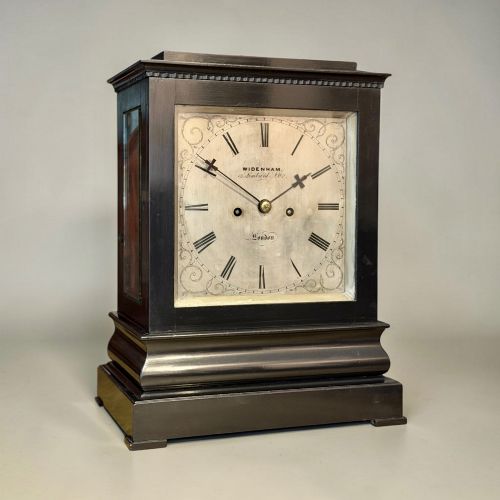
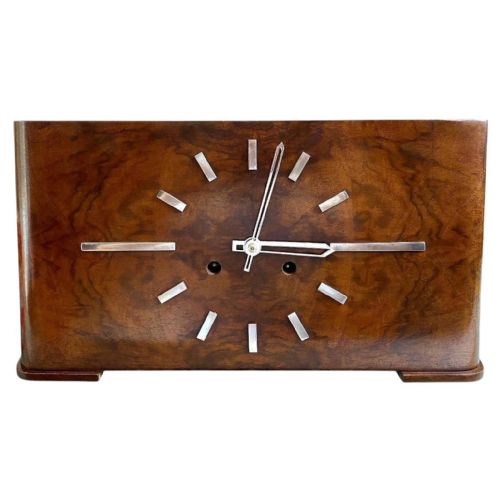
Makers such as Widenham of London and Haller appear among the heavier bracket and chiming formats, showing how commercial workshops produced these significant pieces for domestic and professional spaces. Whether configured as a musical fusee movement or a geometric walnut veneer design, each piece serves as a primary decorative focus.
Materials and Construction
Cabinetmakers constructed these clock cases using solid timbers like oak, mahogany, and walnut, frequently applying rich veneers or delicate inlay work to the exterior surfaces. Ebonised wood also appears, offering a dark contrast to bright brass bezels and silvered metal chapter rings.
Movement assembly required skilled metalworking to house complex mechanisms such as triple fusee gear trains and chiming assemblies inside heavy wooden housings. Carved elements, particularly on Black Forest examples, demonstrate traditional hand-tool techniques applied directly to solid timber.
Some heavy boardroom clocks arrived with musical barrels loud enough to rouse an entire floor of directors.
Assessing Quality and Execution
The distinction between standard production and superior work lies in the architectural ambition of the case and the sophistication of the internal movement. Heavy bracket clocks with triple fusee musical setups or signed movements by makers like Widenham represent a higher tier of horological execution.
Timber selection and decorative restraint govern visual success, where carefully matched walnut veneers or precise mahogany inlay elevate the piece beyond plain utility. Carved detailing on oak and Black Forest pieces varies from repetitive factory scoring to deep, purposeful relief work.
Widenham of London·Haller
The Large Wooden Table Clock Glossary
- Bracket clock
- A portable household clock originally designed to sit upon a dedicated wall bracket. Later examples function entirely as substantial table or mantel pieces.
- Fusee
- A conical pulley used in clock movements to maintain an even pull on the gear train as the mainspring unwinds. This mechanism improves timekeeping accuracy.
- Chiming mantel clock
- A clock fitted with internal gongs or bells that sound the quarters or hours automatically. These movements require robust wooden cases to project the sound.
- Silvered metal dial
- A clock face treated with a silver compound to produce a matte, reflective surface that enhances legibility. Numerals and markings are typically engraved and filled with black wax.
- Veneer
- A thin layer of decorative wood applied to a secondary timber base. This technique allows cabinetmakers to utilise striking grain patterns on prominent surfaces.
Large Wooden Table Clock: Frequently Asked Questions
What is a fusee clock movement?
A fusee movement uses a conical pulley to equalise the power delivered by the mainspring as it loses tension over time. This mechanical arrangement ensures consistent force reaches the escapement.
Such systems indicate higher manufacturing standards and are typically found in the more substantial bracket and boardroom clocks.
How do I date a wooden mantel clock?
Dating relies on combining the timber choice, decorative style, and dial construction visible on the piece. Victorian examples often feature dark carved oak or architectural bracket forms.
Edwardian pieces frequently display inlaid mahogany and balloon shapes, while 1930s items lean into Art Deco walnut veneers and geometric mass.
Where should I place a large table clock?
These clocks require a deep mantelpiece, sturdy sideboard, or dedicated table surface capable of supporting their considerable weight and visual mass. Placement should account for accessibility when winding the movement or setting the hands.
Keeping them away from direct sunlight and damp walls protects the timber case and internal metalwork from environmental stress.
What defines a Black Forest clock?
Black Forest clocks originate from the mountainous region in Germany known for intricate woodcarving and traditional forestry crafts. These pieces usually feature hand-carved natural motifs, animals, or foliage integrated directly into the wooden housing.
Their distinct sculptural style sets them apart from the architectural veneer and inlay work of British and French production.