


Oak Bureau on Stand
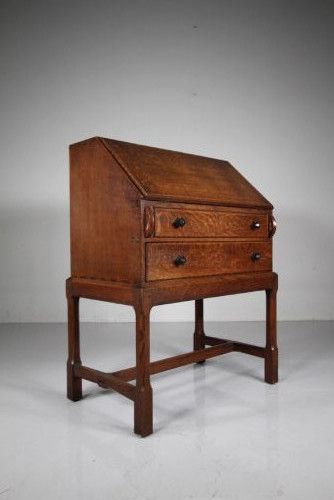
An oak bureau on stand is a fitted writing cabinet raised upon legs, offering a compact workspace with concealed storage that suits studies and living rooms alike.
Oak Bureau on Stand
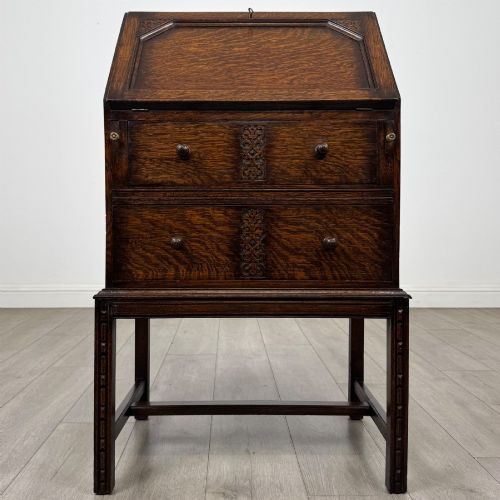
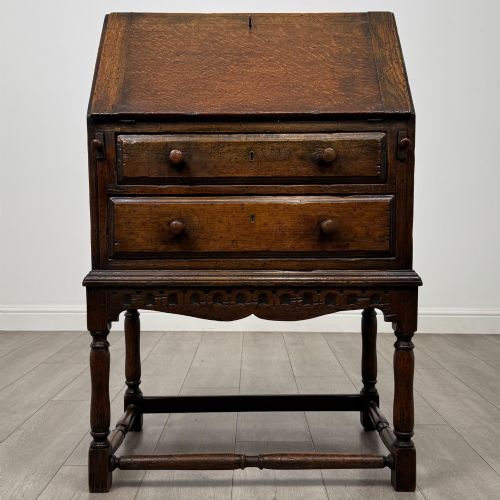
An oak bureau on stand combines a fall-front writing compartment with an elevated open or framed under-tier, creating a distinctive silhouette distinct from standard flat-topped desks. These pieces appear in forms spanning the seventeenth century through to the Edwardian era and the 1930s.
The most traditional examples follow seventeenth-century or eighteenth-century proportions, often featuring cabriole legs or turned supports beneath the main writing box. Alongside these early designs, revival pieces from the Edwardian period and the twentieth century frequently populate the selection.
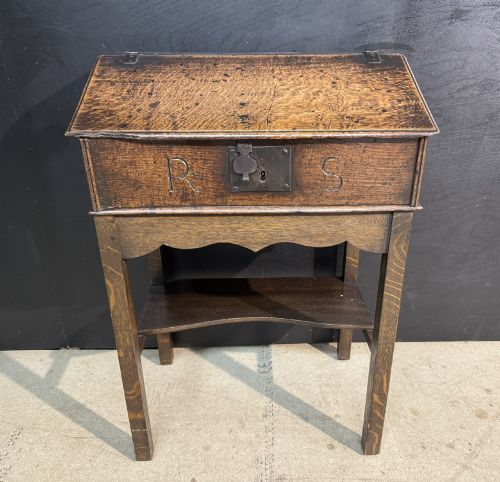
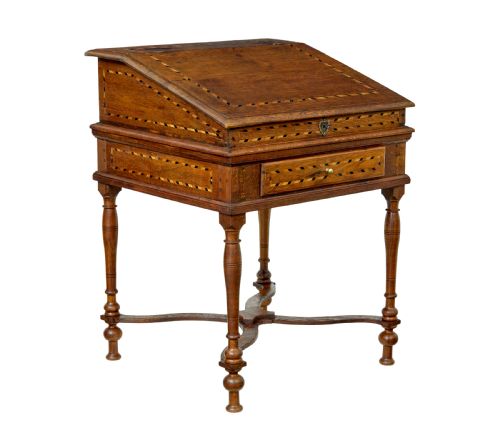
Makers adapted the form across regional workshops, producing Welsh and English variants alongside Dutch inlaid iterations. Buyers encounter everything from provincial strong boxes and clerks desks to fully articulated writing bureaux raised on original stands.
How they were made
Carpenters constructed these desks predominantly from solid oak, sometimes pairing the primary timber with fruitwood or pollard oak veneers for decorative contrast. Structural joints relied on traditional pegged mortise and tenon construction to ensure rigidity across the elevated stand.
Hardware played a functional and decorative role, with heavy brass drop handles, hinges, and escutcheons securing drawers and fall-fronts. Iron fittings occasionally appear on sturdier seventeenth-century strong boxes and provincial writing slopes.
Listings feature oak alongside brass, iron, and fruitwood across periods spanning the seventeenth century to the 1930s.
What varies in quality
The integrity of the stand relative to the upper bureau dictates much of the piece's character, with original matching legs holding greater historical interest than later adaptations. Finer examples display harmonious proportions, where the height of the stand balances the mass of the writing compartment above.
Surface timber quality ranges from plain utility boards to richly figured pollard oak or intricate Dutch marquetry inlay. The crispness of carved details and the survival of original brass hardware further distinguish standard provincial pieces from masterworks.
Stanley Webb Davies·Heals of London
The Oak Bureau on Stand Glossary
- Bureau
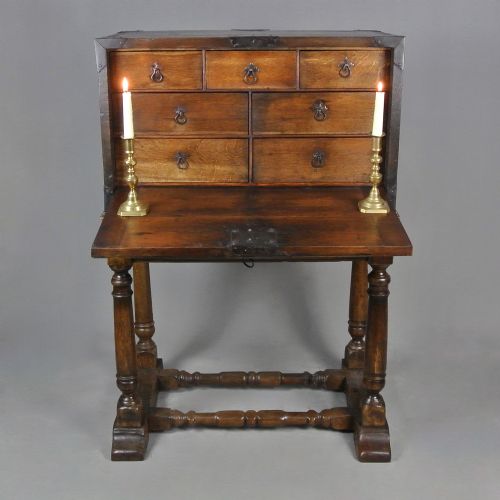
- A writing cabinet featuring a sloping fall-front that opens to reveal internal pigeonholes and small drawers. This form evolved from simple writing slope boxes into sophisticated case furniture.
- Stand
- The supporting frame or legs beneath a cabinet or desk, which elevates the main body off the floor. Stands take various structural forms, including turned legs, bracketed frames, and cabriole supports.
- Pollard oak
- Timber taken from trees that have been pollarded, producing a dense, highly figured grain pattern prized for cabinetwork. This decorative wood creates striking visual movement across flat surfaces.
- Cabriole leg
- A furniture leg that curves outward at the knee and tapers inward at the ankle, ending in a pad or foot. This stylistic element became popular during the early eighteenth century.
- Fall-front
- A hinged panel that drops down to serve as a writing surface while providing access to the interior compartments. It is typically supported by sliding lopers or side arms when lowered.
Oak Bureau on Stand: Frequently Asked Questions
What is an oak bureau on stand?
An oak bureau on stand is a dual-component form uniting a writing cabinet with an elevated support structure. It provides a dedicated writing surface with internal compartments while maintaining a visually light footprint in a room.
These pieces range from early seventeenth-century provincial strong boxes to refined eighteenth-century examples on cabriole legs and later revival interpretations.
How do I date an oak bureau on stand?
Dating relies on examining construction techniques, timber selection, and hardware styles across both the writing box and the stand. Seventeenth-century pieces typically show heavier pegged framing, while eighteenth-century versions introduce refined cabriole legs and pollard oak veneers.
Revival pieces from the Edwardian era and the 1930s often incorporate machine-cut elements and twentieth-century finishing methods that distinguish them from period originals.
Were these desks used for writing?
These desks served as primary correspondence and administration points for merchants, clerks, and households before the widespread use of flat-topped partners desks. The sloping fall-front provided an angled surface suited for quill and ink work.
Internal pigeonholes and small drawers kept writing materials, documents, and ledgers organised securely within the lockable cabinet.
How do I care for antique oak furniture?
Antique oak benefits from stable indoor humidity levels and protection from direct sunlight to prevent timber shrinkage and fading. Regular dusting with a dry, soft cloth maintains the finish without chemical buildup.
Application of traditional beeswax helps nourish dry timber and preserves the natural patina accumulated over centuries of use.