
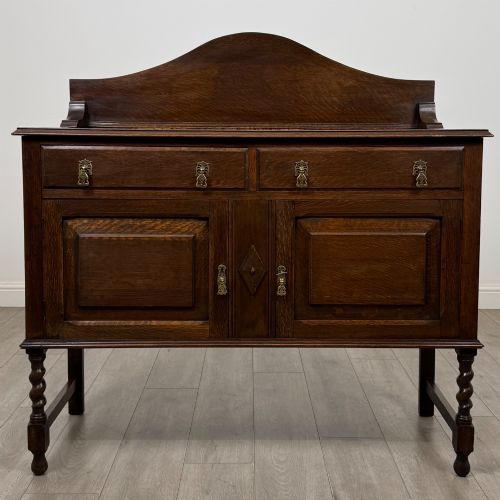
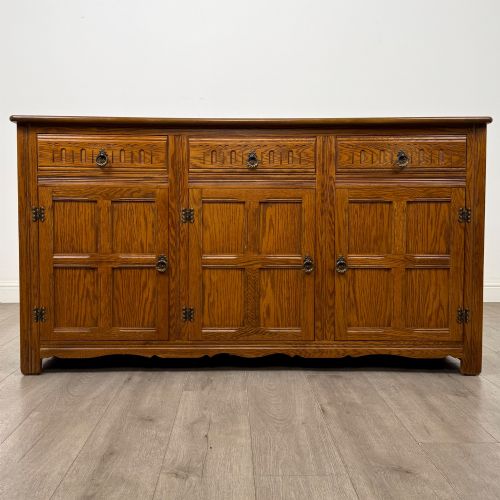
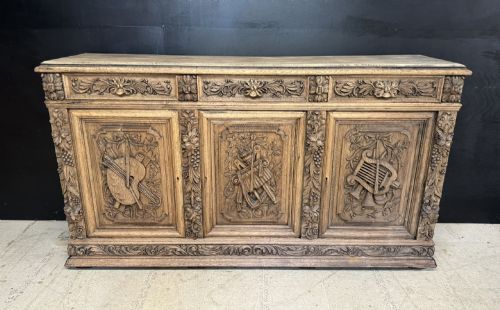
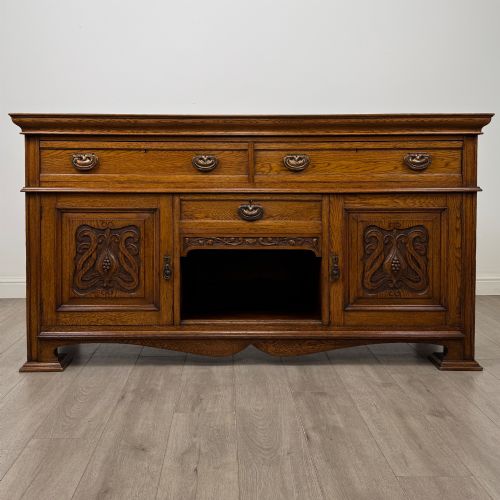
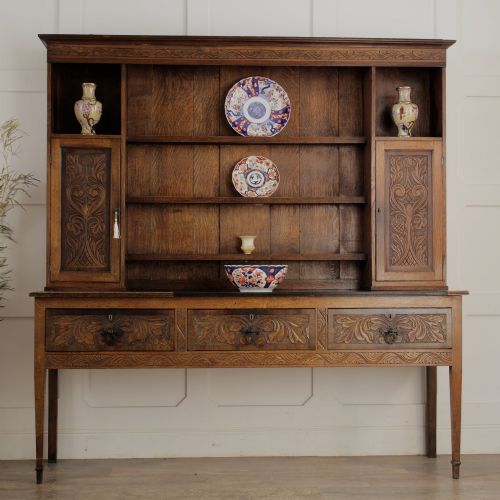
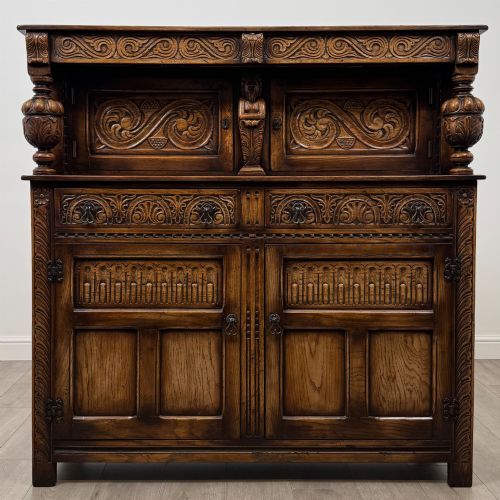
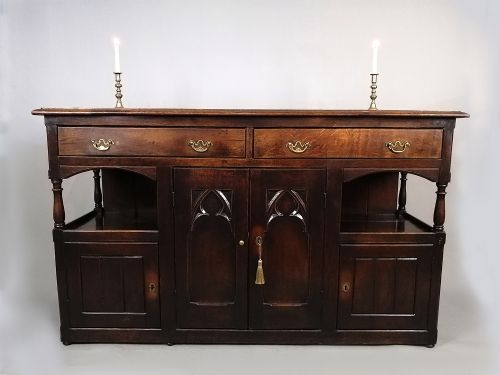
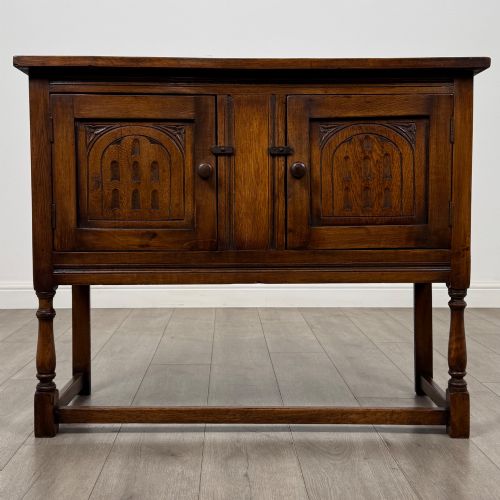
Oak Buffet Server Cabinet
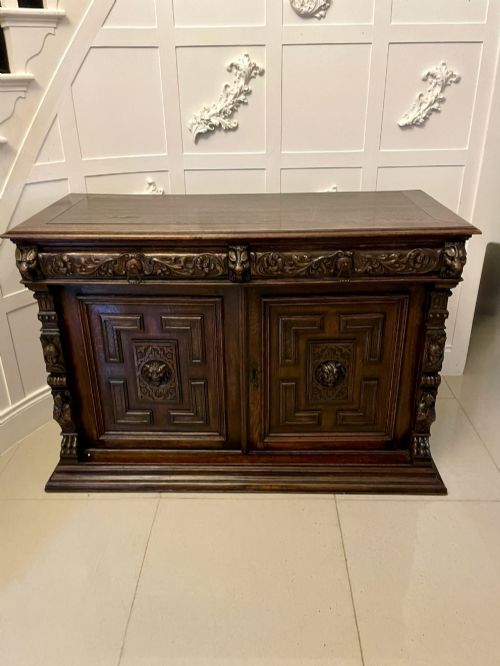
An oak buffet server cabinet brings solid timber and historic weight to a dining room, offering deep storage for silver and linen.
Oak Buffet Server Cabinet
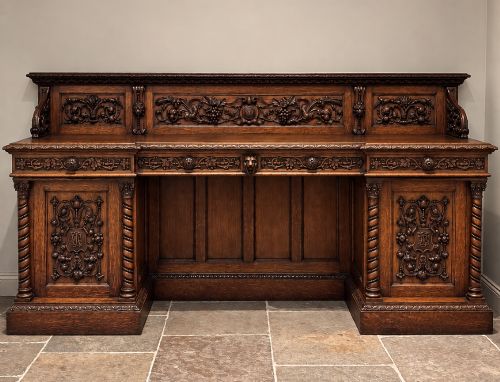
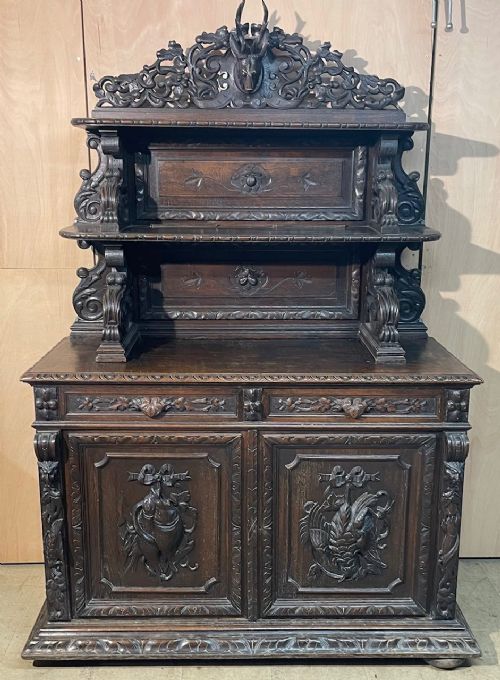
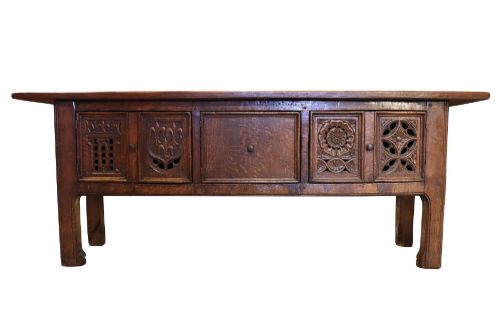
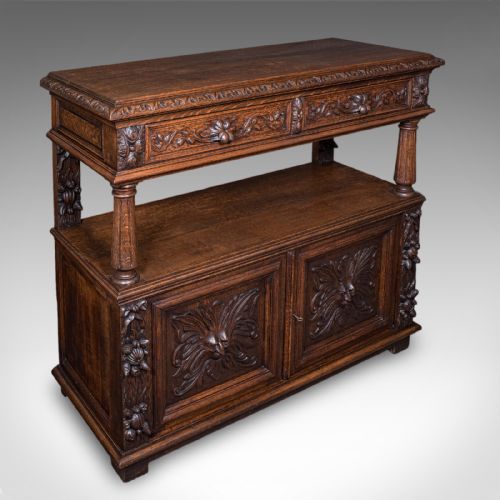
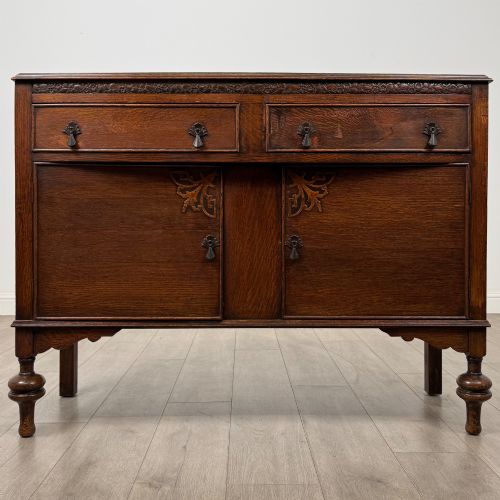
An oak buffet server cabinet spans forms such as sideboards, dresser bases, and court cupboards across the nineteenth century, Edwardian era, and the nineteen-twenties.
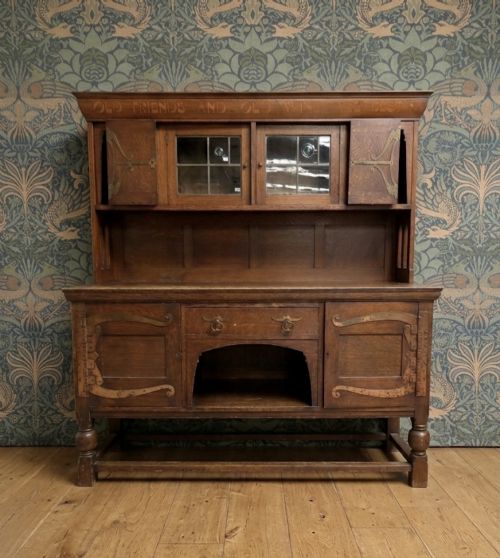
The buyer encounters Victorian carved versions, Arts and Crafts golden oak designs, and French provincial pieces built for domestic storage and serving.
These items originate from British, French, and Scottish workshops, utilising traditional framing for heavy dining room use.
Materials and Technique
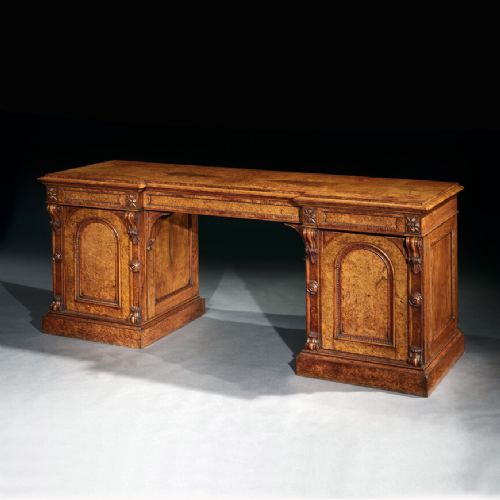
Makers relied principally on solid oak, often figured with pollard oak or burr walnut veneers, supplemented by fruitwood on provincial examples.
Hardware incorporates brass and iron drop handles or hinges, while glass panels appear on upper display doors where fitted.
Carpentry techniques include hand carving, panel framing, and barley twist turning on upright supports.
Listings feature oak alongside contrasting materials like brass, iron, glass, pollard oak, and burr walnut across multiple decades.
Craft and Finish
The standard of carving defines the tier of a piece, moving from crisp, deep relief work to mechanical shallow tooling.
Timber selection separates ordinary stock from examples utilising figured pollard oak or select golden oak boards with matching grain.
Original hardware and integrated structural elements such as potboards or raised top shelves retain greater integrity than later replacements.
Ambrose Heal for Heal & Son·Gomme·Leonard Wyburd for Liberty·Heals of London
The Oak Buffet Server Cabinet Glossary
- Court cupboard
- A heavy enclosed storage piece with an upper recessed cabinet supported by columns. It provides traditional display space for plate.
- Dresser base
- A long low table frame fitted with drawers above cupboards. This form serves dining rooms for surface preparation and storage.
- Barley twist
- A spiral turning carved into wooden table legs and upright supports. It appears frequently on Edwardian oak furniture.
- Pollard oak
- Timber taken from trees that were pollarded, producing dense clusters of branches and a mottled grain. Cabinetmakers prized this for decorative veneer panels.
- Gothic Revival
- A nineteenth-century design movement borrowing medieval architectural motifs like pointed arches and tracery. It manifests in heavy carved ornamentation on oak boards.
Oak Buffet Server Cabinet: Frequently Asked Questions
What is the difference between a buffet and a sideboard?
A buffet is traditionally built lower and serves meals or holds dishes during service, whereas a sideboard often includes upper shelving or tall backboards for display.
Both terms overlap in older listings, but server cabinets emphasise flat surface area for food placement alongside enclosed cupboard storage.
How do I care for antique oak furniture?
Keep solid oak timber away from direct heat sources and sudden humidity shifts to prevent the wood from splitting along the grain.
Apply a natural beeswax periodically and buff with a soft cloth to maintain the finish without building up synthetic residues.
Where should I place a server cabinet?
These heavy timber pieces require a strong wall anchor in a dining room, hallway, or spacious kitchen where depth allows doors to swing fully.
Ensure floor surfaces are level to prevent the frame from twisting and straining the mortise and tenon joints over time.
How do I identify Arts and Crafts oak pieces?
Arts and Crafts items display a focus on simple construction lines, exposed joinery, and golden oak finishes rather than heavy historic revival carving.
Look for plain surfaces, strap hinges in brass or iron, and functional proportions designed for domestic utility.