

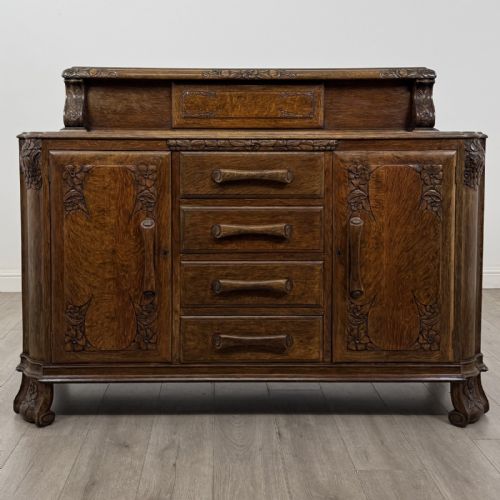
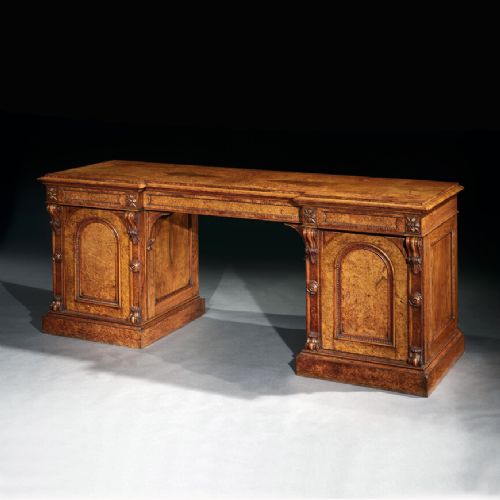
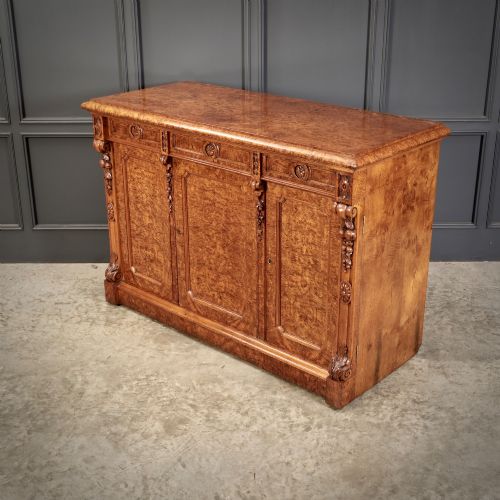
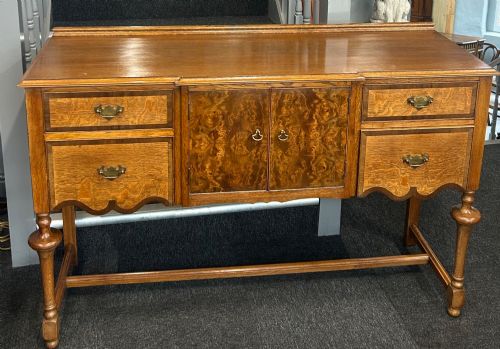
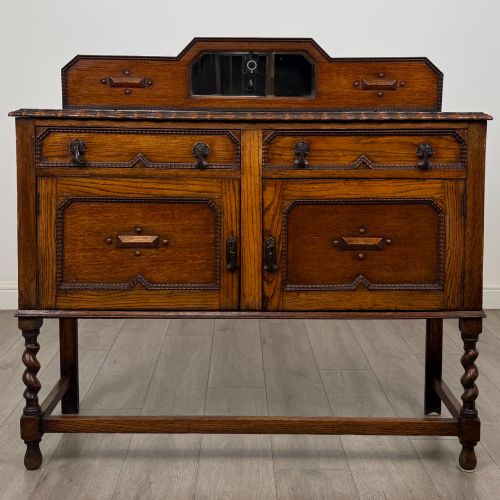


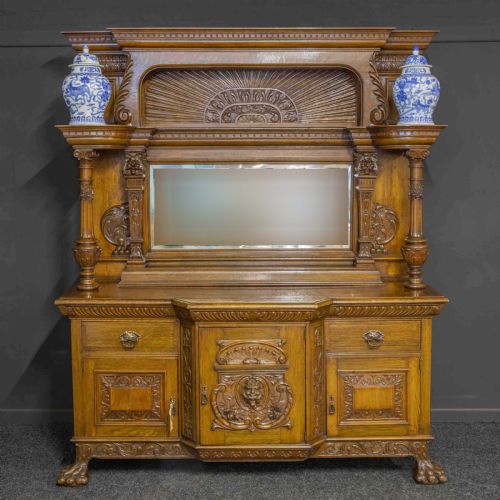
Golden Oak Server Cabinet
These golden oak server cabinet pieces combine durable timber with practical storage, offering a sturdy workspace and display surface for any room.
Golden Oak Server Cabinet
When you search for a golden oak server cabinet, you are looking at substantial storage furniture built from resilient timber, most frequently encountered as sideboards, buffets, and dresser bases from the Victorian and Edwardian eras. These pieces bridge the gap between utility and display, offering generous surface areas and interior compartments designed for domestic storage.
The selection ranges from robust late nineteenth-century items to early twentieth-century interpretations, drawing on Arts and Crafts, Jacobean Revival, and Art Deco styles. You will find variants featuring mirror backs, carved detailing, and compact proportions suited to modern dining spaces as well as traditional interiors.
What varies in quality
Quality reveals itself in the selection of timber and veneer, where figured pollard oak or burr walnut sections elevate standard construction into finer examples of cabinet making. The depth and execution of carved details, alongside the integration of original hardware, distinguish standard utility pieces from more ambitious workshop productions.
Structural integrity and the retention of original surface finishes dictate the standing of individual cabinets. Pieces that maintain their proportion, smooth drawer movement, and uncompromised glass or metal components represent the upper tier of the range.
Golden Oak Server Cabinet Retail Price Guide 2026
Typical asking prices for golden oak server cabinet among the pieces listed under this phrase on Sellingantiques today, from the lower quarter to the upper quarter. They describe what is for sale here now, not the wider market.
Materials documented across the inventory include solid oak, pollard oak, burr walnut, brass, copper, iron, and glass.
Gomme
The Golden Oak Server Cabinet Glossary
- Pollard oak
- Timber taken from trees that have been pollarded, producing a dense wood with clustered, decorative knots. This grain pattern was favoured for high-end Victorian sideboards and cabinet doors.
- Credenza
- A sideboard or buffet cabinet designed for storage and serving, often featuring cupboards and a flat top surface. In the evidence, this form appears in large-scale Victorian iterations.
- Dresser base
- A lower cabinet structure originally used in kitchens or dining rooms for food preparation and storage, frequently fitted with drawers and cupboards. They appear here in seventeenth-century style and Edwardian variants.
- Arts and Crafts
- A design movement emphasising handcraftsmanship, simple forms, and visible construction methods. Pieces from this tradition often feature minimal ornamentation that highlights the natural grain of the oak.
- Jacobean Revival
- A nineteenth and twentieth-century style borrowing heavily from seventeenth-century motifs such as geometric moulding and deep carving. It brings a heavier, architectural presence to golden oak cabinetry.
Golden Oak Server Cabinet: Frequently Asked Questions
What is a golden oak server cabinet?
These pieces are large storage furniture items, encompassing sideboards, buffets, and dresser bases manufactured primarily during the Victorian and Edwardian periods. They provide both concealed shelving and surface space for dining and living areas.
Built predominantly from oak, they frequently incorporate decorative veneers like pollard oak alongside metal hardware made from brass, copper, or iron.
How do I choose the right size?
Consider the proportions of your room and the available wall space, keeping in mind that some Victorian examples feature tall mirror backs that increase the overall height. Measure both the floor footprint and clearance for opening doors and drawers.
Compact Edwardian or Arts and Crafts variants offer reduced dimensions while retaining the functional storage capacity needed for modern living spaces.
How do I clean and maintain oak?
Maintain the timber surface by dusting regularly with a soft cloth and applying a quality beeswax periodically to nourish the wood grain. Avoid placing furniture in direct sunlight or near heat sources to prevent timber splitting.
Keep brass and copper hardware clean using appropriate metal care products designed not to damage the surrounding wood finish.
How do I tell Edwardian from Victorian pieces?
Victorian cabinets often display heavier ornamentation, deep carved detailing, and substantial proportions, sometimes incorporating large mirror backs or pollard oak veneers. They lean towards formal, imposing silhouettes.
Edwardian and Arts and Crafts examples generally present lighter forms, simpler geometric lines, and a focus on the natural qualities of the light oak timber.