

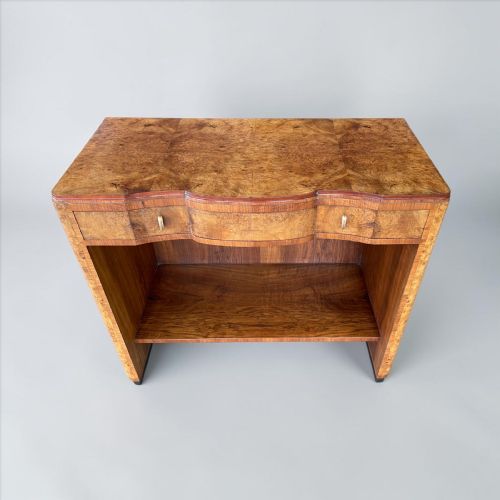
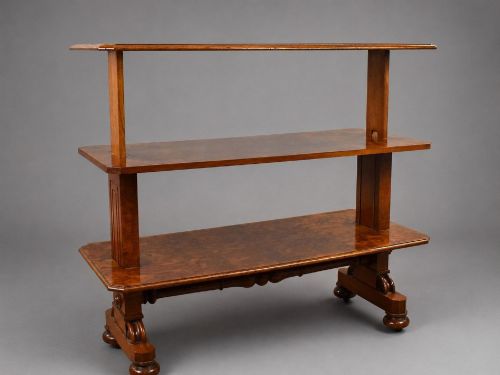
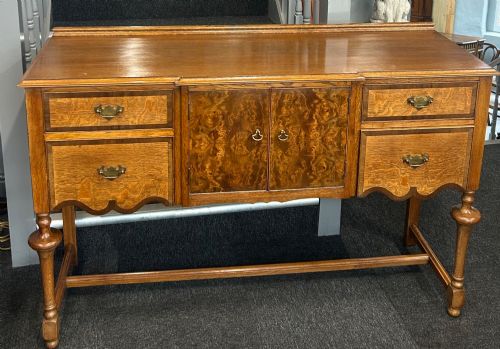


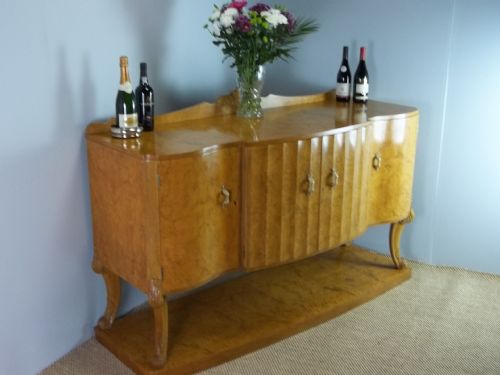
Burr Walnut Buffet Table
These burr walnut buffet table pieces combine rich veneers with practical serving surfaces, offering both storage and striking grain patterns.
Burr Walnut Buffet Table
A burr walnut buffet table serves as a functional sideboard, credenza, or serving table designed for dining and entertaining spaces. These pieces appear across Victorian, Edwardian, and Art Deco periods, showcasing diverse historical influences from Queen Anne revival to late Regency designs.
The most common formats on this page include multi-tiered servers, pedestal sideboards, and cabinet-style credenzas. Each variant provides surface area for display alongside enclosed storage spaces for dining room tableware.
Materials and construction methods
Makers utilised burr walnut veneers applied over secondary timbers such as oak and solid walnut to achieve complex, swirling grain patterns across the main surfaces. This technique required careful timber selection to match grain directions across doors, drawers, and top surfaces.
Hardware details incorporate brass fittings and occasional glass or marble elements, particularly within Victorian and Art Deco iterations. Construction methods range from traditional cabinet joinery on nineteenth-century pieces to streamlined carcasses on twentieth-century Art Deco examples.
Burr Walnut Buffet Table Retail Price Guide 2026
Typical asking prices for burr walnut buffet table among the pieces listed under this phrase on Sellingantiques today, from the lower quarter to the upper quarter. They describe what is for sale here now, not the wider market.
Some Victorian dumbwaiters feature telescopic actions, proving that Victorian engineers loved gadgets as much as we do.
Distinguishing quality across examples
Quality rests in the selection and matching of the burr walnut veneer, where superior examples display symmetrical grain patterns across large drawer fronts and doors. The handling of edgebanding and timber thickness also separates standard production from exceptional workshops.
The integrity of the underlying construction and the refinement of period-specific detailing, such as carved cabriole legs or geometric Art Deco veneering, dictate the standing of an individual piece.
Maurice Adams·Epstein·Hille of London·Harry And Lou Epstein
The Burr Walnut Buffet Table Glossary
- Burr walnut
- A veneer sliced from the distorted growth or burl of a walnut tree. It produces highly figured, swirling grain patterns prized for decorative furniture surfaces.
- Buffet table
- A serving table or sideboard used for holding food and tableware during meals. These pieces often feature multiple tiers or cupboards.
- Credenza
- A dining room cabinet or sideboard without legs, sitting directly on the floor or on a low plinth. They provide enclosed storage behind doors.
- Dumbwaiter
- A multi-tiered serving piece with revolving or fixed shelves. Victorian examples frequently utilise a telescopic mechanism.
- Veneer
- A thin layer of superior timber applied over a secondary wood base. This method allows makers to display decorative grains economically.
Burr Walnut Buffet Table: Frequently Asked Questions
What is a burr walnut buffet table?
A burr walnut buffet table is a serving piece or sideboard covered in highly figured burl veneer. These tables provide storage and display space for dining rooms.
They appear in various styles ranging from Victorian multi-tiered servers to sleek Art Deco cabinets.
How do I identify Art Deco pieces?
Art Deco pieces from the nineteen-twenties and thirties display geometric lines, waterfall edges, and symmetrical burr walnut veneers. Makers like Epstein championed these streamlined shapes.
They often omit traditional carving in favour of smooth, veneered surfaces that highlight the wood grain.
Where were these tables used?
These tables were placed in dining rooms and parlours to hold serving dishes, glassware, and silverware during meals. The surface served food while the cupboards stored dining accessories.
Today, buyers use them in living areas and hallways as decorative storage units.
How do I care for burr walnut veneer?
Burr walnut requires protection from direct sunlight and excessive moisture to prevent veneer lifting and fading. Regular dusting with a dry cloth keeps the surface clean.
Application of appropriate furniture wax helps maintain the lustre of the polished wood.