
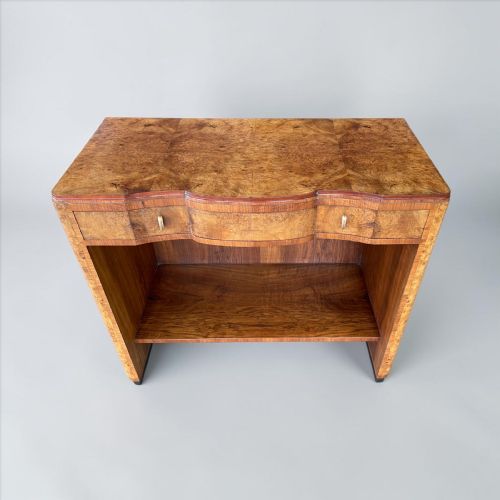
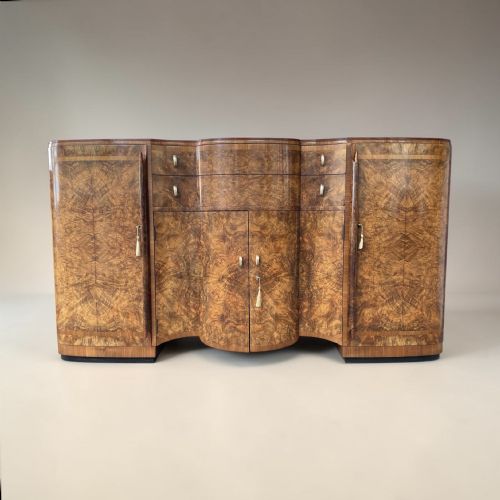

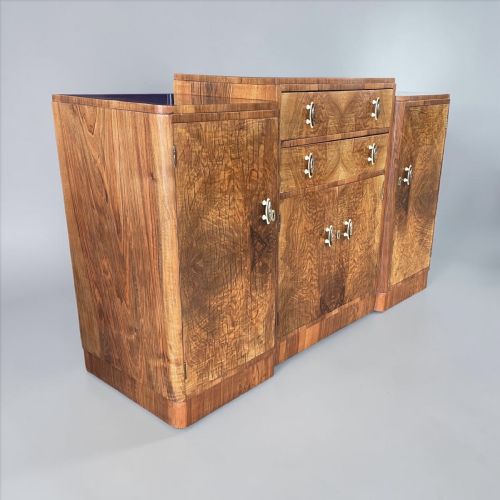
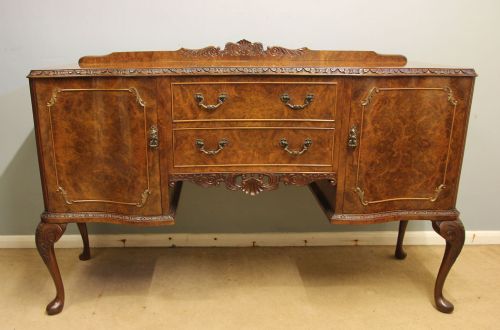
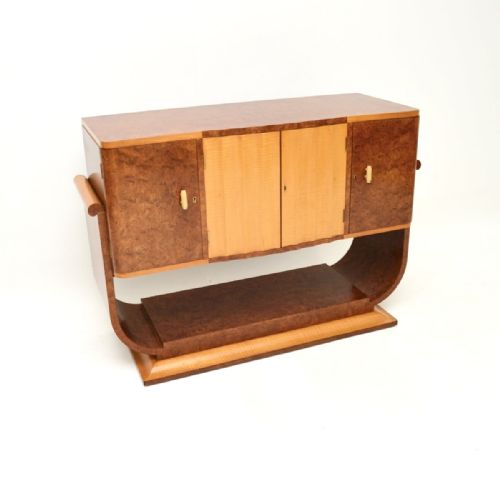
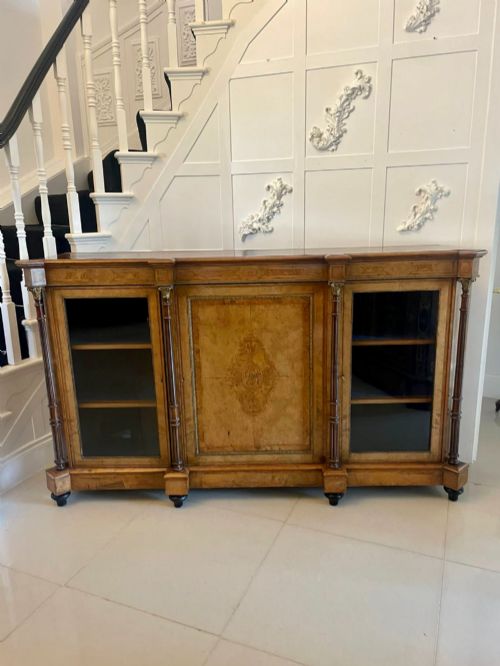
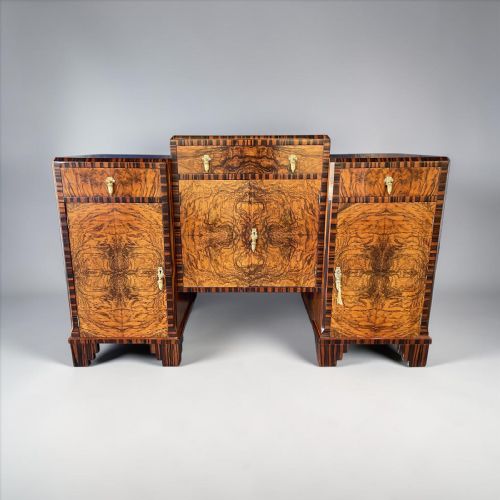
Burr Walnut Dining Buffet
These burr walnut dining buffets bring striking grain patterns and substantial storage to a room, uniting utility with decorative presence.
Burr Walnut Dining Buffet
A burr walnut dining buffet is a substantial serving and storage piece found across several distinct periods, most frequently appearing from the Victorian era through the Art Deco period. These items encompass sideboards, credenzas, and serving tables designed for the dining room.
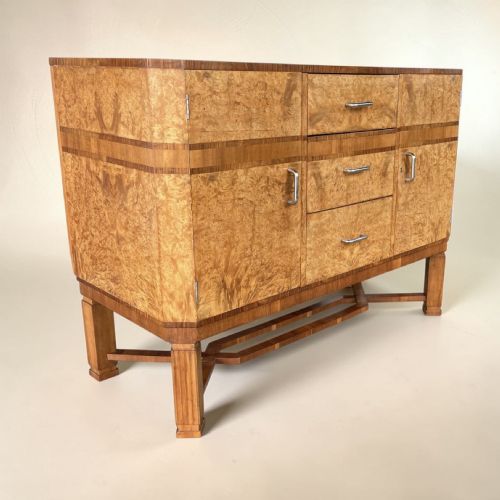
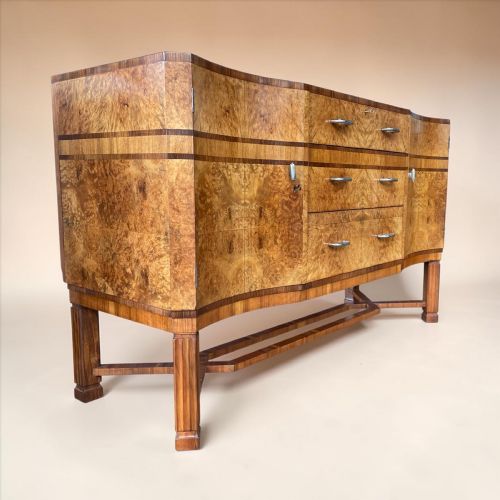
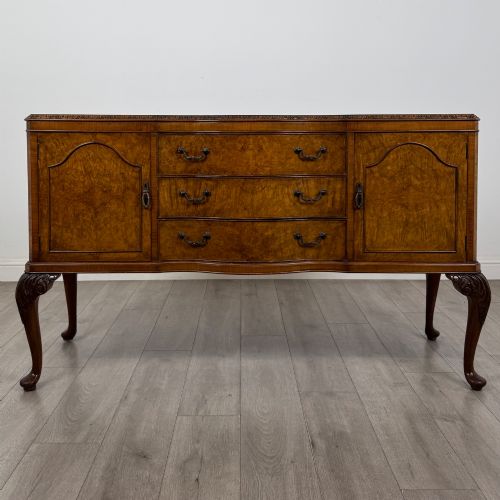
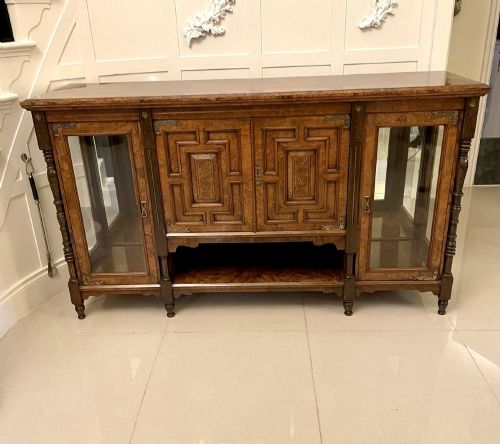
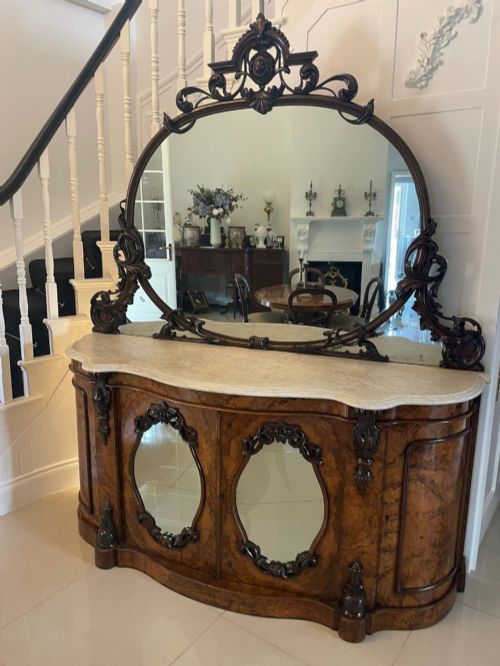
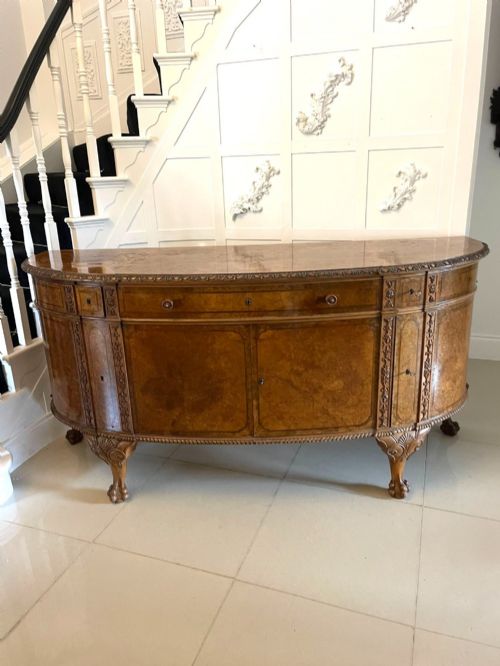
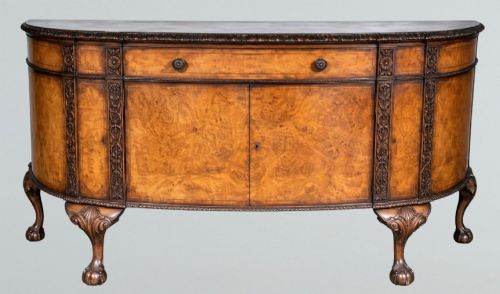
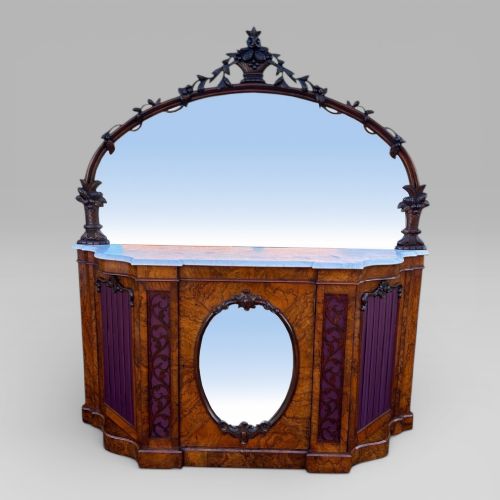
The pieces listed on this page span the mid-nineteenth century up to the 1930s, showing shifts from ornate Victorian and revival designs to clean-lined Art Deco forms. Buyers will encounter both serpentine fronts and bow-fronted carcases alongside mirror-backed credenzas.
Makers from various traditions shaped these dining buffets, ranging from nineteenth-century cabinet makers to twentieth-century firms like Hille and Epstein. The forms serve primary roles in dining rooms for holding cutlery, linen, and serving dishes.
Quality Markers
The choice of veneer defines the visual impact, with tightly swirled burr walnut and balanced book-matching separating superior examples from plain timber boards. The precision of cross-banding and marquetry inlay further demonstrates the maker's skill.
Structural joinery and the selection of secondary timbers indicate the standard of construction, where dovetailed drawer linings and heavy carcases ensure durability. Original hardware, including brass handles and fitted cutlery drawers, preserves the integrity of the piece.
Some dining buffets arrive with their original twelve-piece cutlery sets still nestled inside, waiting for the next dinner party.
Maurice Adams·Hille·Epstein·Harry and Lou Epstein·Hamptons of Pall Mall London
The Burr Walnut Dining Buffet Glossary
- Burr walnut
- A figured wood taken from the warted growths on walnut trees, prized for its complex, swirling grain patterns. It is sliced into thin veneers for decorative furniture surfaces.
- Credenza
- A low cabinet or sideboard, frequently featuring glass doors or mirror backs, used for display and storage in dining rooms and reception rooms. The form evolved significantly from the Victorian period into the twentieth century.
- Marquetry
- The art of applying pieces of veneer to a structure to form decorative patterns and pictures. Craftsmen use various coloured woods to achieve tonal contrast.
- Serpentine front
- A furniture front curved in a concave-convex-concave shape, requiring precise carpentry to fit drawers and doors. This contour adds visual depth to sideboards and serving tables.
Burr Walnut Dining Buffet: Frequently Asked Questions
What is a burr walnut dining buffet?
A burr walnut dining buffet is a large storage and serving piece for the dining room, surfaced in decorative burr walnut veneer. These items include sideboards, credenzas, and serving tables.
They provide deep drawers and cabinet space for dining accessories while presenting a highly figured wood grain to the room.
How do I date a burr walnut sideboard?
Dating relies upon stylistic details, construction methods, and the overall form of the cabinet. Victorian pieces often feature carved mirror backs and heavy mouldings.
Twentieth-century examples, particularly from the Art Deco period, show cleaner geometric lines and contrasting veneer bandings by makers such as Hille and Epstein.
Where were these buffets used?
These pieces sat in dining rooms to assist with serving meals and storing tableware. They held silver, linen, and glassware ready for use.
Their decorative fronts also served to furnish the room and display the status of the household during dinner parties.
What is the difference between a sideboard and a credenza?
Sideboards generally feature cupboards and drawers arranged for general dining storage. Credenzas frequently incorporate glass-fronted display sections and sometimes mirror backs.
Both serve similar dining room functions but belong to different stylistic traditions across the nineteenth and twentieth centuries.
How do I care for burr walnut furniture?
Burr walnut requires stable indoor humidity away from direct sunlight to prevent the veneer from drying or cracking. Regular dusting with a soft cloth maintains the finish.
Avoiding excessive moisture and heat protects the delicate wood grain and the original polish.