


Oak Bracket Mantel Clock
An oak bracket mantel clock combines robust timber housing with precise mechanical movement, offering both functional timekeeping and architectural presence.
Oak Bracket Mantel Clock
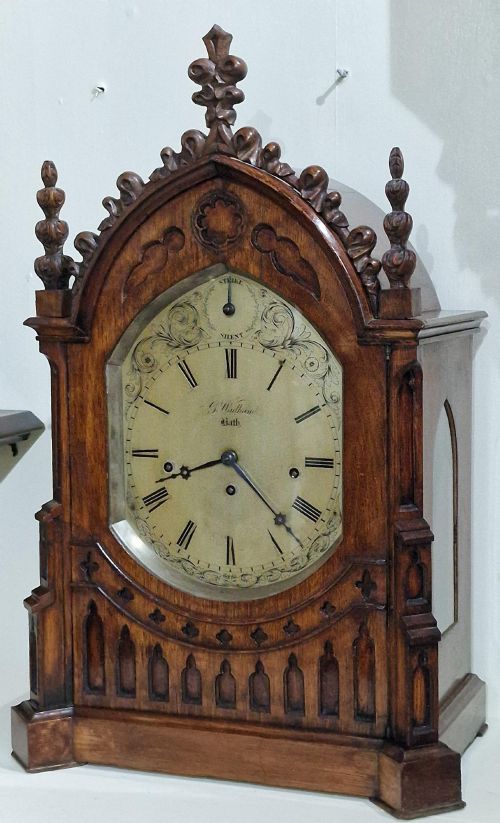
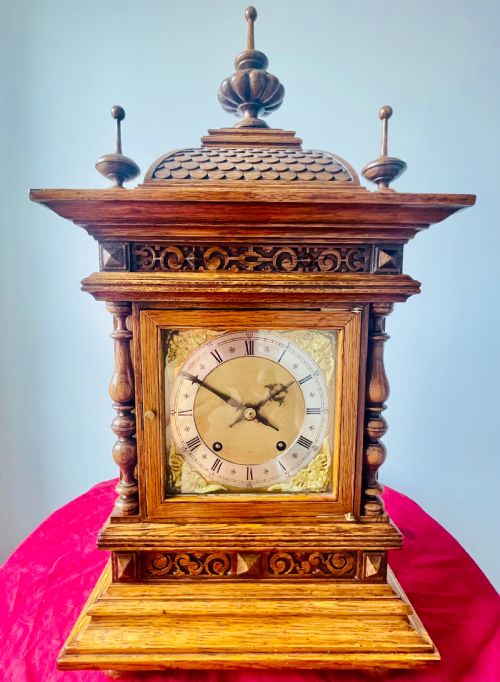
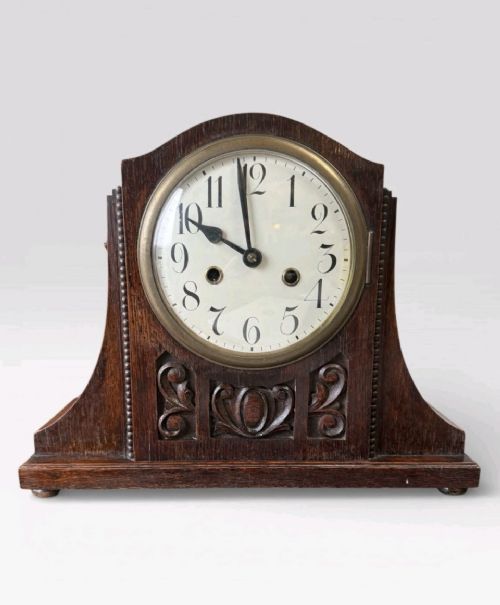
An oak bracket mantel clock stands as a sturdy timepiece designed for shelf, mantel, or bracket placement, featuring timber cases shaped across various eras from the nineteenth century into the mid-twentieth century.
The pieces on this page span styles such as Victorian, Edwardian, Gothic Revival, Art Deco, and Amsterdam School, with solid or pollard oak forming the primary visual identity.
Makers and retailers range from prominent London watchmakers to prolific German workshops, producing everything from simple timepieces to complex triple fusee and quarter-striking musical machines.
How they were made
Clockmakers utilised solid oak, pollard oak, and macassar ebony for the exterior housing, sometimes applying hand-carved detailing or geometric Amsterdam School inlays.
Movements rely on brass components, steel springs or fusee chains, and glass panels protecting enamel or silvered metal dials.
One robust boardroom clock arrives bearing the military designation of an RAF officers' mess.
What varies in quality
The sophistication of the internal movement dictates much of the standing, separating basic single fusee timepieces from complex triple chain fusee or quarter-striking musical mechanisms.
Cabinetry execution marks the difference between standard production boxes and pieces displaying superior pollard oak figuring, architectural gothic carving, or distinctive regional design.
Winterhalder And Hofmeier·George Wadham·Jas Whitelaw·Pennington·DeLa Salle And Christie·Payne And Co·James Voak·Webster·Asprey·Lenzkirch
The Oak Bracket Mantel Clock Glossary
- Fusee
- A conical pulley used in mechanical clocks to maintain even drive tension as the mainspring unwinds. This mechanism helps regulate timekeeping accuracy across the power reserve.
- Bracket clock
- A portable timekeeper originally designed to sit upon a matching wall bracket. Over time, the term broadened to include larger mantel-style shelf clocks.
- Pollard oak
- Timber taken from trees that have been pollarded, producing tightly clustered burls and highly decorative grain patterns. Cabinetmakers utilised this veneer for visual richness.
Oak Bracket Mantel Clock: Frequently Asked Questions
How do I wind an oak bracket mantel clock?
Use the appropriate key on the winding arbors found on the dial face, turning gently until resistance meets you.
Avoid over-winding the mainspring to protect the internal brass teeth and fusee chains from snapping.
Where should I place a mantel clock?
Select a stable, level surface away from direct sunlight, central heating vents, and damp exterior walls to protect the oak case.
A firm mantel or dedicated wall bracket prevents vibrations from interfering with the pendulum or balance wheel.
How do I tell an Edwardian clock from a Victorian one?
Victorian examples often favour heavy architectural carving, dark ebonised accents, or gothic revival influences derived from nineteenth-century design tastes.
Edwardian pieces generally lean towards lighter golden oak tones and cleaner, more restrained proportions influenced by early twentieth-century domestic trends.
What is a ting-tang movement?
A ting-tang striking train uses two hammers striking two different bells or gongs to sound the passing of the quarters.
It offers a distinct musical chime sequence preceding the full hour strike without the complexity of a full Westminster melody.