





Oak Bedroom Chair
An oak bedroom chair brings solid timber warmth and honest utility to a private dressing space.
Oak Bedroom Chair
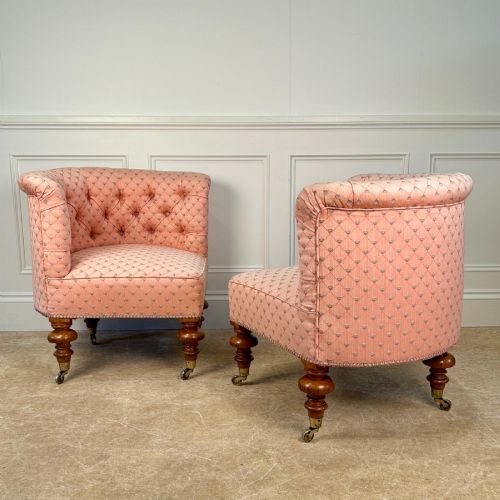
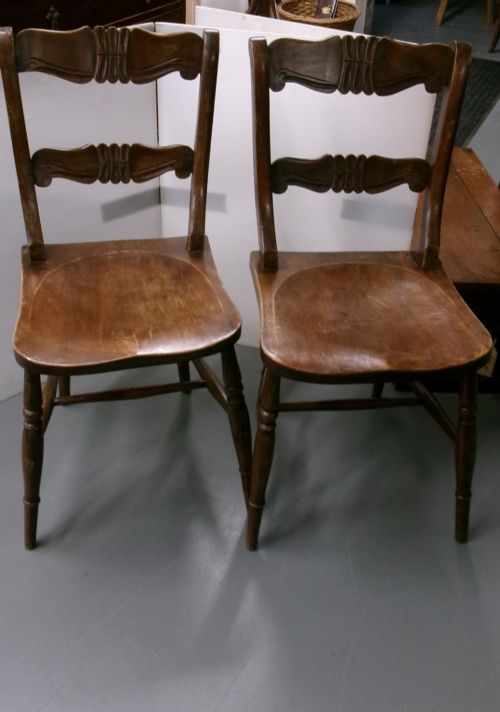
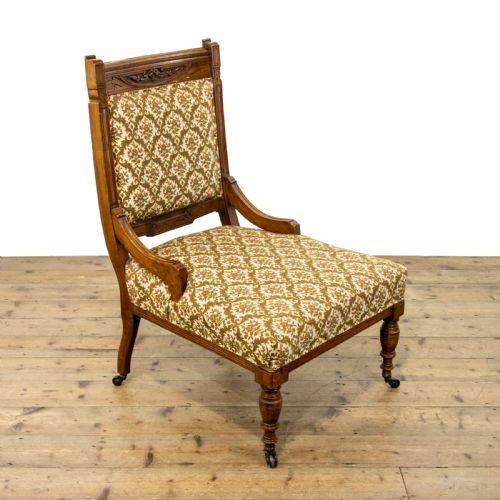
An oak bedroom chair serves as a practical seat for dressing spaces, guest rooms and private parlours. When searching for an oak bedroom chair, buyers encounter diverse forms ranging from low-slung occasional seats to carved nursing chairs.
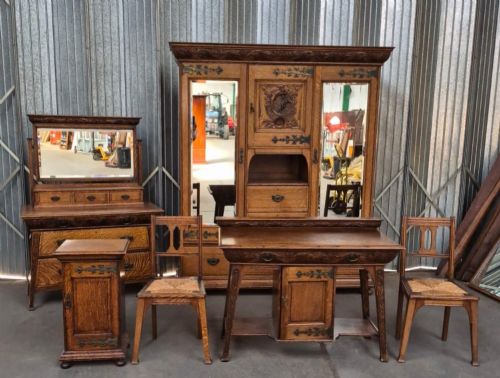
The pieces appearing on this page span the Victorian and Edwardian eras, alongside later Arts and Crafts and Art Deco examples. Many of these chairs arrived as part of larger matching bedroom suites or stood alone as versatile side seating.
Origins stretch from the mid-nineteenth century into the early twentieth century, reflecting shifting domestic habits. Makers often adapted traditional dining and hall chair patterns into smaller proportions suited for intimate domestic quarters.
What varies in quality
Quality rests primarily on the crispness of the woodwork and the integrity of the original joints. Pieces originating from known workshops or forming part of documented bedroom suites often display superior timber selection and deeper relief carving.
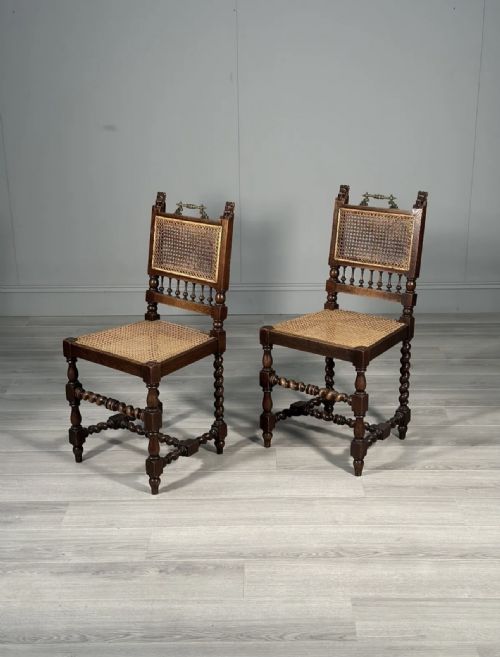
The condition of secondary materials like cane webbing, rush seating, and period upholstery fabrics determines the preservation state. Chairs retaining intact original turnery and structural stability command greater appreciation from collectors.
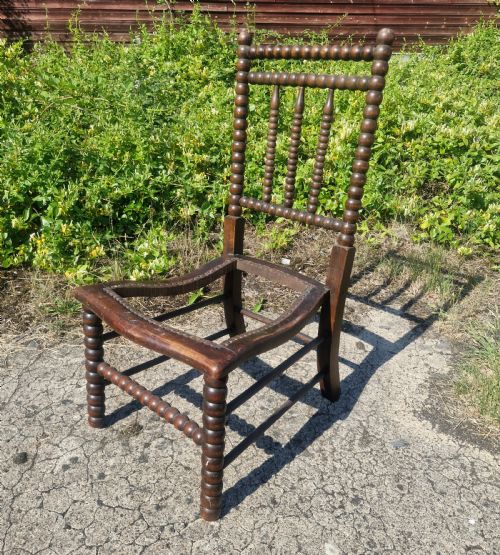
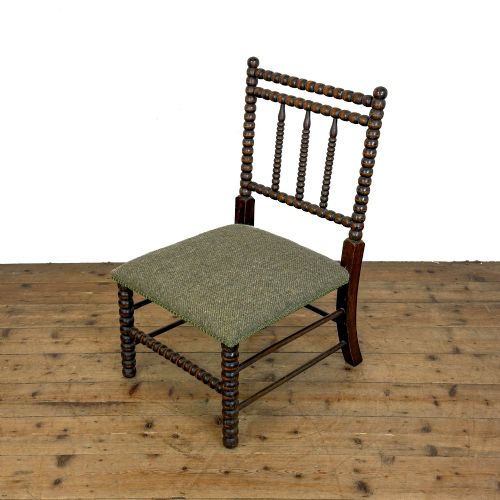
Low bobbin chairs let nineteenth-century sitters gaze into dressing table mirrors without tangling their elaborate petticoats.
Heals·Gillows of Lancaster
The Oak Bedroom Chair Glossary
- Bobbin chair
- A seating frame constructed with turned wooden bobbins resembling spools of thread. This distinctive spindle-turning technique gained popularity during the Victorian period.
- Bergere
- An enclosed armchair featuring woven cane or rattan panels on the back and sides. This French-inspired form provides a lighter visual weight within a furnished room.
- Nursing chair
- A low-seated upholstered chair designed for comfortable infant feeding and personal grooming. These pieces sit closer to the floor than standard parlour seating.
- Barley twist
- A decorative spiral carving resembling a twisted loaf of bread or barley sugar. Craftsmen utilised this turning method on chair legs and structural supports.
- Rattan
- A pliable vine material woven to create resilient seat inserts and back panels. It offers flexible support while maintaining an airy appearance.
Oak Bedroom Chair: Frequently Asked Questions
How do I use an oak bedroom chair today?
These pieces function well as corner accents, dressing table seats, or bedside surfaces for clothing. Their modest proportions allow them to fit easily into smaller guest rooms without crowding the floor.
Buyers often place them where a sturdy, compact wooden seat is needed for daily use. They bring historic character to modern interiors while remaining entirely practical.
Were these chairs originally part of larger sets?
Many examples began life as components of matching bedroom suites alongside wardrobes and dressing chests. Others were produced individually as occasional or nursing chairs for domestic use.
Examining the timber grain and construction methods helps determine whether a pair or single chair belonged to a larger suite.
What is the difference between a hall chair and a bedroom chair?
Hall chairs generally feature rigid wooden seats and tall, decorative backs intended for transient use near an entryway. Bedroom variants prioritise comfort, often incorporating lower seats, upholstery, or cane panels.
Many antique pieces share overlapping characteristics because makers adapted similar frames for different domestic rooms.
How should I care for antique oak furniture?
Maintain the timber by keeping pieces away from direct heat sources and sudden humidity shifts. Regular dusting with a soft, dry cloth preserves the finish without building up residue.
Protect upholstered or cane seats by avoiding excessive weight and inspecting woven panels periodically for signs of drying.