


Vintage Upholstered Oak Chair
A vintage upholstered oak chair brings solid timber frames and tactile textiles together across dining rooms and libraries.
Vintage Upholstered Oak Chair
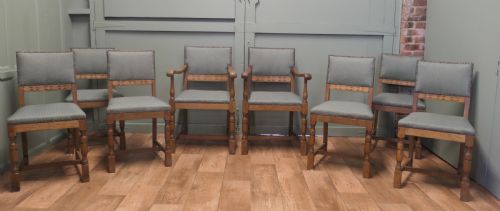
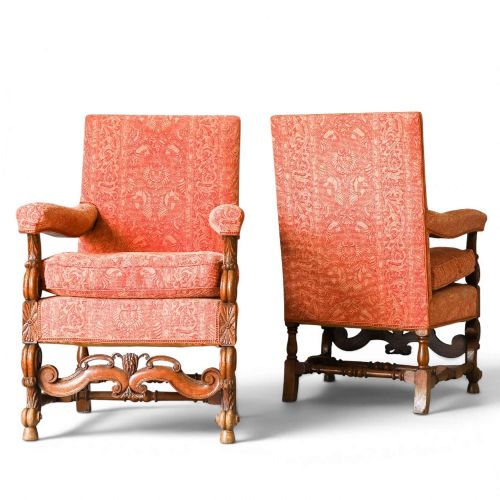
A vintage upholstered oak chair encompasses a broad sweep of domestic seating from the nineteenth and twentieth centuries, where sturdy hardwood supports meet comfortable padding. Buyers search for these pieces to anchor a room with honest construction, choosing between utilitarian side chairs, substantial library armchairs, and matching sets built for the dining table.
The selection here draws heavily on the Edwardian era, the nineteen-thirties, and Victorian decades, alongside earlier revivals like Arts and Crafts and Jacobean styles. Armchairs and larger sets of dining chairs dominate the listings, offering both high-backed formality and low-slung fireside comfort in solid oak.
Materials and construction
Makers relied on solid oak for the primary frame, often selecting golden or dark tones that showcase natural grain and quarter-sawn figuring. Joinery typically involved traditional tenons and dowels to withstand decades of daily use.
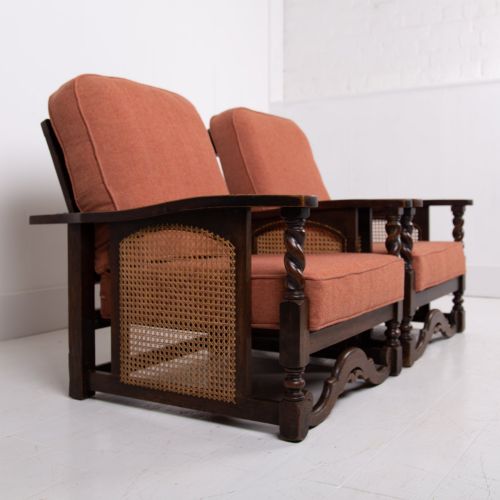
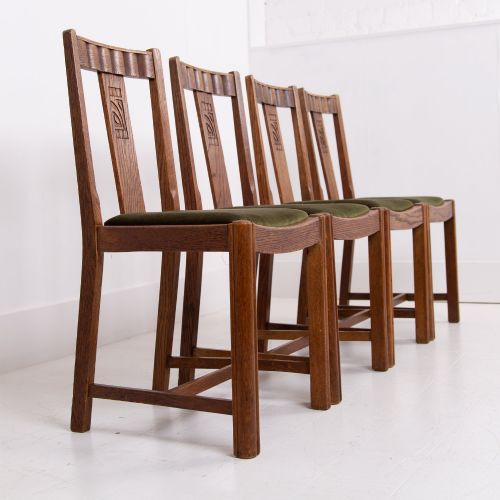
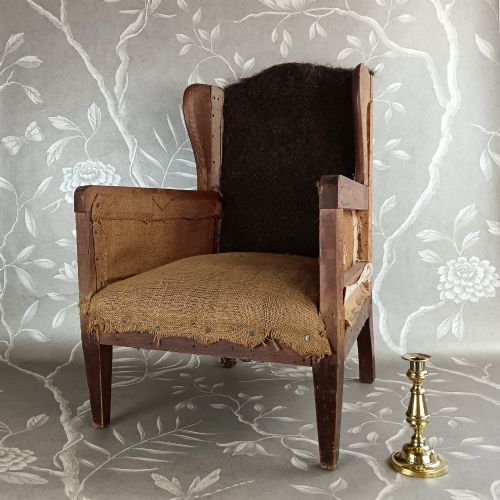
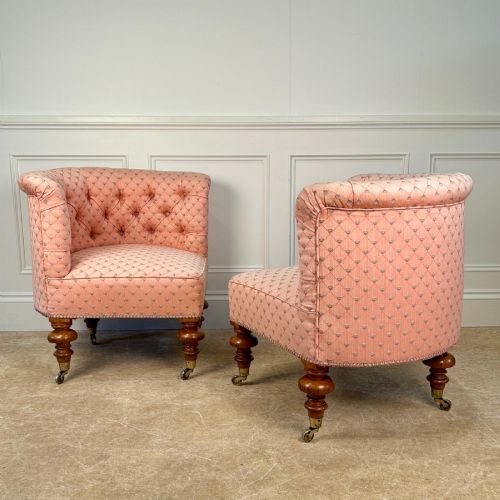
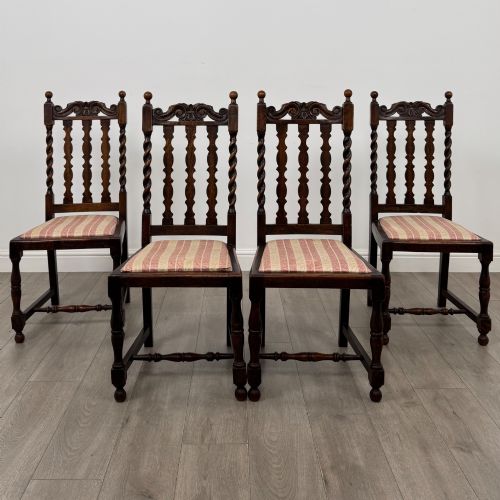
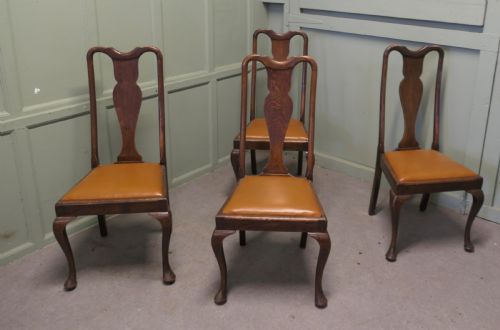
Upholstery was applied over supportive webbing and stuffing, finished in leather, velvet, or woven fabric secured with brass tacks or piping. Many pieces pair carved or barley twist timber frames with supple hide or modern replacement cushions.
Materials paired with the oak frame include supple leather, woven textiles, brass tacks, and tactile velvet across various seating forms.
Gradations in quality
Quality depends upon the crispness of the timber carving and the integrity of the frame joints rather than the presence of applied ornamentation. Superior examples display dense, well-figured oak with hand-shaped components that fit tightly without supplemental bracing.
The standard of the upholstery work also dictates the tier of the piece, where traditional hand-stitched stuffing and high-grade leather or heavy textiles elevate a chair far above mass-produced alternatives.
The Vintage Upholstered Oak Chair Glossary
- Barley twist
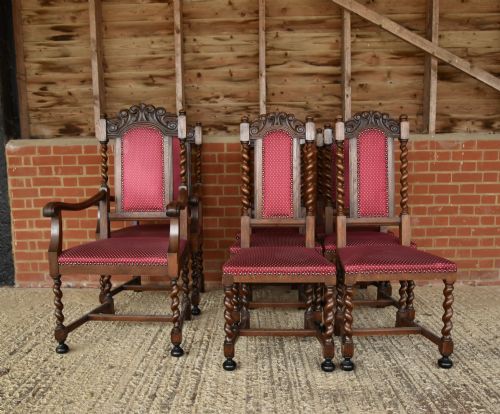
- A turned wooden furniture leg or stretcher carved in a spiral resembling a twisted barley stalk. This decorative motif appears frequently on nineteenth and early twentieth century oak frames.
- Bergere
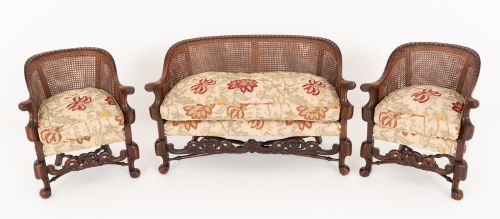
- An enclosed upholstered armchair with a wooden frame where the sides are often filled with cane or fabric panels. These seats offer a formal yet comfortable profile.
- Arts and Crafts
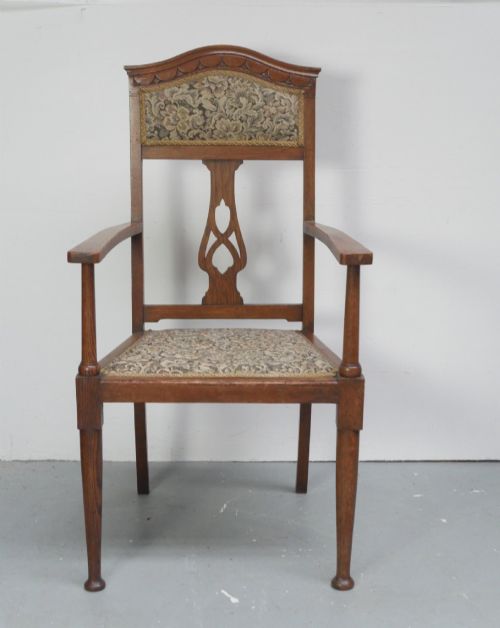
- A design movement prioritising traditional craftsmanship, visible construction, and simple forms over mass production. Pieces from this aesthetic often feature unadorned golden oak and honest joinery.
- Library armchair
- A substantial, deeply padded seat designed for reading rooms and studies, usually upholstered in leather or heavy fabric. They prioritise ergonomic support and durability.
Vintage Upholstered Oak Chair: Frequently Asked Questions
How do I date a vintage oak chair?
Dating relies on observing the combination of style elements, tool marks, and hardware types used within the frame construction. Earlier pieces often exhibit hand-sawn timber and pegged joints, whereas twentieth-century examples integrate machine-turned components and modern fixings.
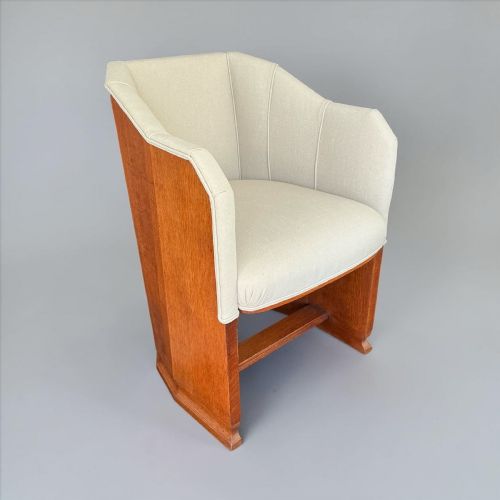
Comparing the silhouette against documented revival periods, such as Jacobean or Art Deco, narrows the decade of origin. Consulting the listed period alongside stylistic details provides a reliable guide to the age of the timber.
Are these chairs suitable for daily dining?
Many oak chairs listed here were specifically built as dining sets and remain entirely practical for everyday meals. Their sturdy hardwood frames withstand regular use, provided the joints remain tight and stable.
For heavy daily service, verify that the seat height matches your table and that the upholstery fabric is durable enough for frequent sitting.
How should I care for the oak frame?
Maintain the timber by dusting regularly with a soft, dry cloth and applying a quality beeswax occasionally to nourish the grain. Avoid placing chairs in direct sunlight or near heat sources, which can dry out and split the oak.
Keeping humidity levels stable in the room preserves both the wooden joints and the integrity of the original or replacement upholstery.