


Gothic Arch Back Chair
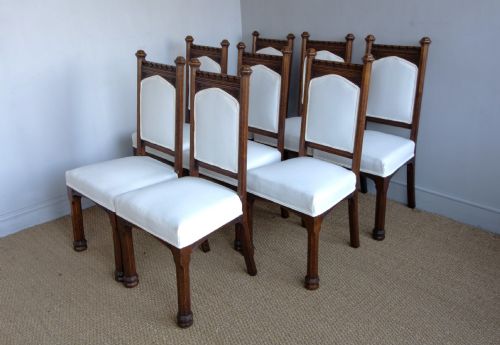
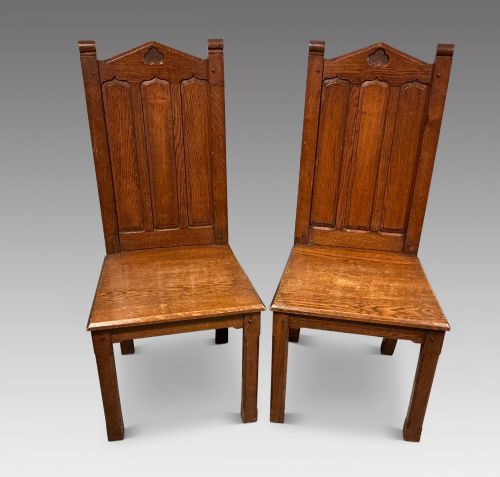
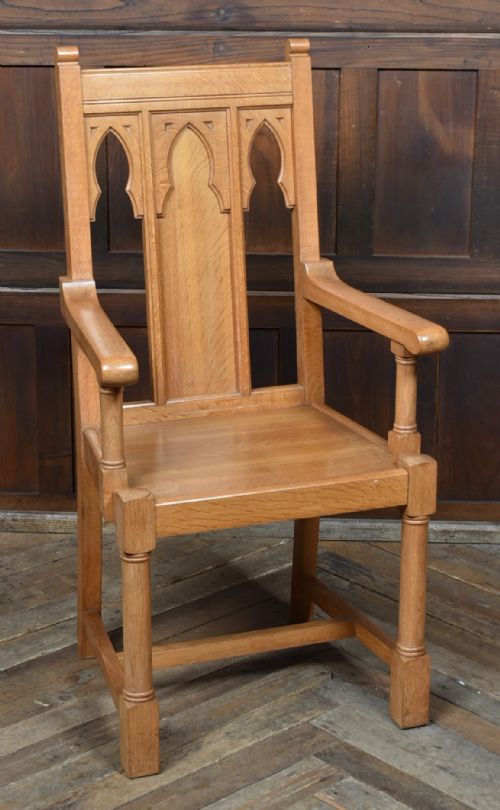
These gothic arch back chair pieces bring striking pointed architectural tracery into domestic seating, offering a dramatic silhouette that anchors a room.
Gothic Arch Back Chair
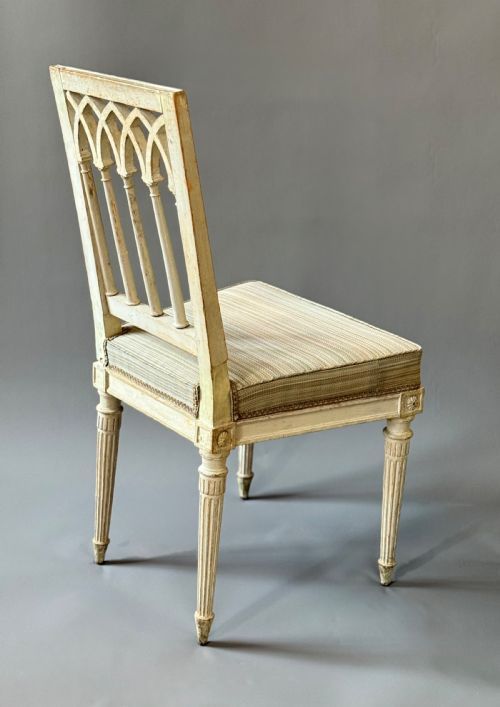
A gothic arch back chair draws upon medieval ecclesiastical architecture, translating stone window tracery and pointed arches into timber seating. These pieces emerge across several distinct eras, spanning 18th-century Gothick interpretations through to robust Victorian Gothic Revival revivals.
Buyers encounter various forms ranging from sturdy oak hall chairs and upholstered armchairs to sets of dining chairs and commanding chapel thrones. The Victorian era produces the highest concentration of examples, frequently deploying carved pointed arches directly into the wooden splats.
Distinctions in Quality
The sophistication of the carved tracery defines the upper tier of these pieces, separating competent vernacular work from ambitious cabinetmaking. Crisp execution of cusps, trefoils, and lancet openings within the arch back indicates superior workshop skill.
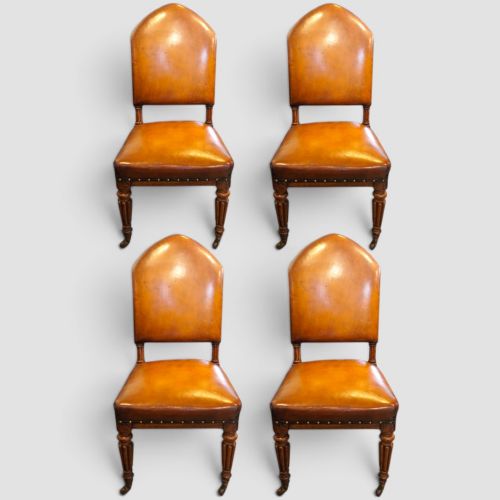
Material selection and timber figure dictate overall stature, with dense mature oak and well-chosen mahogany commanding greater presence than softer pine alternatives. Integrated details such as buttoned leather upholstery and intact brass fittings elevate the finish of armchairs and dining suites.
Object forms span dining chairs, side chairs, hall chairs, armchairs, and chapel thrones.
Norwich Maker·A W N Pugin
The Gothic Arch Back Chair Glossary
- Gothic Revival
- An architectural and decorative style reviving medieval forms, prominent during the Victorian period. It influences furniture through pointed arches and ecclesiastical motifs.
- Tracery
- The stonework framework supporting glass in a Gothic window, adapted by cabinetmakers for chair backs. This pattern forms the primary visual identity of the style.
- Splat
- The vertical central strip of wood in the back of a chair. In these pieces, it is frequently pierced and carved to resemble an architectural arch.
- Windsor Chair
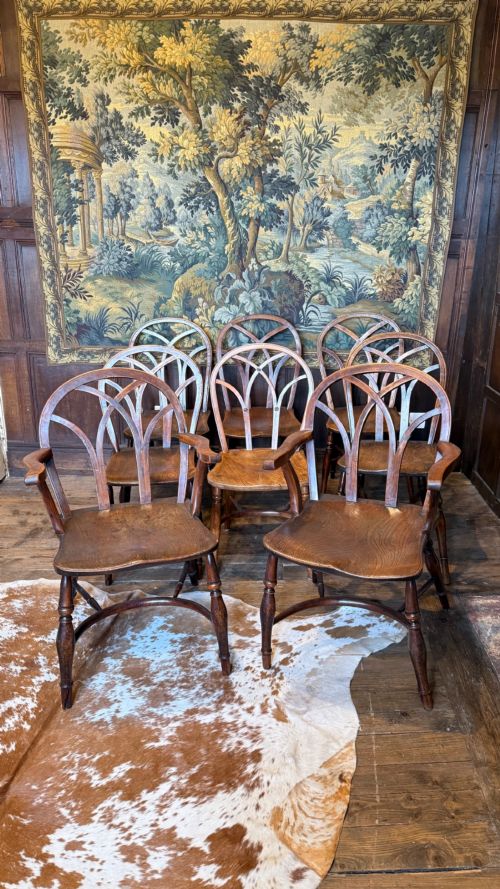
- A traditional seating form featuring a solid wooden seat into which the legs and back spindles are raked directly. Provincial makers apply arched backs to this vernacular structure.
- Chapel Throne
- A large, high-backed ceremonial chair originating from ecclesiastical settings. These monumental pieces often incorporate heavy oak framework and architectural canopies.
Gothic Arch Back Chair: Frequently Asked Questions
What periods do these chairs date from?
The selection spans from 18th-century Gothick experiments through the height of Victorian Gothic Revival production up to the early 20th century. Georgian pieces sit alongside robust Victorian examples and later chapel furniture.
Dates are established through timber characteristics, construction methods, and stylistic interpretations of medieval architectural motifs.
How were gothic chairs used historically?
These pieces served multiple domestic and institutional functions, from formal dining sets to imposing hall chairs placed in entranceways. Grand armchairs and throne chairs typically occupied studies, libraries, or ecclesiastical interiors.
Their dramatic visual weight made them statement pieces rather than casual everyday seating.
Are upholstered seats original?
Many examples feature leather, fabric, or buttoned leather pads that reflect period reupholstery or replacement over decades of use. Solid wood variants retain their original timber seats without padding.
Examining the underlying webbing and tack holes helps determine the age and history of the upholstery.
How do I distinguish Georgian Gothick from Victorian Gothic?
Georgian Gothick pieces, emerging around 1800, tend to utilise lighter mahogany frames with whimsical, playful interpretations of medieval lines. Victorian iterations from the 1850s onward display heavier, more archaeological accuracy inspired by serious architectural theory.
Oak is far more common in the later Victorian period, often featuring deep, crisp relief carving.