
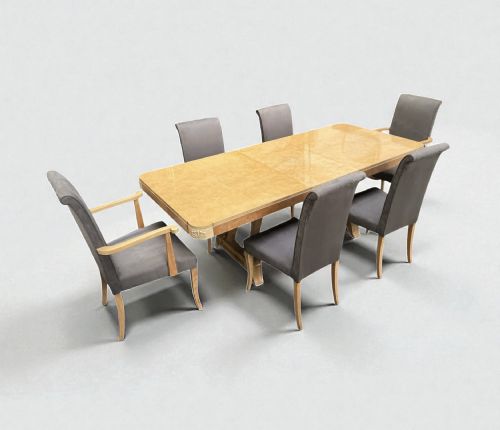


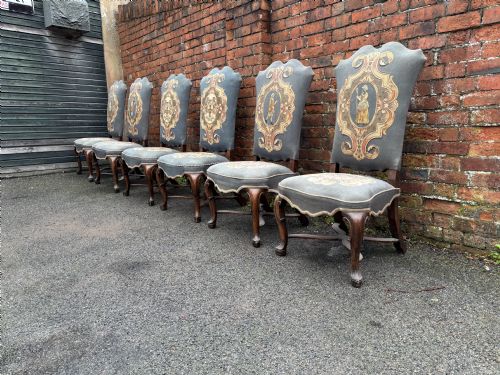


Antique Grey Dining Chair
An antique grey dining chair brings restrained elegance to a room, offering tactile timber frames and muted painted surfaces shaped by centuries of European craftsmanship.
Antique Grey Dining Chair
The antique grey dining chair category encompasses seating designed for the table across diverse periods, including the eighteenth and nineteenth centuries as well as the early twentieth century. Buyers seeking this aesthetic encounter forms rooted in French, Italian, and British design traditions, ranging from side chairs to grander armchairs.
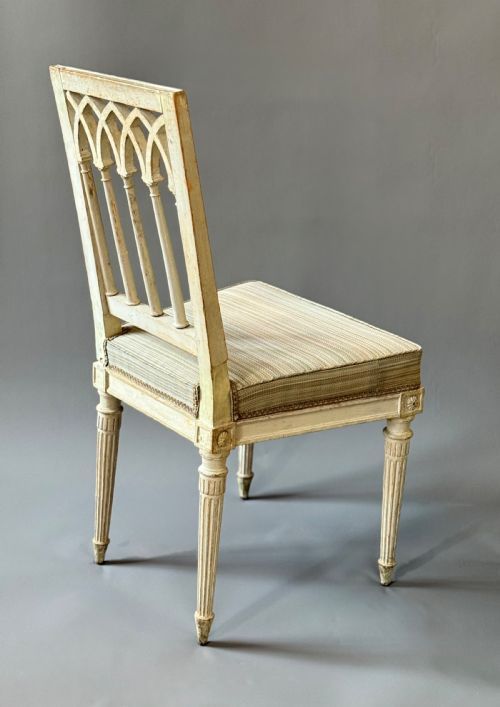
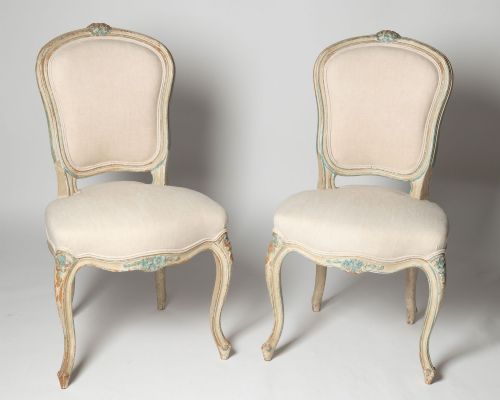
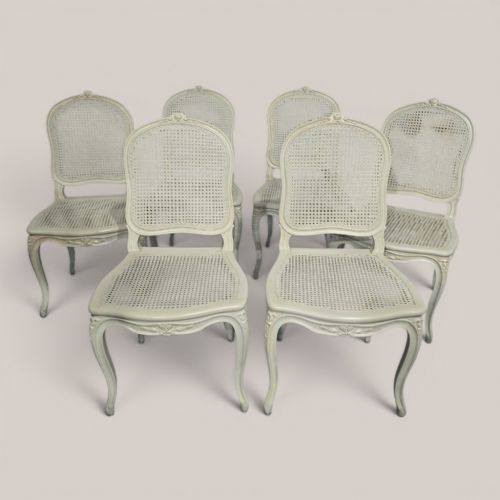
The painted grey surfaces found in these listings frequently reflect eighteenth-century tastes or later revivals such as the Gustavian style. Painted wood frames dominate this specific visual subset, often complemented by exposed walnut, mahogany, or oak structures beneath weathered finishes.
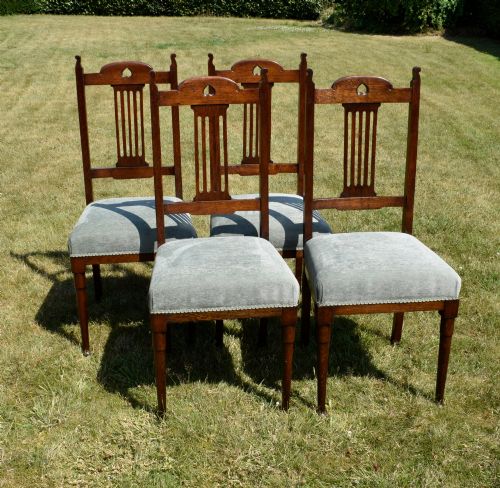
Sets frequently appear alongside individual pieces and pairs, accommodating both intimate dining spaces and larger gatherings. Styles stretch from Louis XV and French Neoclassical to Arts & Crafts and Victorian, showing how historical forms adapt to muted decorative schemes.
Materials and construction
Makers utilised solid timbers such as walnut, mahogany, oak, and beech to construct robust frames capable of enduring daily use. Carved details on these wooden elements display hand-tooled execution, particularly evident in floral motifs, scrollwork, and gadrooning.
Upholstery materials recorded in the evidence include silk velvet, decorative textile, and standard fabric, secured to support padded seats. Brass fittings occasionally provide functional or decorative accents, completing the structural assembly.
Listings feature dining chairs spanning the 18th century through the Victorian period and into the 1930s, utilising beech, mahogany, walnut, and painted wood.
Markers of quality
Superior examples reveal themselves through the crispness of hand-carved ornamentation and the integrity of the underlying timber frame. Finer execution shows in the balanced proportions of cabriole legs, balloon backs, or straight uprights.
The quality of the painted finish and the authenticity of the surface patina separate exceptional pieces from later decorative adaptations. Cohesion within assembled sets further distinguishes the higher tier of dining seating.
Howard and Co London·Hille
The Antique Grey Dining Chair Glossary
- Gustavian style
- A Swedish interpretation of French neoclassical design characterised by simplified classical motifs and pale painted finishes. It provides the visual foundation for many muted grey chairs.
- Louis XV style
- A mid-eighteenth-century French aesthetic noted for asymmetry, flowing curves, and cabriole legs. Chairs in this manner display organic scrollwork and refined carving.
- Balloon back
- A rounded, continuous backrest shape popular during the Victorian era. This profile offers ergonomic support while presenting an elegant silhouette around a dining table.
- Side chair
- An upright chair without arms designed primarily for use at a dining table. These pieces maximise seating capacity in formal and casual settings alike.
- Carved walnut
- A hardwood medium prized for its rich grain and suitability for intricate chisel work. Walnut frames hold fine sculptural details without splitting.
Antique Grey Dining Chair: Frequently Asked Questions
How do I date a grey painted chair?
Dating relies on examining the construction methods, tool marks, and timber species hidden beneath the painted surface. Stylistic cues from periods like the eighteenth century or the Victorian era also guide identification.
Paint layers themselves require careful observation to distinguish original decorative finishes from later applications. Secondary woods inside the frame often reveal the true manufacturing era.
Are these chairs suitable for daily dining?
Most antique dining chairs are built from solid hardwoods like mahogany, walnut, or oak, making them structurally robust for regular use. Traditional joinery ensures they withstand the demands of a modern household.
Upholstered seats can be maintained or renewed using appropriate textiles to match contemporary interiors. Ensuring the frame remains tight at the joints is the main consideration for daily seating.
How do I mix different chair styles?
Combining chairs from related aesthetic traditions, such as Gustavian and French Neoclassical, creates a curated dining arrangement. Shared elements like a grey painted finish provide visual continuity across diverse forms.
Matching heights and seat proportions ensure comfort and balance around the dining table. Restraint in the number of contrasting styles keeps the overall scheme unified.
What is the difference between side chairs and armchairs?
Side chairs lack armrests and are designed to tuck neatly beneath the dining table to save space. They form the core seating of any dining set.
Armchairs feature integrated supports for the arms and traditionally sit at the head of the table. They offer a more substantial presence and enhanced comfort during longer gatherings.