

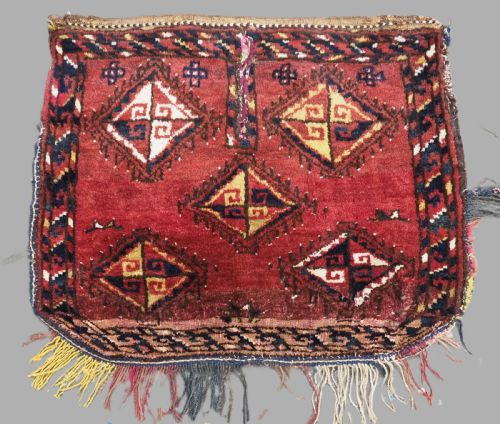


Nomadic Woven Bag
When you search for a nomadic woven bag, you are looking at functional tribal textiles created for portable domestic life across Persia, Central Asia, and the Caucasus.

Nomadic Woven Bag
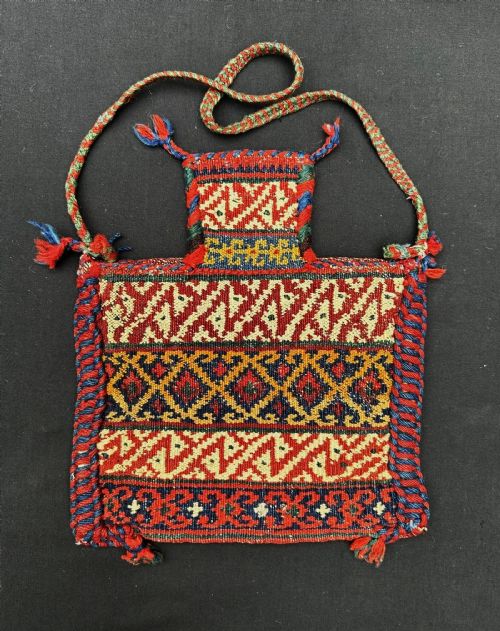
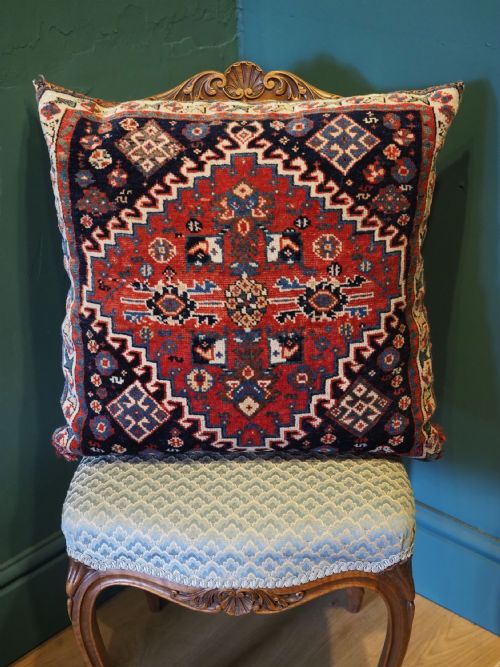
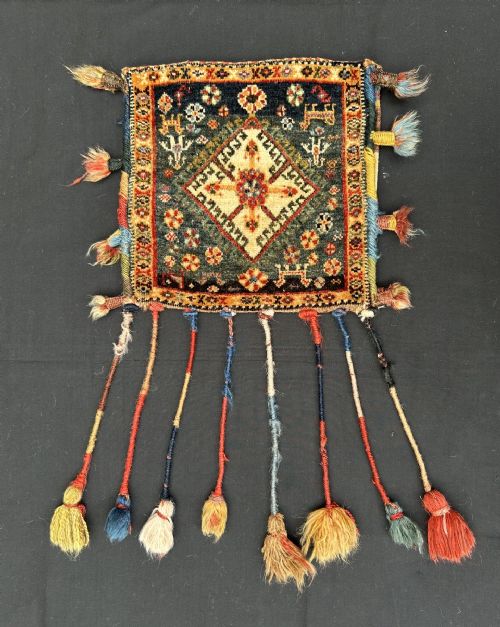
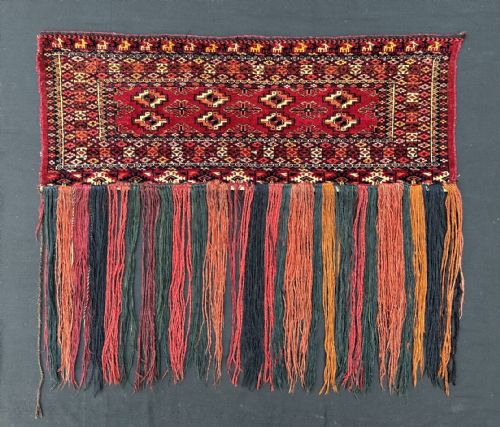
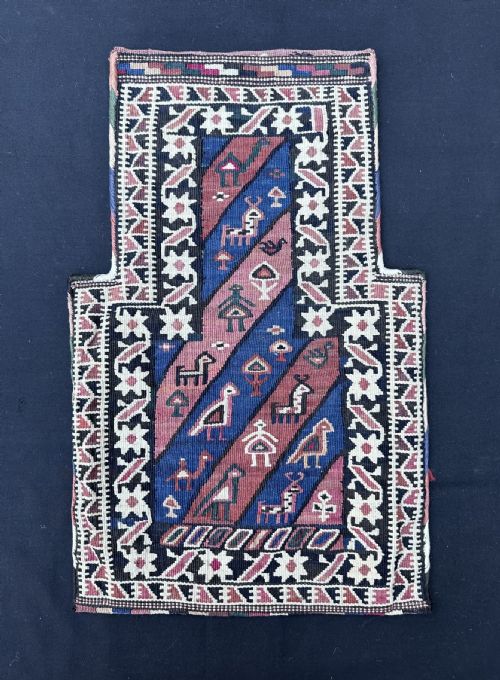
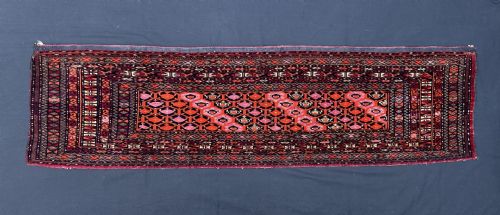
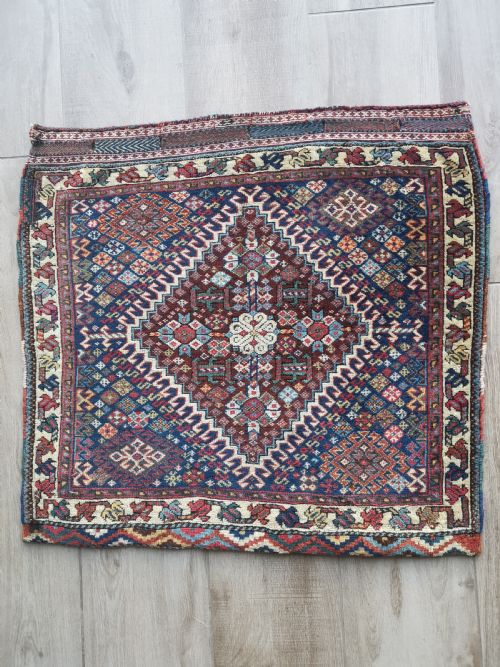
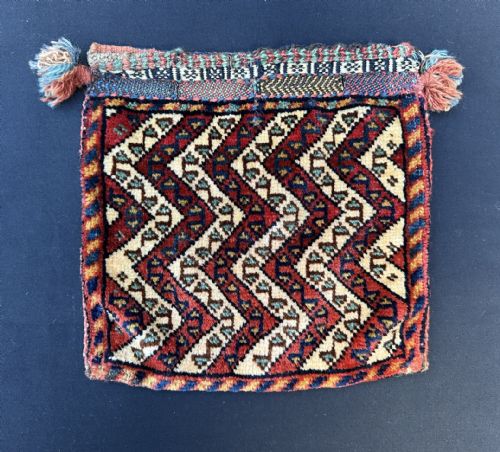
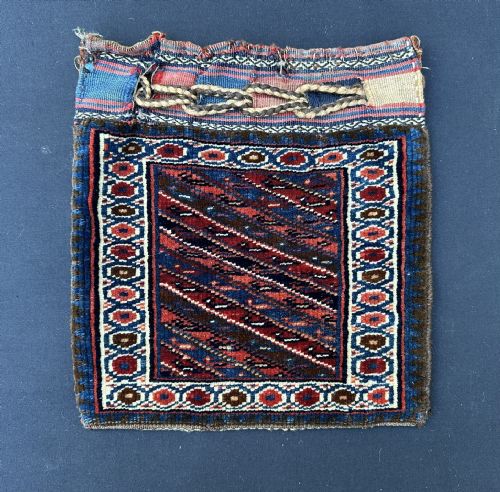
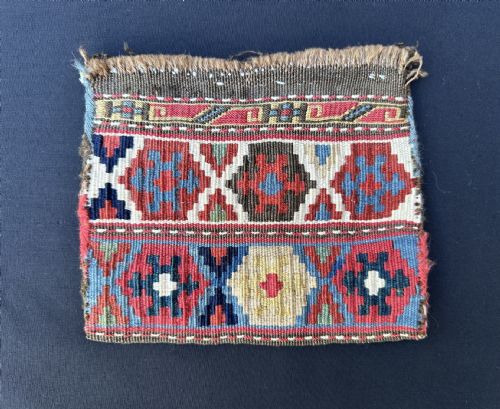
A nomadic woven bag serves practical functions within tribal encampments, ranging from salt and tobacco storage to vanity accessories and saddle transport. The items found on this page span the mid-nineteenth century through the early twentieth century, originating from groups such as the Qashqa'i, Afshar, Baluch, and various Turkmen tribes. These utilitarian objects include specialised formats like the chanteh, torba, kap, and khorjin, each tied to specific domestic or migratory uses.
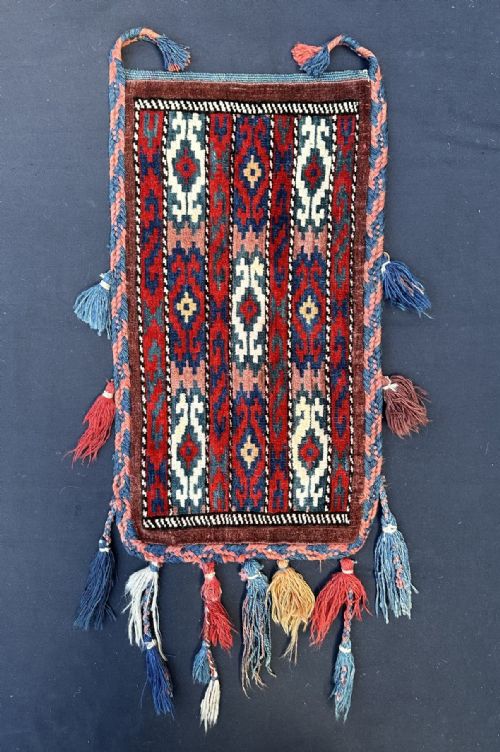
Most examples represent bag faces or complete pouches woven by women within tribal confederacies and regional nomadic groups. The structural variety includes half-khorjins, salt bags, and spindle bags, often preserved either as standalone pile-woven faces or with their original plain weave backs intact. Their forms reflect the material requirements of pastoral migration, where storage had to be durable, lightweight, and easily packed.
How they were made
These textiles rely predominantly on hand-spun wool for the foundation and pile, dyed using natural colorants derived from local plants and minerals. Artisans combined wool with supplementary materials such as cotton for structural stability, alongside occasional silk highlights used for decorative emphasis in specific tribal regions.
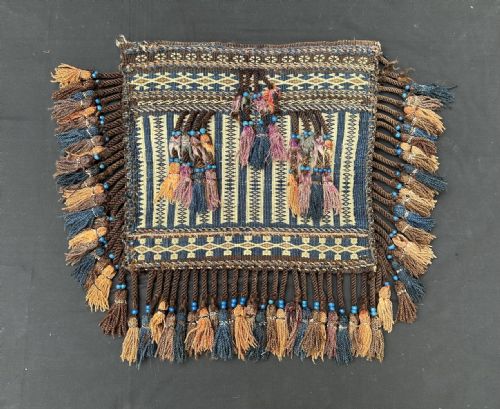
Surface ornamentation frequently incorporates specialised techniques like pile weaving, flatweave backings, and embroidered details. Accents including glass beads and cowrie shells appear on select pieces, adding tactile dimension to the dense wool structures.
Nomadic Woven Bag Retail Price Guide 2026
Typical asking prices for nomadic woven bag among the pieces listed under this phrase on Sellingantiques today, from the lower quarter to the upper quarter. They describe what is for sale here now, not the wider market.
Geographic origins span South Persia, Khorassan, Azerbaijan, Turkmenistan, and Afghanistan, representing Afshar, Qashqai, Baluch, and Turkmen tribal traditions.
What varies in quality
Quality in these textiles rests upon the density of the knotting and the fineness of the weave, which dictate the crispness of tribal motifs such as guls and geometric lattices. Superior examples display precise execution in symmetrical or asymmetrical knotting, maintaining structural rigidity across the wool foundation.
The vibrancy and depth of the natural dyes significantly influence the visual impact of the piece. Master dyers achieved harmonious saturation without muddiness, ensuring that the wool aged gracefully while retaining distinct colour contrasts between fields and borders.
The Nomadic Woven Bag Glossary
- Chanteh
- A small tribal vanity bag or personal container used by nomads for carrying small possessions. These miniature pouches often feature intricate pile work on the face.
- Gul
- A repeating medallion or floral-like motif native to Central Asian carpet and bag designs. Different tribal groups utilised distinct gul patterns to signal lineage and identity.
- Khorjin
- A double saddlebag used for transport on pack animals during seasonal migrations. Complete examples feature two pouches joined by a central web.
- Torba
- A small storage bag hung inside a Turkmen tent for domestic items. They frequently display wide primary borders and characteristic gull motifs.
- Kap
- A large storage bag utilised by Turkmen tribes for bedding and household goods. These pieces typically present structured formats designed for heavy domestic use.
Nomadic Woven Bag: Frequently Asked Questions
What were nomadic bags used for?
Nomadic tribes utilised these woven bags for practical storage during seasonal migrations across Persia and Central Asia. Specific shapes accommodated salt, tobacco, spindles, vanity items, and riding gear.
Households also relied on larger formats for bedding and general domestic storage within tents. Every bag served an immediate utilitarian purpose tailored to pastoral life.
How do I identify tribal origins?
Tribal attribution depends on characteristic structural patterns, colour palettes, and specific motif vocabulary. Groups like the Qashqa'i, Afshar, and various Turkmen tribes employed distinct design traditions passed through generations.
Familiarity with regional knotting habits and secondary wool colours helps distinguish between neighbouring nomadic confederacies. Detail variations in borders and field guls provide primary clues to geographic provenance.
Are these bags complete with backs?
Many surviving examples consist solely of the decorative pile-woven face separated from the original backing over time. Other pieces retain their plain weave backs, complete with original closure systems or hanging loops.
Listings specify whether an item is a bag face or a complete container with its reverse intact. Both formats represent authentic remnants of nineteenth and early twentieth-century tribal weaving.
How should I display a bag?
Smaller pieces like chantehs and salt bags suit mounting on neutral fabric backings or framing behind protective glass. Larger saddle bags and storage pouches can be displayed flat or lightly supported to prevent strain on the wool foundation.
Keeping textiles away from direct sunlight preserves the natural dyes used in their construction. Gentle vacuuming through a mesh screen helps maintain the cleanliness of the dense wool pile.