




Nomadic Wool Prayer Rug
When choosing a nomadic wool prayer rug, you are selecting a piece of tribal textile heritage defined by tribal motifs and hand-knotted pile.
Nomadic Wool Prayer Rug
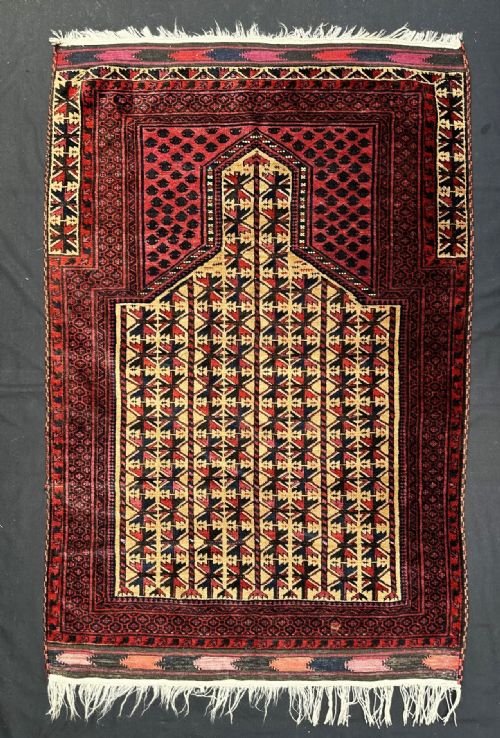
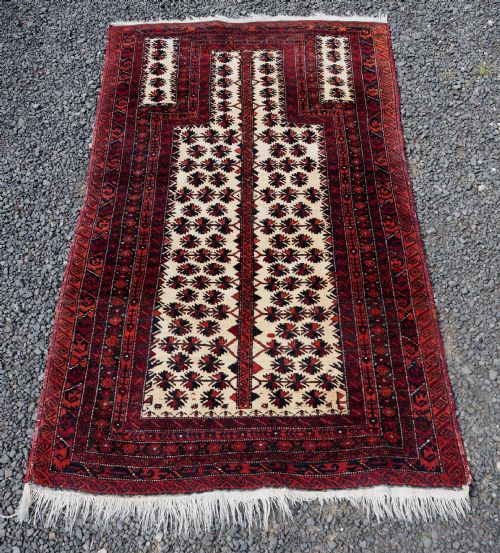
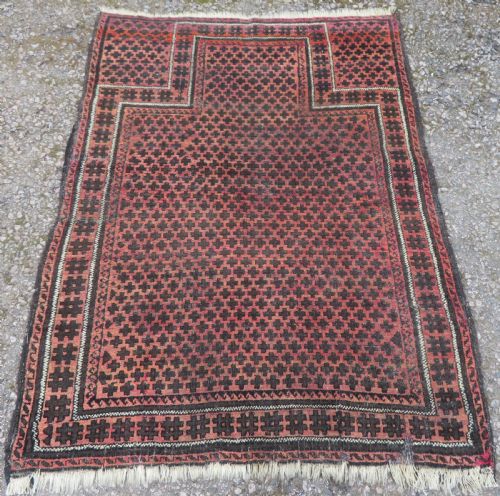
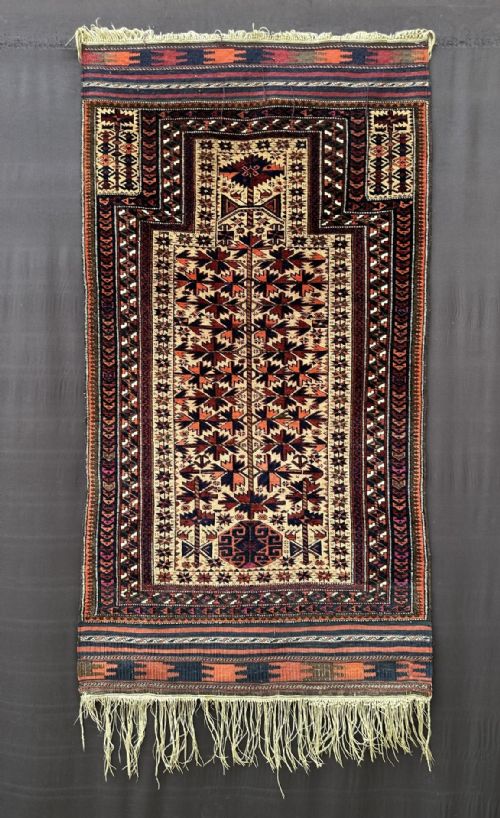
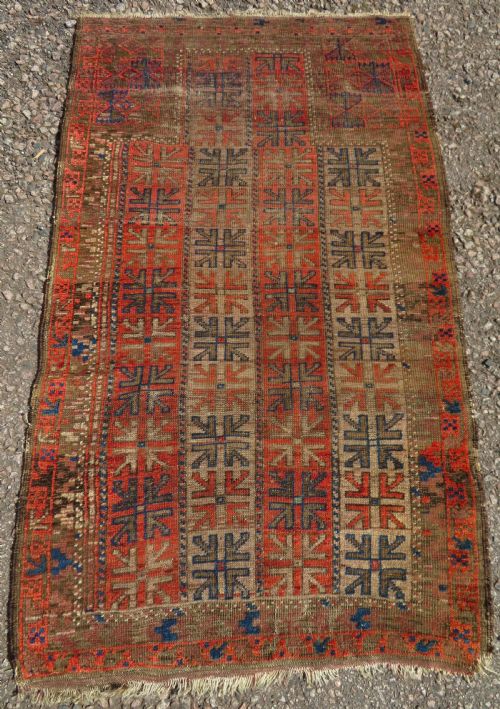
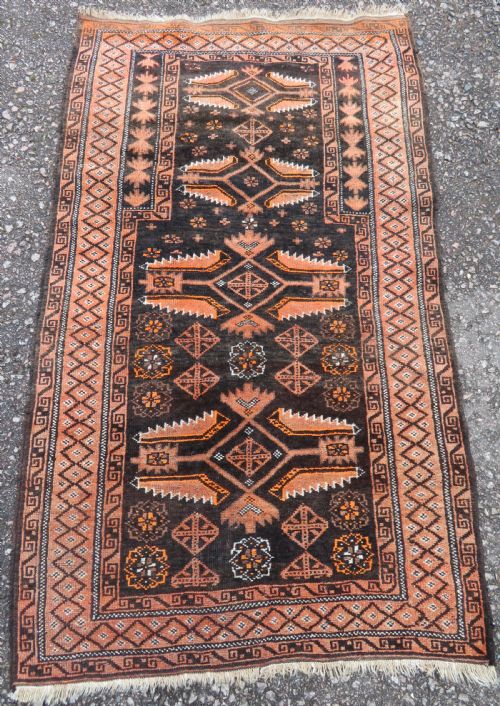
A nomadic wool prayer rug represents the woven artistry of tribal groups such as the Baluch, Timuri, Taimani, and Turkmen tribes working across Persia, Afghanistan, and the wider borderlands. These pieces typically display a distinct architectural arch or niche known as a mihrab, designed to direct the placement of the head during daily devotions. On this page, the pieces you meet most often date from the late nineteenth century through to the early decades of the twentieth century.
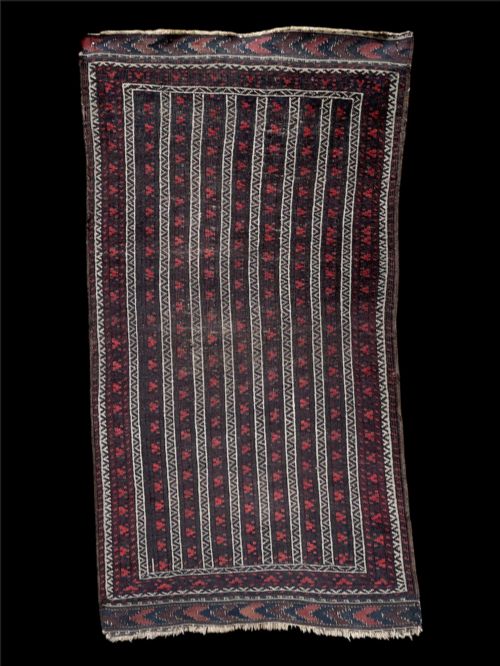
The format usually remains compact and portable, reflecting the itinerant lifestyle of the weavers who produced them on horizontal ground looms. Designs range from single mihrabs to complex multiple arches, tree of life motifs, and geometric repeat patterns rooted in tribal tradition. Alongside standard formats, collectors encounter variants featuring long kilim ends and unusual border configurations.
Materials and construction
Weavers relied principally on hand-spun wool for the pile, often augmented by resilient goat hair for sturdy selvedges and camel hair to provide warm natural ground tones. Natural dyes supplied the deep blues, reds, and browns, while cotton occasionally appeared for specific highlights or foundation elements.
The construction relied on traditional knotting techniques executed on portable looms set up in encampments and villages. This hands-on process meant that yarn preparation, spinning, and dyeing were handled locally, resulting in varied handle and tactile density across different tribal groups.
Nomadic Wool Prayer Rug Retail Price Guide 2026
Typical asking prices for nomadic wool prayer rug among the pieces listed under this phrase on Sellingantiques today, from the lower quarter to the upper quarter. They describe what is for sale here now, not the wider market.
The listings on this page span the late nineteenth century through to the 1930s, highlighting wool, camel hair, and natural dyes.
Evaluating quality and condition
Quality rests in the handling of the wool, the clarity and saturation of the natural dyes, and the crispness of the woven tribal motifs. Finer knot density and well-balanced proportions separate standard village weaving from exceptional tribal work.
Condition plays a part, though a certain degree of distress, surface wear, and oxidized brown or black wool is normal in pieces of this age. The integrity of the foundational weave and the survival of original kilim ends determine how well a piece has weathered its history.
Yaqoub Khani Tribe·Kizil Ayak Turkmen·Saryk Turkmen·Qashqai Kashkuli
The Nomadic Wool Prayer Rug Glossary
- Mihrab
- The arched niche found on prayer rugs, which symbolises the gate to paradise or the direction of prayer. Its shape often helps identify the specific tribal subgroup.
- Seh Mihrab
- A design layout featuring three distinct arches grouped across the field. This variant appears frequently in Baluch and Taimani weaving.
- Kilim end
- The flat-woven section extending beyond the knotted pile at either end of the rug. These often incorporate geometric stripes and protected the textile from fraying.
- Tree of life
- A symbolic motif depicting a branching tree rising from a base, representing eternity and spiritual growth. It forms a central pillar in many camel-ground prayer formats.
- Natural dye
- Colour derived from plant, insect, or mineral sources rather than synthetic chemicals. These dyes mellow gracefully over time, developing subtle tonal variations.
Nomadic Wool Prayer Rug: Frequently Asked Questions
What is a nomadic wool prayer rug?
A nomadic wool prayer rug is a portable, hand-knotted textile created by tribal weavers for personal devotion during travel or daily life. These rugs typically feature a directional prayer arch and geometric motifs characteristic of specific regional tribes.
They served both a functional religious purpose and functioned as portable expressions of tribal identity and storytelling. The materials and patterns reflect the immediate environment of the weaver.
How do I identify a Baluch prayer rug?
Baluch prayer rugs are typically identified by their rich dark ground colours, depressed warps, and geometric or tree of life motifs. They often include distinctive camel hair highlights and flat-woven kilim ends.
Many examples exhibit characteristic minor borders and wool qualities that separate them from larger urban Persian workshop carpets. Regional sub-groups like the Timuri and Taimani share closely related structural traits.
How should I care for an antique prayer rug?
Care involves gentle vacuuming without a beater bar and keeping the textile away from direct, harsh sunlight to protect natural dyes. Professional antique rug cleaning is recommended when dust accumulates within the pile.
Using a suitable underlay helps prevent slipping and reduces friction between the foundation and the floor. Rotating the rug periodically ensures even wear over time.
What does double mihrab mean?
A double mihrab design incorporates two prayer arches within the field, arranged either side-by-side or mirrored vertically. This uncommon layout distinguishes certain tribal prayer formats from standard single-arch designs.
The inclusion of multiple arches adds complexity to the composition and points to specific regional weaving traditions within the broader tribal sphere.