


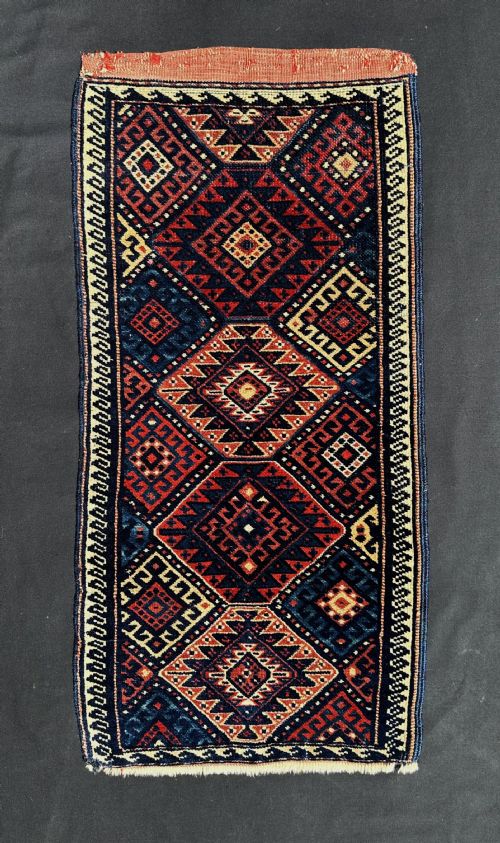

Nomadic Wool Bag Face
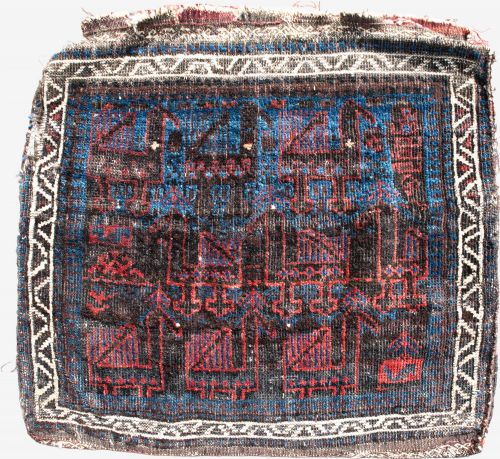
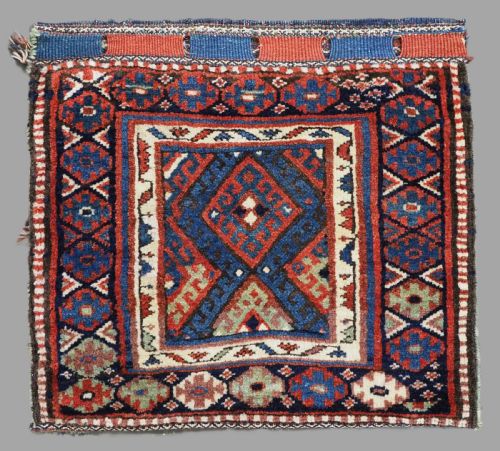
When you search for a nomadic wool bag face, you are looking at the front panel of a utilitarian tribal storage piece woven by pastoral groups in Persia, Central Asia, and the Caucasus.
Nomadic Wool Bag Face
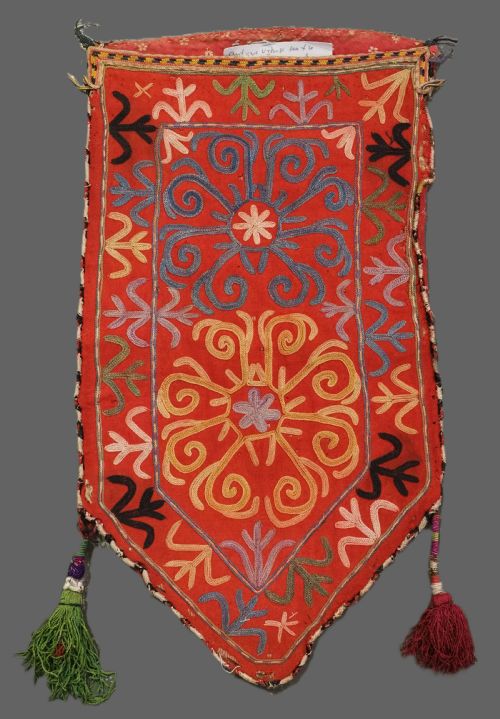
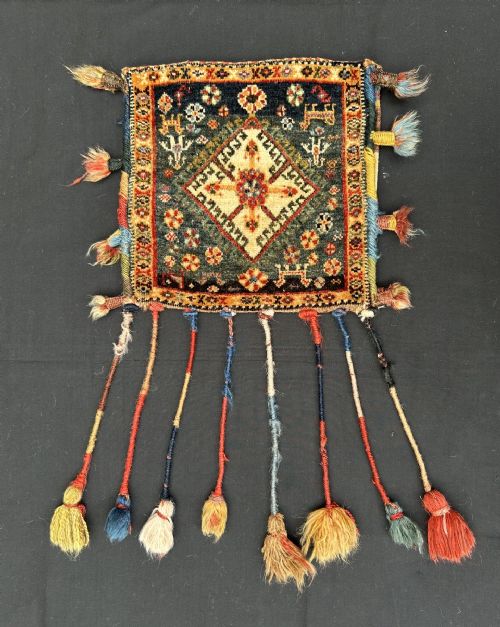
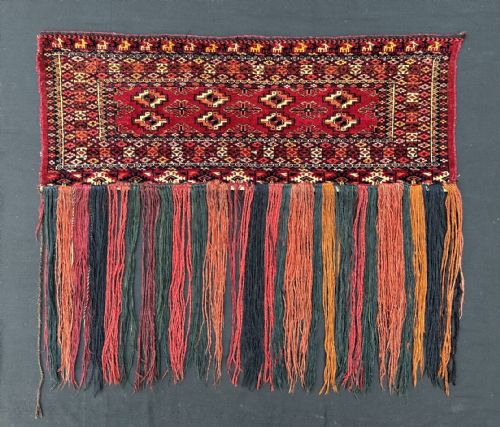
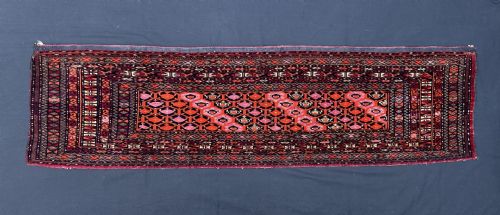
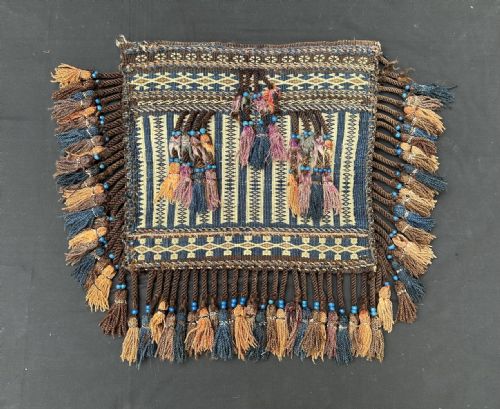
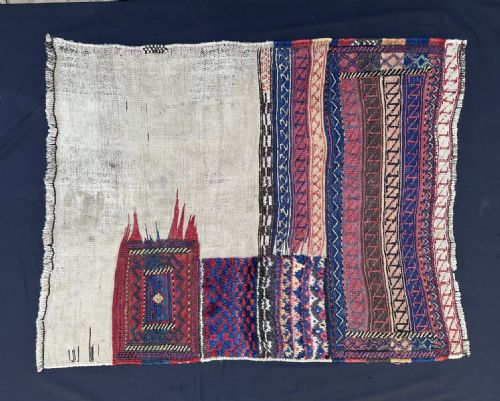
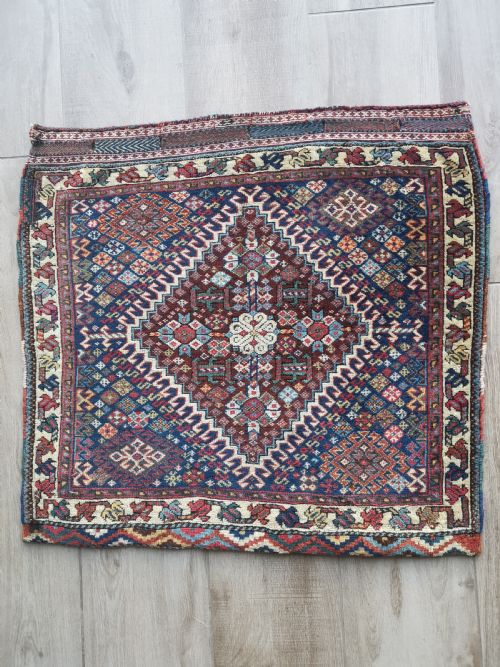
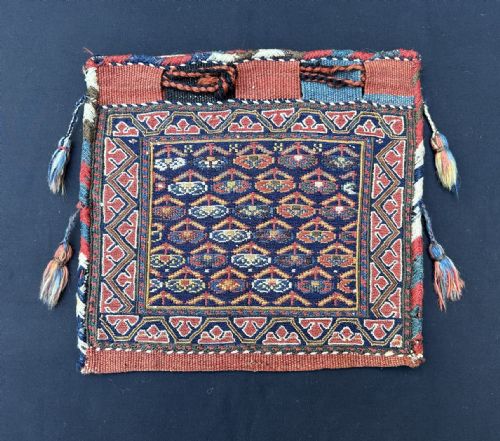
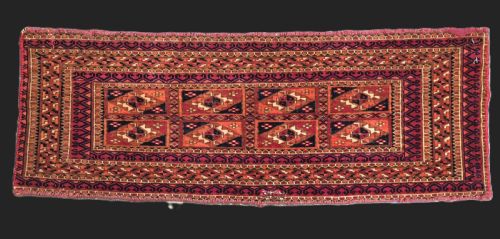
A nomadic wool bag face represents the decorative front portion of a larger utilitarian container, such as a saddlebag, tent storage bag, or grain sack, which was separated from its plain weave back over time. These textiles originate from tribal confederations and pastoral groups including the Yomut, Tekke, Saryk, and Ersari Turkmen, alongside Qashqai, Baluch, Kurdish, and Shahsavan nomads.
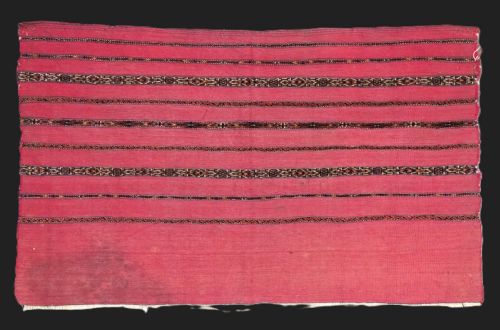
The pieces on this page span the nineteenth and early twentieth centuries, featuring distinct regional formats like the horizontal torba, the larger chuval, the small chanteh, and specialised pouches such as spindle bags and vanity bags. Collectors encounter these items as flat woven panels or pile-woven fragments that preserve the traditional iconography and domestic craft of nomadic life.
Materials and construction
Weavers constructed these panels primarily using hand-spun wool for both the structural foundation and the pile, often incorporating cotton for added stability and silk highlights for specific decorative details. Natural dyes provide the enduring palette, grounding the textiles in rich madder reds, indigos, and earth tones derived from local plants and minerals.
Techniques vary according to tribal origin, combining dense symmetrical or asymmetrical knotting for plush pile surfaces with intricate flatweave structures like sumac and soumac banding. Artisans occasionally integrated glass beads or embroidery onto the face to enhance specific tribal motifs and structural borders.
Listings span the nineteenth and early twentieth centuries, featuring wool, cotton, silk, and glass bead materials across Persian, Turkmen, and Central Asian tribal traditions.
Assessing quality and execution
Quality in these textiles rests upon the density of the weave, the crispness of the drawing, and the depth achieved through natural dye use. Tighter knotting and finer wool preparation allow intricate geometric motifs, such as guls and curled leaf patterns, to maintain structural integrity and visual clarity.
The handling of secondary materials also distinguishes finer examples, where the inclusion of silk highlights or secure flatweave transitions indicates superior workshop or domestic skill. Preservation of the complete format, including original side cords or remaining portions of the plain weave back, contributes significantly to the integrity of the piece.
The Nomadic Wool Bag Face Glossary
- Torba
- A small, horizontal Turkmen wall-hanging bag used for domestic storage inside a yurt or tent. These pieces typically feature wide formats and prominent primary guls.
- Chuval
- A large storage bag utilised by nomadic tribes for bedding and heavy household goods. The faces often display multiple rows of major tribal medallions.
- Khorjin
- A traditional paired saddlebag used for transport on animals during tribal migrations. When separated, the remaining front panel functions as a bag face.
- Gul
- A primary medallion or repeating tribal motif characteristic of Central Asian rug and textile design. Each design often identifies the specific weaving tribe or sub-group.
- Sumac
- A warp-wrapping flatweave technique that creates a durable, textured surface without a cut pile. Artisans frequently employ this method on Shahsavan and tribal storage pieces.
Nomadic Wool Bag Face: Frequently Asked Questions
What were nomadic bag faces used for?
These textiles served practical functions within pastoral households, forming the decorative fronts of bags used to store grain, bedding, clothing, and domestic utensils. Nomads transported possessions in these containers during seasonal migrations and hung them inside tents for daily organisation.
Over decades of use, heavy wear on the plain weave backs often led to the removal of the decorative front panel. Collectors now preserve these surviving faces as independent textile art.
How should I display a bag face at home?
Bag faces adapt well to wall display because their original format mimics a small textile panel or hanging. Mounting them requires professional archival support, such as hand-stitching the textile to a fabric-covered backing board that distributes the weight evenly.
Placing the textile away from direct sunlight protects the natural wool and vegetable dyes from fading. Regular, gentle rotation and low-suction vacuuming through a mesh screen help maintain the condition of the pile and flatweave.
Are these pieces made with natural dyes?
The nineteenth-century pieces on this page pre-date the widespread commercial adoption of synthetic aniline dyes in the region. Weavers relied on natural sources such as madder root for reds, indigo for blues, and weld or other plants for yellows.
Subtle variations in tone, known as abrash, often occur naturally within these organic dye lots. This tonal shifting adds depth and visual movement across the wool surface.