


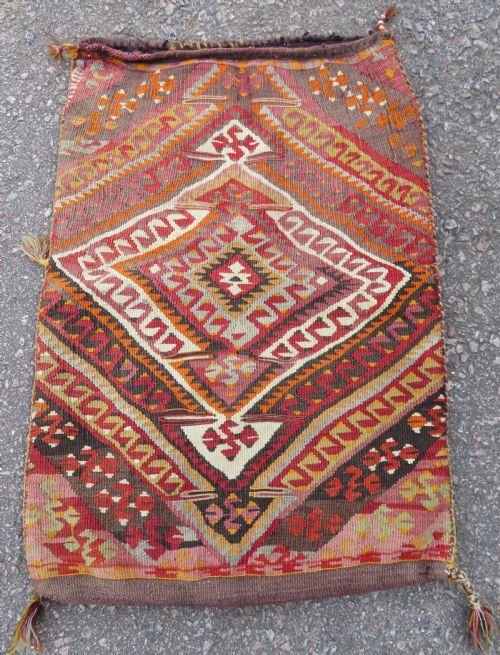


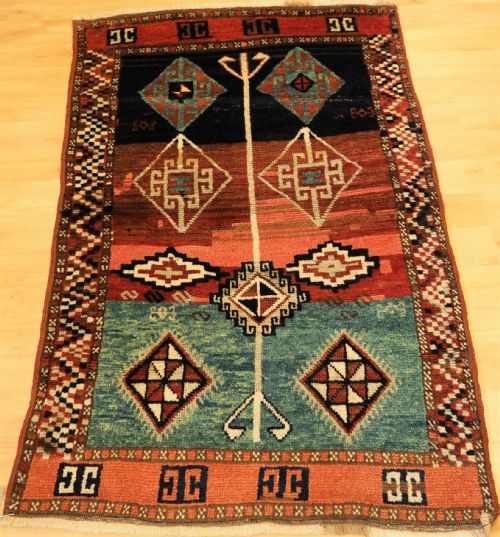


Nomadic Turkish Rug
A nomadic turkish rug brings the honest weave of Anatolia into a room, made for daily use by tribal groups.
Nomadic Turkish Rug
A nomadic turkish rug spans practical floor coverings and household textiles made across Anatolia, recorded in periods from the nineteenth century through the early twentieth century. These pieces include flatweave kilims, runners, prayer rugs, and functional storage forms like saddlebags and grain sacks.
The most frequent encounters on this page are wool flatweaves and piled rugs created by regional groups such as the Yuruk, Bergama, and Konya. Smaller items like cushions and embroidered panels also appear, drawn from the same tribal traditions.
Materials and construction
The construction relies primarily on wool, alongside structural cotton and occasional leather elements used for reinforcement or binding. Weavers hand-wove these textiles using traditional upright looms, producing both dense pile carpets and flatweave structures.
Specific regional techniques involve slit-tapery in kilims, embroidery work such as cicim, and two-part joining methods seen in specific tribal kilims. The materials reflect pastoral resources available to makers in Eastern and Western Anatolia.
Nomadic Turkish Rug Retail Price Guide 2026
Typical asking prices for nomadic turkish rug among the pieces listed under this phrase on Sellingantiques today, from the lower quarter to the upper quarter. They describe what is for sale here now, not the wider market.
The listings span the nineteenth and early twentieth centuries, recording materials of wool, cotton, and leather across diverse Anatolian regions.
Evaluating quality and character
Quality rests in the integrity of the weave, the handling of wool, and the clarity of the traditional design execution. Strong structure in flatweaves and well-preserved pile density separate robust utilitarian pieces from heavily degraded examples.
Visual depth comes from the balance of regional patterns, such as medallions or geometric tribal motifs, paired with natural dye variations. The crispness of geometric drawing and the tightness of the structural weave mark the finer examples.
The Nomadic Turkish Rug Glossary
- Kilim
- A flatweave rug produced without a pile by tightly interweaving warp and weft threads. This technique creates a lightweight, reversible textile with sharp geometric patterns.
- Yuruk
- A term denoting rugs made by nomadic or formerly nomadic Turkmen groups in Anatolia. These pieces typically feature saturated wool and bold tribal designs.
- Cicim
- A supplementary-weft embroidery technique sewn onto a plain-weave foundation. It adds raised surface patterns to tribal textiles.
- Juval
- A large face-bag used by nomadic tribes for storage inside a tent or during migration. They feature intricate tribal weaving on the front panel.
Nomadic Turkish Rug: Frequently Asked Questions
How do I care for a nomadic rug?
Vacuum gently without a beater bar and keep the textile out of direct, harsh sunlight to protect the wool fibres.
Professional cleaning suited for antique pile and flatweave rugs ensures the natural dyes remain stable over time.
Where were these rugs made?
These textiles originate from various regions across Anatolia, including Bergama, Konya, Malatya, and Karapinar.
Local tribal groups and nomadic communities produced them for personal household use, transport, and storage.
Can I hang these rugs on a wall?
Many smaller pieces, runners, and panels lend themselves well to wall display using appropriate hanging sleeves or clips.
Ensuring the weight distributes evenly across the upper edge prevents distortion of the wool structure.