
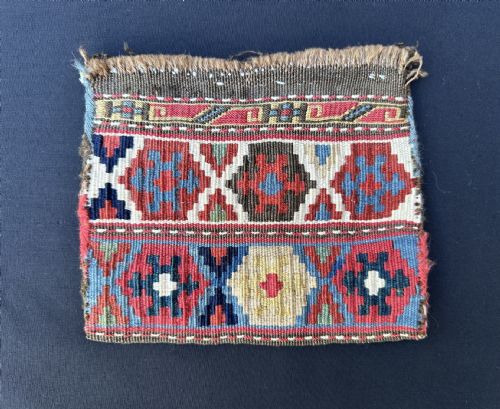
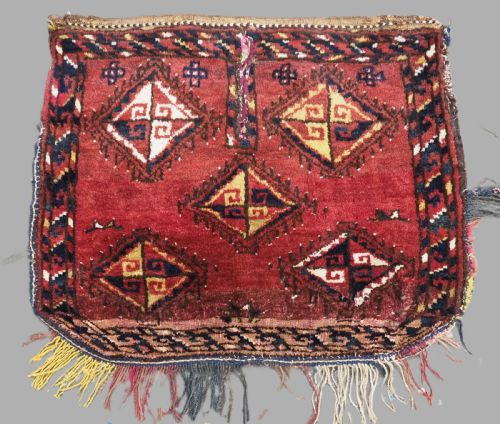


Nomadic Tribal Woven Bag
When considering a nomadic tribal woven bag, you are looking at utilitarian carriers made by pastoral peoples across Persia, Central Asia, and the Caucasus.
Nomadic Tribal Woven Bag
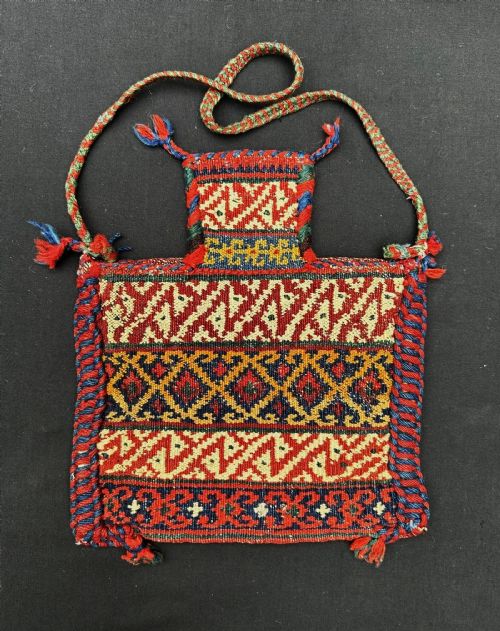
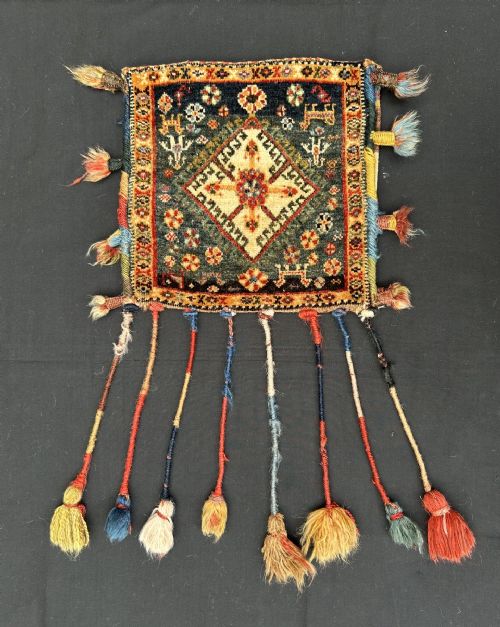
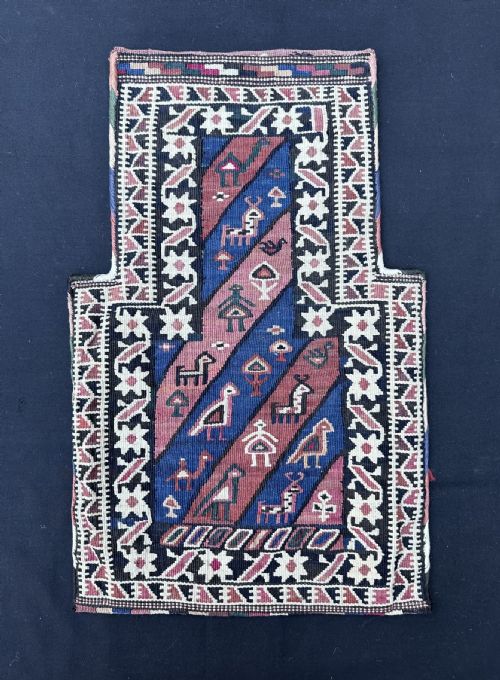
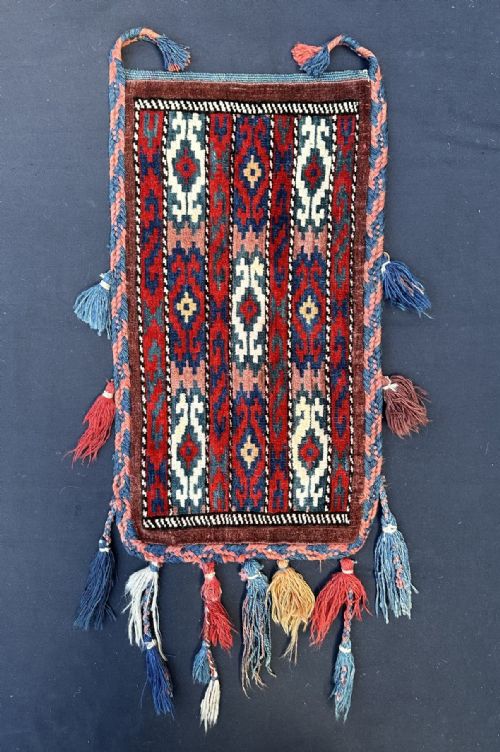
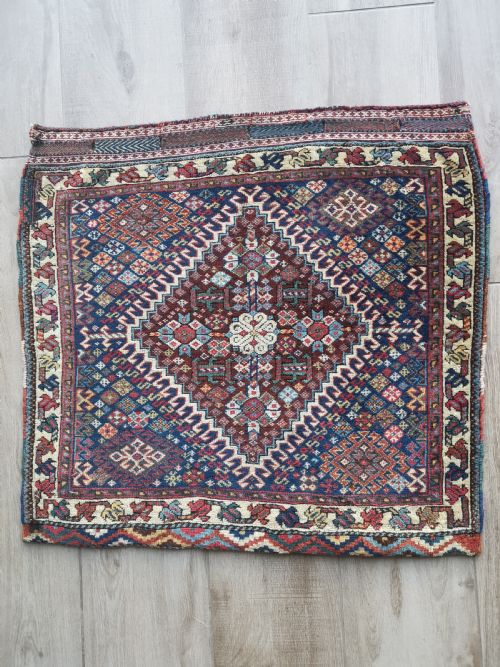
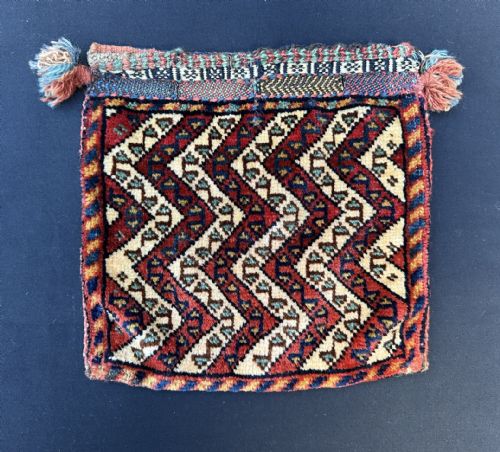
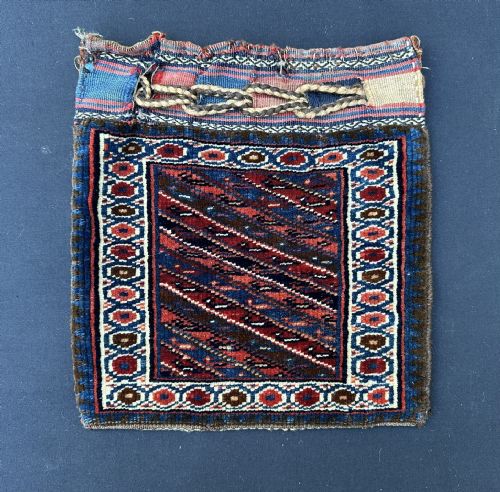
A nomadic tribal woven bag serves daily domestic and pastoral needs, functioning as storage containers, salt-bags, vanity cases, and saddle carriers. When searching this phrase, buyers encounter examples originating from regional confederacies and tribes such as the Qashqa'i, Afshar, Shahsevan, Baluch, and various Turkmen groups.
The material record on this page spans from the mid-nineteenth century through the early twentieth century, capturing pieces woven across Persian provinces and Central Asian oases. Forms range from complete saddle-bags and storage sacks to smaller personal items like chantehs and spindle bags.
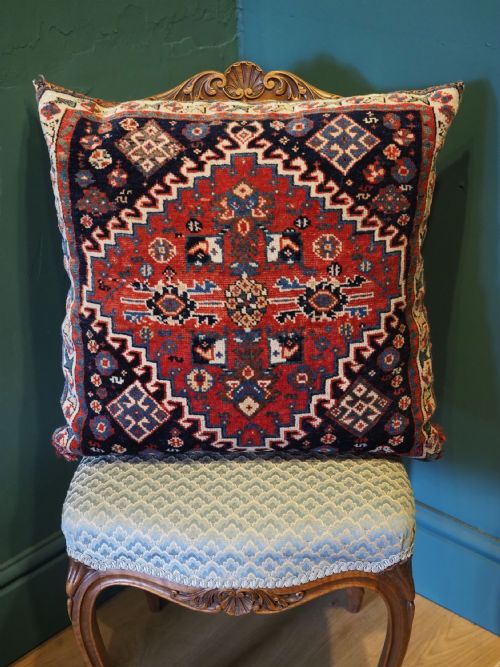
Makers utilised specific tribal motifs, structural weaves, and formats native to their respective regions, resulting in distinct visual traditions. These textile items reflect the utilitarian requirements of pastoral life translated into patterned domestic objects.
Materials and construction
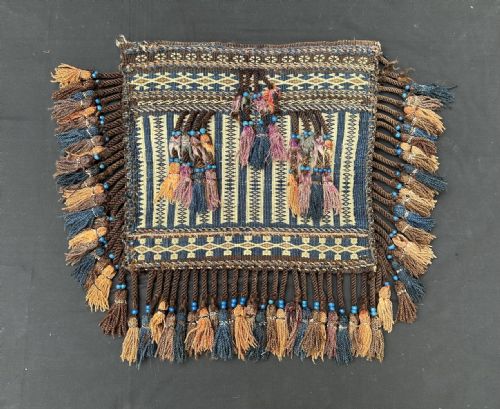
Weavers relied principally on wool, hand-spun wool, and natural dyes to build the dense pile and flat-woven structures of these carriers. Cotton frequently appears in foundations, while occasional embellishments incorporate silk highlights, glass beads, or cowrie shells.
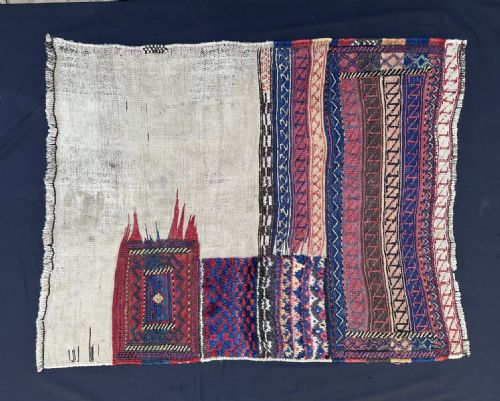
Construction techniques combine pile weaving with flat-weave backs, encompassing structural formats like torbas, chuvals, and khorjins. The integration of durable wool fibres with plant-derived colour palettes ensured the structural integrity required for nomadic transport.
Some salt and spindle bags retain traces of desert sand trapped deep within their dense wool foundations.
Evaluating the range
Quality separates along the precision of the weave, the clarity of tribal motifs, and the depth of the natural dyes used across the surface. Finer knot density and tightly packed flat-weave structures distinguish superior examples from coarser utility items.
The handling of traditional design elements, such as specific gul patterns or balanced borders, indicates the weaver's skill and adherence to regional tribal canons. Preserved integrity in the original backings and surviving decorative embellishments also elevate certain pieces within the spectrum.
The Nomadic Tribal Woven Bag Glossary
- Chanteh
- A small tribal vanity bag or personal container used by nomads for carrying small possessions. These woven pouches often feature characteristic regional patterns.
- Gul
- A medallion or repeating primary motif found predominantly in Central Asian tribal weaving. Each design typically associates with a specific tribe or confederation.
- Khorjin
- A traditional double saddle-bag designed for animal transport during nomadic migrations. One half is slung across each side of the mount.
- Torba
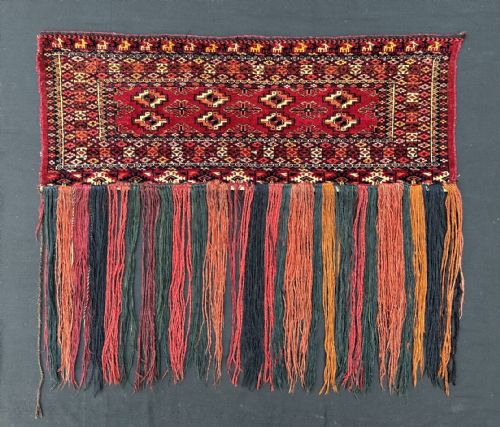
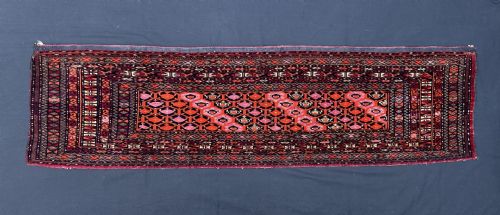
- A small rectangular storage bag utilised inside a Turkmen tent for household possessions. They frequently display detailed face designs with plain-weave backs.
- Jollar
- A horizontal bag face or trapping created by Turkmen tribes for domestic storage. These items typically feature repeated primary güls and structured border systems.
Nomadic Tribal Woven Bag: Frequently Asked Questions
How were these bags used?
Nomadic groups utilised these woven pieces for practical storage inside tents, transporting salt, tobacco, spindles, or personal items during seasonal migrations. They functioned as durable containers tailored to the mobile lifestyle of pastoral communities.
Many formats were designed specifically as saddle components or hanging wall pouches, combining utility with distinct tribal visual identifiers.
How do I care for a textile bag?
Gentle vacuuming with a mesh screen protects the wool pile and prevents dust accumulation within the weave. Keeping the textile away from direct sunlight preserves the stability of natural dyes.
Professional textile conservators should handle any major cleaning or structural stabilization. Displaying them flat or properly mounted avoids undue stress on old foundation threads.
How do I identify tribal origins?
Specific design vocabulary, structural formats, and colour palettes connect a piece to particular regions and confederacies like the Qashqa'i or Shahsevan. Examining the specific knotting, wool preparation, and motifs reveals regional traditions.
Comparing structural elements against documented tribal groups helps narrow down geographic provenance. Certain border arrangements and primary medallions remain exclusive to specific sub-tribes.
What is the difference between a torba and a chuval?
A torba is generally smaller and more horizontally proportioned, functioning as a smaller storage bag or tent hanging. A chuval is a larger storage sack traditionally used for bedding and household goods.
Both forms appear frequently in Turkmen weaving traditions but serve distinct domestic functions within the tribal dwelling.