
Nomadic Rug Bag
A nomadic rug bag brings portable tribal artistry into your interior, offering authentic woven heritage from Persian, Turkmen, and Central Asian groups.
Nomadic Rug Bag
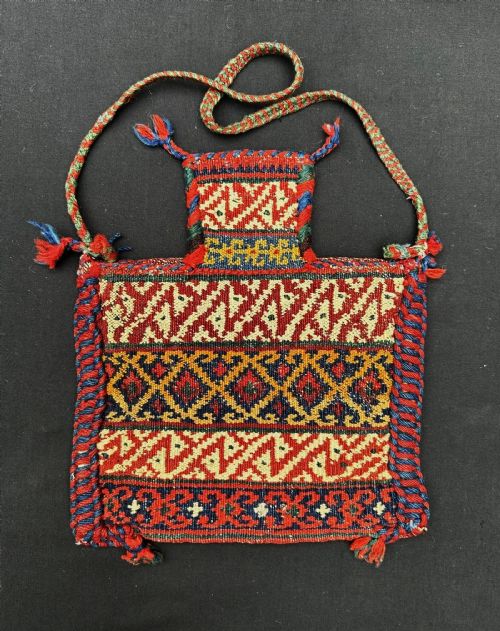
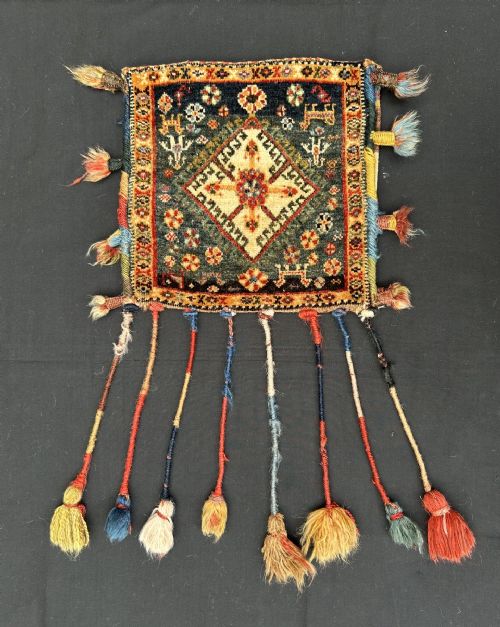
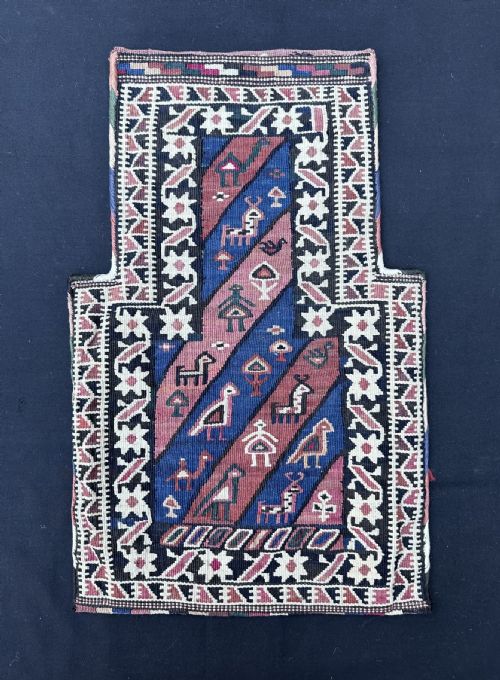
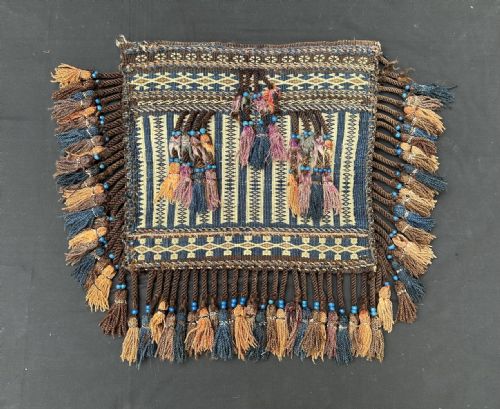
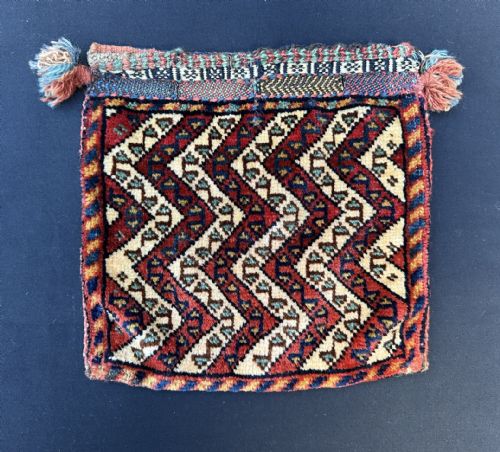
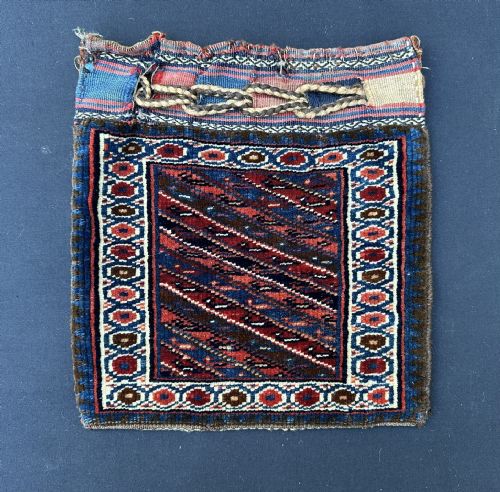
When you search for a nomadic rug bag, you encounter utilitarian textiles woven by tribal groups across Persia, Central Asia, and the Caucasus during the nineteenth and early twentieth centuries. These pieces served practical roles in daily camp life, functioning as storage containers, salt bags, vanity cases, saddle bags, and tent hangings.
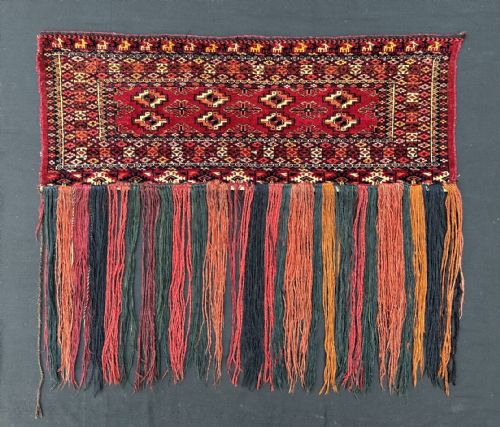
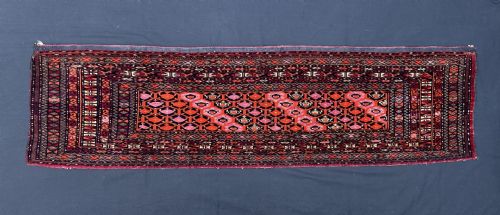
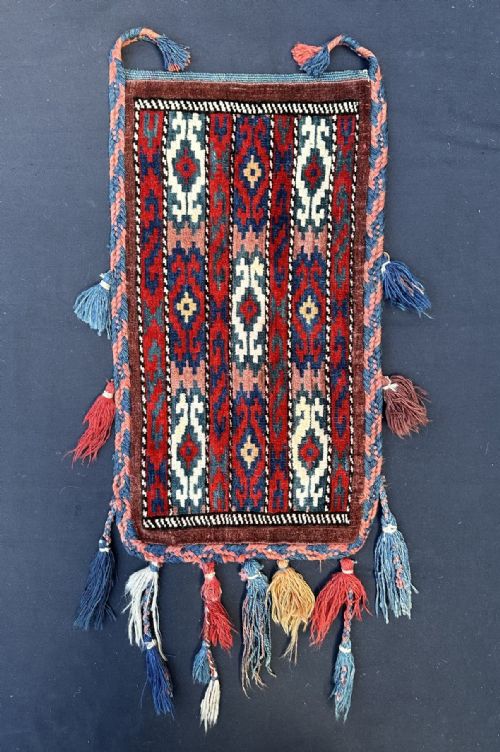
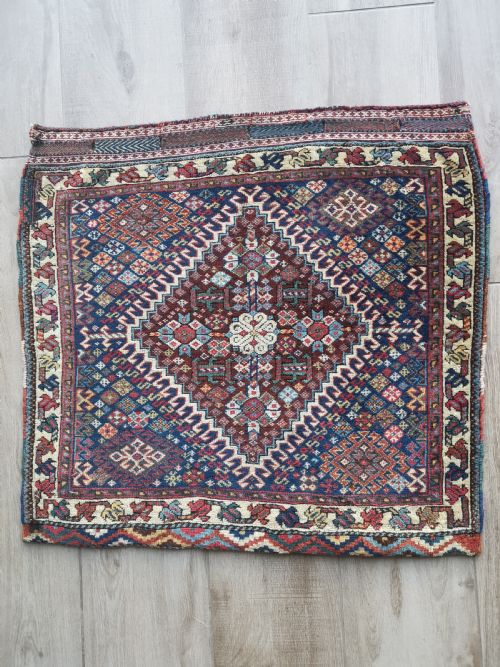
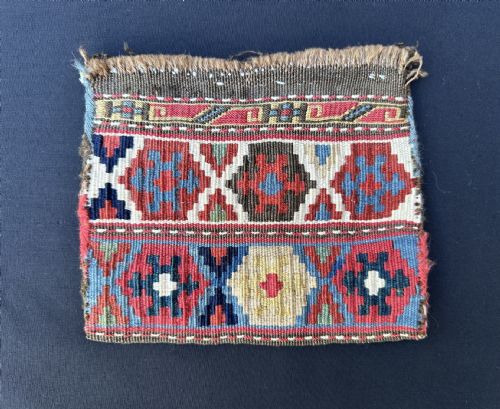
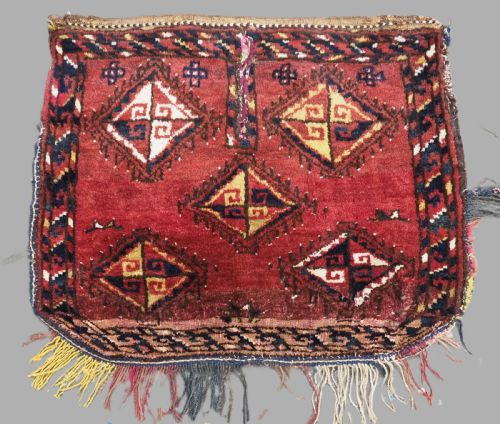
You are most likely to meet specific functional forms on this page, including salt bags, vanity bags, and tent bags such as torbas and chuvals originating from tribes like the Qashqai, Turkmen, Afshar, and Baluch. These textiles display the distinctive regional patterns, pile weaves, and flatweaves characteristic of their specific makers.
Materials and Construction
Weavers constructed these pieces primarily using hand-spun wool for the pile and foundation, often supplemented with cotton and occasionally silk for delicate details. Natural dyes provided the deep reds, blues, and golds that define the palette.
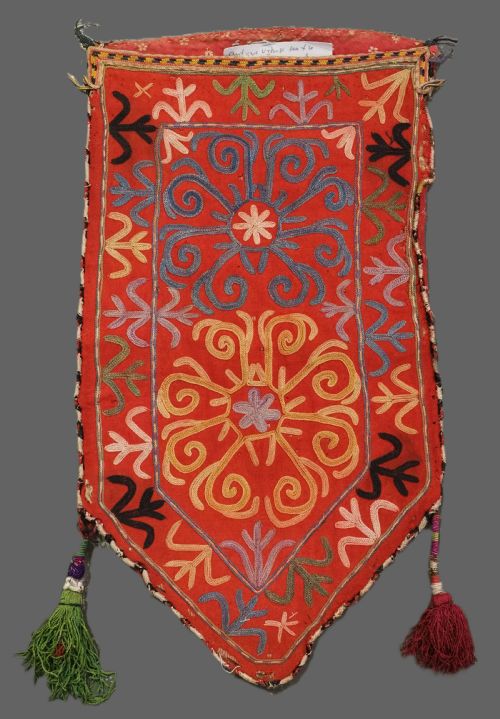
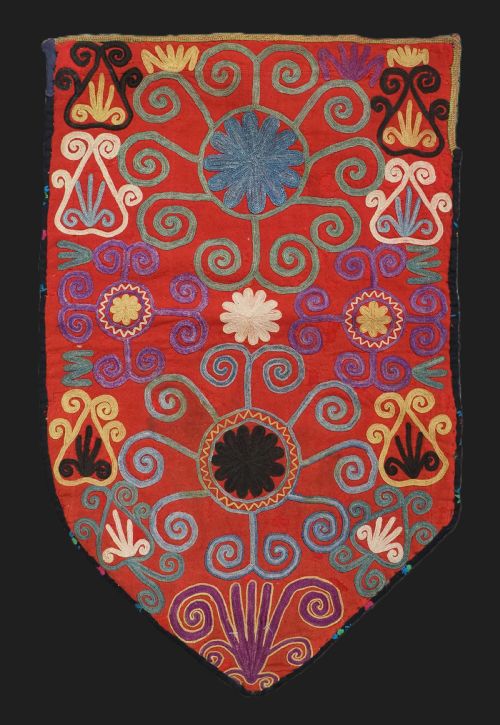
Nomadic makers integrated structural reinforcements and decorative embellishments such as glass beads and cowrie shells onto specific formats like Uzbek illustrative trappings. Plain weave backs commonly accompanied pile-faced fronts to balance durability with flexibility during transport.
Some Turkmen bags incorporated cowrie shells and glass beads to ward off the evil eye and protect household salt.
Assessing Quality and Execution
Quality in these textiles depends heavily on the density of the weave, the precision of the tribal motifs, and the depth achieved through natural dyeing techniques. Finer knots and tighter structures indicate greater skill and time invested by the weaver.
The Nomadic Rug Bag Glossary
- Chuval
- A large tent storage bag used by Turkmen tribes for household belongings. These items were typically woven in pile and displayed repeating gul motifs.
- Torba
- A smaller horizontal storage bag utilised inside the Turkmen tent. They frequently hung against the lattice walls to hold smaller possessions.
- Chanteh
- A small traditional Persian or Kurdish vanity bag or personal carrying pouch. Collectors prize these portable pieces for their intimate scale and varied tribal patterns.
- Khorjin
- A traditional double-sided saddle bag designed for transport over animals. Complete pairs feature two matching pouches linked by a central web.
- Gul
- A repeating medallion or octagonal gabled motif characteristic of Turkmen weaving. Each pattern often identifies the specific tribal subgroup of the maker.
Nomadic Rug Bag: Frequently Asked Questions
What were nomadic rug bags used for?
These woven containers served essential daily functions in tribal camps, holding household goods, salt, tobacco, and personal items. Families also utilised them as saddle bags for transport during seasonal migrations.
Their sturdy construction protected contents from dust and moisture while adding portable decoration to tents and pack animals.
How do I live with a tribal bag?
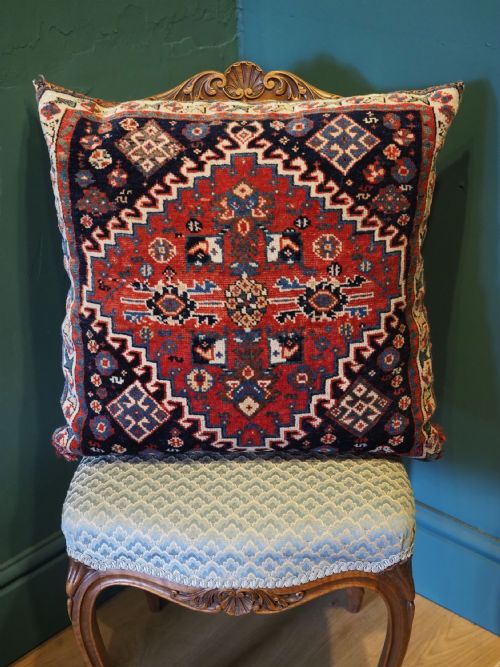
You can display these textiles by mounting them on walls, using them as small floor rugs, or placing them on furniture as decorative cushions. Their manageable size allows them to fit easily into various interior spaces.
Keep them away from direct sunlight to protect the natural dyes, and gently vacuum them with a low-suction attachment without a beater bar.
How do I identify the tribe?
Tribal attribution relies on specific combinations of knotting structures, colour palettes, and characteristic geometric or floral motifs. Different confederations like the Qashqai, Afshar, or Turkmen utilised distinct design vocabularies.
Examining the edge finishes, end borders, and secondary wool colours provides further clues to the specific regional group.
Are pile bags different from flatweaves?
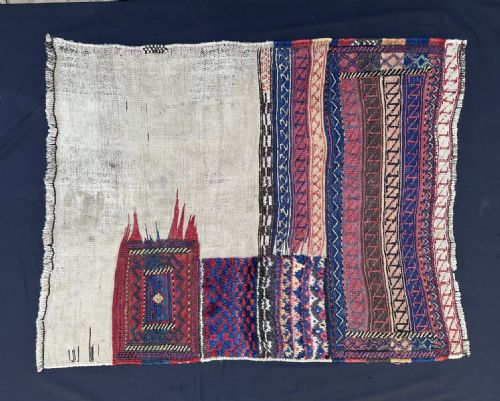
Pile bags feature a dense, knotted wool surface that creates a plush texture similar to a carpet. Flatweaves, such as salt bags or backings, are constructed using warp-faced or weft-faced interlacings without pile.
Many examples combine both techniques, featuring a knotted pile face for durability and visual impact alongside a plain weave back.