

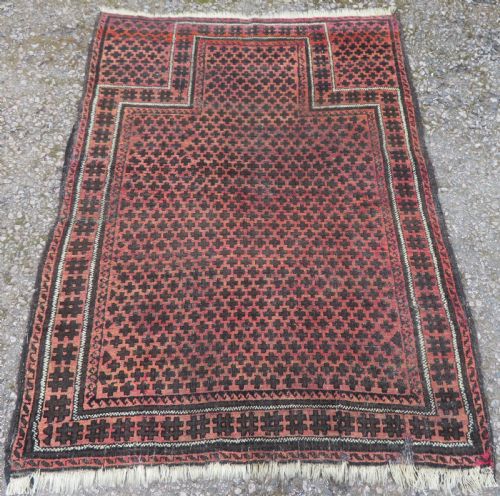


Nomadic Prayer Mat
A nomadic prayer mat brings portable hearth traditions into domestic spaces through deeply saturated wool and concentrated tribal symbolism.
Nomadic Prayer Mat
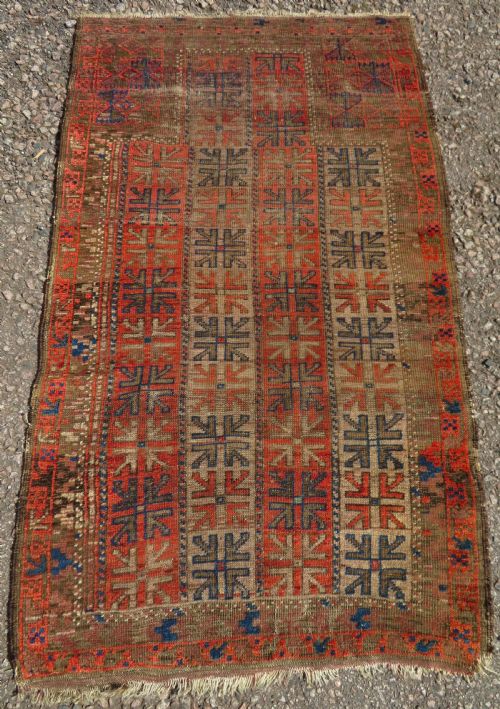
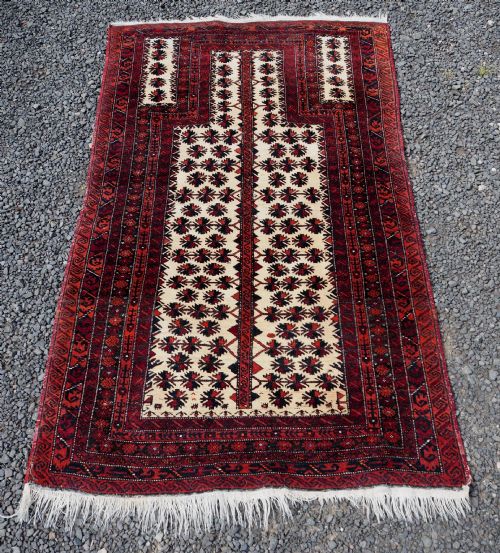
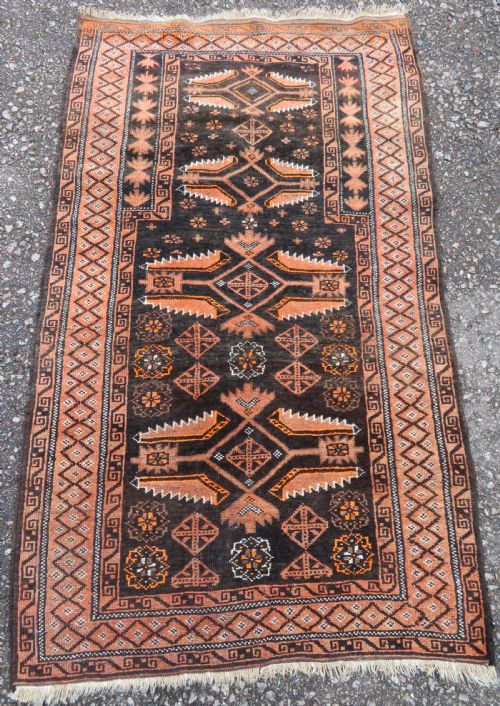
A nomadic prayer mat serves as a personal, portable space for daily devotion, created by tribal groups across Persia, Afghanistan, and the wider borderlands. These pieces reflect the portable lifestyle of their makers, sized for individual use rather than grand chamber decoration.
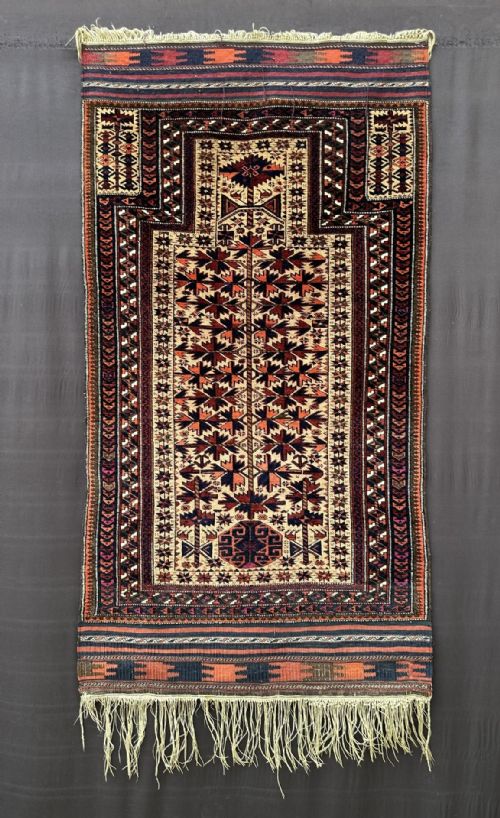
The page centres on tribal weaving traditions, principally Baluch, Timuri, Taimani, and Afghan village works. Buyers encounter formats dominated by single, double, or triple mihrab arches designed to direct the practitioner during prayer.
The aesthetic vocabulary draws upon ancestral motifs such as the tree of life, repeat lotus leaves, and rams horn patterns. These compact textiles bridge functional religious objects and folk art created by pastoral communities.
Wool and Natural Dyes
Makers rely primarily on local sheep wool, sometimes incorporating camel hair for its natural golden-brown tone, spun by hand into resilient yarns. This foundational material provides the dense handle and durability required for items subjected to frequent rolling and travel.
Colour palettes derive from natural dyes yielding rich indigo blues, deep madders, and earthy camels that age gracefully over decades. Kilim ends frequently finish the vertical margins, protecting the knotted pile from fraying.
Listings feature pieces spanning the late nineteenth century through the early decades of the twentieth century.
Distinctions in Tribal Weaving
Technical execution separates standard village output from the finest tribal pieces, visible in the tightness of the knotting and the precision of the geometric layout. Greater density in the foundation allows complex motifs like the seh mihrab or figural elements to hold crisp definition.
The handling of the wool stock and the depth of the dye saturation dictate the vibrancy of the surface texture. Superior examples exhibit lustrous pile and harmonious secondary colours that retain visual tension across the field.
The Nomadic Prayer Mat Glossary
- Mihrab
- The arched niche at the top of a prayer rug, symbolising the direction of prayer. Its architectural shape guides the user's orientation.
- Seh Mihrab
- A triple arch design arrangement found on specific regional prayer rugs. This multi-niche format often points to particular tribal groups in the Sistan and Afghan borderlands.
- Kilim end
- Flat-woven sections of warp and weft extending beyond the main knotted pile at either end of the rug. These durable borders prevent the pile rows from unravelling.
- Tree of life
- A vertical motif symbolising the connection between earth and heaven. It appears frequently beneath the prayer arch in nomadic compositions.
- Camel hair
- Undyed fleece utilised to create a warm, resilient background field. Its inclusion adds natural tonal variation distinct from standard sheep wool.
Nomadic Prayer Mat: Frequently Asked Questions
How were these mats used?
Nomadic weavers used these compact rugs primarily for daily personal prayer while travelling or living in pastoral camps. Because of their small scale, they rolled up easily for transport across the rugged terrain of Central Asia and Persia.
Over time, these functional objects became cherished possessions within the household, serving as clean, dedicated spaces for quiet contemplation before being passed down through generations.
How do I tell different tribal designs apart?
Tribal attribution relies heavily on specific structural quirks, colour choices, and repeating motif patterns. For instance, Baluch and Timuri weavers often incorporated dark blue fields, camel hair accents, and distinctive border arrangements.
Regional variants like the seh mihrab or specific leaf repeats point directly to particular pockets of Afghanistan and eastern Persia. Examining the structure of the ends and the handling of the wool helps separate one group from another.
How should I live with an antique prayer rug?
These antique textiles fit comfortably into modern interiors as small floor coverings in low-traffic zones, or displayed directly on walls as textile art. Placing a proper underlay beneath them prevents slipping and cushions the historic wool foundation.
Keep them out of harsh, direct sunlight to preserve the natural dyes, and clean them gently with appropriate methods suited for vintage pile rugs.