





Nomadic Prayer Carpet
When you search for a nomadic prayer carpet, you are looking at hand-woven tribal textiles designed for personal devotion across nineteenth and early twentieth-century Asia.
Nomadic Prayer Carpet
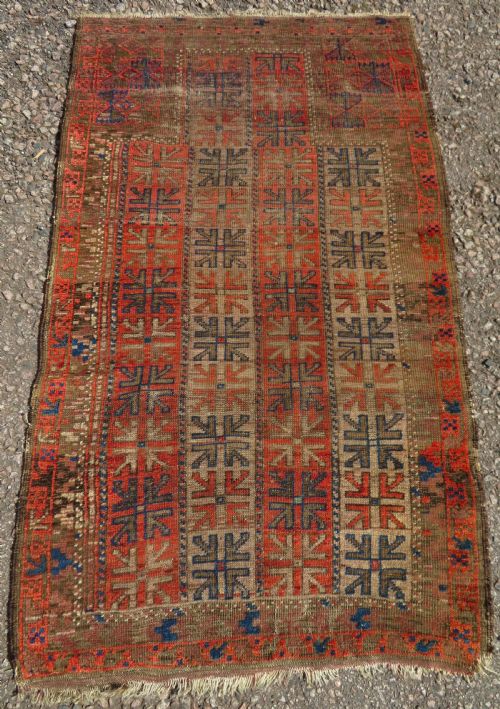
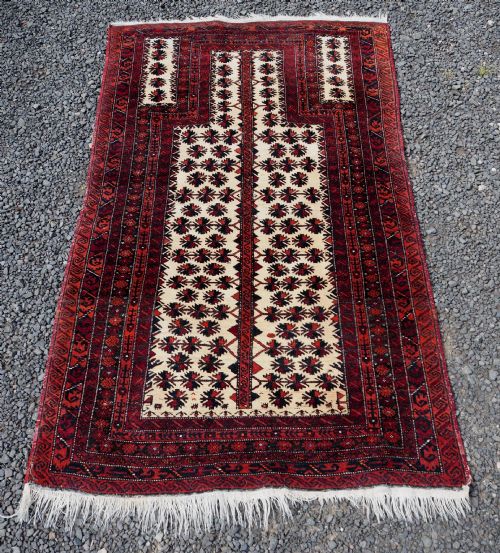
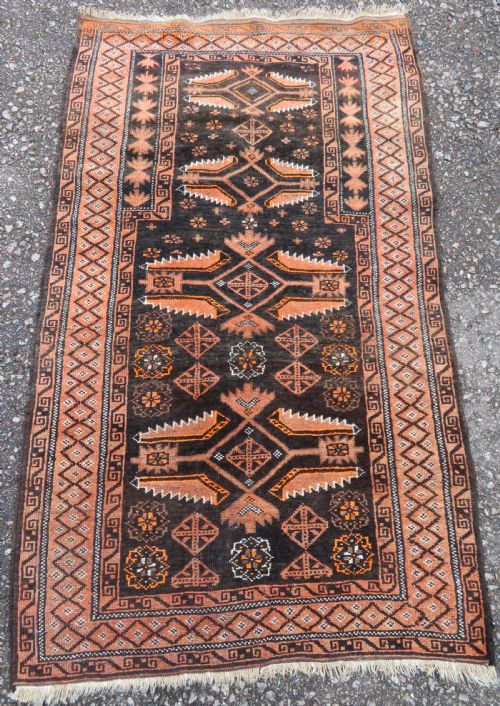
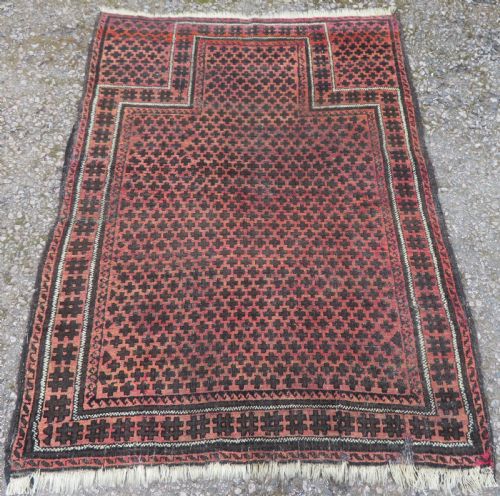
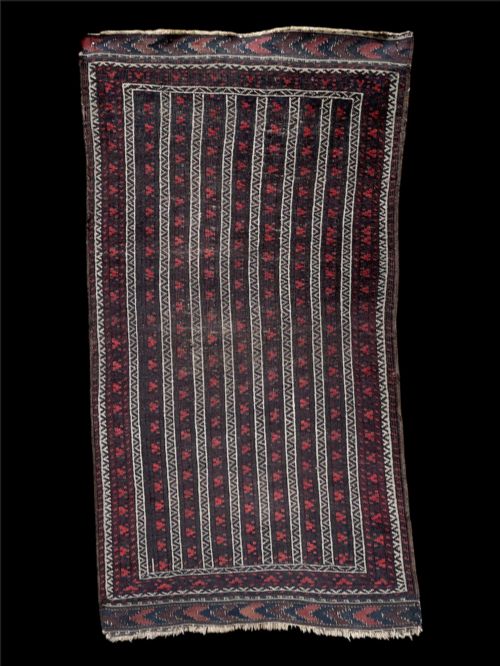
A nomadic prayer carpet serves primarily as a portable place of worship for tribal weavers across regions spanning Persia, Afghanistan, and the broader borderlands. Buyers exploring this category encounter numerous examples associated with Baluch, Timuri, Taimani, and Turkmen tribes, typically structured around a distinct arched mihrab niche.
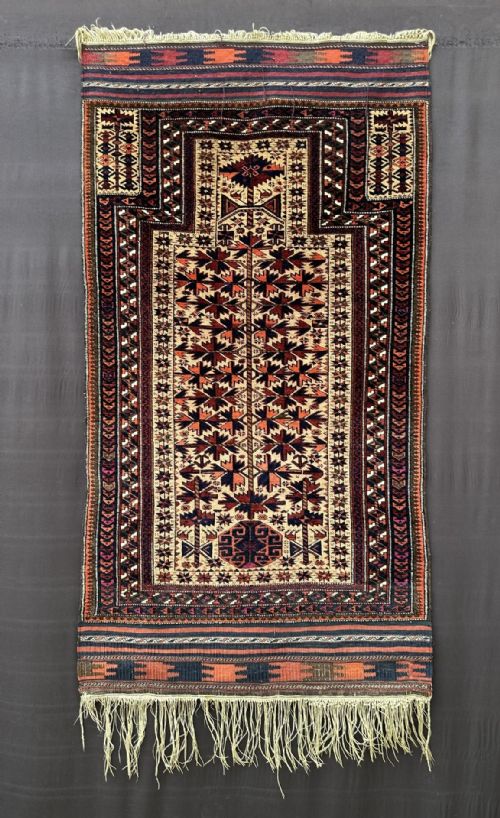
The format of a nomadic prayer carpet often incorporates regional tribal motifs such as the tree of life, double mihrab, or multiple arches known as seh mihrab. These smaller rugs were woven on portable horizontal looms, reflecting the traditional lifestyle of weavers living across Khorassan, Herat, and surrounding tribal territories.
Most entries within this category date from the late nineteenth century up to the early decades of the twentieth century, bridging the Victorian era and the 1930s. Village and nomadic workshops produced these pieces using traditional layouts handed down through generations, resulting in strong tribal character and varied field designs.
Materials and construction methods
Weavers constructed these tribal rugs predominantly from hand-spun wool, frequently utilising supplementary materials such as camel hair for natural light-brown fields and goat hair for durable dark selvedges. Cotton occasionally appears in foundation structures or specific design highlights like white details.
Natural dyes provide the deep indigo blues, madder reds, and earthy tones characteristic of these pieces, reacting to organic mordants over decades of ageing. The pile is tightly knotted onto woolen or occasionally cotton warps and wefts, finished with flatwoven kilim ends.
The documented geographic origins range across Khorassan, East Persia, and the borderlands of north-east Persia and north-west Afghanistan.
Distinctions in quality and execution
Quality within these tribal textiles rests upon the fineness of the knotting, the stability of the wool foundation, and the complexity of the secondary borders. Tightly packed piles and well-balanced natural dye palettes separate standard village work from master tribal weaving.
The integrity of the structural ends, such as long kilim borders, and the crisp definition of motifs like the tree of life or mihrab arches dictate the overall visual success of an antique piece.
Baluch Tribes·Timuri Tribe·Taimani Group·Kizil Ayak Turkmen·Saryk Turkmen
The Nomadic Prayer Carpet Glossary
- Mihrab
- The arched niche design set into the field of a prayer rug, pointing toward Mecca during daily worship. This architectural motif guides the layout of nearly every carpet in this category.
- Seh Mihrab
- A design layout featuring three arched prayer niches grouped across the upper field. This multi-mihrab format appears frequently in regional Afghan and Baluch weaving.
- Tree of Life
- A symbolic vertical motif depicting branches, leaves, or floral stems rising from a base, representing eternal life and spiritual growth. It is a recurring central element on camel-ground prayer rugs.
- Kilim Ends
- Flatwoven plain or patterned sections extending beyond the knotted pile at either end of the rug. They protect the foundation from fraying and often feature geometric striped bands.
- Ensi
- A specific carpet format traditionally hung at the entrance tent flap of Turkmen nomads. These pieces feature a characteristic quartered design layout rather than a standard single prayer arch.
Nomadic Prayer Carpet: Frequently Asked Questions
What is a nomadic prayer carpet used for?
These carpets served as portable, personal mats laid upon the ground for daily Islamic ritual prayers among tribal populations.
Because they were lightweight and woven on horizontal looms, weavers could roll them up easily during seasonal tribal migrations.
How do you identify a Baluch prayer rug?
Baluch prayer rugs are typically distinguished by deep indigo or camel-ground fields, geometric borders, and a compact size suited for individual use.
They often incorporate goat hair edges and wool foundations produced by tribal groups residing across the borders of Persia and Afghanistan.
What does seh mihrab mean?
The term seh mihrab translates to three arches, referring to a prayer rug design that displays three distinct prayer niches across the upper field.
This specific variant occurs primarily within regional Afghan and Taimani tribal weaving traditions from the late nineteenth and early twentieth centuries.
How should I care for an antique prayer rug?
Antique wool rugs require gentle, regular vacuuming without rotating beater bars and should be kept away from direct, harsh sunlight to preserve natural dyes.
Professional cleaning tailored to vintage textiles helps maintain the integrity of the hand-spun wool pile and delicate kilim ends.