



Nineteenth Century Transferware
Nineteenth century transferware brings printed ceramic scenes into the home, offering collectors richly detailed plates, jugs and tureens.
Nineteenth Century Transferware
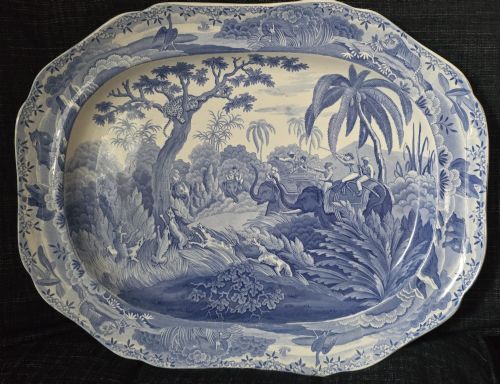
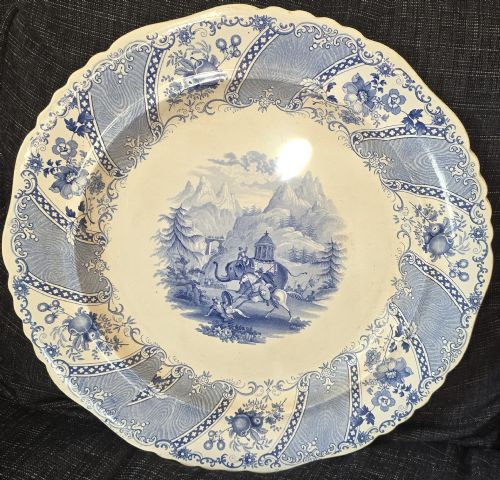
Nineteenth century transferware comprises ceramic tableware and decorative vessels decorated with printed imagery transferred from an engraved copper plate. These pieces span the Georgian, Regency and Victorian periods, with earthenware and ironstone forming the core of the selection.
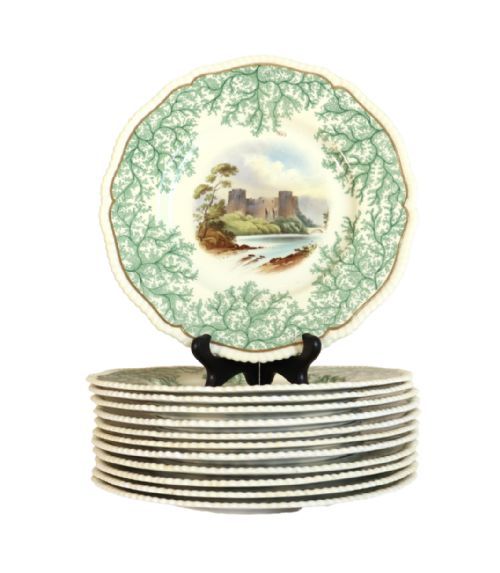
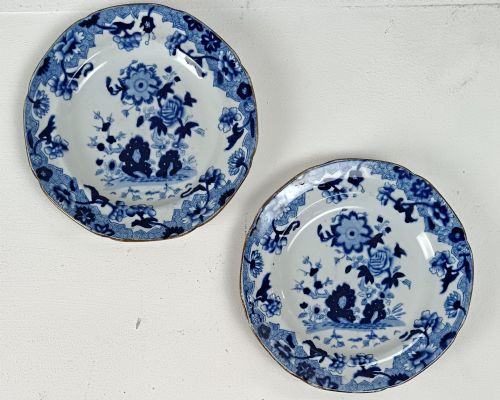
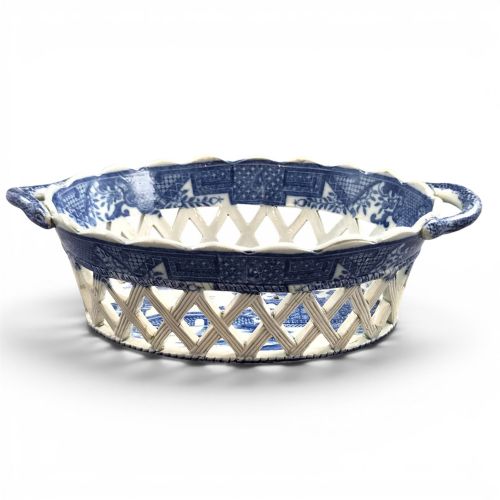
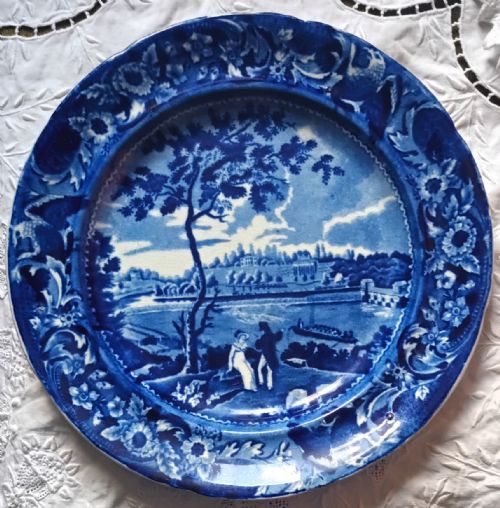
Dinner plates, tea plates and serving dishes dominate the available forms, often featuring topographical views, classical ruins or animal patterns. Footbaths, chestnut baskets and children's mugs also appear among the Staffordshire and Spode productions.
The objects originate primarily from English potteries working through the eighteen hundreds. Buyers will encounter both utilitarian dining pieces and decorative chargers bearing blue and white or polychrome transfer decoration.
How they were made
Potters produced nineteenth century transferware by pressing or throwing earthenware, pearlware, creamware or ironstone bodies before firing them into bisquewares. Artisans then transferred engraved copperplate impressions onto tissue paper and applied them directly to the ceramic surface.
The decorated pieces received a transparent ceramic glaze, enamel highlights where appropriate, and a subsequent kiln firing to fuse the print permanently beneath the glassy finish.
Listings feature earthenware, creamware, pearlware and ironstone bodies decorated with blue and white and purple transfer prints.
What varies in quality
Quality in nineteenth century transferware rests upon the crispness of the engraved transfer and the depth of the glaze. Finer examples display sharp, well-defined pictorial lines without blurring or smudging from the paper application.
The sophistication of the ceramic body also distinguishes the tier of production, moving from standard earthenware to refined ironstone, pearlware or creamware. Maker attribution, such as works by Spode, Wedgwood or Minton, further elevates the standing of an individual piece.
Spode·Wedgwood·Minton·William Adams·Thomas Lakin·J. and R. Clews·John Rogers and Son
The Nineteenth Century Transferware Glossary
- Transfer printing
- A decoration technique where a design is engraved on a copper plate, inked, transferred to tissue paper, and pressed onto unglazed or biscuit pottery before glazing. This method allowed potteries to produce consistent pictorial scenes across large dinner services.
- Pearlware
- An earthenware body developed by Josiah Wedgwood that used a small amount of cobalt in the glaze to create a bluish-white tint. It bridges the gap between creamware and later nineteenth-century white earthenwares.
- Ironstone
- A dense, durable type of ceramic patented in the early nineteenth century that combined earthenware clay with Cornwall stone and slag. It resisted chipping better than standard soft paste bodies and suited heavy household use.
- Creamware
- A fine-grained, cream-coloured earthenware developed in Staffordshire during the eighteenth century and continued into the nineteenth. Its warm yellowish tone provided a bright ground for enamel and transfer decorations.
- Reticulated
- Pierced or openwork ceramic design created by cutting out sections of the clay before firing. This decorative border technique appears on specialised serving pieces like chestnut baskets.
Nineteenth Century Transferware: Frequently Asked Questions
How do I clean nineteenth century transferware?
Wash these ceramics gently by hand using lukewarm water and mild dish soap. Avoid abrasive sponges and harsh automatic dishwashers to protect the historical glaze.
Dry each piece thoroughly with a soft cloth. Storing them carefully prevents rim chips on plates and holloware.
Can I use these plates for dining?
Many collectors prefer to display nineteenth century transferware on walls or in cabinets rather than using them for daily meals. Older glazes can be sensitive to modern cutlery and acidic foods.
Reserved occasional use for cold foods remains acceptable to some owners. Inspecting the surface for historical wear guides your decision on daily practicality.
How do I identify the maker?
Turn the ceramic over to check the underside for impressed marks, printed factory stamps or pattern titles. Many Staffordshire potteries included the pattern name within the transfer design itself.
Cross-referencing these names with documented historical archives helps confirm the pottery of origin and production decade.