






Nineteenth Century Tea Tray
These nineteenth century tea tray examples bring period craftsmanship into daily use, offering sturdy serving surfaces and rich decorative surfaces.
Nineteenth Century Tea Tray
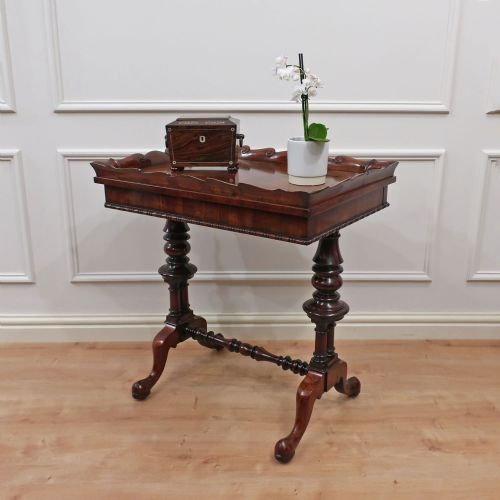
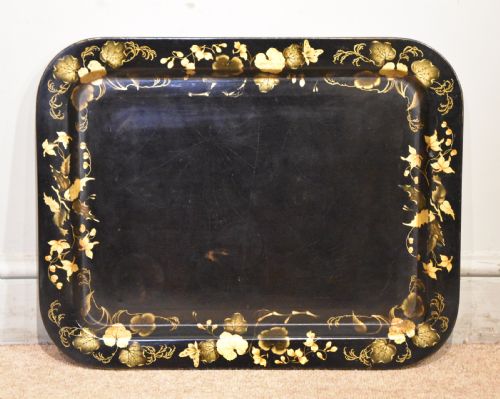
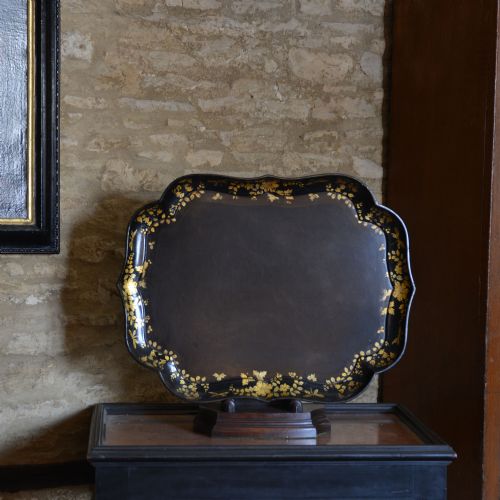
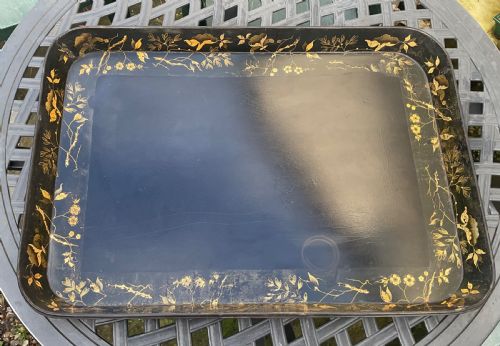
When you search for a nineteenth century tea tray, you encounter a diverse selection of serving wares and adapted tables originating from the Regency, Victorian, and Edwardian eras. The examples on this page span several distinct functional forms, ranging from handled serving platters to decorative trays mounted upon custom stands.
The most common formats include handpainted toleware, gilt-decorated papier-mache, and polished mahogany boards. Many pieces from this hundred-year span crossed over from utility to display, frequently converted into side tables or coffee tables during subsequent periods of interior design.
How they were made
Makers of the era utilised robust hardwoods like mahogany and satinwood for wooden boards, frequently incorporating inlaid borders and brass handles for practicality. Metal pieces relied on tinned iron sheets known as toleware, shaped and finished with handpainted designs.
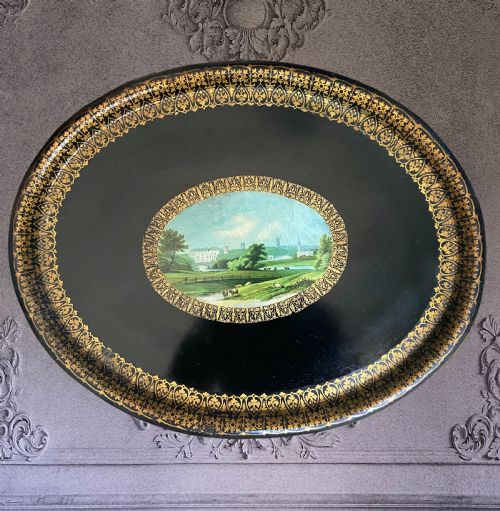
Papier-mache construction involved pressing pulped paper layers under heavy pressure to create a lightweight yet durable core, subsequently sealed with dark lacquer and embellished with gold leaf or painted Chinoiserie motifs. Silver plated items utilised nickel silver or base metal foundations bonded with a durable layer of silver.
Periods represented span from the Regency era through to Edwardian cabinetwork.
What varies in quality
The distinction between standard utility wares and exceptional pieces rests in the execution of the surface decoration, particularly the fineness of handpainted details and the preservation of original gold leaf gilding. Superior papier-mache examples retain structural integrity without extensive cracking to the underlying lacquer layers.
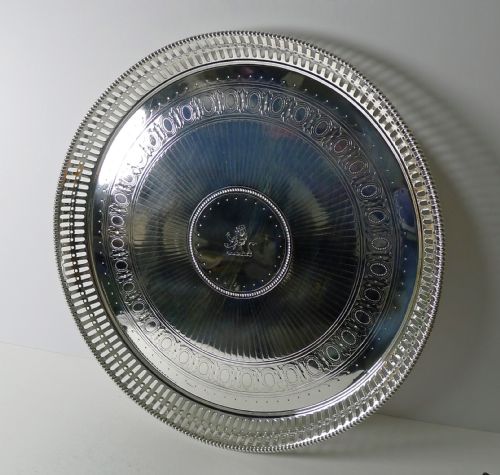
Cabinetwork quality separates simple boards from fine tables, with attribution to established workshops like Gillows adding notable pedigree to mahogany side pieces. Metalwork quality is evident in the weight of the silver plating and the crispness of stamped borders on twin-handled trays.
Gillows·Elkington·Walker & Hall
The Nineteenth Century Tea Tray Glossary
- Toleware
- Painted or lacquered metalware, typically manufactured from tinned sheet iron in centres such as Pontypool. These items often feature detailed handpainted botanical or figurative motifs.
- Papier-mache
- A composite material made from paper pulp or sheets mixed with glue and resin, pressed and dried to form a rigid blank. It provides a smooth base for lacquer and gilding.
- Chinoiserie
- A European artistic style reflecting Chinese motifs and techniques, popular in lacquerwork and painted decoration. It frequently depicts imaginary landscapes, pavilions, and figures in gold.
- Regency
- An architectural and decorative style spanning the early nineteenth century, characterised by classical restraint and neoclassical motifs. Furniture from this period often uses dark mahogany with subtle brass mounts.
Nineteenth Century Tea Tray: Frequently Asked Questions
How do I clean an antique papier-mache tray?
Dust surfaces gently with a dry, soft cloth to protect the delicate lacquer and gold leaf layers from moisture damage.
Avoid commercial polishes and water entirely, as harsh liquids can permanently lift historic paint and crack the underlying paper pulp.
Were these trays originally used on stands?
Many large serving trays were produced as flat boards intended for table use or butler transport during tea service.
Craftsmen and later owners frequently mounted these portable boards onto custom wooden folding or fixed stands to create side tables.
What is the difference between toleware and lacquer?
Toleware specifically denotes painted and varnished sheet metal objects, whereas traditional lacquer involves successive coats of resin applied to wood or papier-mache bases.
Both finishes offer glossy, decorative surfaces, but metal toleware carries more weight and magnetic properties than papier-mache.
How can I date a nineteenth century tray?
Dating relies on stylistic clues like Regency neoclassical lines, Victorian silver plate hallmarks, or Edwardian satinwood banding.
Examining the materials, such as early papier-mache versus later composition boards, also helps narrow the manufacturing decade.