
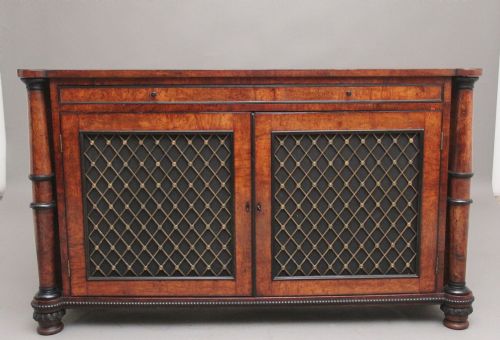
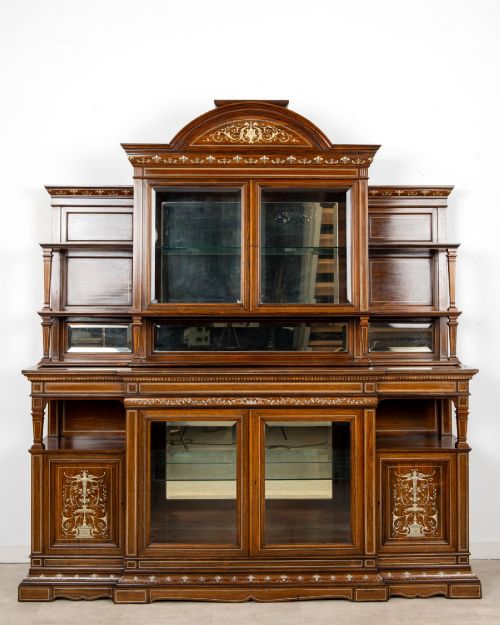
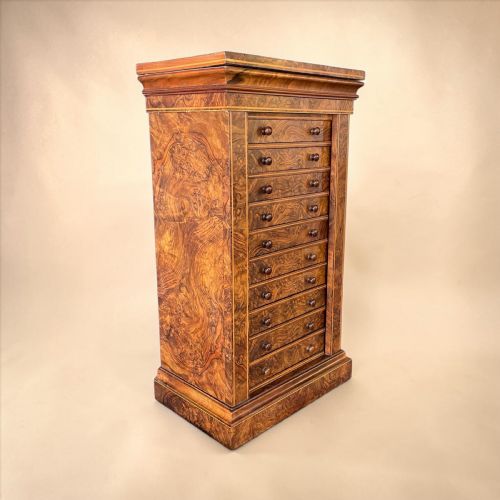
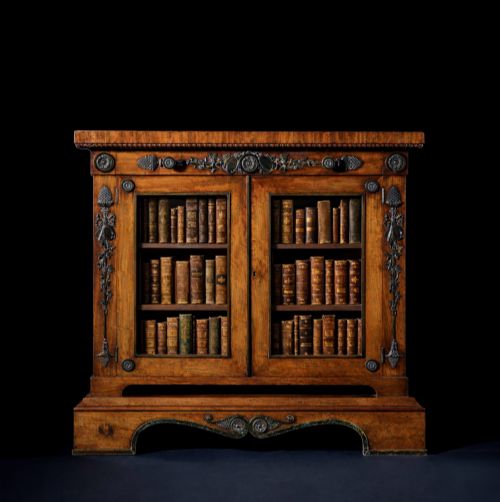


Nineteenth Century Side Cabinet
A nineteenth century side cabinet brings substantial timber and period proportion to a room, offering display space and enclosed storage.
Nineteenth Century Side Cabinet
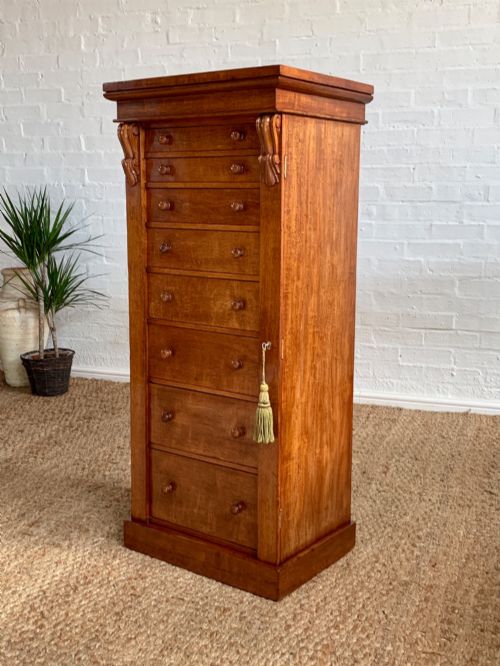
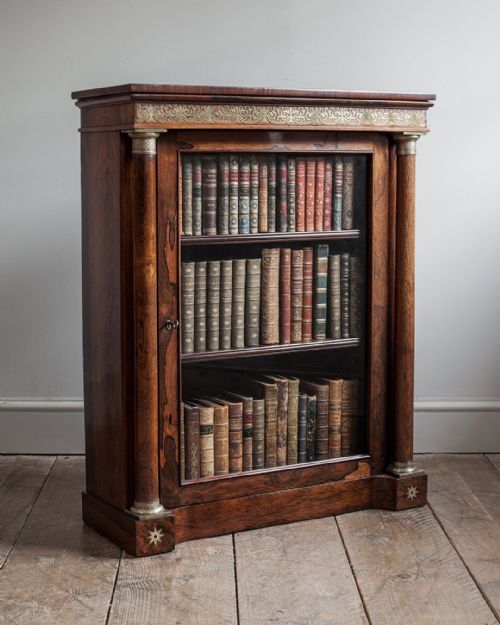
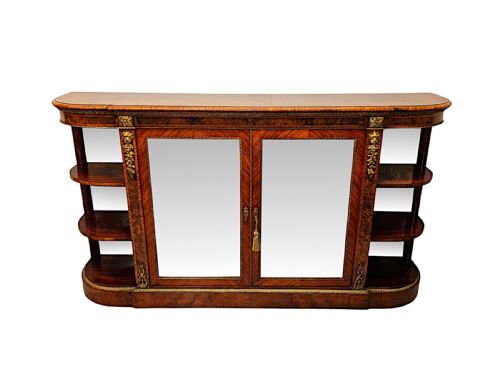
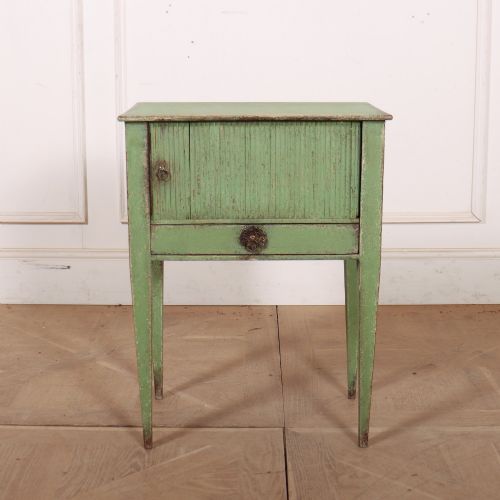
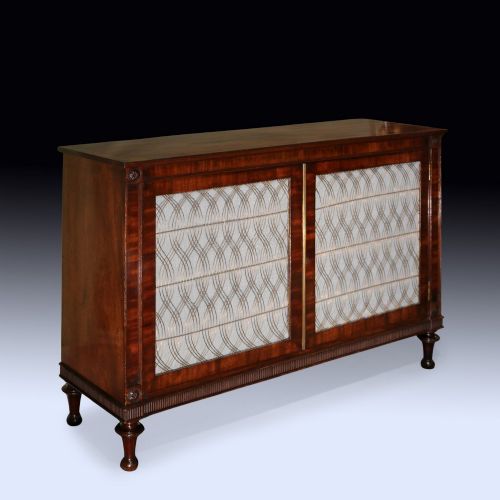
A nineteenth century side cabinet is a low storage piece designed to sit against a wall, frequently taking the form of a credenza, chiffonier, or pier cabinet. These items served formal reception rooms and parlours to hold books, china, or decorative objects upon their tops.
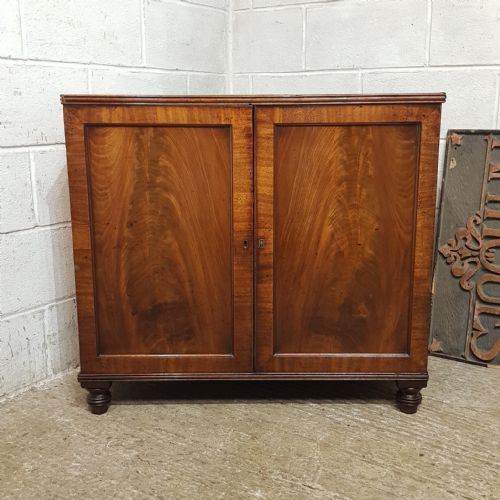
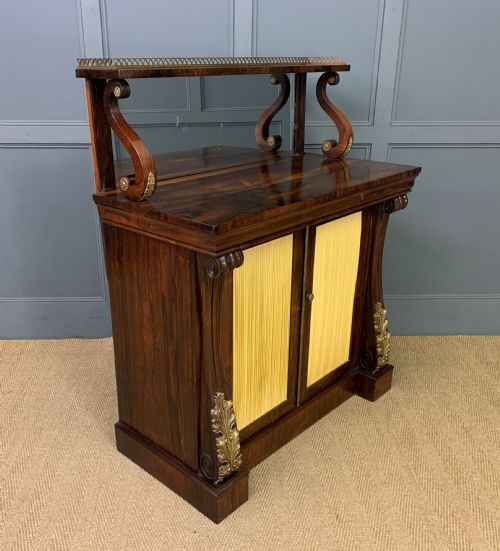
The versions most common here span the Regency and Victorian eras, rendered in dark hardwoods or figured veneers with brass grilles or glass doors. Cabinetmakers built these pieces to anchor a room while providing functional interior shelving.
How they were made
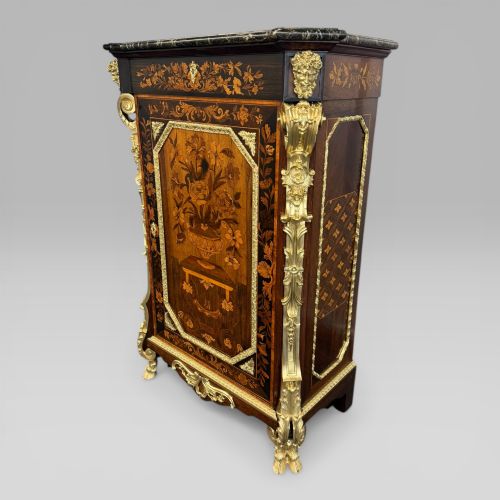
Carpenters constructed carcasses from solid timber foundations such as mahogany, oak, or walnut, and applied decorative veneers like rosewood, burr walnut, and pollard oak to the primary exterior surfaces. Cabinetmakers utilised marquetry and boxwood stringing to create geometric or floral patterns across door panels.
Metal mounts in brass and gilt ormolu provided structural accents and framing around glass doors or open shelving. Finer examples incorporated marble tops and intricate brass wire grilles instead of solid timber.
Nineteenth Century Side Cabinet Retail Price Guide 2026
Typical asking prices for nineteenth century side cabinet among the pieces listed under this phrase on Sellingantiques today, from the lower quarter to the upper quarter. They describe what is for sale here now, not the wider market.
What varies in quality
Quality rests in the selection of timber veneers and the precision of the cabinet work, where symmetrical grain matching separates standard workshop production from exceptional pieces. The weight and chasing of ormolu mounts, together with the finesse of marquetry inlay, indicate the skill of the maker.
Structural integrity reveals itself in the original fitting of doors, drawers, and brass hardware, alongside the preservation of secondary timbers inside the cabinet. Pieces attributed to documented makers display superior internal construction and refined proportions.
Collinson & Lock·Gillows·Edward Holmes Baldock·John McClean·Joseph Zwiener
The Nineteenth Century Side Cabinet Glossary
- Credenza
- A grand freestanding display cabinet featuring central doors flanked by curved glass panels, popular for formal Victorian interiors.
- Chiffonier
- A compact sideboard or cabinet equipped with a small shelf superstructure on top, commonly used in Regency and Victorian drawing rooms.
- Ormolu
- Gilded bronze mounts applied to furniture edges and doors for decorative contrast.
- Marquetry
- Inlaid wood veneers forming pictorial or decorative patterns across the cabinet front.
Nineteenth Century Side Cabinet: Frequently Asked Questions
Where did these cabinets sit in a house?
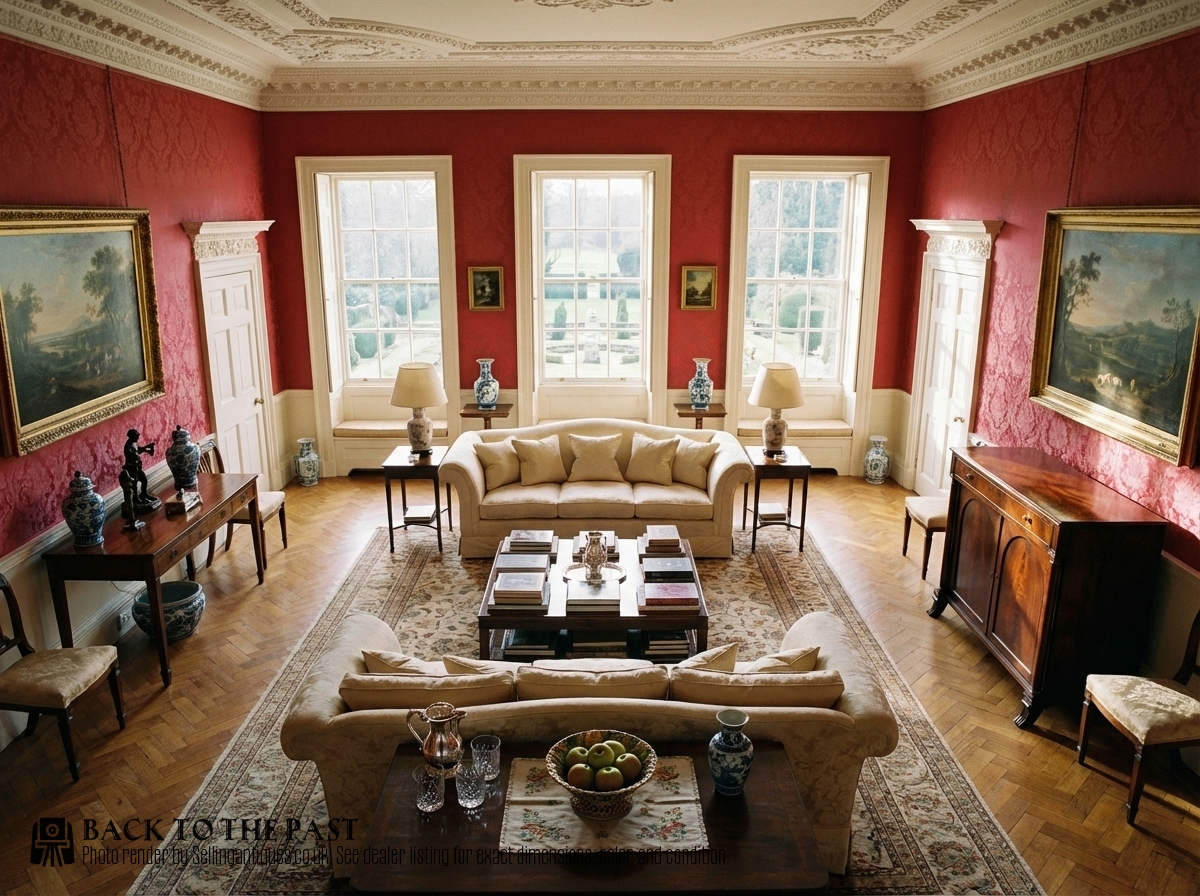
These cabinets stood against the principal walls of drawing rooms, dining rooms, and parlours, positioned where they could display porcelain and silver.
Their low profile ensured they did not obstruct windows or paintings hung above them.
What is a pier cabinet?
A pier cabinet is a narrow piece built specifically to fit the wall space between two large windows.
These cabinets often incorporated glass doors and velvet-lined interiors to showcase delicate collections.
Can I use an antique cabinet for modern storage?
The interior shelves accommodate books, tableware, and modern media equipment depending on the depth of the carcass.
Care should be taken with antique locks and hinges when accessing the interior regularly.