


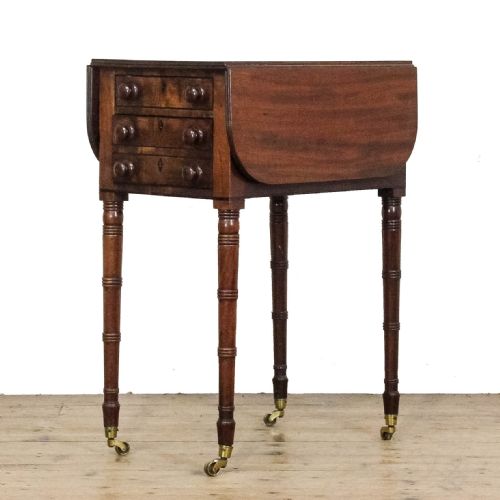


Nineteenth Century Sewing Table
A nineteenth century sewing table is a versatile piece designed for domestic handwork, combining practical storage with elegant display surfaces.
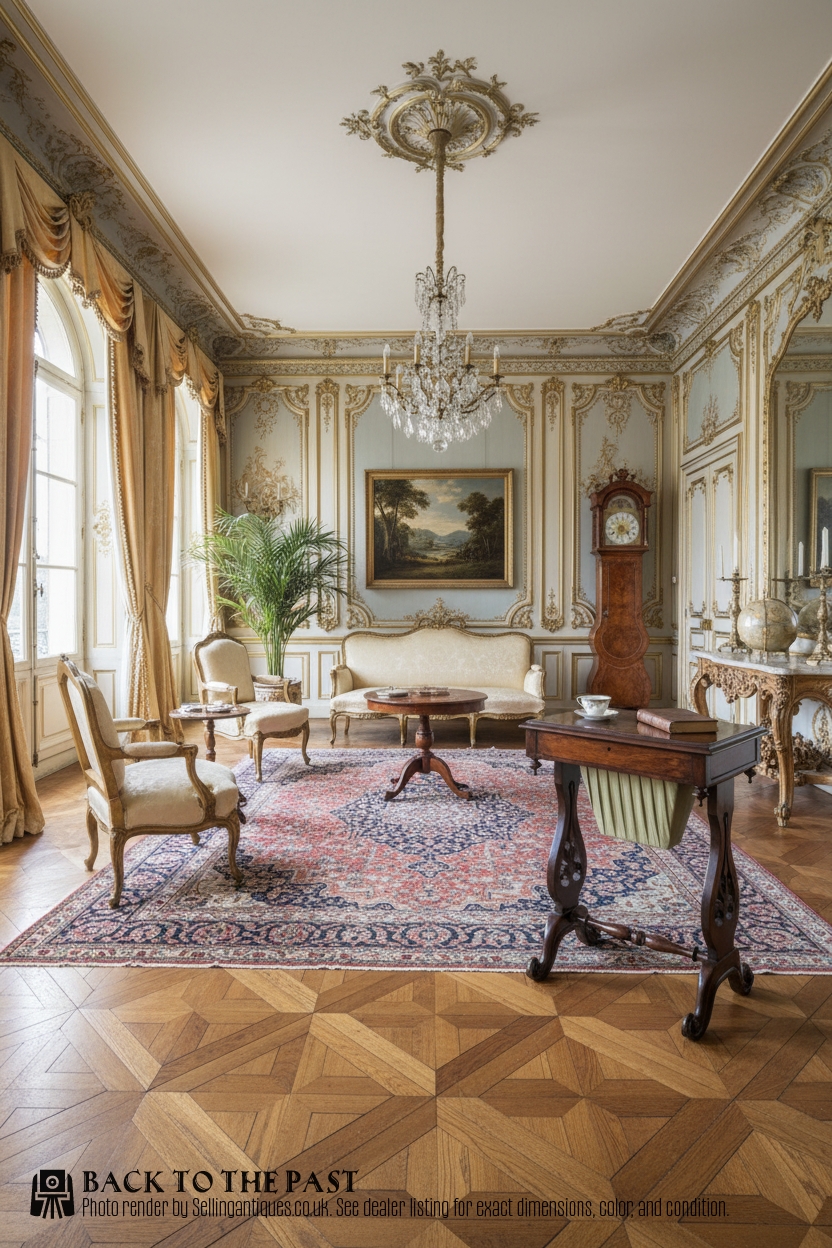
Nineteenth Century Sewing Table
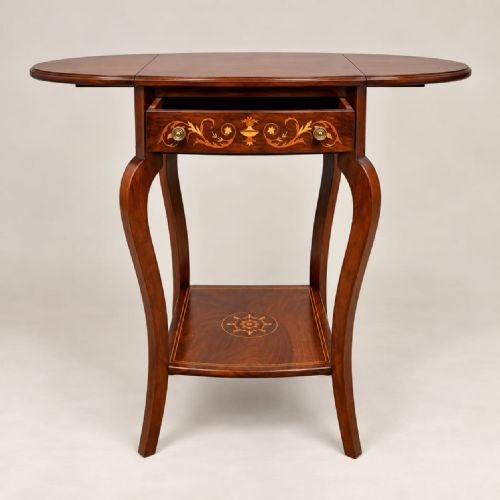
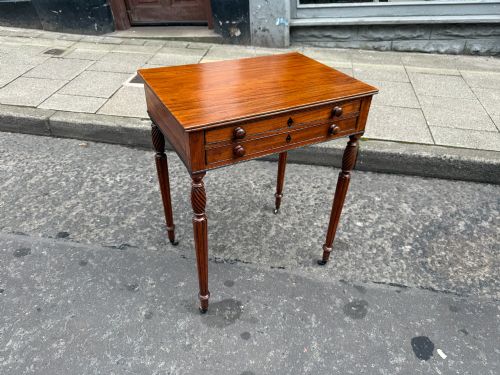
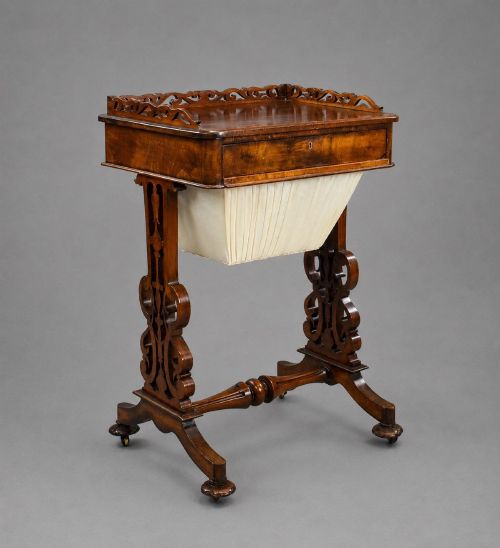
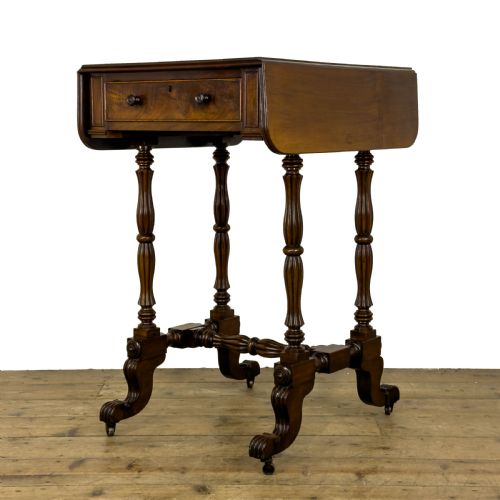
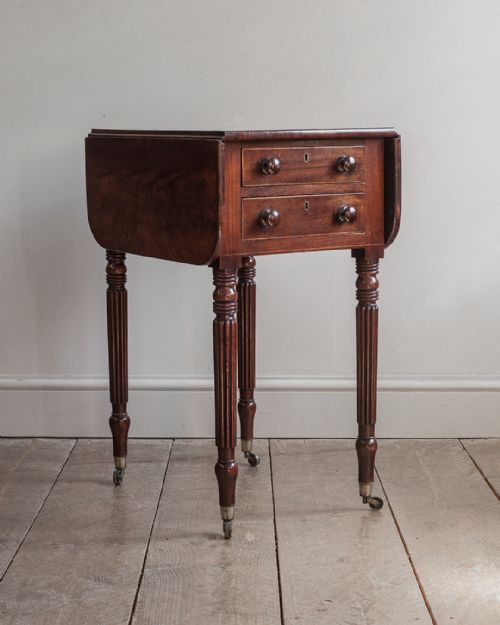
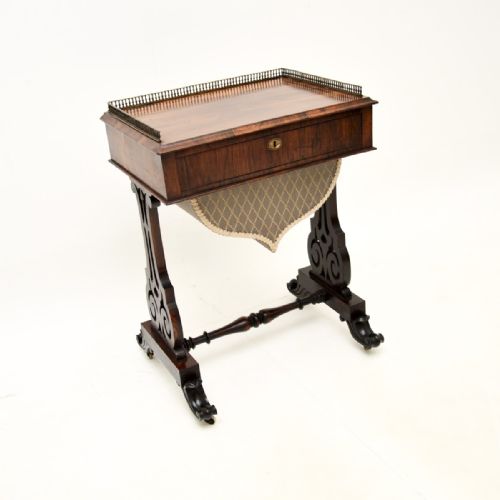
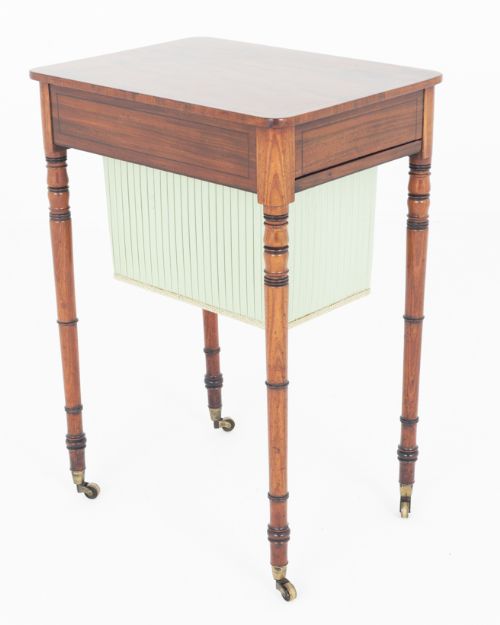
When you search for a nineteenth century sewing table, you encounter pieces designed primarily for needlework and small crafts. These items frequently appear as work tables, occasional tables, and side tables spanning the Georgian, Regency, William IV, and Victorian eras.
The most common examples on this page are Victorian burr walnut or mahogany pieces, alongside Regency designs in mahogany or rosewood. Many incorporate drop leaves, pedestal bases, or fitted interiors with compartments for thread and implements.
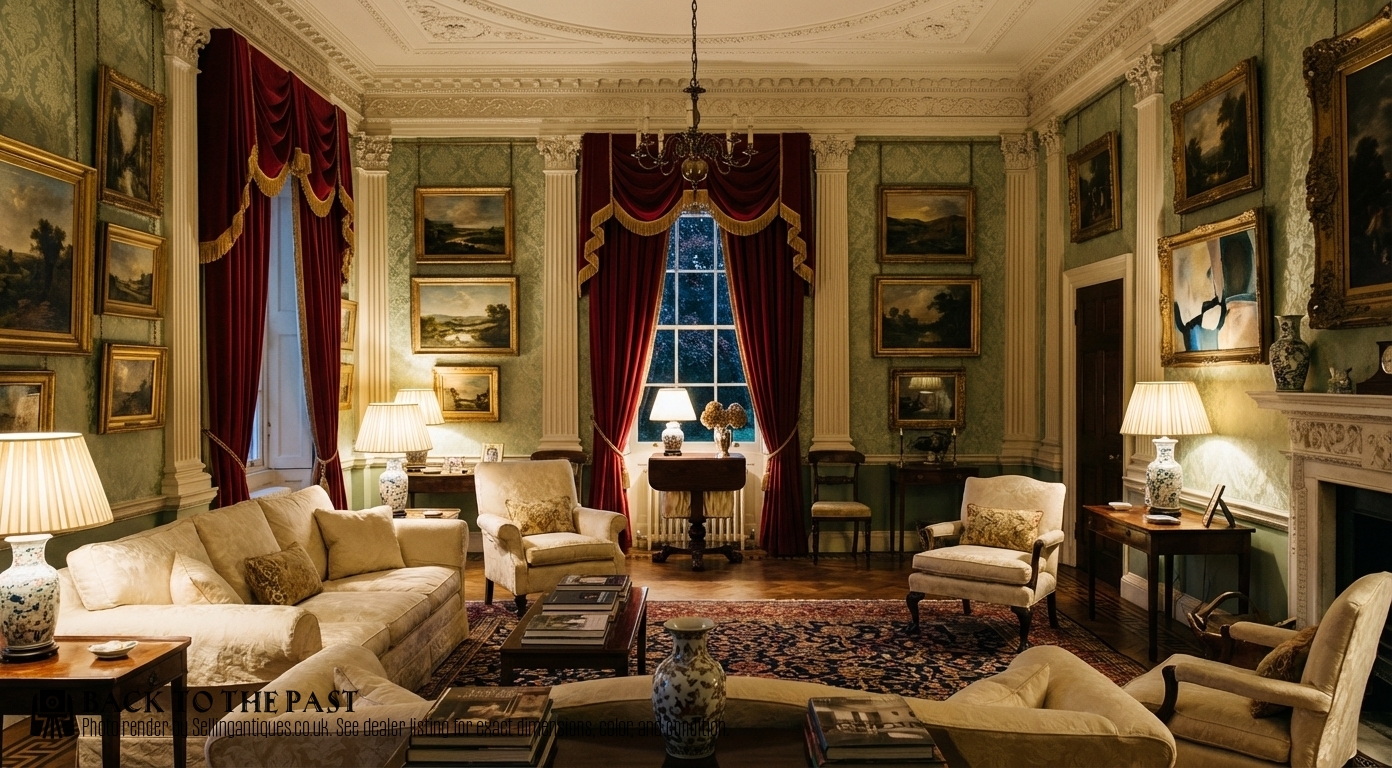
Materials and construction
Cabinet makers utilised a rich palette of timbers, including solid mahogany, rosewood, walnut, burr walnut, and satinwood. Finer examples display intricate marquetry inlay, brass detailing, or tiger bamboo structures reflecting specific period tastes like the Aesthetic Movement or Napoleon III styles.
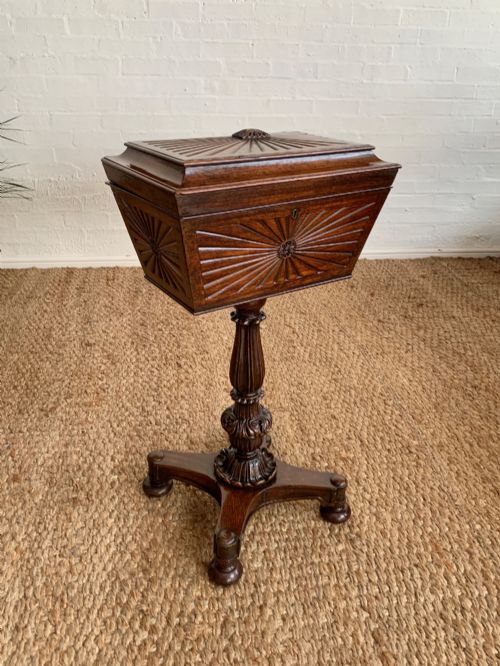
Structural forms rely on drop leaves, pedestal columns, and trumpet bodies containing internal compartments or workboxes. Surfaces frequently combine veneered tops with turned supports and carved decorative elements such as sunburst motifs.
Nineteenth Century Sewing Table Retail Price Guide 2026
Typical asking prices for nineteenth century sewing table among the pieces listed under this phrase on Sellingantiques today, from the lower quarter to the upper quarter. They describe what is for sale here now, not the wider market.
Several tables cleverly disguise their needlework storage as musical instruments or trumpets, keeping domestic labour looking entirely melodious.
Distinctions in quality
The standard of a nineteenth century sewing table is determined by the selection of timber veneers and the precision of the joinery. Superior items employ highly figured burr walnut, flame mahogany, or contrasting satinwood with careful attention to grain alignment.
Internal complexity and decorative detail further differentiate the range. Pieces featuring elaborate marquetry inlay, fitted silk-lined workboxes, or attributed cabinet work display a higher degree of craftsmanship than simpler utilitarian forms.
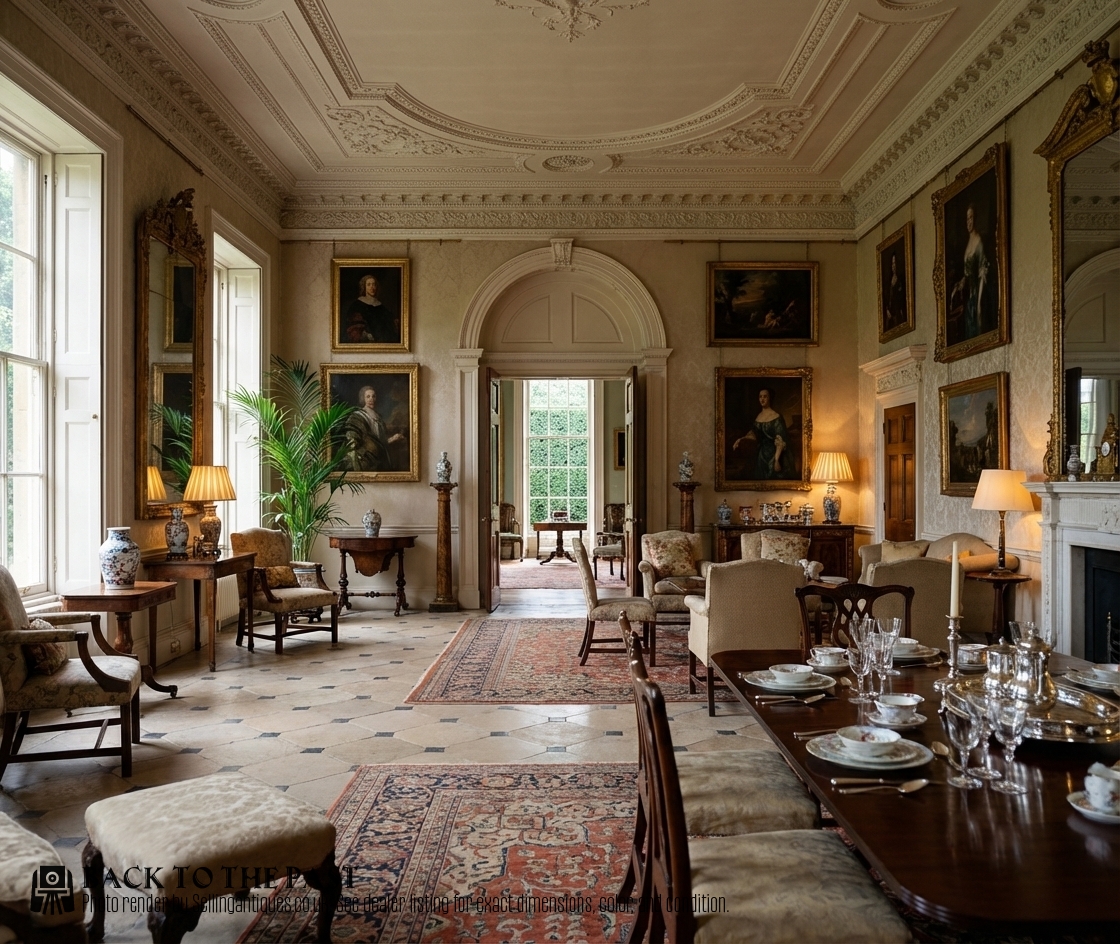
John MaClean
The Nineteenth Century Sewing Table Glossary
- Work table
- A multi-functional piece of furniture containing internal compartments designed specifically for holding sewing materials and crafting accessories.
- Drop leaf
- A hinged flap on the side of a table that can be raised to extend the surface area or lowered when space is restricted.
- Trumpet table
- A form of nineteenth century work table characterised by an octagonal or circular body widening towards the base, resembling the bell of a musical instrument.
- Marquetry
- Decorative inlay technique using various wood veneers to create pictorial or geometric patterns across the table surface.
- Pedestal
- A single central support column rising from a platform base with feet, commonly utilised on Regency and William IV tables.
Nineteenth Century Sewing Table: Frequently Asked Questions
What is a sewing table?
A sewing table is a small decorative piece of furniture from the nineteenth century equipped with drawers, boxes, or fabric bags to hold needlework supplies.
These versatile items functioned as side tables or occasional tables in drawing rooms and parlours while keeping domestic crafts close at hand.
How do I date a sewing table?
Dating relies on identifying stylistic characteristics associated with specific periods, such as Regency brass inlay, William IV pedestal carving, or Victorian burr walnut veneers.
Construction methods and timber choices also provide clear indicators of whether a piece originates from the early nineteenth century or the later Victorian decades.
Did these tables only serve for sewing?
While intended primarily for needlework, many examples double as games tables with reversible tops for chess or backgammon.
Others serve adequately as lamp tables or occasional side tables in modern living spaces due to their compact proportions.
What is a trumpet workbox?
A trumpet workbox is a Victorian form featuring a flared octagonal body set on a slender pillar and tripod base.
The hinged lid opens to reveal a fitted interior divided into compartments for storing threads, thimbles, and small sewing tools.