

Nineteenth Century Mahogany Desk
Nineteenth century mahogany desk pieces are substantial writing furniture built for libraries and studies, prized for deep timber grain and practical drawers.
Nineteenth Century Mahogany Desk
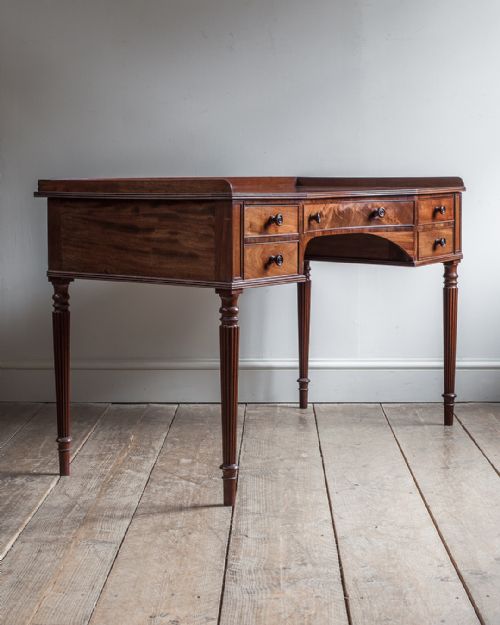
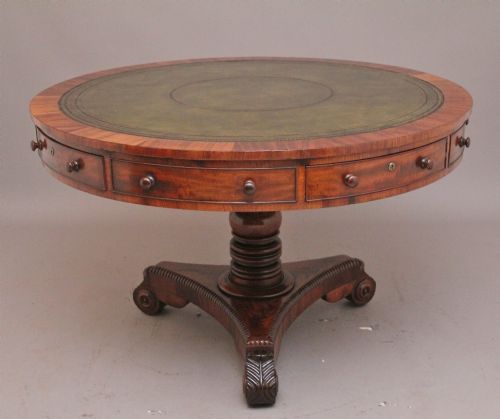
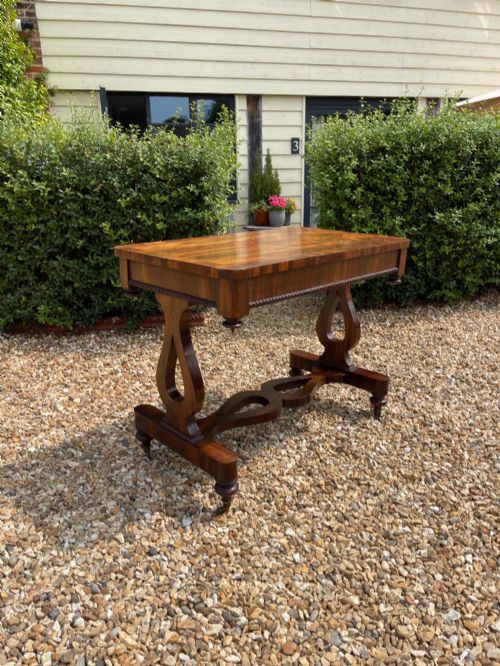
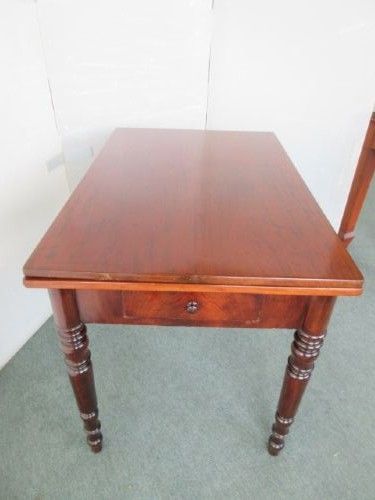
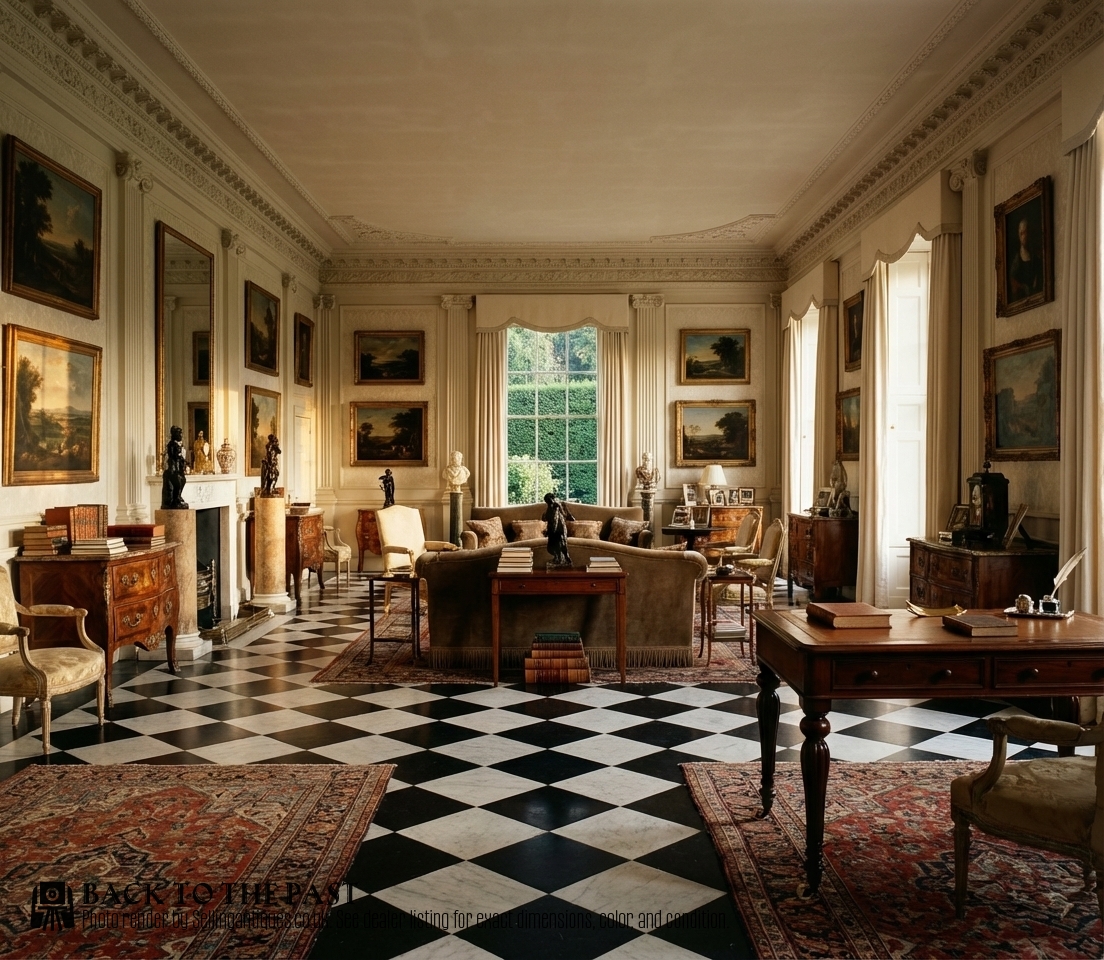
When you examine a nineteenth century mahogany desk, you encounter forms ranging from pedestal tables to compact campaign writing slopes and large partners pieces. The Victorian and Regency periods dominate these offerings, bringing substantial timbers and formal proportions into domestic and institutional spaces.
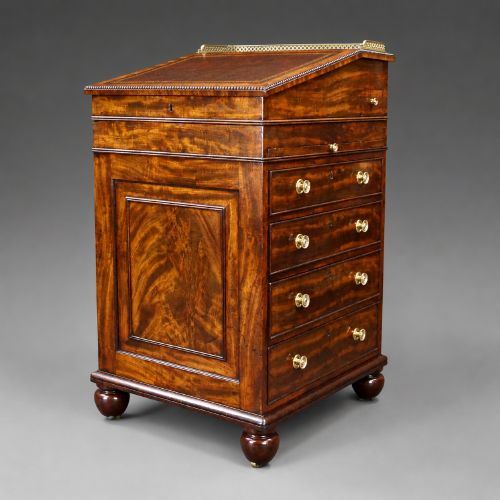
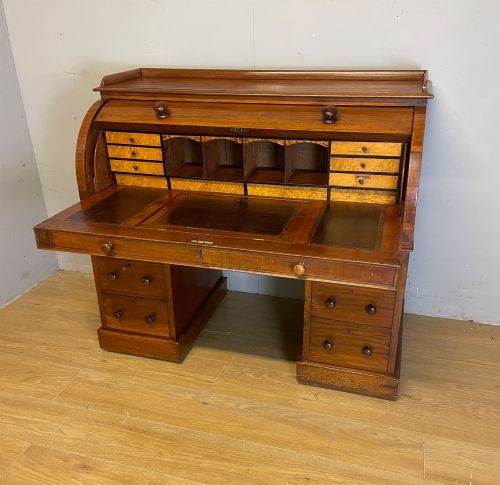
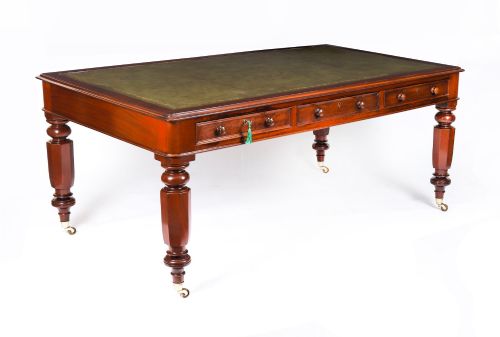
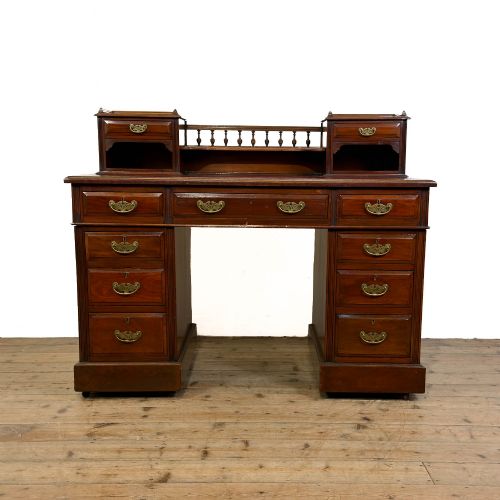
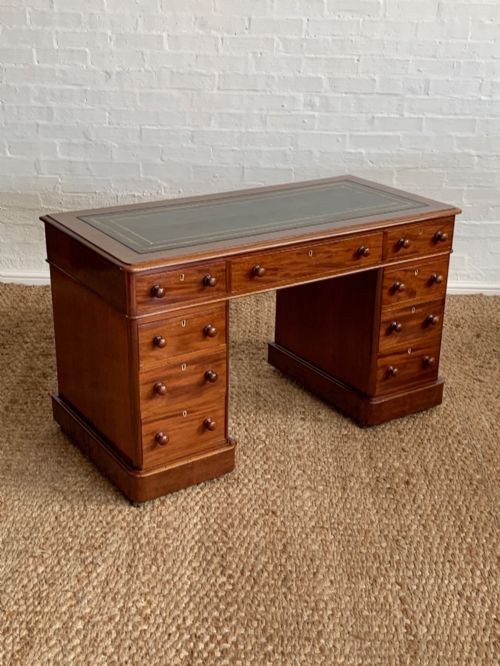
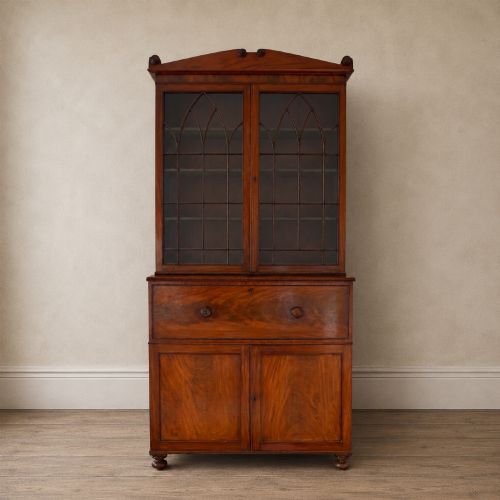
Pedestal desks and writing tables appear most frequently in this selection, often fitted with tooled leather writing surfaces and multiple drawers. Alongside these, cylinder desks, Carlton House formats, and secretaire bookcases provide specialised compartments for correspondence and account keeping.
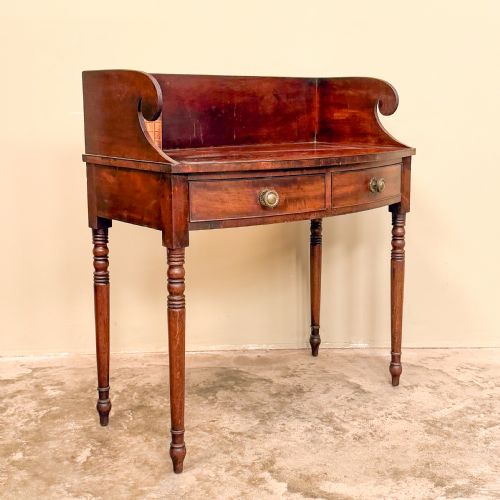
Makers working within these styles drew upon Georgian traditions while adapting to changing domestic requirements during the 1850s, 1860s, and later decades. The resulting variety spans simple functional writing surfaces to elaborate architectural cabinetry inlaid with rosewood and satinwood.
Materials and construction methods
Cabinetmakers utilised solid mahogany and figured flame mahogany veneers over secondary timbers, often selecting boards with rich natural grain patterns. Brass hardware, including campaign mounts, locks, and drawer pulls, added durability and structural contrast to the dark timber.
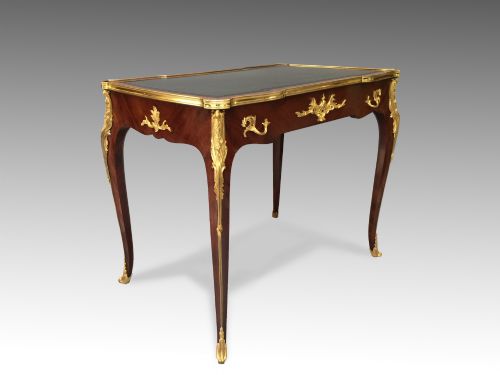
Writing surfaces incorporated tooled leather in shades such as olive green or red, secured around the perimeter with subtle blind tooling. Secondary materials such as glass, ormolu, and rosewood accents appeared on finer pieces originating from specialist workshops and French ateliers.
Nineteenth Century Mahogany Desk Retail Price Guide 2026
Typical asking prices for nineteenth century mahogany desk among the pieces listed under this phrase on Sellingantiques today, from the lower quarter to the upper quarter. They describe what is for sale here now, not the wider market.
Secret spring-loaded catches hidden inside pedestals often release shallow concealed compartments beneath the main writing surface.
Distinctions in quality and execution
Quality rests upon the selection of timber, particularly the depth of figure in flame mahogany veneers and the precision of the cabinet joints. Pieces originating from documented makers or bearing maker stamps exhibit superior internal drawer construction and refined secondary woods.
The integration of original brass hardware, functional locking mechanisms, and well-preserved tooled leather surfaces elevates an example above standard utility pieces. Proportion, restrained carving, and balanced secondary veneers distinguish master cabinetwork from simpler commercial production.
Gillows·François Linke·Edwards & Roberts·Hobbs & Co.·Walker·Richardson of Leeds·W Ovitt
The Nineteenth Century Mahogany Desk Glossary
- Mahogany
- A durable tropical hardwood prized for its reddish-brown colour and stability in cabinetmaking. It takes a high polish and accepts fine carving.
- Partners desk
- A large freestanding writing table designed with drawers on both long sides to accommodate two users facing each other. These pieces frequently feature leather-inlaid tops.
- Pedestal desk
- A heavy writing desk comprising two stacks of drawers supporting a single top surface. The user sits in the central kneehole space between the pedestals.
- Campaign writing slope
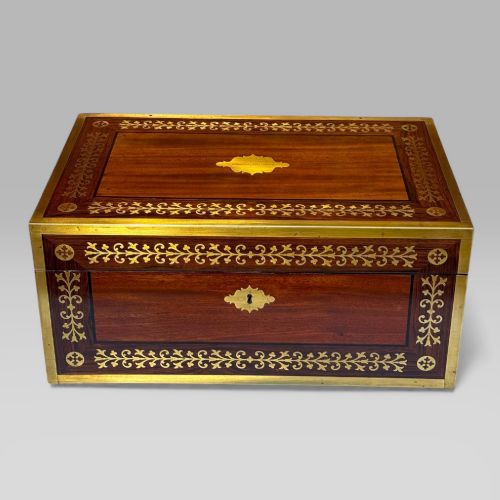
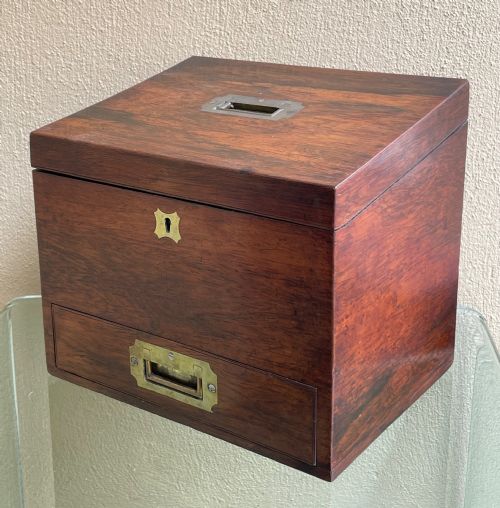
- A portable box that opens to form a slanted writing surface with compartments for ink and paper. These items were built for travel with recessed brass carrying handles and corner reinforcement.
- Secretaire bookcase
- A tall cabinet combining upper bookshelf storage with a drop-front writing drawer concealing small pigeonholes and inner drawers. It represents a versatile architectural form from the period.
Nineteenth Century Mahogany Desk: Frequently Asked Questions
What is a partners desk?
A partners desk is a large, freestanding writing table constructed with drawers and cupboards on opposing sides. This design allowed two people to work opposite one another in a shared study or library.
These pieces typically feature a tooled leather writing insert on top and represent some of the most substantial writing furniture produced during the period.
How do I care for leather desk tops?
Leather writing surfaces require gentle cleaning with a damp cloth and occasional treatment with appropriate leather dressings to prevent cracking. Avoid harsh chemical cleaners that can strip the original tooling and gold leaf.
Maintaining a stable room temperature protects both the leather insert and the underlying mahogany timber from excessive drying.
What distinguishes Regency from Victorian desks?
Regency pieces often display classical architectural influences, delicate brass inlay, and clean structural lines derived from earlier Georgian traditions. They frequently utilise figured flame mahogany and rosewood crossbanding.
Victorian desks tend toward heavier proportions, deeper pedestals, and robust architectural mouldings, reflecting changing domestic tastes through the middle and late nineteenth century.