


Nesting End Tables
Nesting end tables offer a clever space-saving arrangement of graduated tables that slide neatly beneath one another when floor space matters.
Nesting End Tables
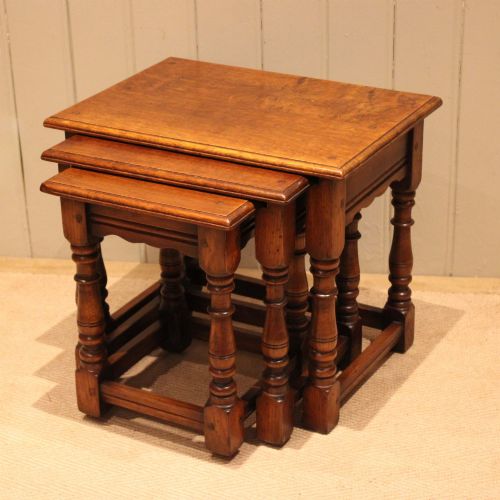
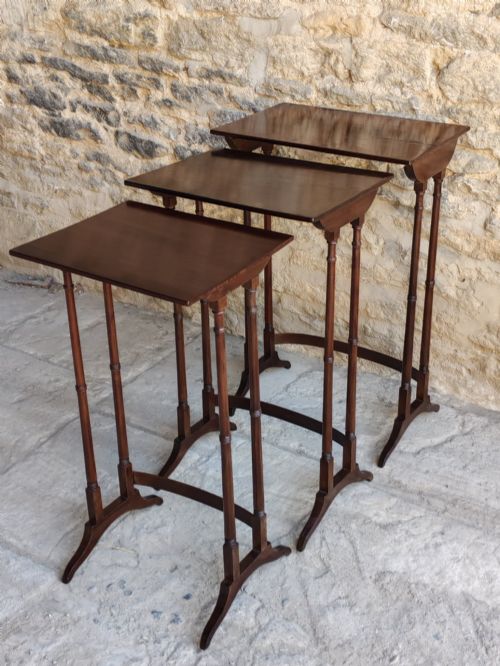
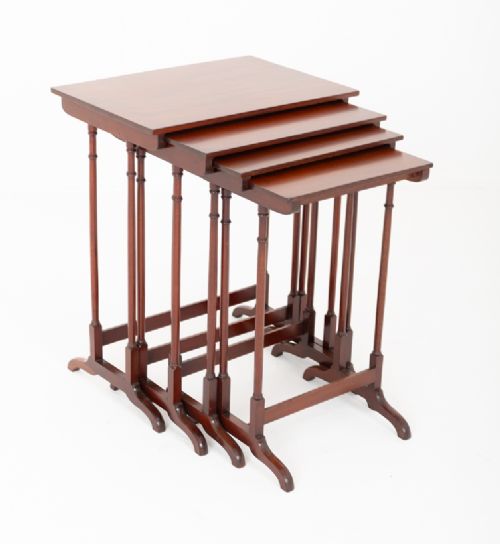
Nesting end tables comprise multiple graduated tables designed to slide neatly beneath one another, preserving floor space until additional surfaces are required for tea or display. When seeking nesting end tables, you encounter various formats ranging from sets of three to five tables.
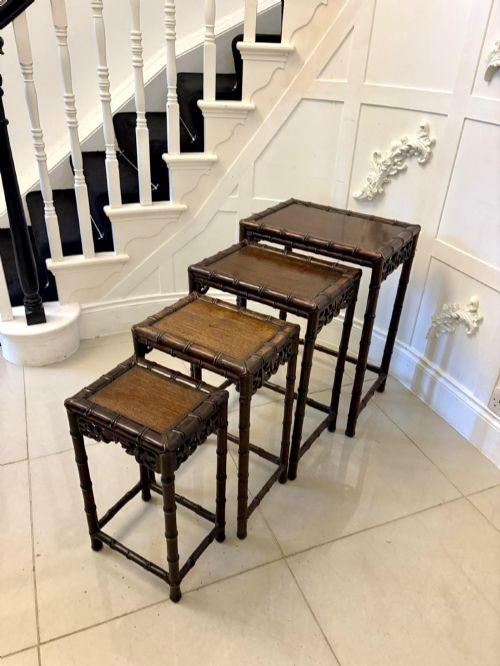
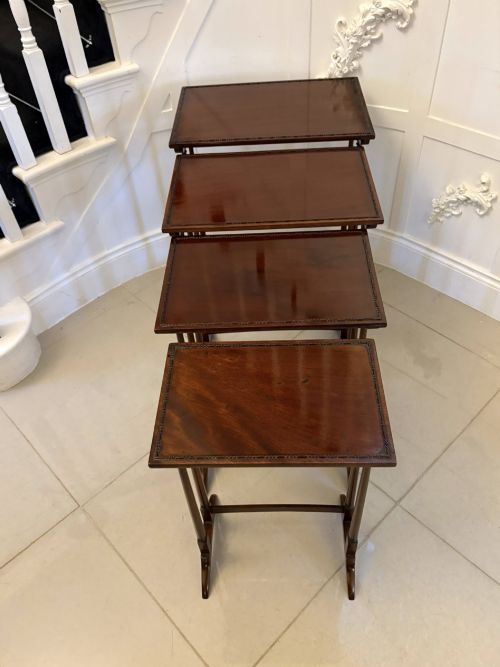
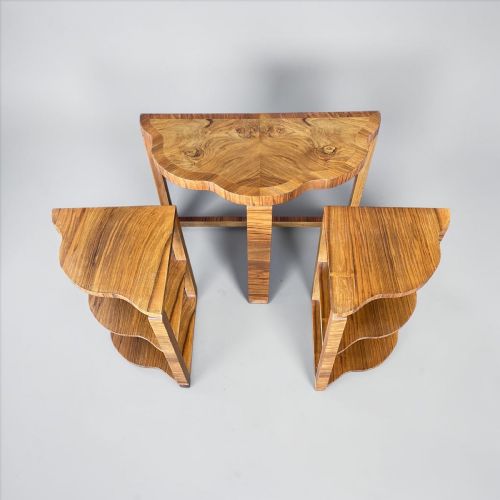
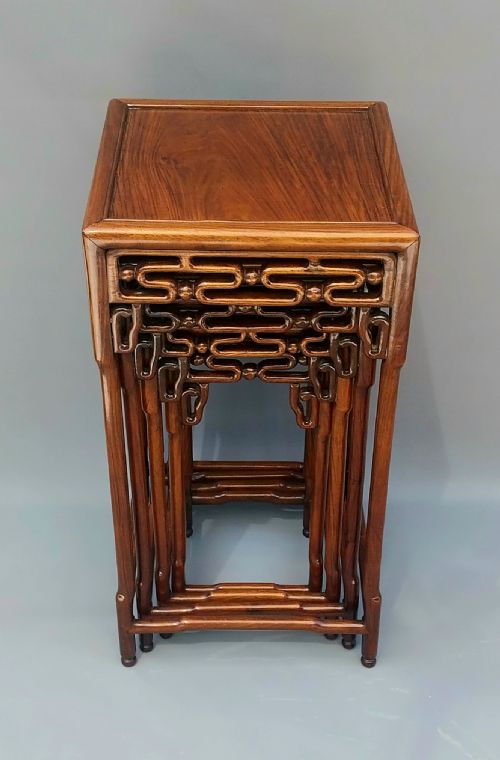
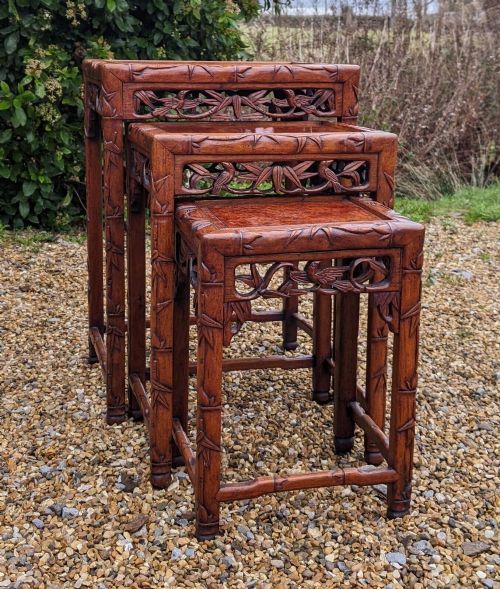
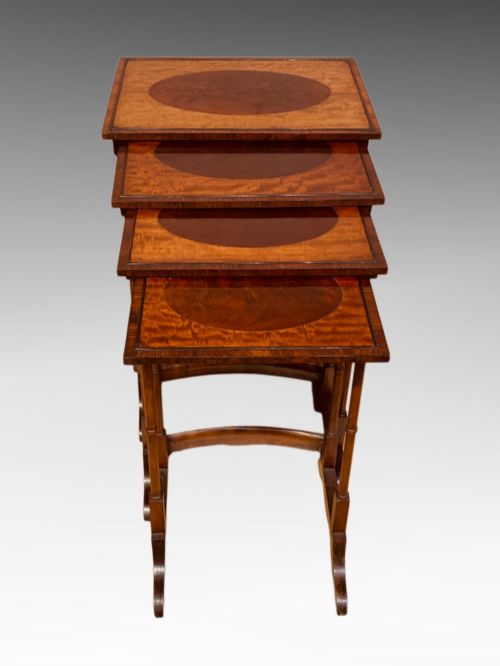
The material record spans traditional British periods like the Georgian, Victorian, and Edwardian eras, alongside Art Deco designs and Chinese Export pieces in rosewood and hardwood. Edwardian and early twentieth century mahogany examples appear frequently alongside nineteenth century Oriental carved hardwood sets.
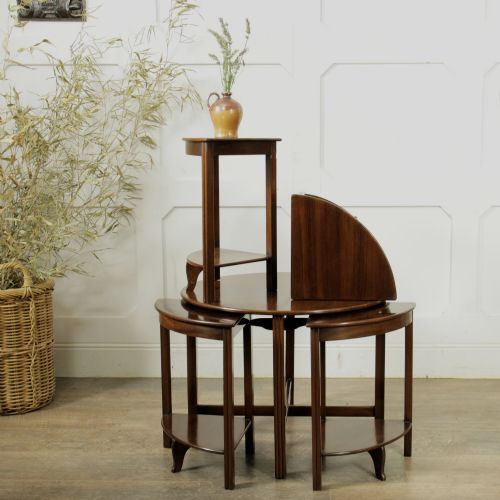
Formats shift from circular Edwardian configurations to rectangular quartetto sets and low coffee table heights. This variety allows these versatile furnishings to slide beside a sofa or serve individual guests around a room before storing compactly as a single unit.
Assessing Quality
Quality rests in the precision of the graduated sizing and the structural integrity of the joints on every table in the set, not just the largest one. Superior pieces maintain tight tolerances so the stacked arrangement sits flush and square.
Choice of timber grain and the crispness of inlay or carving distinguish finer examples from standard production. Richly figured mahogany, well-executed satinwood inlay, or deeply carved Oriental hardwood elevate a set above plain utilitarian items.
The Nesting End Tables Glossary
- Quartetto
- A matched set of four graduated tables designed to nest together. This traditional term appears frequently in nineteenth and early twentieth century descriptions.
- Chinoiserie
- European decorative style employing Chinese artistic motifs. These designs often feature painted or lacquered oriental scenes on wooden surfaces.
- Parquetry
- Geometric mosaic woodwork used for decorative surface patterns. Skilled cabinet makers arrange small wooden veneers to form repeating motifs.
- Satinwood
- A durable tropical timber with a lustrous yellowish grain. Makers utilise this material for contrasting stringing and decorative inlay work.
Nesting End Tables: Frequently Asked Questions
How were nesting tables originally used?
These tables served primarily for serving afternoon tea or holding books and drinks in nineteenth and early twentieth century drawing rooms.
Servants would separate the graduated pieces and place them beside seated guests before stacking them away to clear the floor.
What is a quartetto set?
A quartetto set consists specifically of four tables that scale down in size to fit one beneath another.
This format gained popularity during the Edwardian period and earlier nineteenth century for compact modular convenience.
How do I distinguish Edwardian sets from earlier periods?
Edwardian examples frequently display lighter mahogany frames with delicate satinwood inlay or circular multi-table configurations.
Earlier Georgian and Victorian sets tend toward heavier timber construction and simpler rectangular proportions.
Can these tables be used as coffee tables?
Certain modern listings designate specific lower sets as coffee tables, though traditional variants served as occasional side tables.
The graduated heights allow individual pieces to be pulled out around a low seating area as needed.
What woods are most common?
Mahogany forms the majority of British provincial and Edwardian examples, often enhanced with boxwood or satinwood stringing.
Oriental and Chinese export pieces rely on dense hardwoods including rosewood, hongmu, and huanghuali.