


Neoclassical Wall Plaque
A neoclassical wall plaque brings classical mythology and profile portraits into an interior through relief sculpture.
Neoclassical Wall Plaque
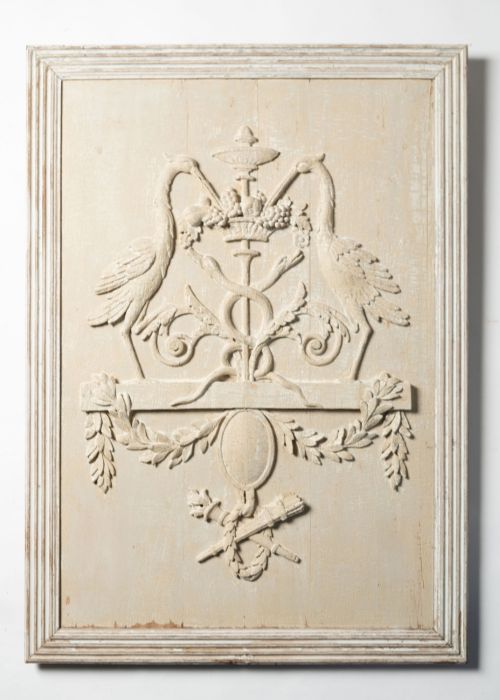
A neoclassical wall plaque takes the form of a carved wooden panel, a framed relief sculpture, or a porcelain charger mounted for display. The pieces met here span the eighteenth and nineteenth centuries, drawing on French Empire, Louis XVI, and classical revival styles.
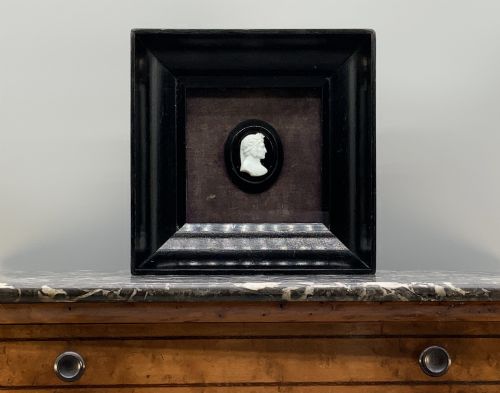
Makers rendered mythological figures, Roman emperors, and allegorical scenes in high or low relief. Formats range from small Italian marble profile plaques to large plaster friezes and painted decorative panels.
Materials and construction
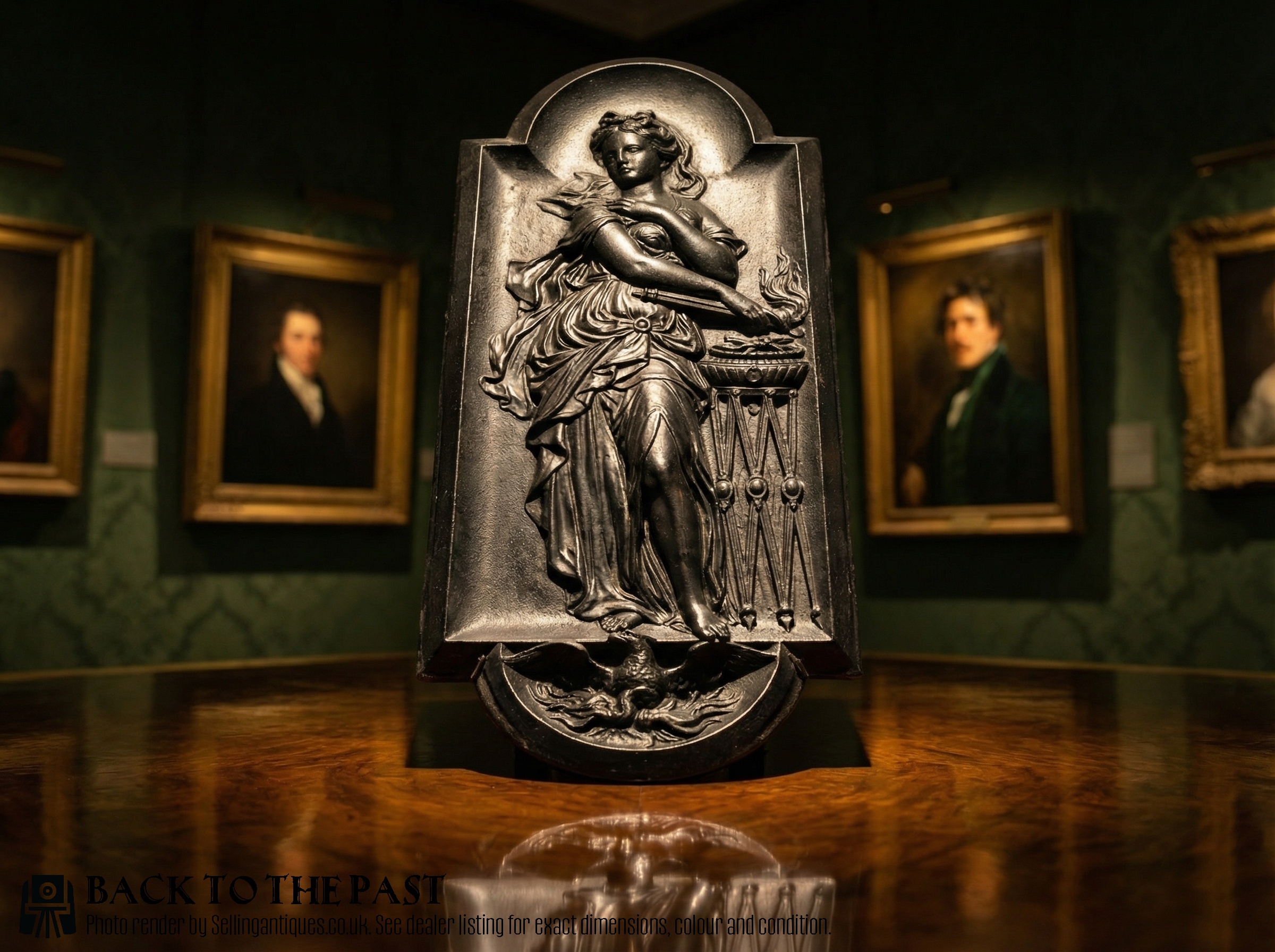
Carvers worked ivory, wood, and marble to create detailed bas-relief portraits and classical scenes. Foundries cast bronze, brass, and copper into heavy relief plates and decorative plaques, sometimes applying gold leaf highlights.
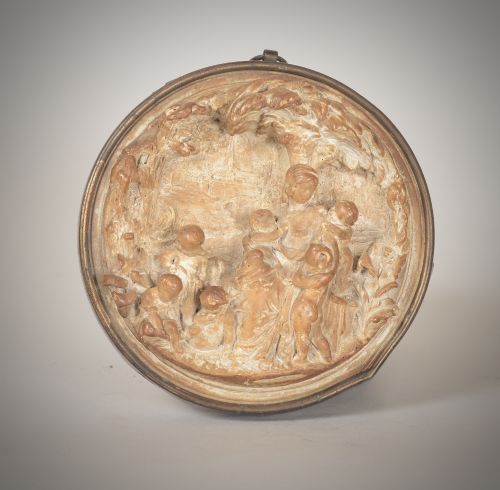
Potteries utilised fine porcelain for chargers depicting mythological narratives, whilst other workshops moulded plaster, terracotta, and marble dust into relief friezes and wall masks.
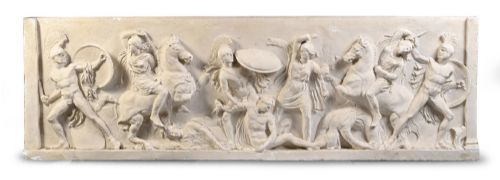
An Amazonmachy battle scene brings ancient Greek heroines and warring Amazons straight to the dining room wall.
Distinctions in quality
The choice of material dictates the finish, from the smooth glaze of Vienna porcelain chargers to the dense grain of carved wooden panels. Early Grand Tour souvenirs and labelled works demonstrate superior handling compared to later commercial copies.
Carlhian And Corbiere London·Coalbrookdale·Vienna
The Neoclassical Wall Plaque Glossary
- Bas-relief
- Low relief sculpture where the figures project only slightly from the background plane. This technique appears frequently on marble cameo portraits and porcelain chargers.
- Grand Tour
- A traditional trip through Europe undertaken by upper-class travellers in the eighteenth and nineteenth centuries. Souvenirs from these journeys included small carved marble profile plaques and bronze plates.
- Charger
- A large decorative plate intended for display rather than dining. Vienna porcelain examples often depict classical historical scenes across a wide surface.
- Terracotta
- Fired brownish-red clay used for sculptural friezes and reliefs. It allows for direct modelling before baking.
- Jasperware
- A type of fine stoneware developed by Josiah Wedgwood, known for its matte surface and contrasting neoclassical cameos in relief.
Neoclassical Wall Plaque: Frequently Asked Questions
How were these wall plaques displayed?
Many pieces were hung directly on walls as independent artworks, mounted within decorative frames, or set above doorways as architectural over-doors.
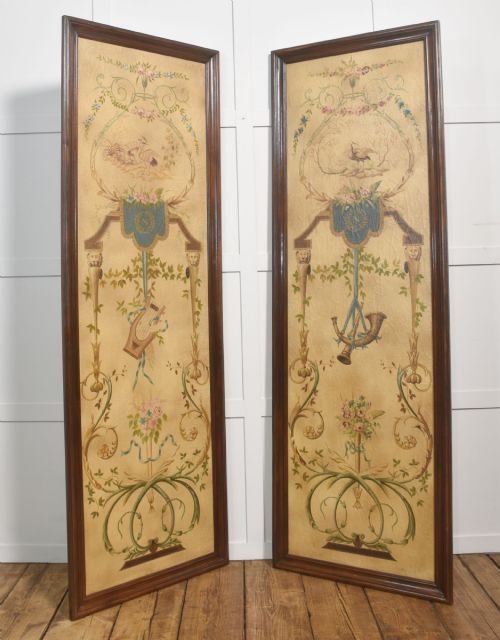
Larger plaster friezes and painted panels were integrated into room panelling to emulate classical interiors.
What subjects appear on these plaques?
Motifs draw heavily from Greek and Roman mythology, including figures such as Venus, Bacchus, and Diana the Huntress. Profile portraits of Roman emperors, Dante, and Virgil also recur across marble and ivory.
How do I distinguish eighteenth-century pieces from nineteenth-century copies?
Eighteenth-century examples often show the hand-tool marks of individual carvers on marble, wood, and ivory. Nineteenth-century pieces frequently utilise industrial casting methods or factory-produced porcelain bodies.
Can heavy bronze and marble plaques hang safely?
Solid bronze plates, marble panels, and framed sculptures require secure wall anchors suited to their weight. Professional fixings that engage directly with wall studs or masonry provide necessary support.