



Ebonised Wall Plaque
These ebonised wall plaque items bring dark, dramatic framing and detailed portraiture or relief work straight to your interior walls.
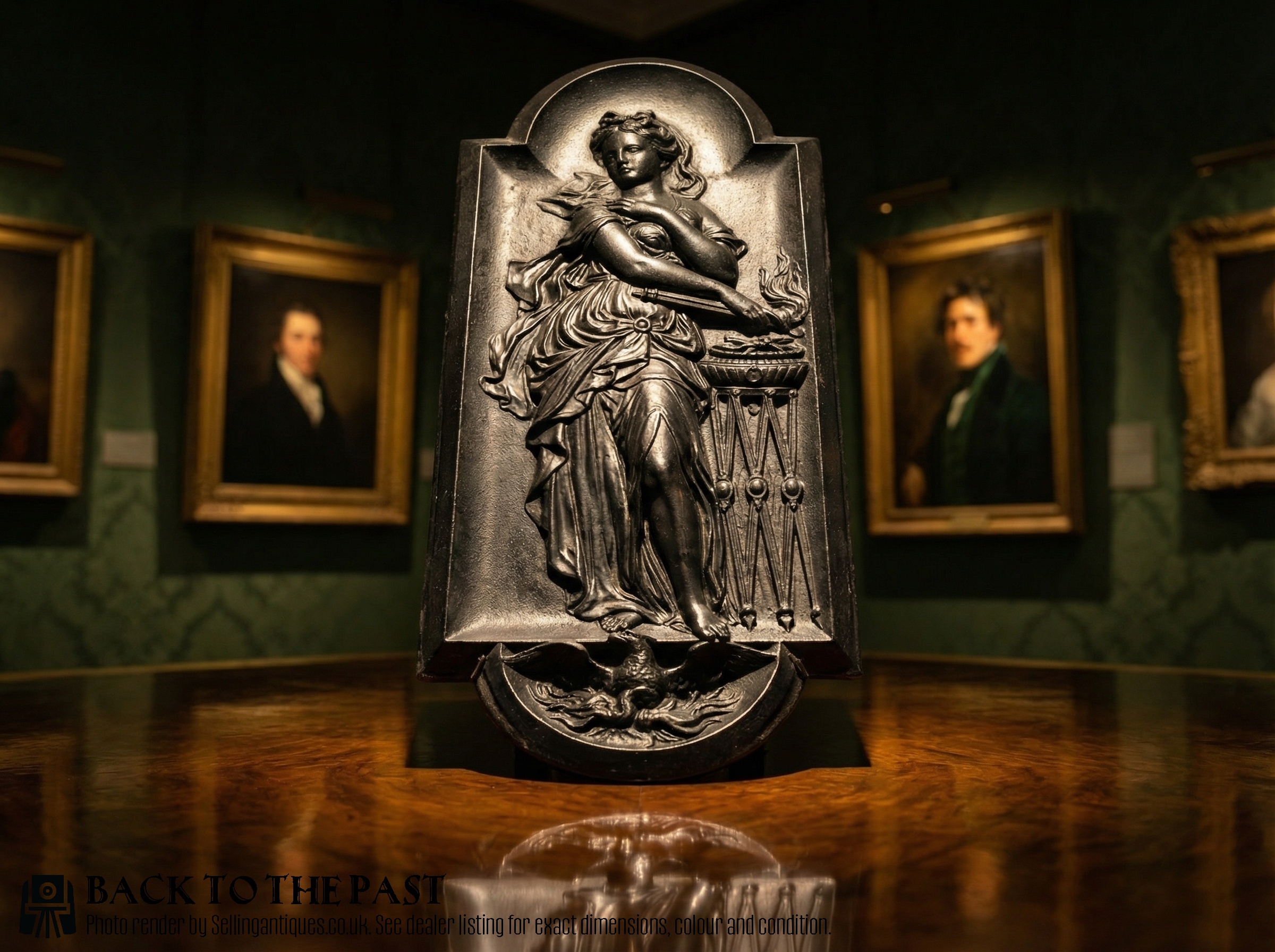
Ebonised Wall Plaque
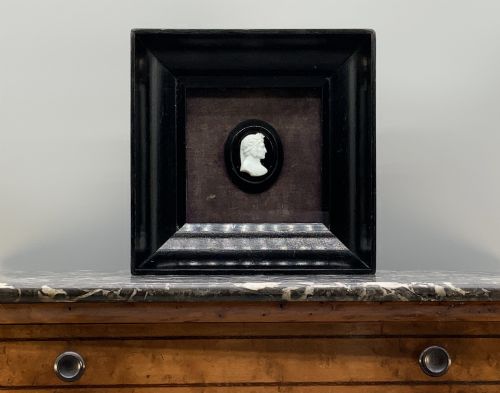
An ebonised wall plaque combines a dark, blackened timber frame or mounting with a central decorative panel made from materials like carved ivory, porcelain, micromosaic, or enamel. These pieces serve as striking focal points that draw the eye through high-contrast displays.
You will most commonly encounter nineteenth-century examples on this page, often featuring classical motifs, religious scenes, or portraiture housed within contrasting black surrounds.
The assortment spans diverse stylistic revivals, including Neoclassical, Baroque, and Regency periods, reflecting centuries of European craftsmanship and Grand Tour collecting habits.
Materials and construction
Maker techniques rely heavily on darkening wood to imitate ebony, creating a dense, light-absorbing border that accentuates the brighter materials mounted within. Timber frames house delicate interior elements such as painted Limoges porcelain, micromosaic glass tesserae, and carved ivory.
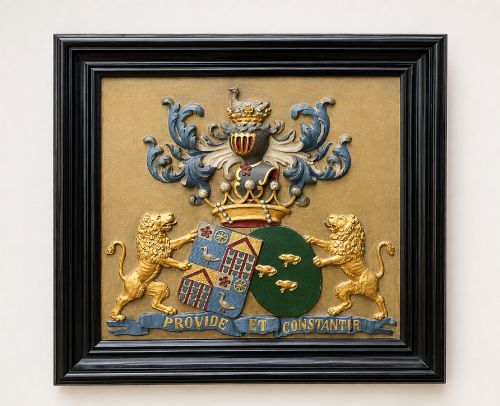
Marriage plaques from nineteenth-century Dutch households recorded familial alliances with the same solemn permanence as an architectural monument.
Distinguishing quality in execution
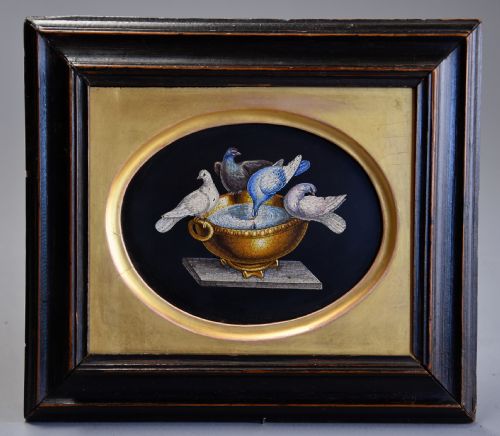
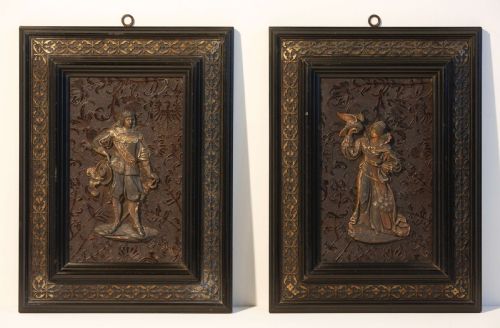
Superior examples demonstrate exceptional fineness in the central relief or painted detail, whether through the minute precision of glass tesserae in a micromosaic or the sharp casting of bronze figures. The relationship between the dark ebonised frame and the central plaque determines the visual harmony of the entire piece.
The integrity of the mounting and the depth of the carving separate standard workshop pieces from those produced by skilled artisans or established London firms. Original labels and well-preserved framing elements further elevate the standing of an individual item.
Carlhian and Corbiere London·Van Rijckevorsel and Verheijen·Gian Federigo Bonzagna·George Atkinson
The Ebonised Wall Plaque Glossary
- Ebonised
- Wood treated with a dark stain or finish to simulate genuine ebony. This process became widely popular during the nineteenth century to provide a dramatic, uniform black border.
- Micromosaic
- A pictorial technique utilising tiny opaque glass pieces, known as tesserae, assembled together to form detailed figurative or landscape scenes. Italian workshops produced renowned examples often set into black frames.
- Grand Tour
- A traditional cultural excursion of Europe undertaken by wealthy young men in the eighteenth and nineteenth centuries. Travellers collected small artworks, including classical portrait plaques, to bring home.
- Limoges
- A French city celebrated for its historic production of enamelled and painted porcelain plaques. These items display vibrant pigments fired onto metal or ceramic bases.
- Neoclassical
- An artistic style inspired by the classical art and culture of ancient Greece and Rome. This aesthetic manifests in symmetrical compositions and dignified portrait subjects.
Ebonised Wall Plaque: Frequently Asked Questions
How do I hang a wall plaque safely?
Most pieces utilise integrated hanging loops, secure wire setups, or sturdy wooden backing structures designed to support their specific weight. You should assess the mounting hardware on the reverse of each individual frame before installation.
Ensure you use appropriate wall anchors that match the weight and material of both the plaque and your wall surface.
How are different periods identified?
Period identification relies upon stylistic markers, material combinations, and framing techniques characteristic of eras like the Regency or the nineteenth century. Details such as classical dress, subject matter, and maker labels provide direct chronological clues.
Craftsmanship methods, including the specific type of bronze casting or porcelain painting, also help determine the age of the piece.
How should I care for these materials?
Maintenance requires keeping pieces away from direct sunlight and extreme temperature fluctuations to protect sensitive materials like ivory, enamel, and wood. Dusting should be done gently with a dry, soft cloth without applying harsh cleaning agents.
Checking the stability of the frame and glass housing periodically helps preserve the condition of the internal artwork.