
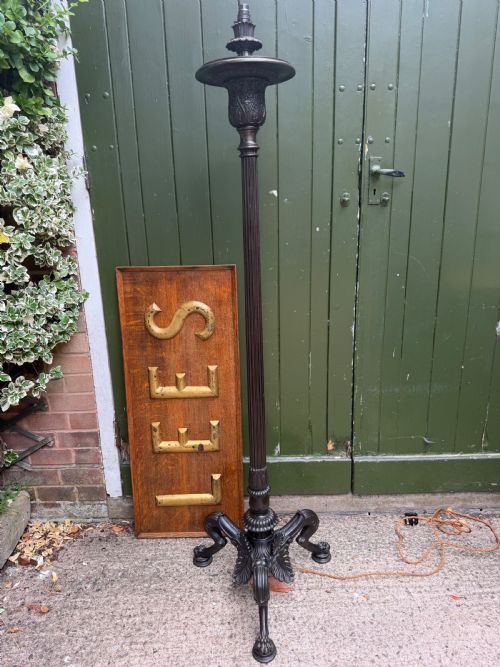
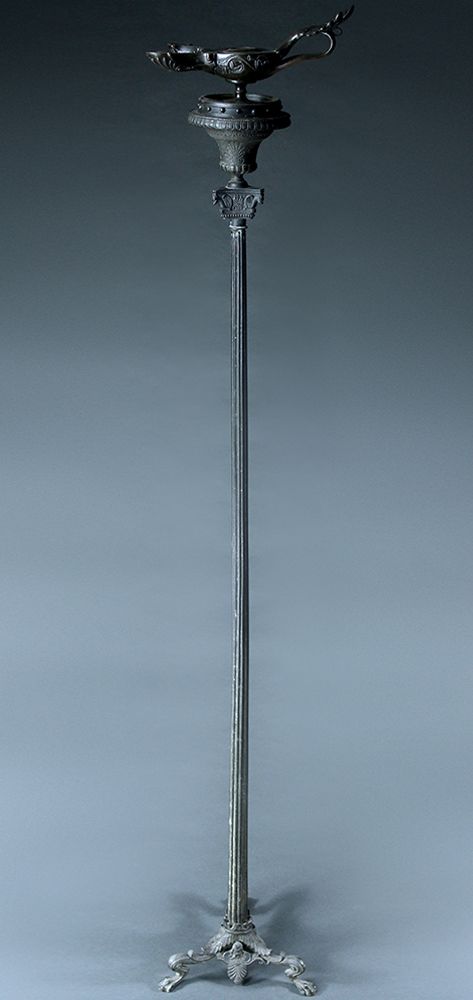
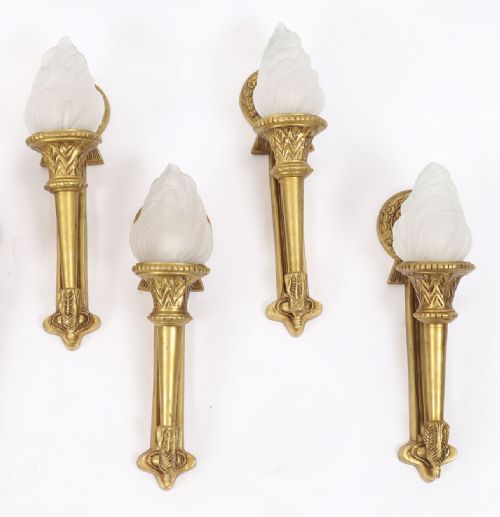


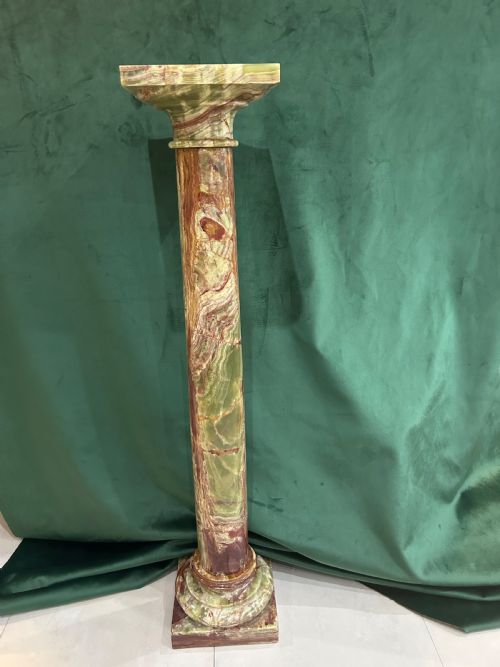
Neoclassical Torchere
A neoclassical torchere brings classical proportion and upright presence into a room, serving as a pillar for light or display.
Neoclassical Torchere
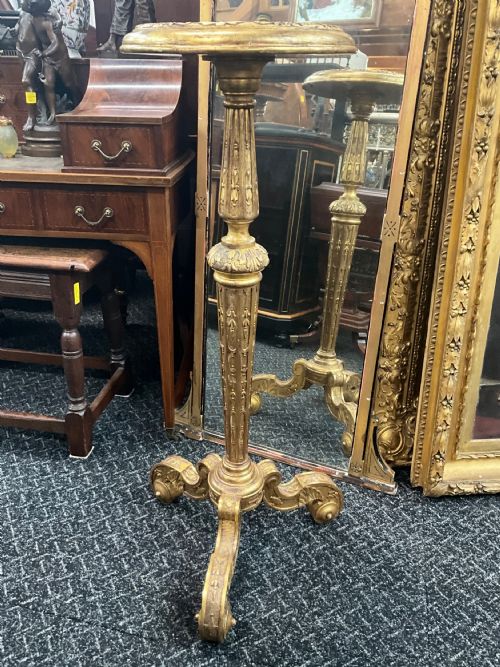
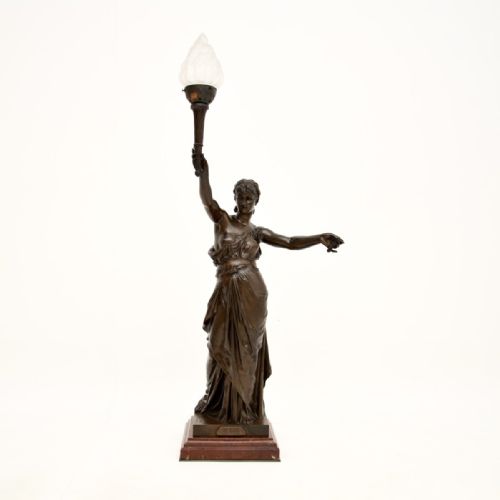
A neoclassical torchere takes the form of a tall stand, pedestal, or figural lamp rooted in classical design, often referencing ancient Greek and Roman motifs. You encounter these as floor standing lamps, tall pedestals, and wall-mounted lights spanning the nineteenth century through the early twentieth century.
The pieces on this page range from grand giltwood and bronze figural stands to marble columns and painted occasional tables, capturing revivals from Regency to French Empire styles. They function equally well as standalone sculptural objects or as elevated bases for illumination.
Makers and designers from Humphrey Hopper to F. De Luca and Jean-Jules Cambos appear across the listings, alongside substantial works of Italian and French origin. This variety gives you a choice between strict architectural symmetry and more decorative figural interpretations.
How they were made
Makers relied on cast metals such as bronze, ormolu, and spelter, often combined with hand-carved woods like giltwood, mahogany, and ebonised timber. These materials were frequently finished with applied gesso or patination to emulate ancient metalwork and stonework.
Marble and Carrara stone feature heavily in the construction of heavier stands and plinths, providing a stable foundation for taller lighting structures. Glass elements, including frosted or flaming torch shades, complete pieces designed specifically for illumination.
The listings on this page span the Georgian, Regency, and Victorian periods through to the nineteen-thirties.
What varies in quality
Quality rests in the crispness of the casting and carving, where finely chased ormolu mounts and deeply undercut woodwork distinguish superior examples from simpler production. The handling of classical proportions and the weight of the materials used dictate the overall presence of the piece.
Signed works and pieces associated with known sculptors or workshops carry a distinct level of execution in their figural detailing. The integration of high-grade marble or fire-gilt surfaces elevates certain stands far above standard painted alternatives.
Humphrey Hopper·F. De Luca·Jean-Jules Cambos·Coutan
The Neoclassical Torchere Glossary
- Torchere
- A tall ornamental stand or floor lamp designed to hold a light or display an object. The form originates from seventeenth-century torch-bearers.
- Ormolu
- Gilt bronze mounted on furniture or lighting fixtures, created using a mercury-gilding technique. This finish provides a bright, lasting metallic lustre.
- Gesso
- A plaster-like mixture applied to wood surfaces as a base for gilding or painting. It allows craftsmen to carve crisp decorative relief details.
- Spelter
- A zinc alloy used as a cheaper substitute for bronze in decorative figures and lamp bases. It takes patination well while remaining lighter than bronze.
- Giltwood
- Timber coated with a thin layer of gold leaf over a prepared ground. It remains a defining finish for formal neoclassical furniture and lighting.
Neoclassical Torchere: Frequently Asked Questions
What is a neoclassical torchere?
A neoclassical torchere is a tall stand or lighting fixture inspired by the architecture and art of antiquity. These pieces draw heavily on Greek and Roman forms.
They usually take the shape of columns, pedestals, or figural standards designed to hold lights or elevate decorative objects. Their primary function is to combine vertical height with classical ornamentation.
How were torcheres used historically?
Historically, torcheres held candles or oil lamps to illuminate large rooms and dark corners. They were placed strategically around formal reception spaces.
Over time, many of these stands were adapted for electricity or utilised purely as pedestals for displaying sculpture and vases. Their tall profile made them ideal for filling empty architectural gaps.
How do I identify a Regency torchere?
Regency torcheres often feature restrained classical lines, use materials like giltwood and mahogany, and reference ancient Roman or Egyptian motifs. They reflect early nineteenth-century British taste.
Look for architectural symmetry, carved classical details, and proportions that match the Regency aesthetic. Signed examples or works attributed to makers like Humphrey Hopper offer further confirmation.
Where should I place a torchere at home?
A torchere fits well in corners, flanking doorways, or standing beside large pieces of furniture where vertical balance is needed. Their height draws the eye upward.
Wall-mounted versions work effectively in hallways or reception rooms to provide ambient lighting. Floor-standing models can act as sculptural focal points in a living space.