


Neoclassical Silver Stick
These neoclassical silver stick pieces bring formal symmetry and classical order to a room, driven by clean lines and antique proportion.
Neoclassical Silver Stick
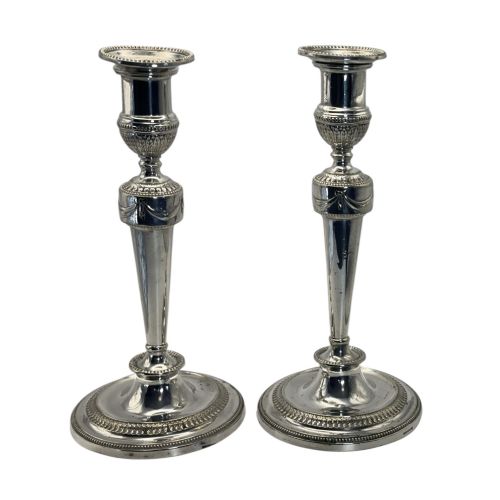
When you search for a neoclassical silver stick, you encounter candlesticks, candelabra, and walking sticks shaped by classical restraint and proportion. The examples on this page are most frequently silver plated, sterling silver, or silvered metal, drawing on Georgian, Victorian, and Edwardian periods.
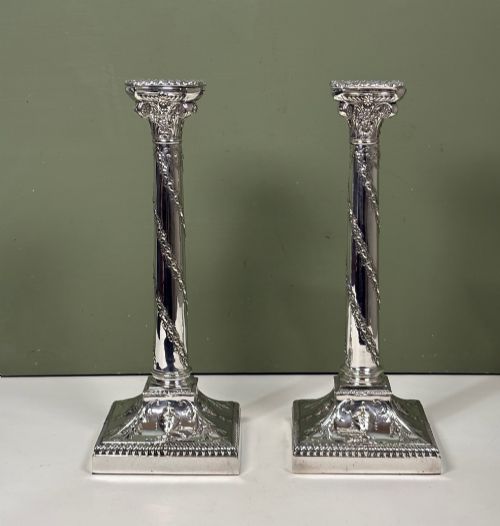
The styles span standard neoclassical through to Italian and Victorian interpretations, alongside revival pieces from the late nineteenth and early twentieth centuries. Candlesticks dominate the selection, often appearing in pairs with removable sconces or columnar designs.
How they were made
Makers utilised silver plate, old Sheffield plate, and sterling silver over bases of copper, brass, carved wood, or silvered bronze. Methods combined metal casting, silver plating techniques, and detailed hand-carving or gesso work on wooden cores.
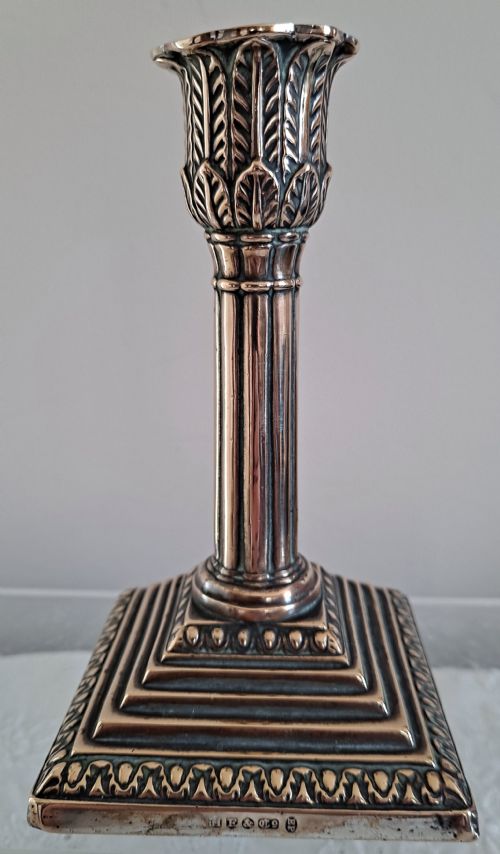
Detailing relied on precision stamping, casting, and applied silver leaf, creating the fluted columns, urn motifs, and classical capitals characteristic of the style.
Some walking sticks double as hidden measuring tools or contain secret compartments for the discerning eighteenth-century traveller.
What varies in quality
Quality rests in the crispness of the cast classical ornament, such as acanthus leaves, bead reels, and fluted columns. Stronger pieces retain deep detail and balanced proportions without undue wear to the silver layer.
Maker attribution and material integrity separate standard production from distinguished workshops. Heavy gauge metalwork and intact structural components define the finer items in the range.
Mappin & Webb·Barker Ellis·Ferdinand Barbedienne·Walker & Hall·Charles Boyton & Sons
The Neoclassical Silver Stick Glossary
- Old Sheffield Plate
- A method of fusing a thin sheet of silver to a thicker copper base by heat and pressure. This technique produces distinct edge-banding where the base metal shows.
- Sconce
- The detachable top pan on a candlestick designed to catch dripping wax. Removable sconces allow easier cleaning and maintenance.
- Corinthian Column
- A classical column form featuring an ornate capital decorated with acanthus leaves. It appears frequently on neoclassical pillar candlesticks.
- Silver Plate
- A thin layer of silver applied to a base metal such as copper, brass, or white metal. It offers the appearance of solid silver at a different weight.
Neoclassical Silver Stick: Frequently Asked Questions
Are these sticks made of solid silver?
The selection includes items in sterling silver, but a large portion consists of silver plate, old Sheffield plate, or silvered bronze and carved wood.
Checking the hallmarks or examining the weight and edges will clarify the underlying material of each individual piece.
How do I date a neoclassical candlestick?
Dating relies on stylistic markers, construction methods, and any maker marks or hallmarks present on the base or sconce.
Georgian and Victorian pieces display different casting weights and decorative treatments compared to later Edwardian revival examples.
What is the difference between old Sheffield plate and standard silver plate?
Old Sheffield plate involves fusing silver directly to copper through heat, creating a specific layered metal structure.
Later silver plating methods typically utilised electroplating processes introduced during the nineteenth century.
How should I clean silver plated items?
Cleaning requires a soft cloth and a gentle silver polish formulated for plated items to avoid wearing through the thin silver layer.
Avoid harsh abrasive cleaners that can damage the underlying copper or brass base.