
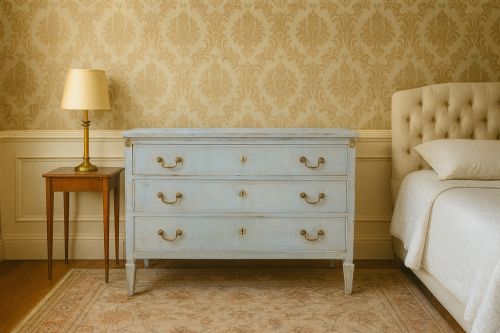


Neoclassical Painted Chest
These neoclassical painted chest designs offer refined storage, bringing classical proportions and decorative pigment to domestic spaces.
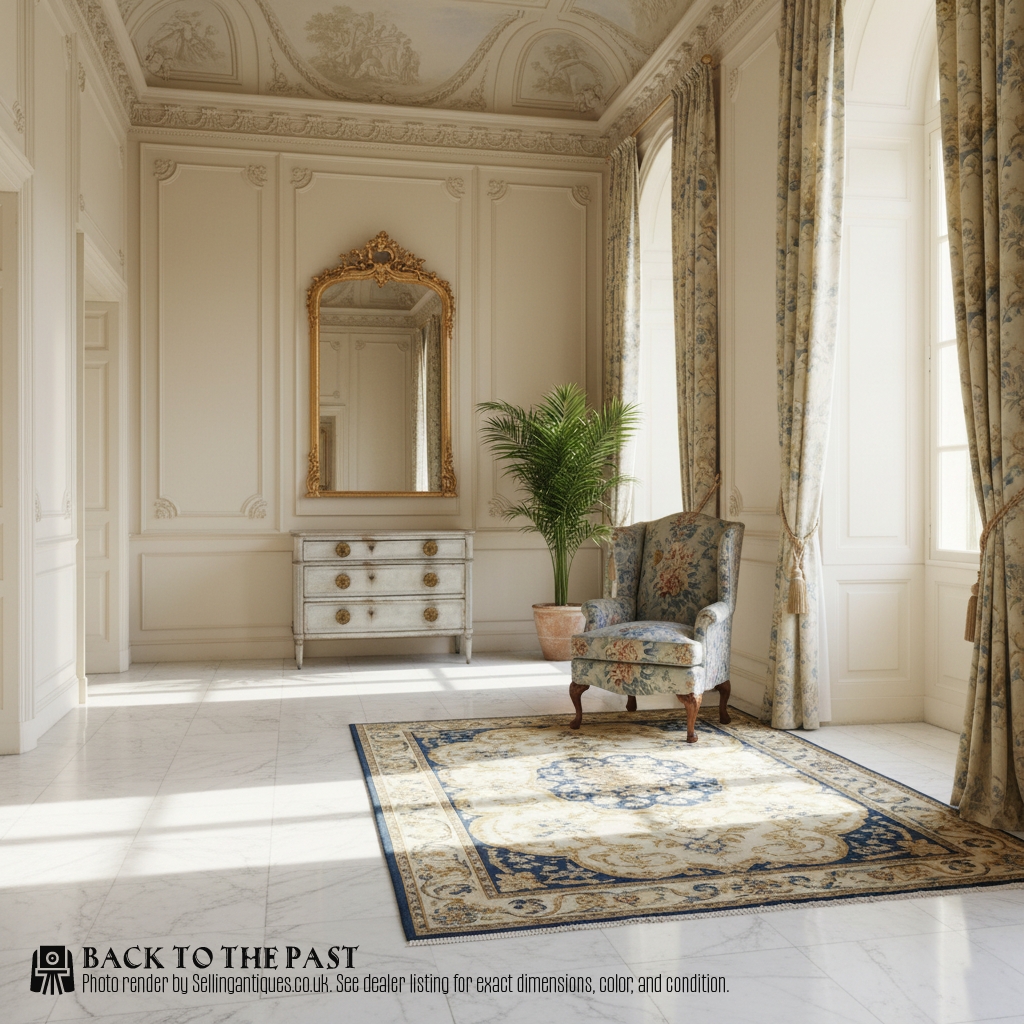
Neoclassical Painted Chest
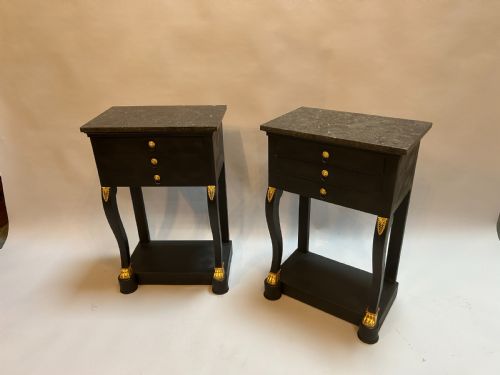
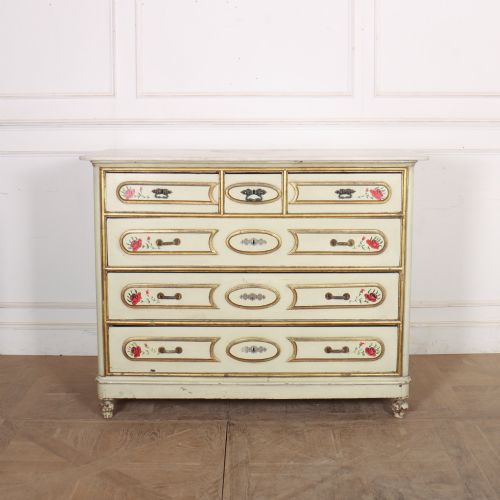
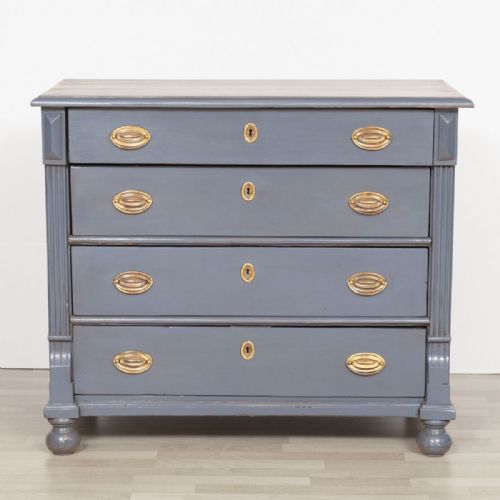
A neoclassical painted chest combines architectural symmetry with surface pigment, taking the form of commodes, tall boys, and bedside tables. When searching for a neoclassical painted chest, buyers frequently encounter 18th-century and 19th-century examples originating from Sweden, Italy, France, Spain, and the Netherlands. Regional interpretations range from Swedish Gustavian pieces to Italian serpentine front commodes and Dutch breakfront designs.
The selection includes matched pairs as well as single chests of drawers, often constructed from pine, oak, timber, or walnut. Alongside standard chests, the records encompass related furniture such as benches, window seats, linen presses, and compactums finished with paint or polychrome decoration.

What varies in quality
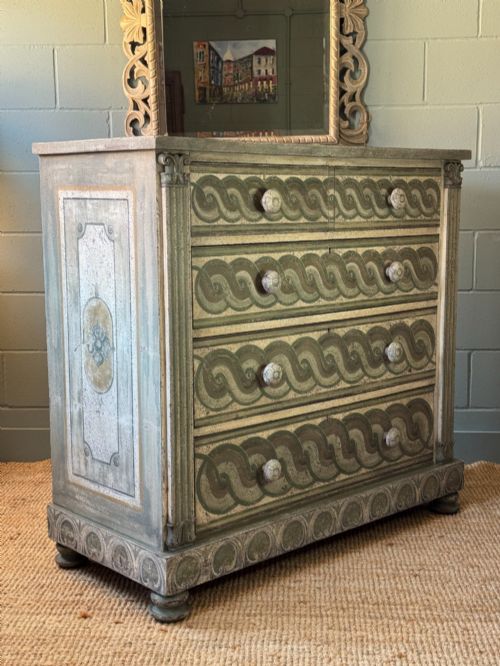
The refinement of the painted finish separates standard examples from exceptional ones, particularly where hand-painted polychrome details or original pigment survive intact. Superior execution shows in the crispness of classical motifs and the harmonious integration of colour across the wood carcase.
Structural complexity also dictates standing, with serpentine fronts, breakfront configurations, and matched pairs demanding higher levels of joinery skill than simple rectilinear forms. The inclusion of original marble tops or integrated brass elements further elevates the work.
Neoclassical Painted Chest Retail Price Guide 2026
Typical asking prices for neoclassical painted chest among the pieces listed under this phrase on Sellingantiques today, from the lower quarter to the upper quarter. They describe what is for sale here now, not the wider market.
One past piece doubled as a cellaret, hiding liquid refreshment inside a carton pierre neoclassical chest.
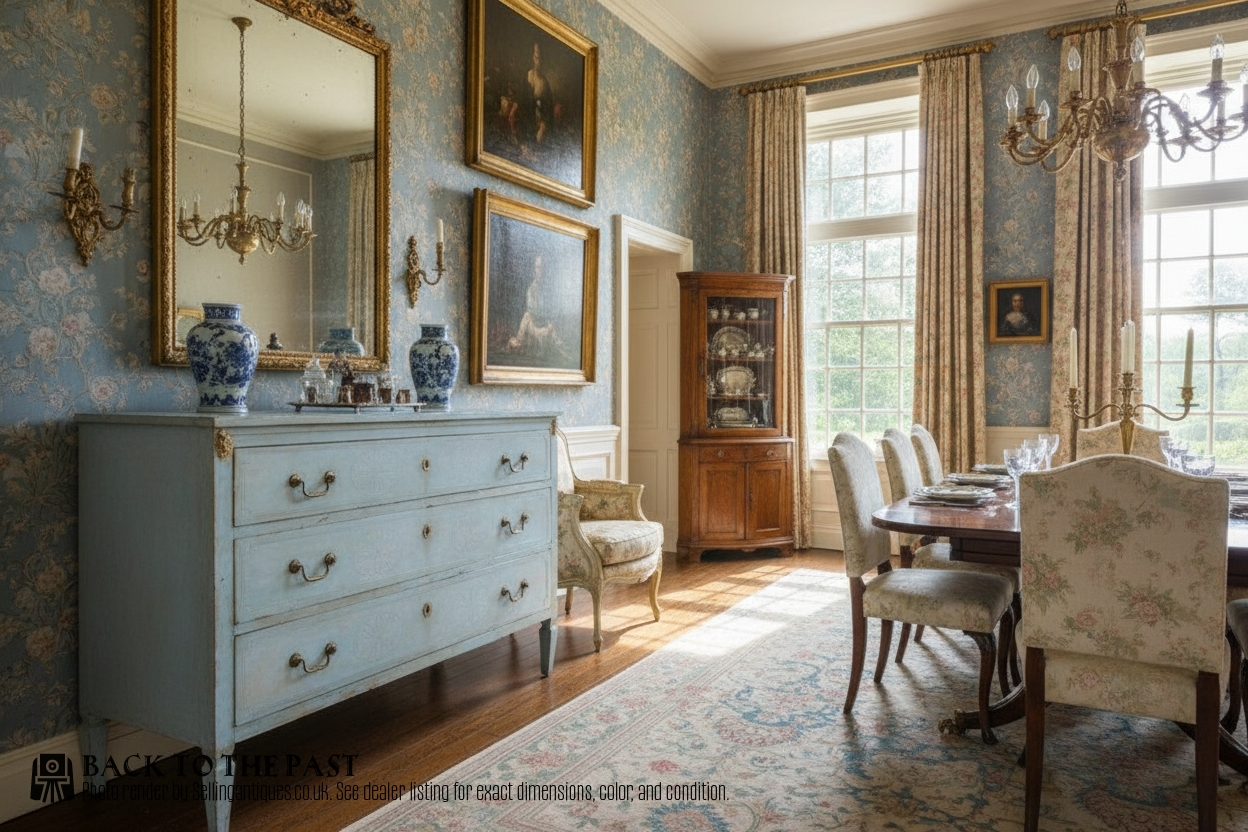
The Neoclassical Painted Chest Glossary
- Commode
- A low chest of drawers or cabinet, frequently featuring decorative painted finishes and multiple drawer tiers. In continental European furniture traditions, it serves a similar function to the English chest of drawers.
- Gustavian
- The Swedish interpretation of neoclassical style, characterised by restrained classical detailing, pale painted finishes, and functional elegance. This aesthetic emerged during the late eighteenth century.
- Serpentine front
- A furniture front that curves outward in the centre and inward at the sides in a gentle 'S' shape. This configuration requires advanced woodworking skill to construct and finish.
- Carton pierre
- A moulded papier-mâché material used to simulate carved wood or stone enrichment in neoclassical ornament. It provides crisp relief detail on decorative panels and mouldings.
- Polychrome
- Decorated in multiple colours, often applied to wood surfaces to create pictorial or geometric patterns. This technique brings vibrant contrast to neoclassical furniture designs.
Neoclassical Painted Chest: Frequently Asked Questions
What is a neoclassical painted chest?
A neoclassical painted chest is a storage piece decorated with classical motifs and finished in paint, originating largely from eighteenth and nineteenth century European workshops.
These items encompass commodes, bedside tables, and tall boys from regions including Sweden, Italy, and France.
Where were these chests made?
Makers across Europe produced these painted chests, with significant representation from Swedish, Italian, French, Dutch, and Spanish workshops.
Regional preferences shaped the distinct styles seen today, from Gustavian restraint to elaborate Italian serpentine forms.
How do I identify Gustavian pieces?
Gustavian chests typically display pale painted surfaces, restrained neoclassical carving, and balanced proportions inspired by French design but adapted with Scandinavian simplicity.
They frequently date from the late eighteenth or nineteenth century and rely on pine or timber construction.
What materials are used?
Workshops constructed the carcases using woods such as pine, oak, walnut, and general timber before applying layers of paint.
Selected examples incorporate marble top slabs, brass hardware, or carton pierre ornamentation to enhance the classical aesthetic.
How do I live with one?
These chests function as practical storage units for bedrooms and living areas while serving as decorative focal points through their painted surfaces.
Their varied dimensions, from bedside chests to large commodes and tall boys, allow placement in diverse interior layouts.