




Neoclassical Painted Cabinet
A neoclassical painted cabinet brings balanced proportion and classical ornament into a room through hand-painted motifs and refined timber forms.
Neoclassical Painted Cabinet
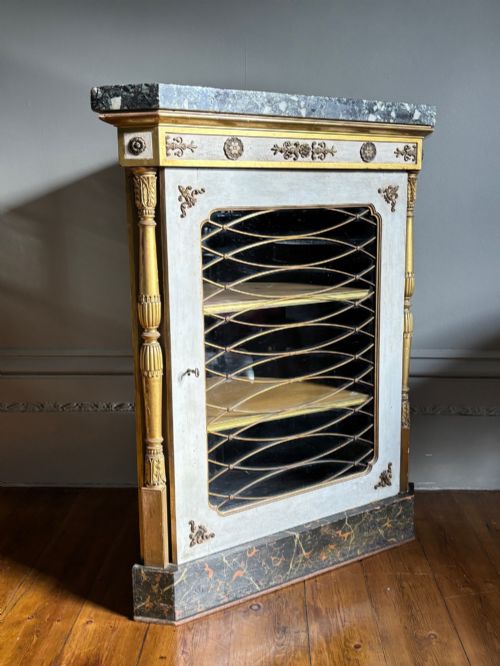
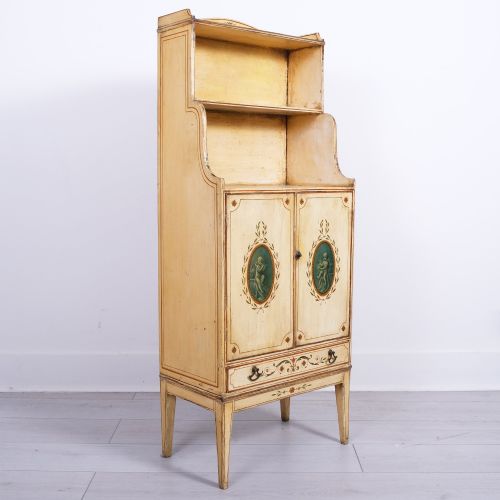
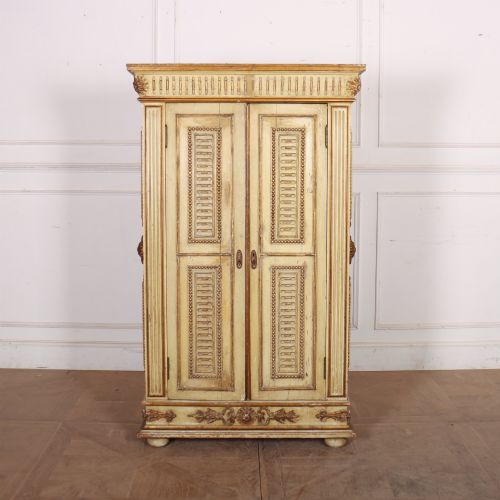
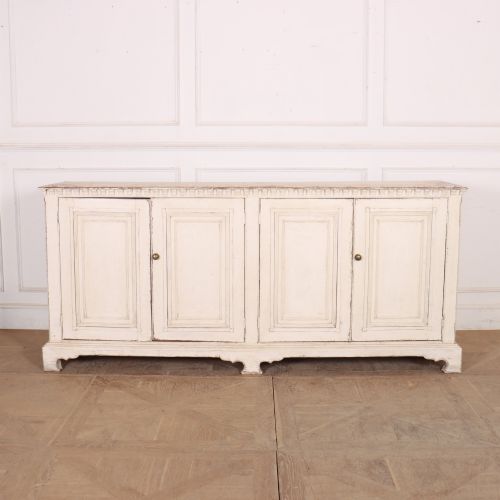
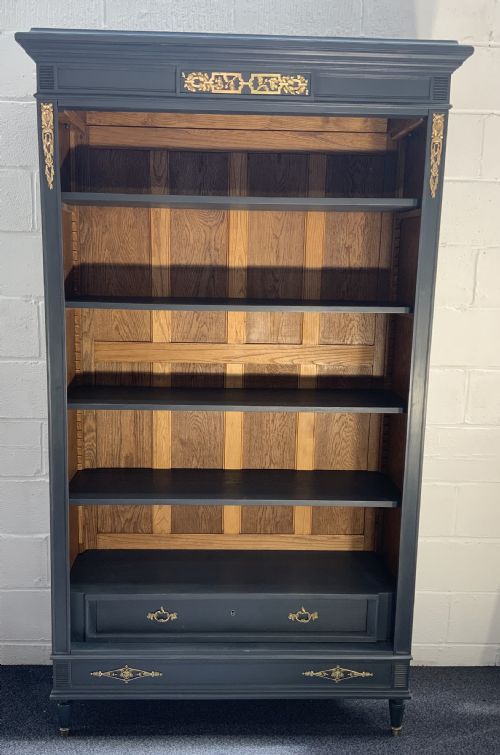
A neoclassical painted cabinet encompasses side cabinets, bookcases, commodes, and corner cupboards originating from eighteenth-century and nineteenth-century workshops. Pieces span George III, Regency, and later revival movements including Sheraton, Adam, and Gustavian styles.
Italian, French, Swedish, Dutch, and English origins appear frequently across the selection. Forms range from narrow bedside tables and demi-lune commodes to large breakfront bookcases and enfilades.
Materials and execution
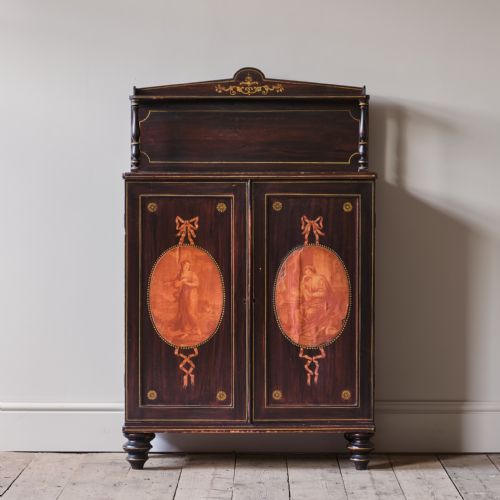
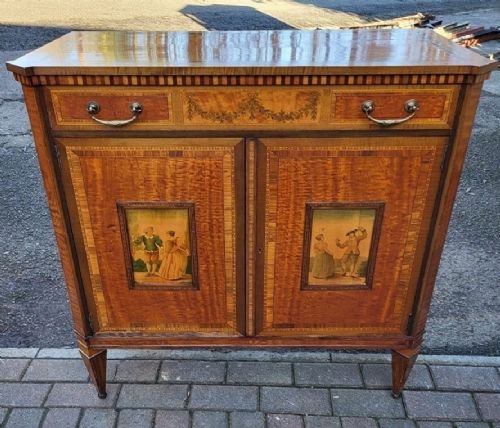
Constructed primarily from timber such as satinwood, pine, and maple, these cabinets often receive decorative paint finishes, gold leaf, and simulated rosewood graining. Applied brass embellishments and marble tops supplement the painted surfaces.
Painted decoration forms the core of the construction, executed directly onto wood or porcelain components. Historical examples utilise fine pigments to render classical figures, floral scrolls, and architectural details.
Neoclassical Painted Cabinet Retail Price Guide 2026
Typical asking prices for neoclassical painted cabinet among the pieces listed under this phrase on Sellingantiques today, from the lower quarter to the upper quarter. They describe what is for sale here now, not the wider market.
Cupid, Psyche, Bacchus, and Ariadne frequently gaze out from painted panels, ensuring your household accounts are audited by deities.
Standards of execution
Quality rests upon the precision of the painted decoration and the handling of the timber carcass. Masterful brushwork depicting classical figures distinguishes superior examples from standard decorative pieces.
The choice of underlying wood contributes to the tier of the piece. Dense satinwood surfaces provide a finer ground for painted ornament than softer pine bodies finished with simulated grain.
Jewell of Holborn·Maple and Co.
The Neoclassical Painted Cabinet Glossary
- Demi-lune
- A half-moon shape used for commodes and side tables designed to stand flat against a wall. This profile became popular during the eighteenth and nineteenth centuries.
- Satinwood
- A hard, yellowish timber native to Ceylon and India with a lustrous natural sheen. It served as a favoured canvas for painted neoclassical decoration.
- Enfilade
- A suite of formal cabinets or cupboards aligned in a continuous row. Such pieces originated in grand European interiors.
- Astragal
- A small convex moulding used to divide glass panes within cabinet doors. These strips often appear on neoclassical bookcases.
- Gustavian
- The Swedish interpretation of French neoclassical and Louis XVI design, characterised by pale painted finishes and restrained classical carving.
Neoclassical Painted Cabinet: Frequently Asked Questions
What periods do these cabinets come from?
Pieces originate from the eighteenth and nineteenth centuries, alongside revival eras spanning into the early twentieth century. Styles reflect George III, Regency, and later neoclassical revivals.
Craftsmanship varies across these periods, encompassing English satinwood pieces, Swedish commodes, and Italian corner cupboards.
How do I identify a neoclassical style?
Neoclassical design draws upon ancient Greek and Roman motifs, presenting symmetrical forms, pilasters, urns, and floral swags. Painted details often feature mythological scenes or classical figures.
Cabinets from this tradition favour clean geometric lines over the exuberant curves of preceding rococo periods.
Where were these cabinets made?
Origin workshops span England, Italy, France, Sweden, and the Netherlands. Each region adapted neoclassical design through local timbers and regional painting traditions.
Swedish pieces frequently display light Gustavian palettes, while English examples commonly employ figured satinwood.
How should I place one in a room?
Demi-lune commodes and corner cupboards suit smaller spaces by fitting compactly against walls. Taller bookcases and enfilades function effectively as focal storage points.
Keep painted cabinets away from direct sunlight to preserve the historical pigments and timber finishes.