
Neoclassical Open Armchairs
Neoclassical open armchairs bring formal symmetry and restrained classical ornament into a room, offering both seating and architectural presence.
Neoclassical Open Armchairs
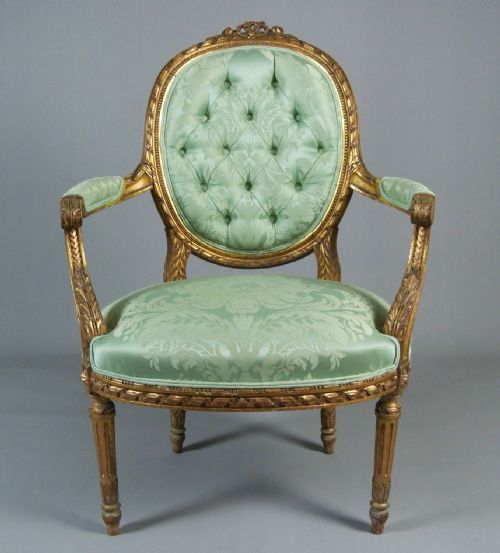
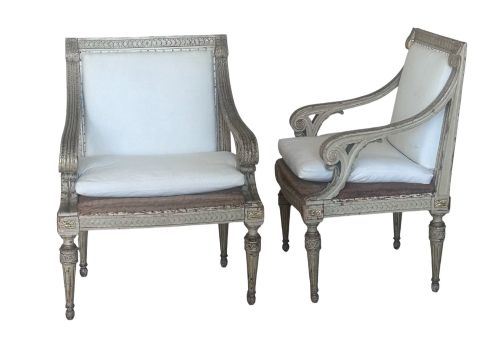
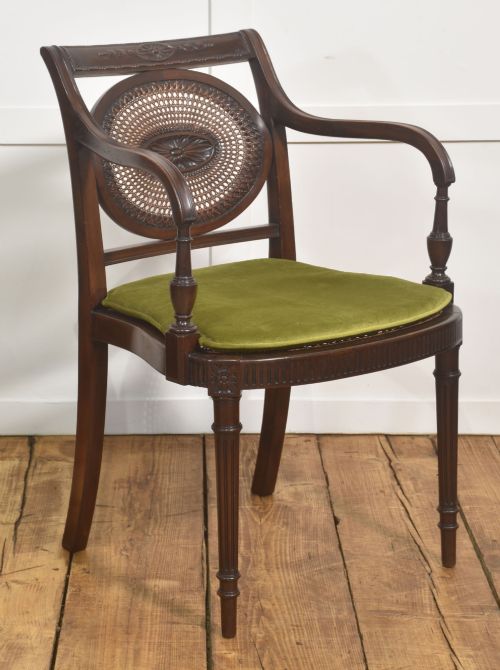
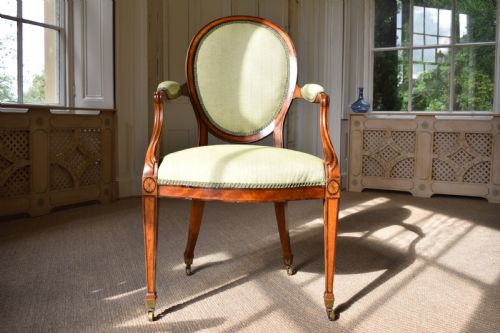
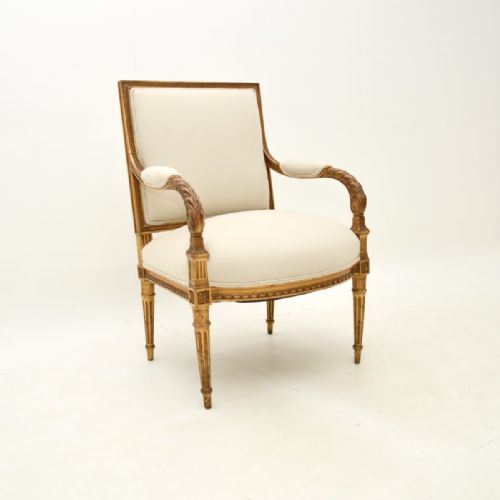
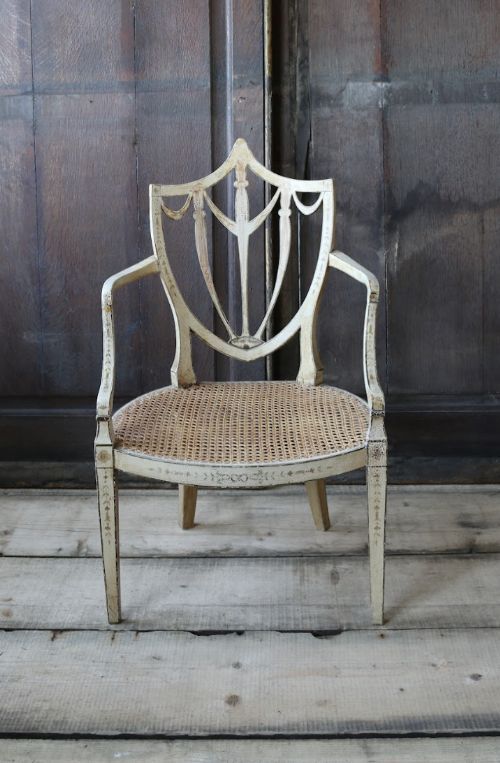
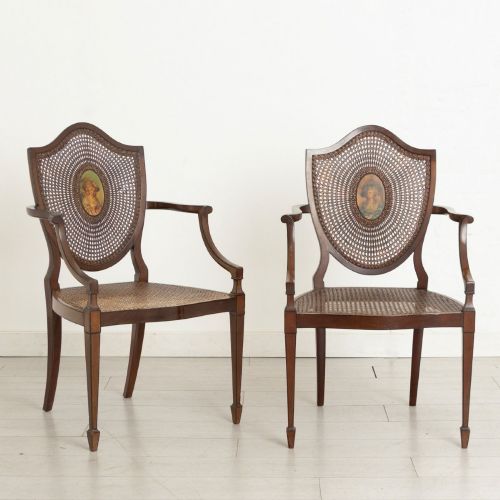
Neoclassical open armchairs take the form of seating designed during the eighteenth century and later revivals, following classical lines rather than the exuberant curves of earlier rococo work. These pieces present straight tapered legs, rectilinear frames, and decorative motifs drawn from antiquity.
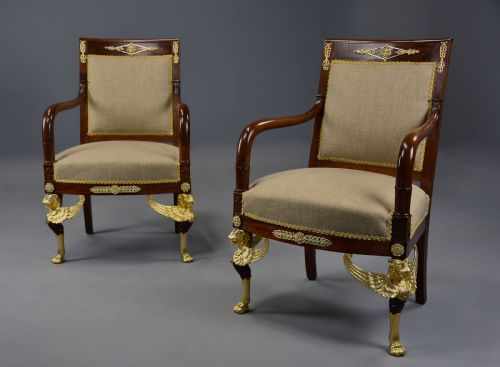
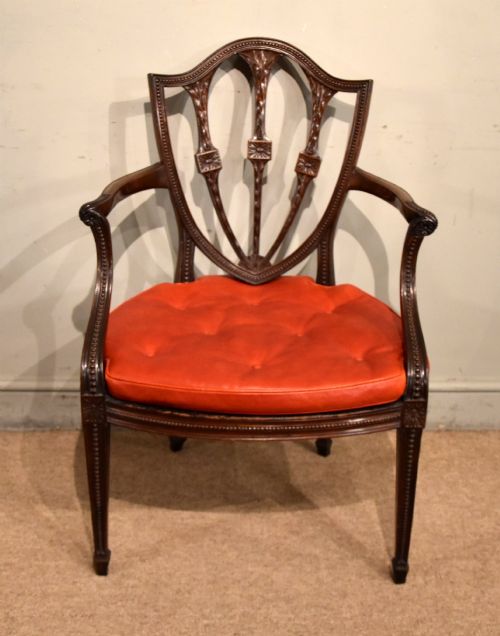
The versions most commonly met on this page span the eighteenth century, the nineteenth century, and twentieth-century revivals, taking shapes associated with George III makers and French workshops.
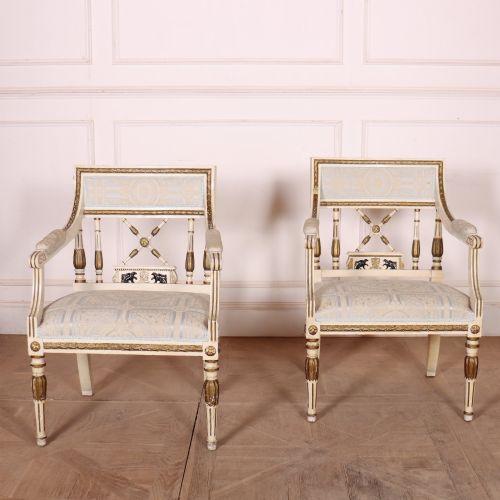
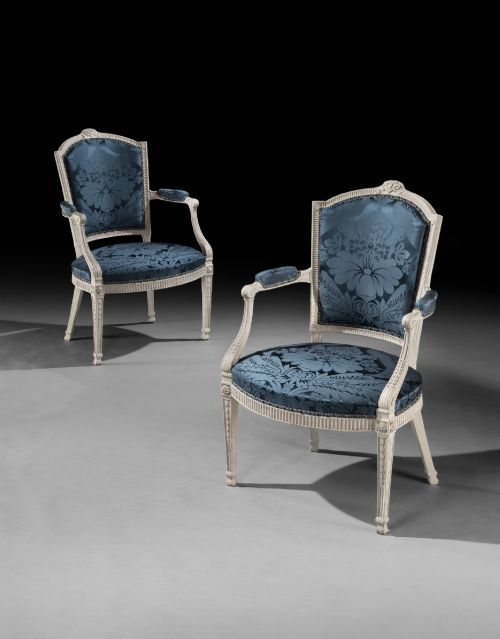
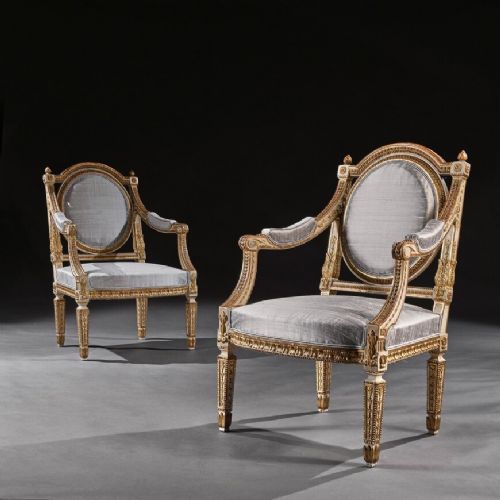
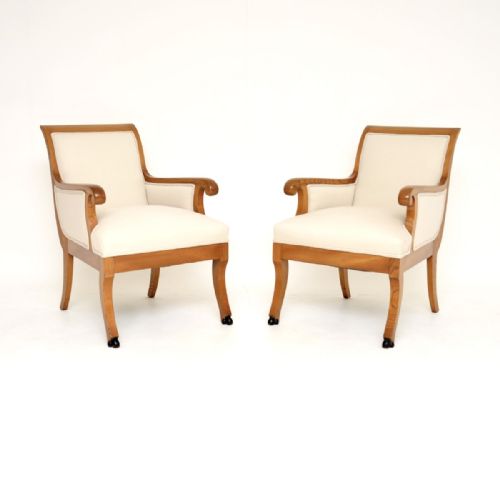
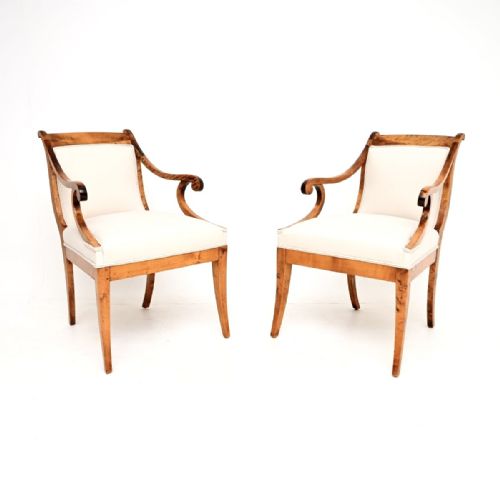
Makers working in these styles built matched pairs upholstered in damask, plain fabric, or decorated with polychrome paint and giltwood accents.
Materials and Construction
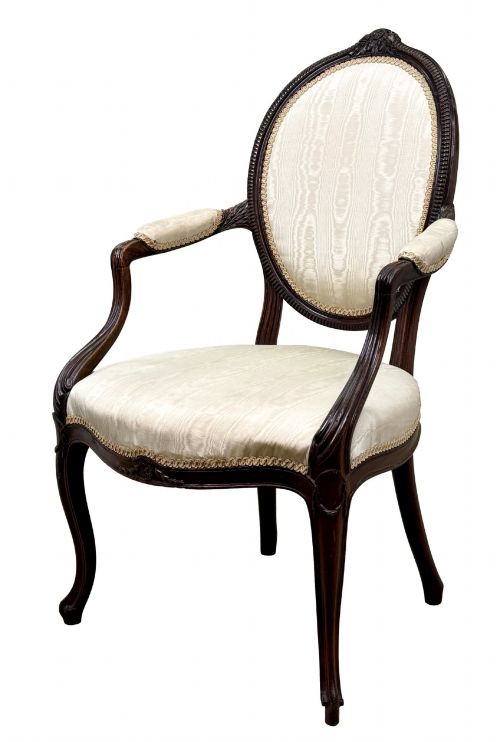
Frames are constructed from timber, beech, mahogany, and walnut, providing the structural strength required for upright seating with open arms.
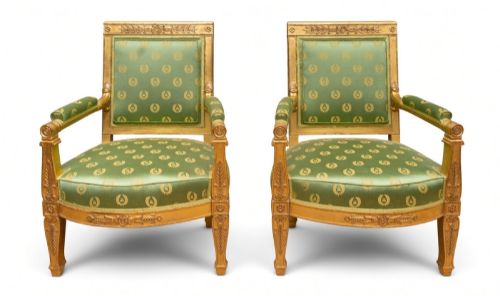
Surface treatments include painted timber, polychrome decoration, and giltwood, often accented with brass tacks securing the upholstery.
Upholstery materials range from standard fabric to red damask, finishing the seat and back panels enclosed by the wooden framework.
Retail Price Guide 2026
Typical UK retail prices for neoclassical open armchairs, calculated from the Sellingantiques database of over a million retail prices indexed since 2003. This retail price guide relies exclusively on Sellingantiques data; no external sources or auction records are used, so the figures do not describe the wider market.
Listings feature frames made from beech, mahogany, walnut, and general timber, paired with damask fabric, giltwood, and painted finishes.
Judging Quality
Quality rests in the crispness of the carved detail and the integrity of the timber frame, distinguishing workshop production from later revival interpretations.
The treatment of the painted, gilt, or polished surfaces dictates the visual depth of the piece, where hand-applied finishes hold up better under close inspection than flat commercial paints.
John Linnell
The Neoclassical Open Armchairs Glossary
- George III
- A British stylistic period spanning the reign of George III, known for refined neoclassical furniture forms. Pieces from this era often utilise mahogany or painted timber.
- Directoire
- A transitional French style bridging Louis XVI and Empire, characterised by austere classical lines and revolutionary symbols. It strips away excess ornamentation in favour of stark geometric forms.
- Giltwood
- Timber treated with a thin layer of gold leaf applied over a prepared gesso ground. This finish catches the light and denotes high status.
- Polychrome
- Decoration employing several colours on a single wooden surface. It appears frequently on eighteenth-century painted seating.
Frequently Asked Questions
What periods do these armchairs come from?
These chairs date from the eighteenth century through the nineteenth century, alongside later twentieth-century revival pieces.
Periods represented include George III, French Regency style, French Directoire, and French Empire.
What woods were used for the frames?
Framing timbers include mahogany, walnut, beech, and general timber selected for strength in open-arm designs.
Surfaces are frequently finished with paint, polychrome decoration, or giltwood.
How do George III and French styles differ?
George III pieces often utilise mahogany or painted timber with restrained British interpretations of classical motifs.
French pieces from periods like Directoire or Empire lean towards distinct continental proportions and specific decorative vocabularies.
What upholstery materials appear on these chairs?
Upholstery ranges from simple fabric to red damask, secured along the wooden borders with brass tacks.
Many pieces retain or have been restored with traditional textile choices suited to formal seating.