



Neoclassical Metal Vases
These neoclassical metal vases bring antique proportion and classical ornament into a room, drawing on centuries of Roman and Greek design.
Neoclassical Metal Vases
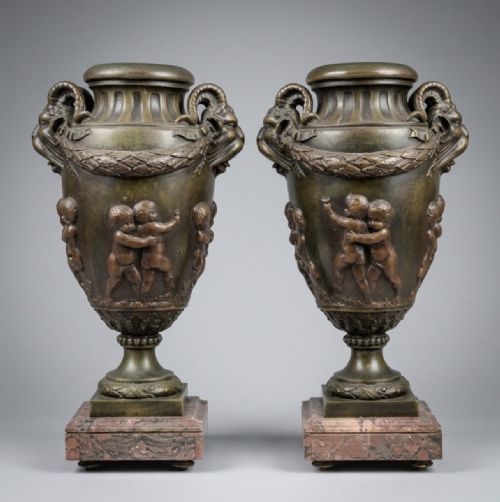
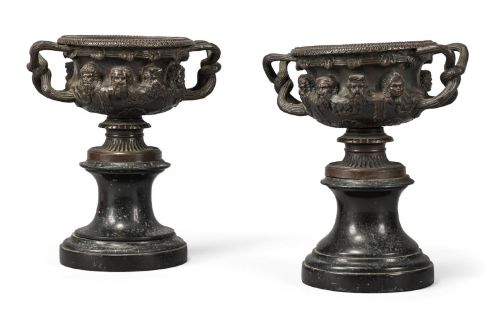
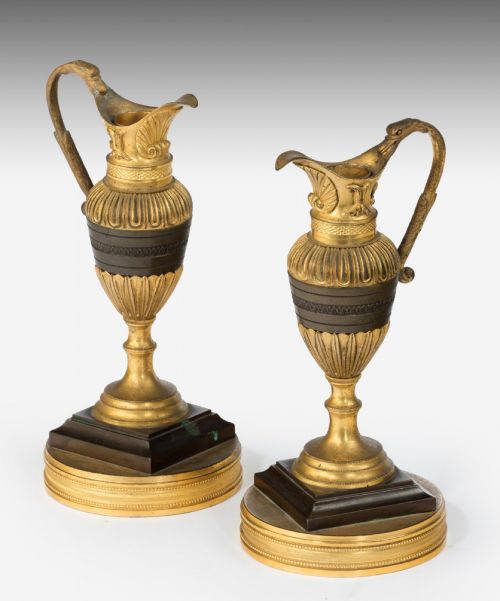
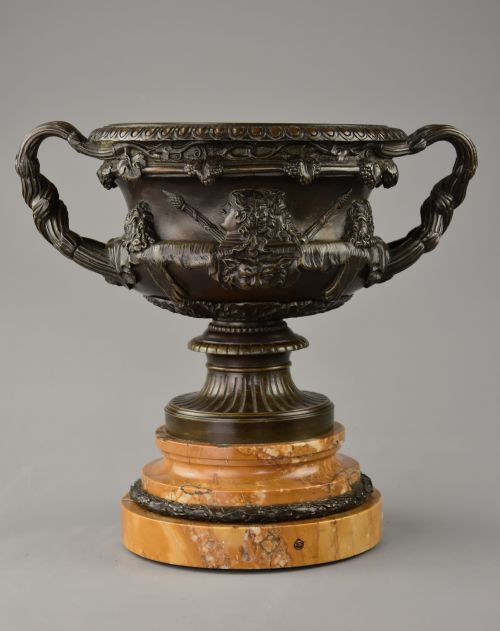
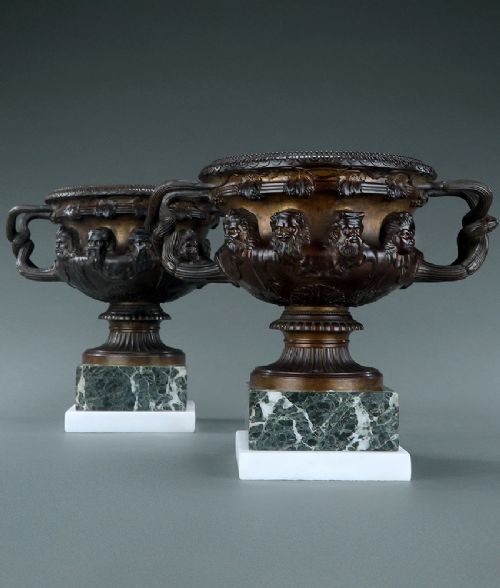
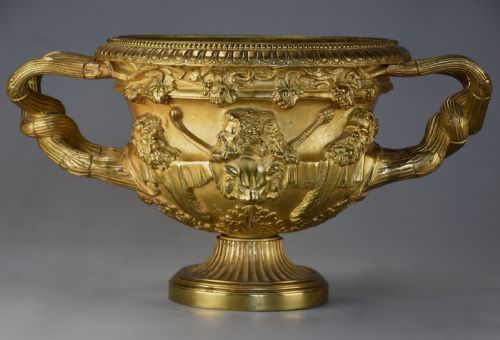
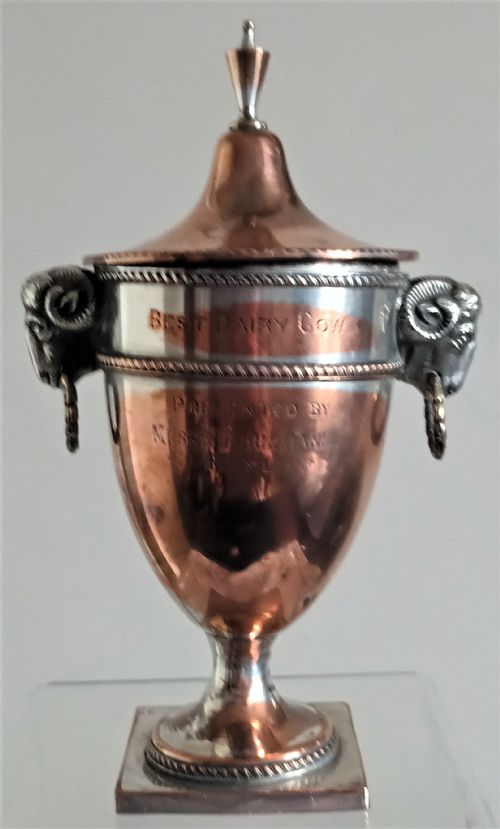
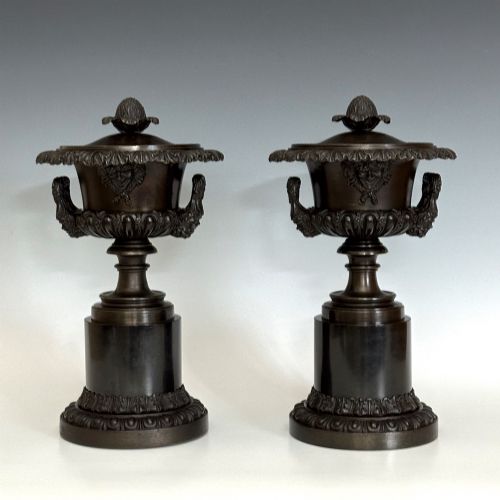
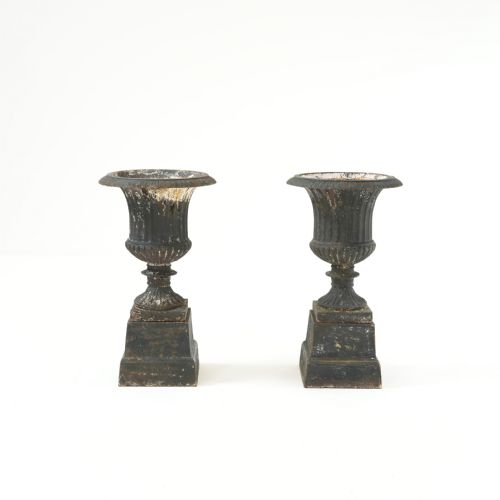
Neoclassical metal vases emerge predominantly in the nineteenth century, though earlier eighteenth-century examples appear in smaller domestic forms like miniature chestnut urns. The selection relies heavily on Grand Tour reductions of famous antiquities, including the Warwick and Albani vases, alongside campana shapes and classical ewers.
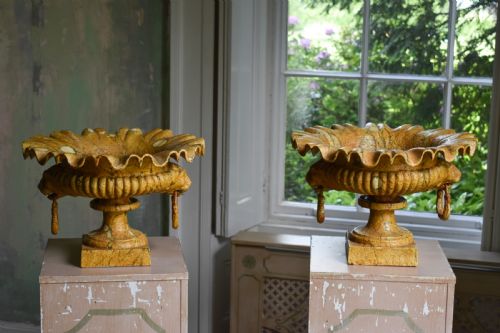
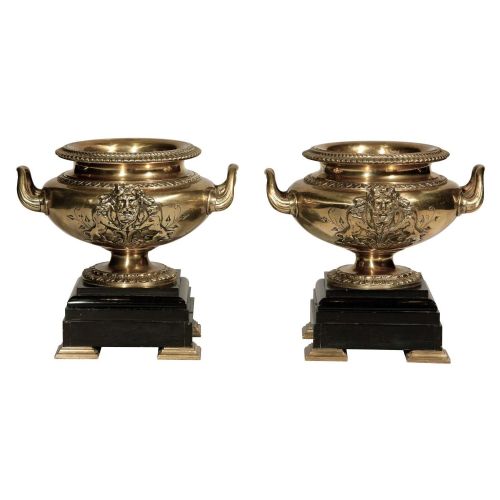
French, Italian and English makers produced these decorative vessels in bronze, spelter, cast iron and ormolu. Pieces frequently sit upon stepped marble bases or wooden pedestals, serving purely decorative functions within domestic interiors and garden settings.
Materials and casting
Bronze and spelter serve as the primary metals for body construction, often finished with patination or fire gilding to create rich surface tones. Ormolu mounts, cast brass details and painted cast iron provide contrasting textures and structural support.
Marble plinths and green marble sections anchor the heavier metal vessels, while lead and toleware appear in specific utilitarian and decorative forms. Many pieces utilise lost-wax casting techniques to capture sharp classical relief work like acanthus leaves and figural handles.
Some nineteenth-century bronze vases were cast with hidden internal compartments, serving as clandestine resting places for visiting cards.
Execution and finish
The crispness of the chasing and the depth of the metal patination separate ordinary production from superior examples. Finely cast handles, such as those depicting Bacchus or dolphins, show deliberate hand-finishing rather than soft, repetitive machine smoothing.
The integration of secondary materials like original marble bases and fire-gilt ormolu mounts dictates the refinement of the piece. Heavier gauge metals and tightly fitted construction demonstrate superior workshop standards.
The Neoclassical Metal Vases Glossary
- Campana urn
- A bell-shaped vessel with an everted rim, modelled on ancient Roman garden and table vases. This form is common among nineteenth-century Grand Tour metalwork.
- Grand Tour
- A cultural journey undertaken by wealthy Europeans in the eighteenth and nineteenth centuries, acquiring souvenirs such as bronze reductions of classical antiquities. These objects often replicate famous marble sculptures housed in Italian museums.
- Ormolu
- Finely ground high-carat gold applied to a bronze base using a mercury amalgam, creating a durable golden finish. It appears frequently on French Empire and Regency decorative metalwork.
- Spelter
- A zinc alloy used as a cheaper alternative to bronze for sculptural castings, often painted or bronzed to imitate heavier metal. It became popular for decorative vases during the later nineteenth century.
- Warwick Vase
- A monumental Roman marble vase discovered at Hadrian's Villa, reproduced in bronze and various scales during the nineteenth century. Reductions of this specific vessel form a major category of classical metal vases.
Neoclassical Metal Vases: Frequently Asked Questions
How were these vases used originally?
In period interiors, large bronze and cast iron urns functioned as decorative centrepieces, wine coolers or garden ornaments. Smaller examples served as mantelpiece decoration and cabinet specimens.
They demonstrated classical learning and refined taste, reflecting the enduring influence of archaeological discoveries across Europe.
How do I date a metal vase?
Dating relies on material composition, casting quality and stylistic markers associated with periods like the Regency, French Empire and Victorian eras. Nineteenth-century Grand Tour pieces often exhibit specific patination and reduction techniques.
Examining the base construction, fixings and wear patterns helps determine whether a piece originates from the early nineteenth century or later decades.
Where should I place them?
These vases suit heavy timber sideboards, marble mantelpieces and architectural pedestals where their classical proportions can anchor a room. Robust cast iron examples suit sheltered outdoor spaces and garden terraces.
Pairing matching campana urns on console tables creates symmetry true to nineteenth-century interior design conventions.