


Neoclassical Marble Stand
A neoclassical marble stand brings classical architecture indoors, supporting sculpture, lighting or plants upon stone shafts of varied geological origin.
Neoclassical Marble Stand
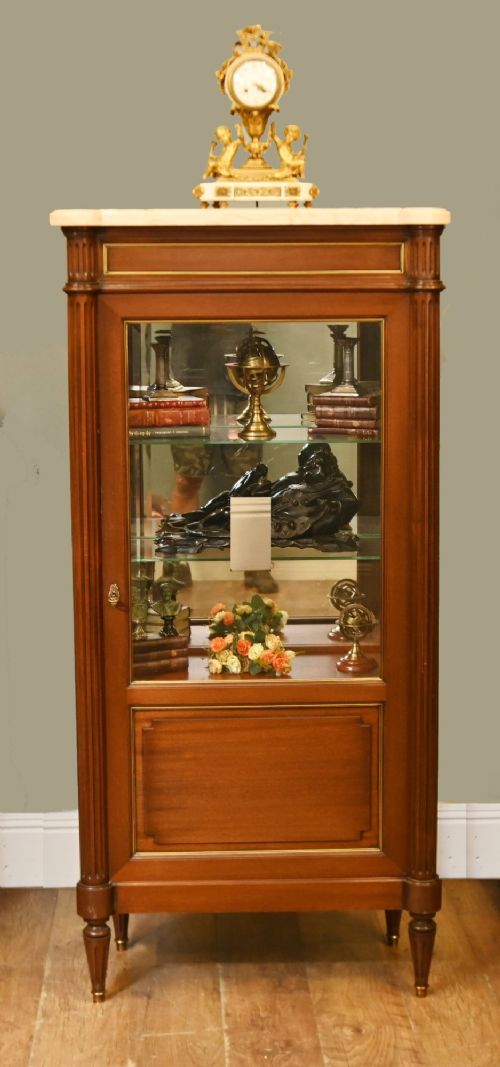
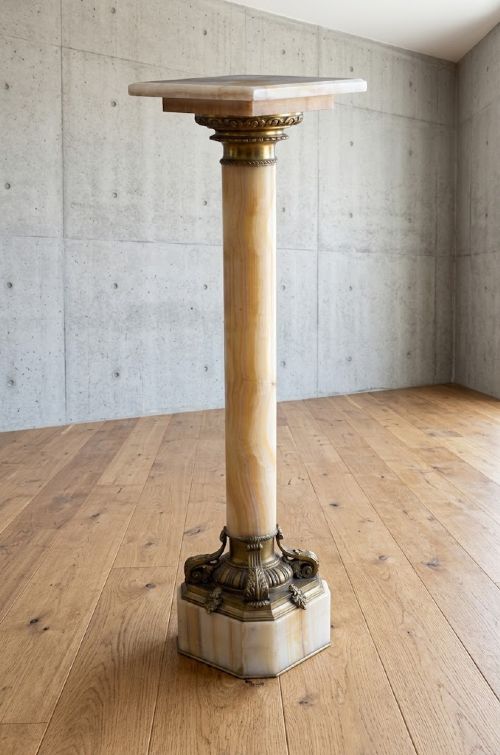
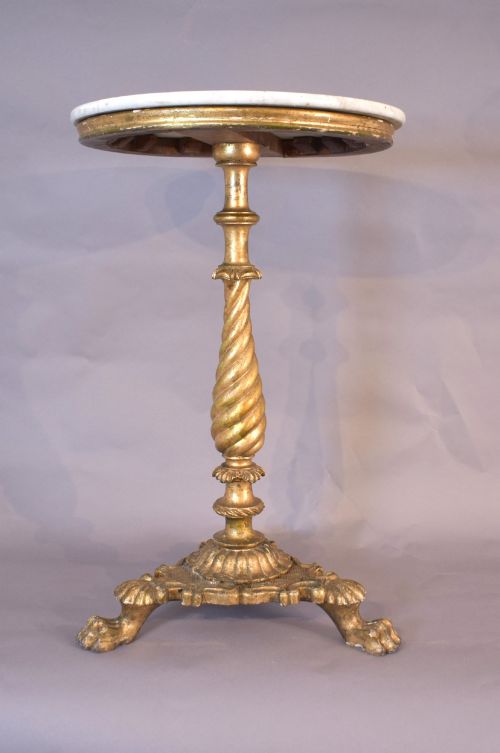
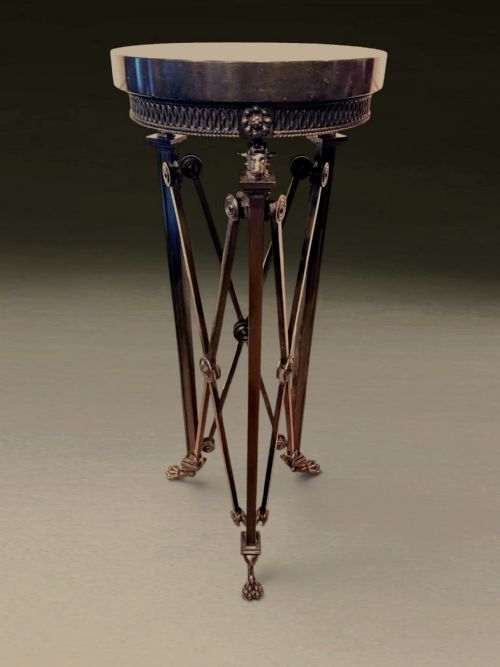
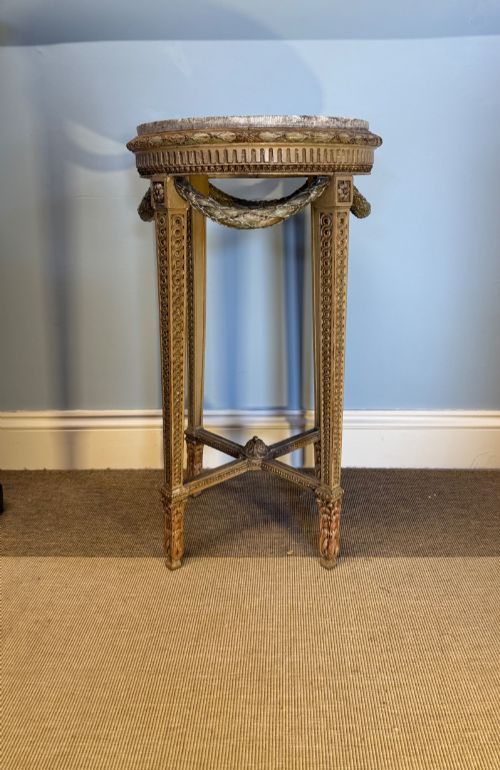
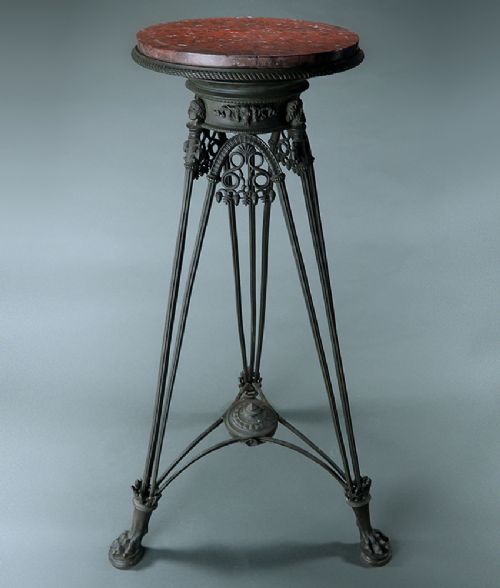
A neoclassical marble stand takes the form of columns, pedestals, plinths and guéridon tables rooted in the nineteenth century and revival eras. These pieces elevate display surfaces using stone shafts paired with bronze, brass or giltwood components.
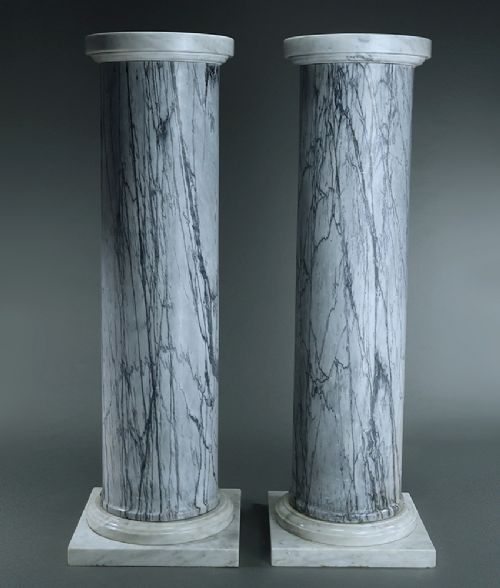
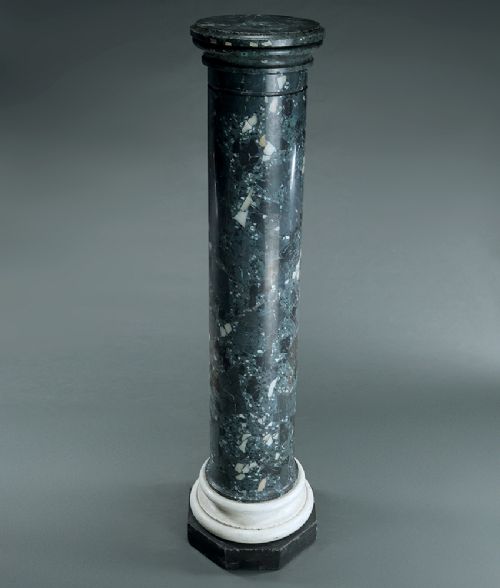
The selection ranges from tall architectural columns in green serpentine, bardiglio and vert de patricia to smaller tripod tables and urn stands. Most examples draw upon French Empire, Louis XVI and Regency idioms.
Makers and designers of the period looked to classical antiquity for proportion and ornament. This lineage manifests in fluted shafts, decorative collars and socle bases designed to hold busts, lamps and flora.
Materials and construction methods
Masonry forms the core of these items, utilising natural stones such as carrara, onyx, alabaster and scagliola alongside faux marble painted finishes. Scagliola provides a composite stone effect through pigmented selenite, glue and plaster.
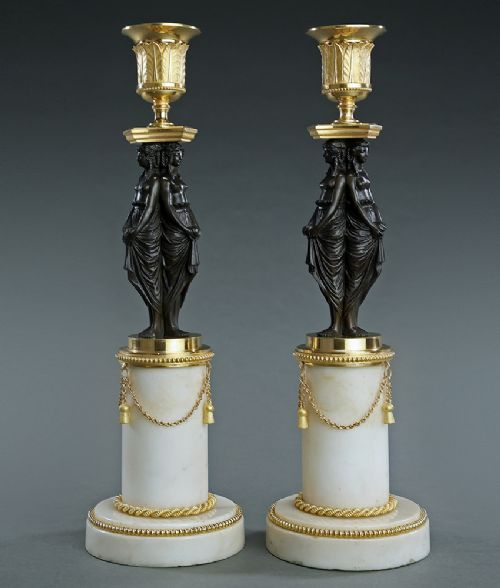
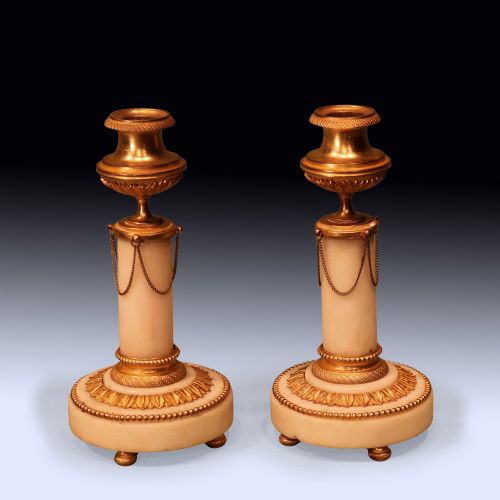
Metalwork provides structural accents and decorative mounts in ormolu, gilt bronze, brass and patinated bronze. Foundries cast and chase these bronze elements to frame the stone shafts and support tabletops.
Woodworking underpins the auxiliary tables and pedestals, employing mahogany, satinwood and giltwood. Cabinetmakers join these timbers to marble tops using traditional joinery and bracket supports.
Listings feature nineteenth century and early twentieth century examples incorporating alabaster, onyx, mahogany and gilt bronze.
Evaluating quality and execution
The grade of a neoclassical marble stand rests upon the geological selection and density of the stone. Solid mineral columns with rich veining and precise turning outrank softer gypsum alabasters or painted plaster substitutes.
Chasing and fire-gilding define the metal components. Crisp detail in the ormolu collars, caryatids and bronze mounts separates fine studio work from routine commercial production.
Proportion and stability govern structural merit. Weight distribution must safely sustain heavy stone tops or sculptural loads without tipping.
Thomas Hope·Dugourc·Weisweiler
The Neoclassical Marble Stand Glossary
- Ormolu
- Gilt bronze produced by applying a mercury and gold amalgam to cast bronze. This technique creates a durable, luminous golden finish characteristic of French luxury furniture.
- Scagliola
- A composite material made from pigmented selenite, glue and plaster. Artisans paint and polish this mixture to imitate precious marbles.
- Guéridon
- A small French round table supported by a central pillar or tripod legs. These tables often feature marble tops for serving or display.
- Socle
- A short plinth or pedestal acting as a foot for a column, bust or vase. It elevates the primary object from the floor or base.
- Verde Antico
- A dark green serpentine breccia marble quarried in antiquity and revived in later decorative arts. Its mottled appearance resembles dark foliage.
Neoclassical Marble Stand: Frequently Asked Questions
What held a neoclassical marble stand originally?
These supports held bronze busts, porcelain urns, decorative lamps and flowering plants in domestic reception rooms.
Their sturdy stone tops provided stable platforms for heavy display items during the nineteenth century.
How do I distinguish scagliola from solid marble?
Scagliola feels warmer to the touch than natural stone and lacks crystalline depth under magnification.
Close inspection reveals the plaster and glue matrix beneath the polished surface finish.
Where should I place a heavy column?
Position columns on solid, level flooring away from high-traffic zones to prevent accidental tipping.
Ensure the weight distributes evenly across the base and socle.
How do I clean marble and ormolu?
Dust marble gently with a soft dry cloth and avoid acidic cleaning agents that etch the stone.
Dust ormolu mounts carefully without abrasive polishes to preserve the historical gilding.