


Neoclassical Marble Console
A neoclassical marble console brings symmetry and ancient architectural proportion into a room, grounded by heavy stone tops and structured wooden frames.
Neoclassical Marble Console
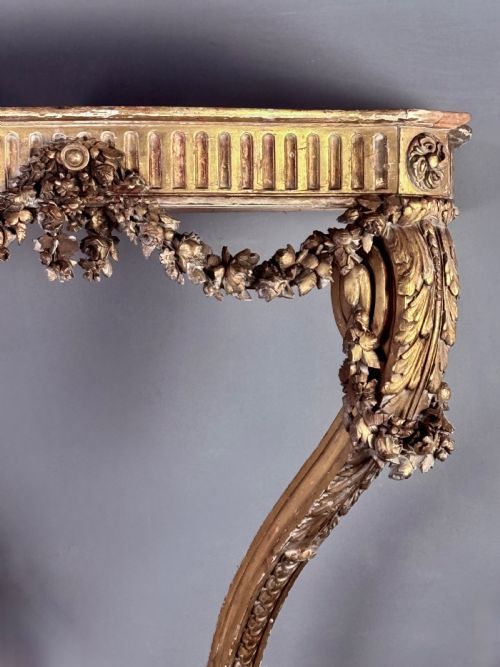
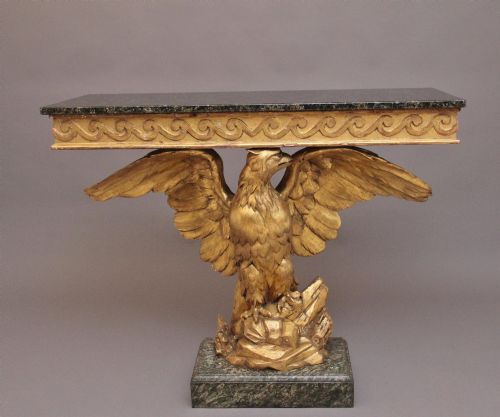
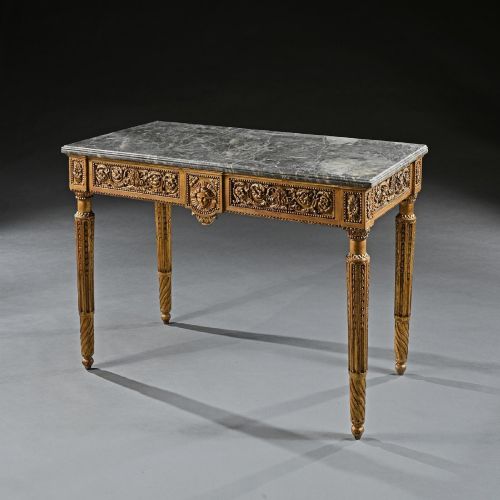
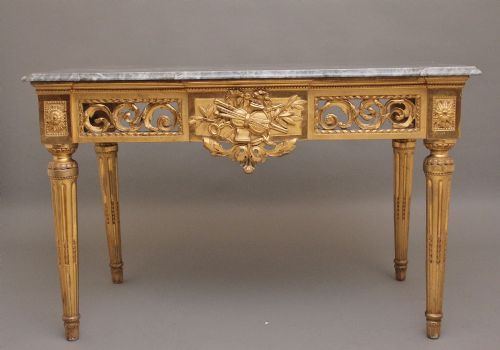
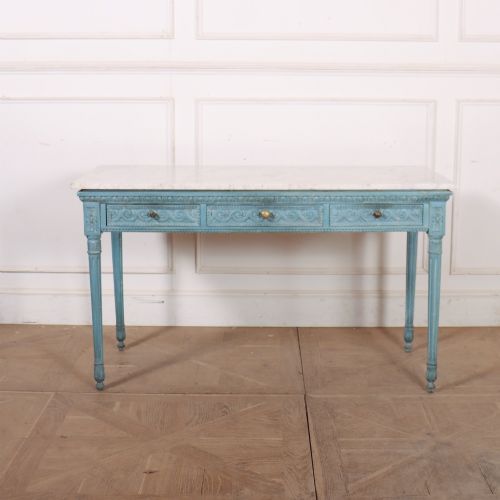
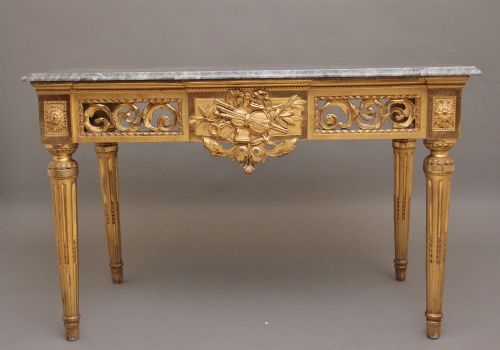
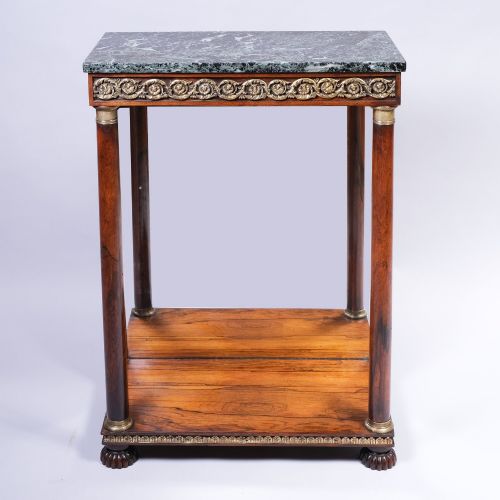
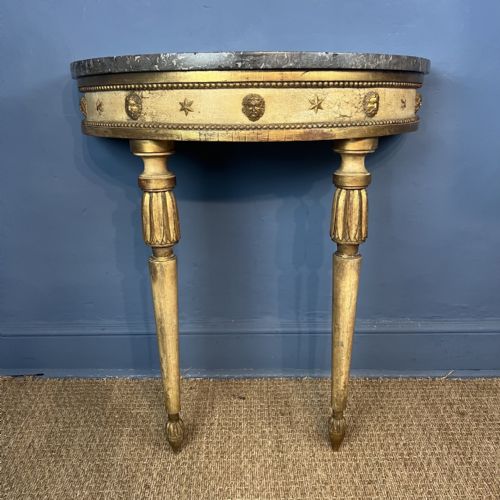
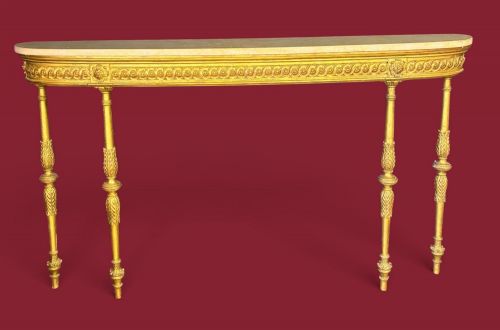
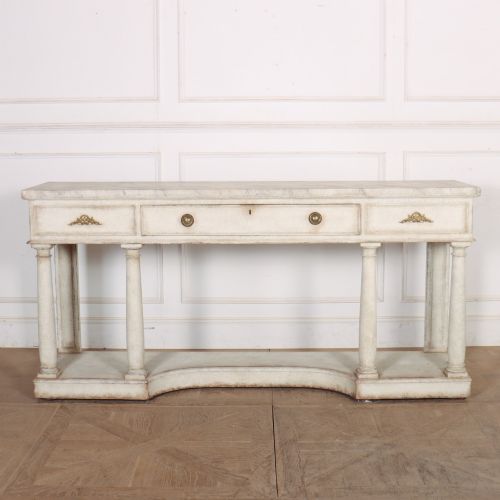
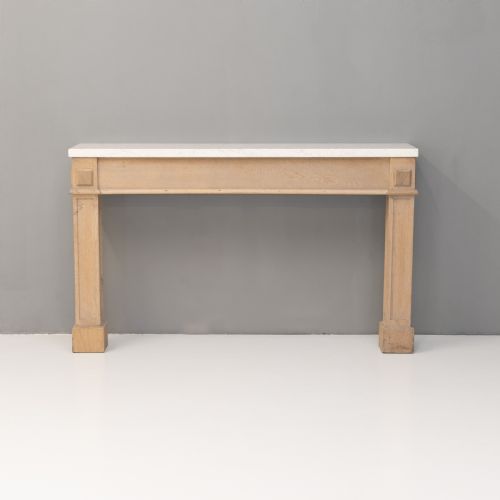
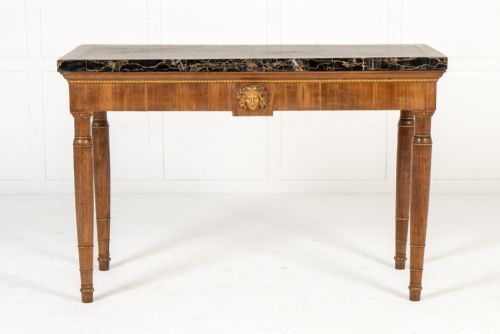
A neoclassical marble console stands against a wall, combining a heavy stone slab with a carved or painted wooden base. These tables draw on classical Greek and Roman motifs, showing clean lines and balanced proportions.
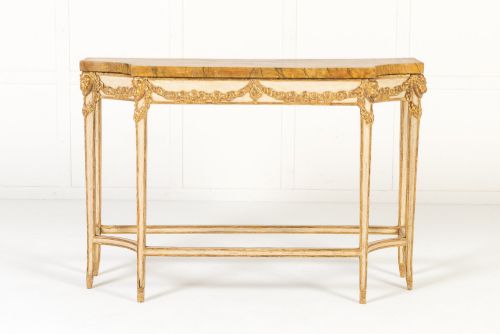
The versions most common on this page date from the eighteenth and nineteenth centuries, originating mainly from Italian, French, and Swedish workshops. Regional variations appear in the paint finishes and wood choices, ranging from gilded surfaces to cream painted timber.
Makers produced these forms as console tables, side tables, and occasional desks designed to anchor formal reception rooms. Many examples feature demi-lune shapes or rectangular tops supported by elaborate stretcher bases and fluted legs.
Materials and construction
Makers combined natural stone with timber, utilising marble for the top surface and mahogany, walnut, or pine for the supporting structure. Craftsmen frequently applied gesso and gold leaf to the wooden frames to achieve a gilded finish.
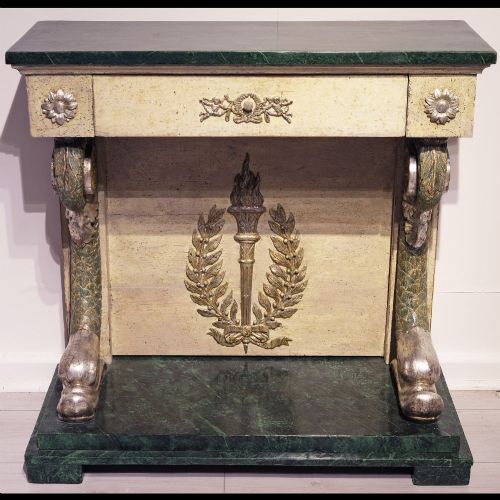
Surface decoration involved hand painting, parcel gilding, and the integration of ormolu or brass mounts cast in classical patterns. Some tables incorporate faux porphyry or marquetry to accent the main wood grain.
Listings feature pieces spanning the eighteenth century through the early twentieth century, including Gustavian and French Empire styles.
Judging quality in a console
Quality rests in the crispness of the wood carving and the depth of the gilding applied over the gesso base. Hand-chased ormolu mounts and solid marble slabs demonstrate higher craftsmanship than moulded metal or thin stone veneers.
Proportion and stability separate standard pieces from exceptional ones, particularly where heavy marble slabs require robust joinery in the frame. The precision of the hand-painted details and the preservation of original surfaces also govern the standing of the piece.
Felix Alfred Ternisien·Jean Joseph Chapuis
The Neoclassical Marble Console Glossary
- Ormolu
- Gilded bronze used for decorative mounts and furniture embellishments. This technique involves applying a mercury and gold amalgam to bronze before firing.
- Gesso
- A plaster mixture applied to wood surfaces as a smooth base for gilding or painting. It allows carvers to achieve sharp architectural details before applying gold leaf.
- Demi-lune
- A half-moon shape used for tabletops and cabinets designed to sit flush against a wall. This form saves floor space while maintaining a formal presence.
- Parcel gilt
- A finishing method where only specific carved elements of a painted or wood surface receive gold leaf. It highlights structural details without covering the entire piece.
Neoclassical Marble Console: Frequently Asked Questions
Where should I place a console table?
These tables suit entrance hallways, living rooms, and dining areas where they sit flat against a wall. They provide a surface for lamps and decorative objects without blocking main walkways.
Because many examples include heavy stone tops, placing them near structural walls ensures stable support. Pairing a console with a matching mirror creates a balanced focal point in a room.
How do I care for the marble top?
Cleaning requires simple dusting with a soft cloth and washing with mild, pH-neutral soap and warm water. Avoid acidic cleaners or citrus liquids that etch the polished stone surface.
Using coasters and mats prevents scratching and staining from glasses or ceramic objects. Regular sealing helps protect porous marbles from absorbing moisture over time.
How do I identify the period?
Dating relies on examining construction methods, tool marks on the timber, and stylistic cues from the relevant design era. Eighteenth-century versions often feature hand-carved gesso and timber joinery typical of regional European workshops.
Revival pieces from later centuries adopt earlier motifs but utilise machine-cut timber elements and modern fixings. Comparing the patina of the wood and the wear on the gilt surface helps confirm the age.