


Neoclassical Glazed Bookcase
A neoclassical glazed bookcase brings architectural symmetry and refined glass-fronted display to a room, combining classic proportion with practical storage.
Neoclassical Glazed Bookcase
A neoclassical glazed bookcase stands as a formal yet functional piece of furniture designed to house and display collections of books or decorative objects behind glass doors. These cabinets draw heavily upon classical architectural vocabulary, often featuring clean lines, balanced proportions, and restrained ornamentation derived from antiquity.
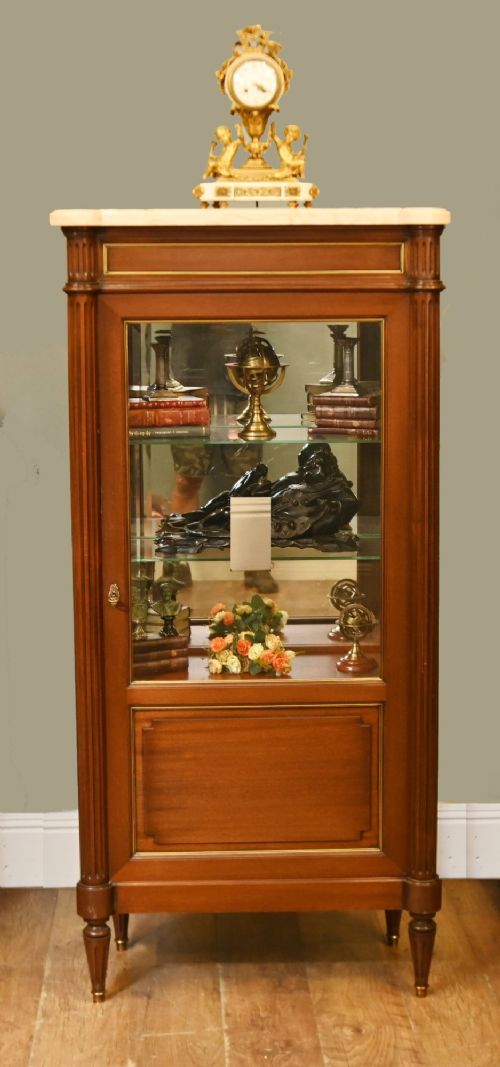
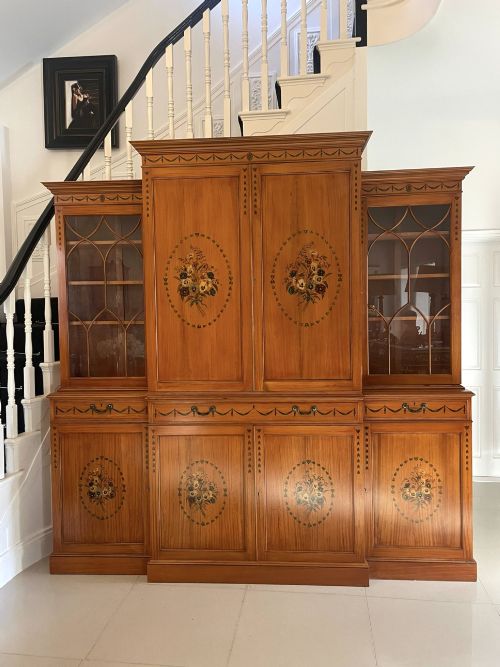
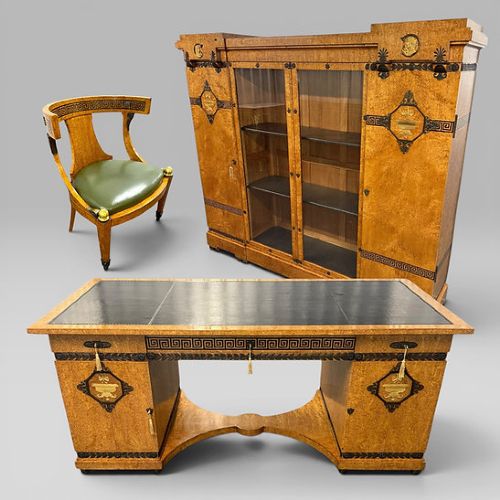
The versions most commonly met on this page span the late nineteenth century through to the early twentieth century, encompassing Georgian originals alongside revivalist interpretations such as Sheraton Revival, Adam Revival, and French Empire styles. Forms range from freestanding breakfront bookcases and corner cabinets to refined display vitrines and secretaire cabinets incorporating fitted writing sections.
Makers and workshops of the period utilised distinct regional interpretations, ranging from English satinwood and mahogany pieces associated with prominent London cabinet makers to French vitrines and office sets. Buyers encounter formats incorporating brass mounts, marquetry inlay, and painted decoration alongside simpler glazed book cabinets.
How They Were Made
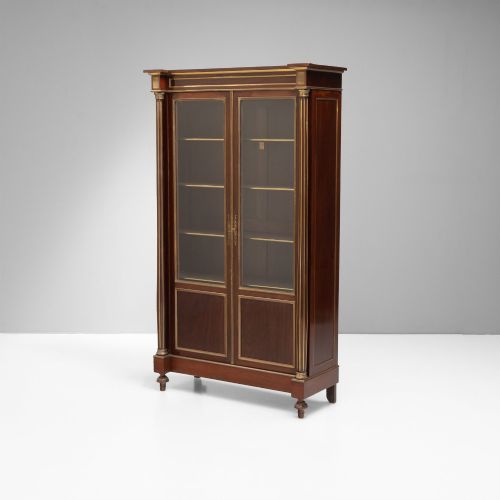
Cabinet makers constructed the foundational carcase of a neoclassical glazed bookcase using timber frames of mahogany or satinwood, frequently enhanced with ebonised wood or delicate marquetry veneers. Glass panes were fitted into timber doors or astragal frames, while brass mounts, bronze details, and fabric or leather linings added textural contrast and interior refinement.
Surface decoration relied upon precise woodworking techniques such as crossbanding, stringing, and hand-painted motifs rather than heavy carving. Cabinet makers balanced structural integrity with graceful visual lightness, incorporating architectural cornices, fluted columns, and bracket feet or stands to elevate the main body of the bookcase.
Some nineteenth-century cylinder cabinets hide miniature writing drawers designed to slide forward smoothly at the touch of a single hidden spring.
What Varies in Quality
The caliber of a neoclassical glazed bookcase rests upon the selection of timber figures, such as highly figured satinwood or rich flame mahogany, matched symmetrically across doors and drawer fronts. Superior pieces exhibit meticulous hand-cut marquetry, fine brass or bronze mounts, and crisp architectural mouldings that reflect disciplined execution rather than hurried factory production.
Structural refinement distinguishes finer examples, visible in the snug fit of glazed doors, the integration of original glass, and the presence of secondary timbers like oak or mahogany used in drawer linings. Signed pieces or those attributed to notable workshops demonstrate a higher standard of joinery and proportion, ensuring the cabinet maintains both visual elegance and mechanical integrity over generations.
Mercier Frères·Jewell of Holborn·Waring & Gillow·Edwards & Roberts·Sandberg & Co·C Hindley & Sons
The Neoclassical Glazed Bookcase Glossary
- Astragal glazed
- A method of dividing glass panes within a door using thin timber mouldings, creating a geometric grid that supports the glass.
- Breakfront
- A cabinet design where the central section projects forward from the flanking sections, creating architectural depth and rhythm.
- Marquetry
- The art of applying decorative veneer pieces to a structure to form intricate patterns, pictures, or floral motifs.
- Secretaire
- A desk form featuring a pull-out or drop-front writing drawer that conceals smaller compartments and pigeonholes.
- Vitrine
- A glass-fronted display cabinet primarily intended for the exhibition of porcelain, silver, or small decorative objects.
- Satinwood
- A lustrous, fine-grained yellow timber favoured by eighteenth and nineteenth-century cabinet makers for sophisticated neoclassical furniture.
Neoclassical Glazed Bookcase: Frequently Asked Questions
What is a neoclassical glazed bookcase?
A neoclassical glazed bookcase is a storage and display piece defined by classical architectural motifs, symmetrical design, and glass-fronted doors. These cabinets combine utility with decorative elegance.
They reflect historical revivals spanning the Georgian era through to the early twentieth century, utilising fine timbers and glass to protect books and display objects.
How do I date a neoclassical bookcase?
Dating relies on identifying the underlying timber, construction techniques, secondary woods, and stylistic revival markers such as Sheraton or Adam details. Nineteenth and early twentieth-century pieces often combine period forms with machine-assisted precision.
Examining drawer linings, backboards, and hardware helps distinguish Georgian originals from later nineteenth-century revival interpretations.
Where were these bookcases placed?
Historically, these bookcases occupied formal libraries, drawing rooms, studies, and grand reception spaces where scholarly collections or fine ceramics were showcased. Their architectural presence anchored the room's decorative scheme.
Today, they serve a similar function in domestic interiors, providing dust-protected shelving while displaying books and decorative arts.