




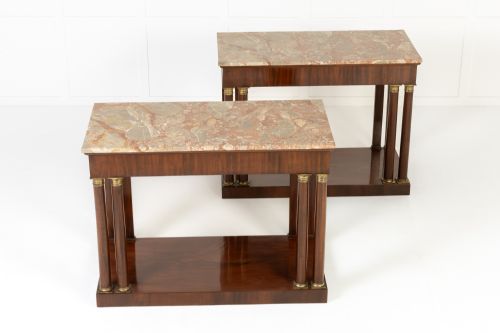
Neoclassical Mahogany Furniture
Neoclassical mahogany furniture brings together rich timber and classical proportion, offering structured elegance and refined proportions for period interiors.
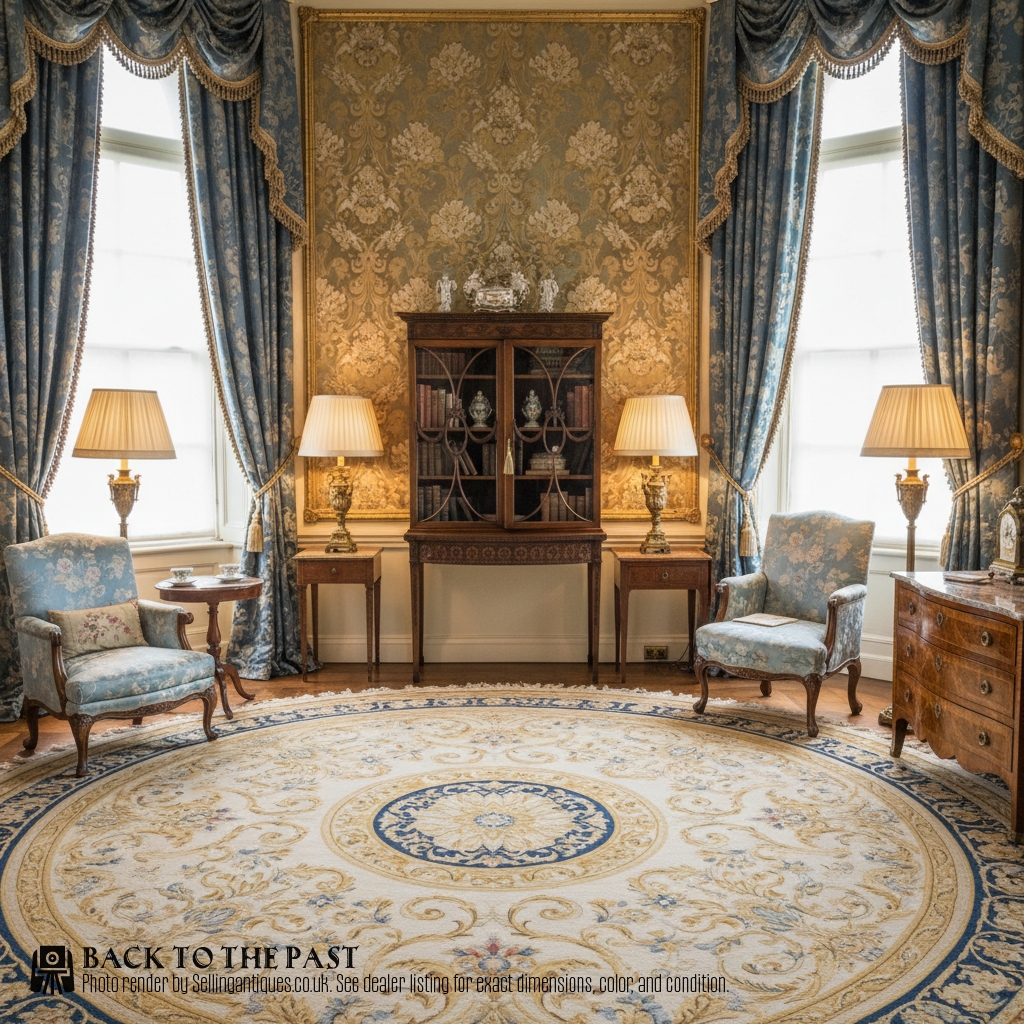
Neoclassical Mahogany Furniture
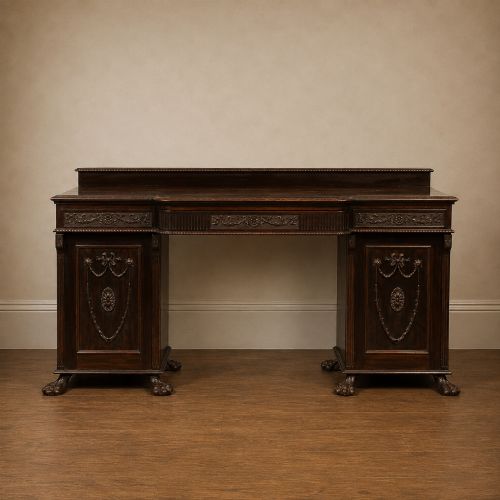
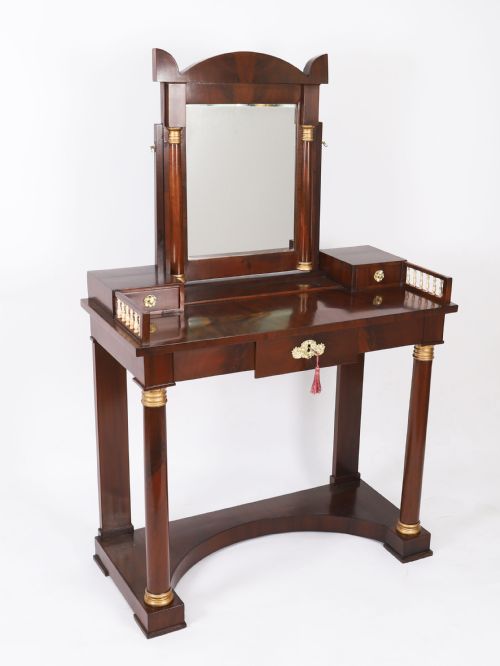
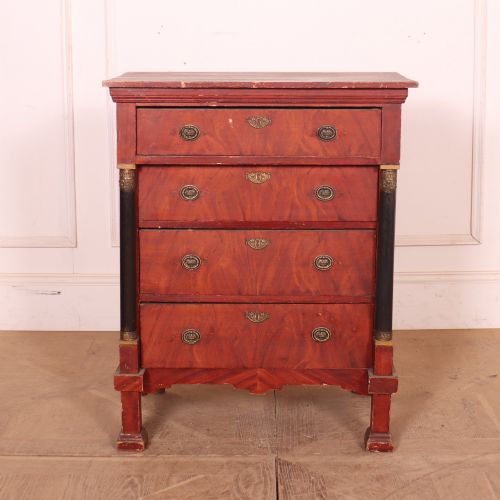
Neoclassical mahogany furniture comprises practical household items built during the eighteenth and nineteenth centuries, alongside later revivals from the Edwardian era. Pieces on this page span several functional forms designed for storage, display, and gathering, including chests of drawers, console tables, sideboards, armchairs, and display cabinets.
Materials and construction
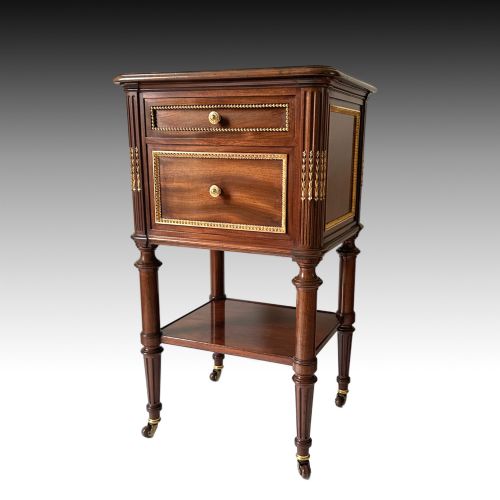
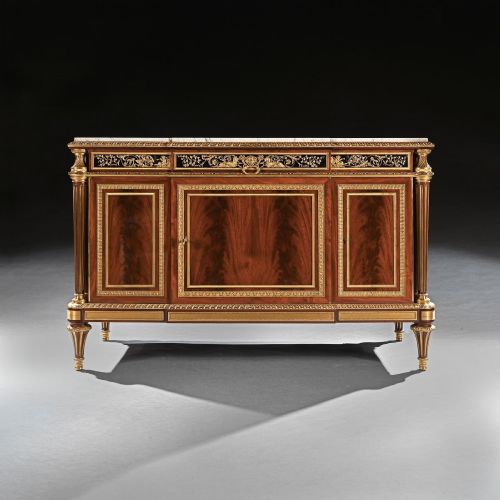
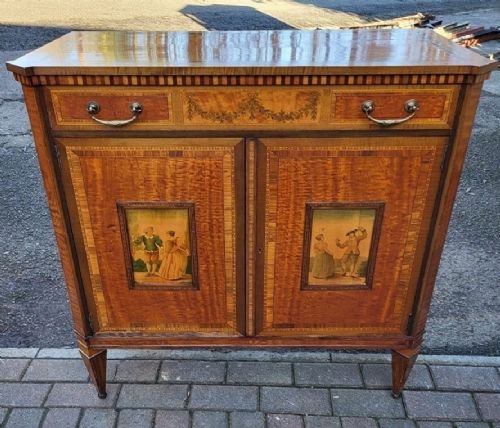
Makers utilised solid mahogany and mahogany veneers as the primary timber substrate, often combining them with contrasting secondary woods such as satinwood and boxwood for decorative banding. Marble tops in white or fossil varieties frequently provide durable surfaces on console tables and commodes.
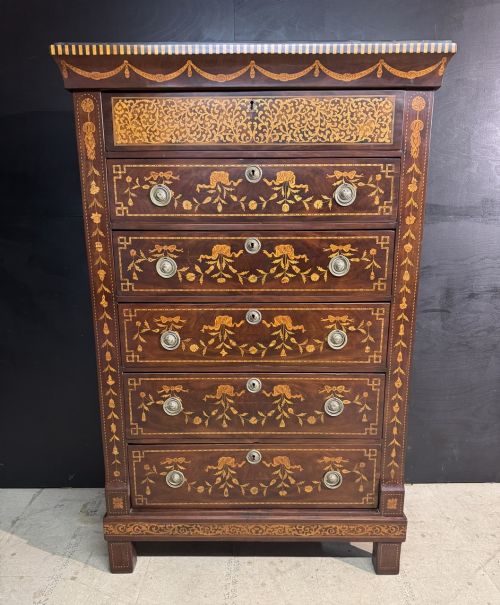
Cast brass and gilt ormolu mounts punctuate the timber facades, echoing classical architectural motifs. Marquetry inlay appears on Dutch and Sheraton revival pieces, incorporating meticulous floral and geometric patterns into the mahogany surfaces.
Materials across the inventory include solid mahogany, satinwood, boxwood, marble, brass, and gilt ormolu.
Evaluating standard and execution
The degree of refinement in carved details and metalwork marks the distinction between standard production and exceptional examples. Fine mounts possess crisp chiselling and secure original gilding, whereas lesser pieces feature softer cast definition.
The selection of timber grain and the precision of inlaid satinwood or boxwood stringing dictate visual depth. Master workshops employed balanced veneers and tight cabinet joints that endure through centuries of use.
Henry Dasson·Maple and Co·Jewell of Holborn
The Neoclassical Mahogany Furniture Glossary
- Ormolu
- Gilded bronze used for decorative mounts and furniture trim. This technique creates a bright metallic contrast against dark mahogany surfaces.
- Marquetry
- The art of applying pieces of veneer to a structure to form decorative patterns. Craftsmen use various woods to achieve pictorial designs on drawer fronts and tabletops.
- Commode
- A low chest of drawers or cabinet developed in France. These pieces often feature marble tops and elaborate metal mounts.
- Guéridon
- A small circular table supported by a central pillar or multiple legs. French makers frequently incorporated classical figures and swan details into these designs.
- Bow-front
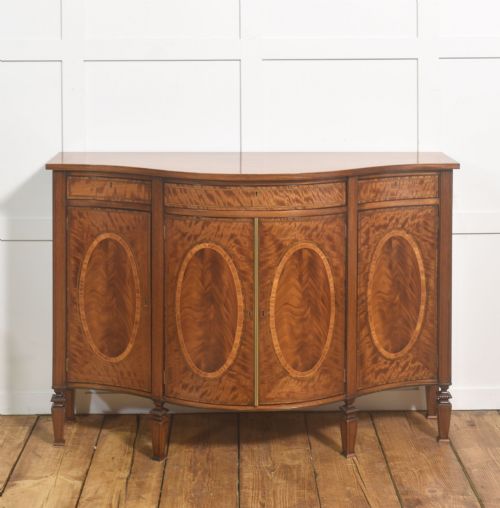
- A convex curved cabinet or chest front popular in Sheraton and revival furniture. This curved profile softens the linear geometry of a room.
Neoclassical Mahogany Furniture: Frequently Asked Questions
How do I identify French Empire pieces?
French Empire furniture relies on dense mahogany construction paired with heavy cast ormolu mounts depicting classical military, botanical, or animal motifs. These pieces often feature dark marble tops and austere architectural silhouettes derived from ancient Roman and Greek design.
Cabinetmakers working in this style avoided excessive carving in favour of smooth, polished timber planes that highlighted the natural figure of the mahogany. Look for structural symmetry and structural mass when assessing pieces from this tradition.
What is Sheraton Revival furniture?
Sheraton Revival pieces replicate the light, rectilinear proportions of late eighteenth-century English design during the Edwardian period. They frequently utilise mahogany framed with satinwood veneer, boxwood stringing, and delicate painted details.
These items suit modern domestic spaces because their smaller scale and restrained ornament complement existing interior schemes without dominating a room.
Where should I place a console table?
Console tables function best against flat walls in entrance halls, living rooms, or dining spaces, often positioned beneath mirrors or artwork. Their shallow depth provides a surface for decorative lamps or ceramic vessels without obstructing movement.
Many examples feature finished backs or marble tops that allow them to stand securely in open interior layouts.
How do I care for antique mahogany?
Maintain antique mahogany by dusting regularly with a soft, dry cloth and avoiding placement near direct heat sources or strong sunlight. Excessive temperature fluctuations cause timber to dry out and veneers to lift from their substrate.
Apply a microcrystalline wax periodically to nourish the surface and protect the polished finish from moisture and everyday wear.