



Neoclassical Display Stands
Neoclassical display stands are architectural columns, pedestals, and vitrines designed to elevate sculpture or ceramics, bringing classical order into domestic interiors.
Neoclassical Display Stands
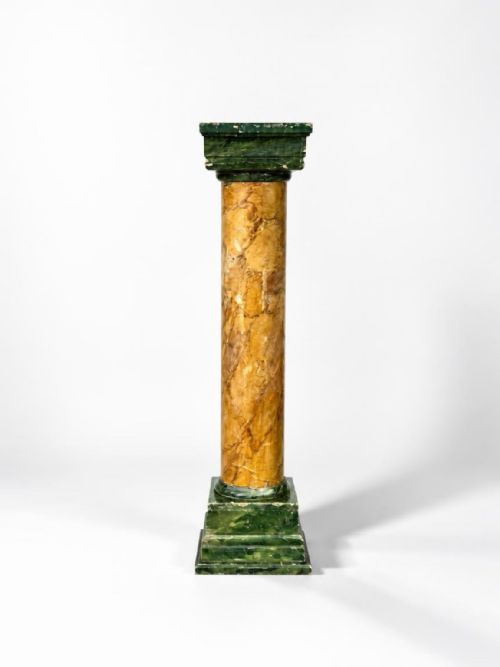
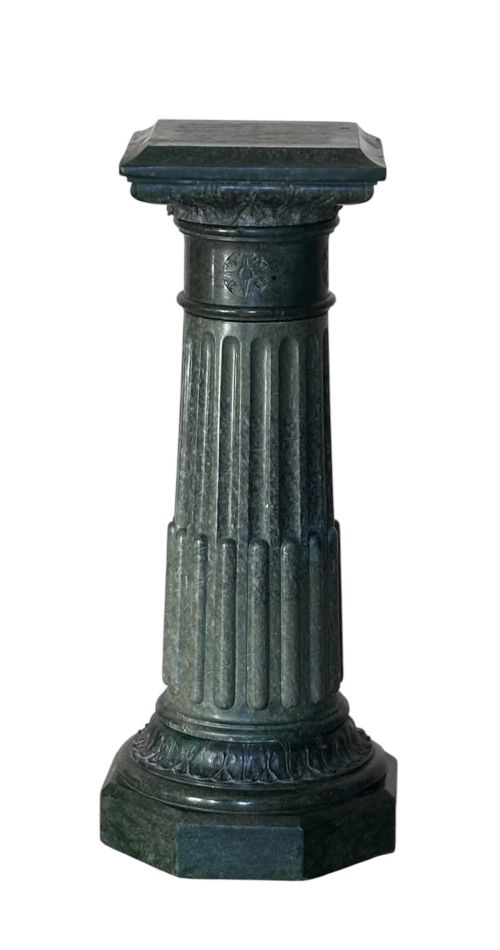
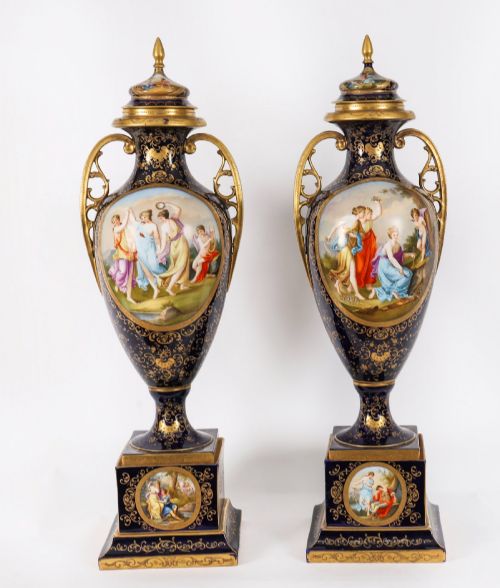
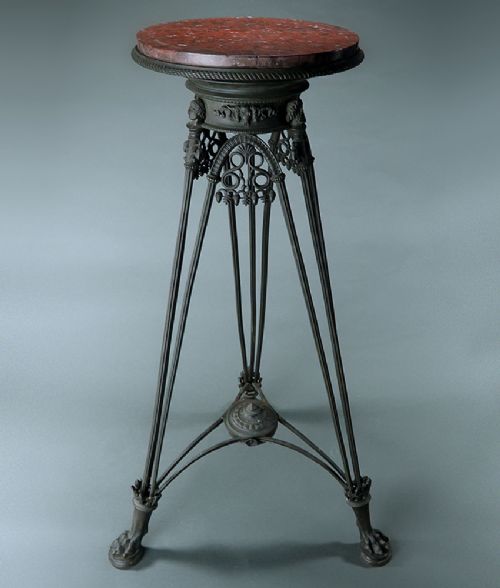
Neoclassical display stands encompass pedestals, columns, plinths, torcheres, and vitrines drawing on ancient Greek and Roman design principles. These pieces emerge predominantly across the nineteenth and early twentieth centuries, reflecting revivals such as Louis XVI, French Empire, and Edwardian classical tastes.
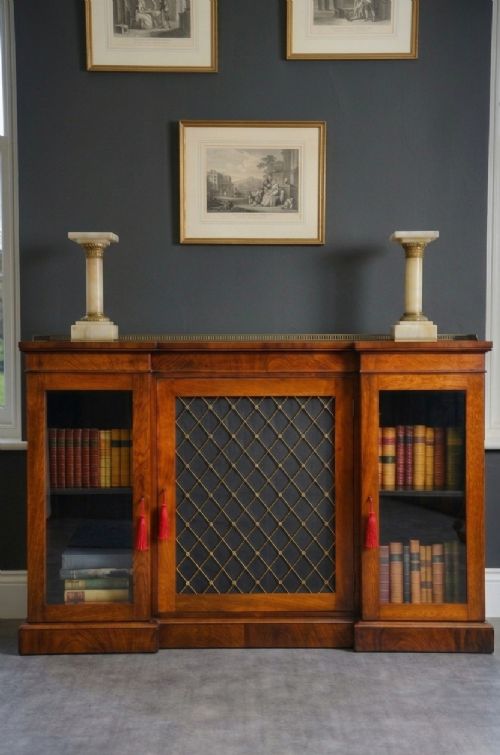
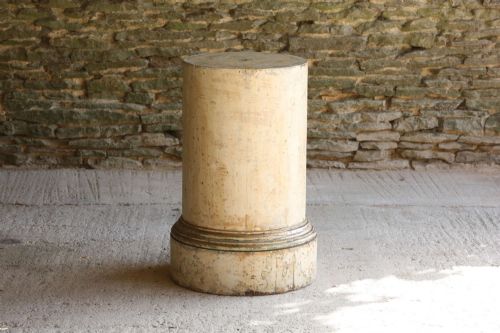
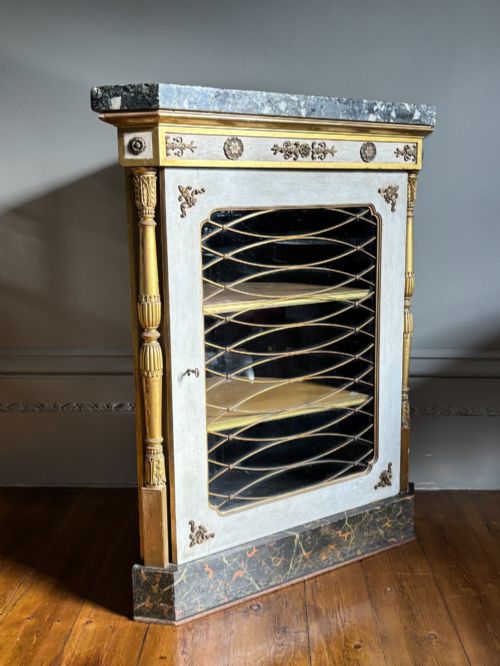
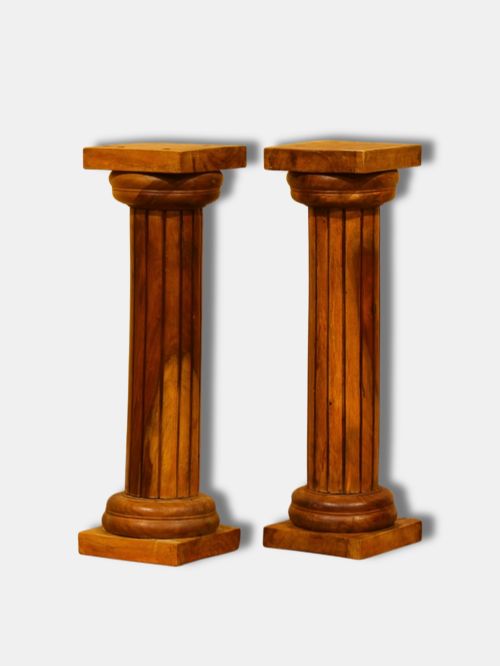
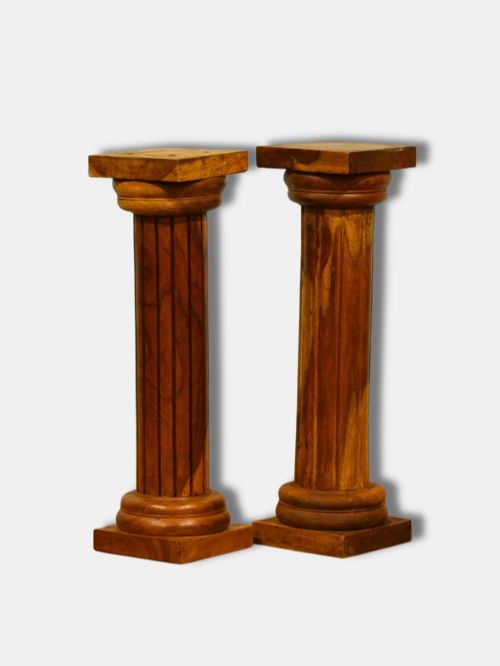
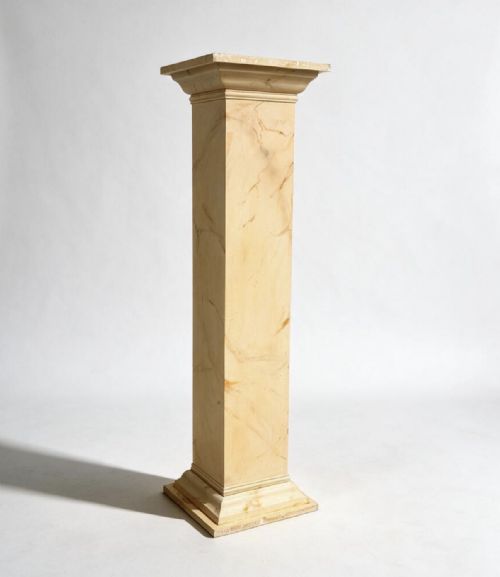
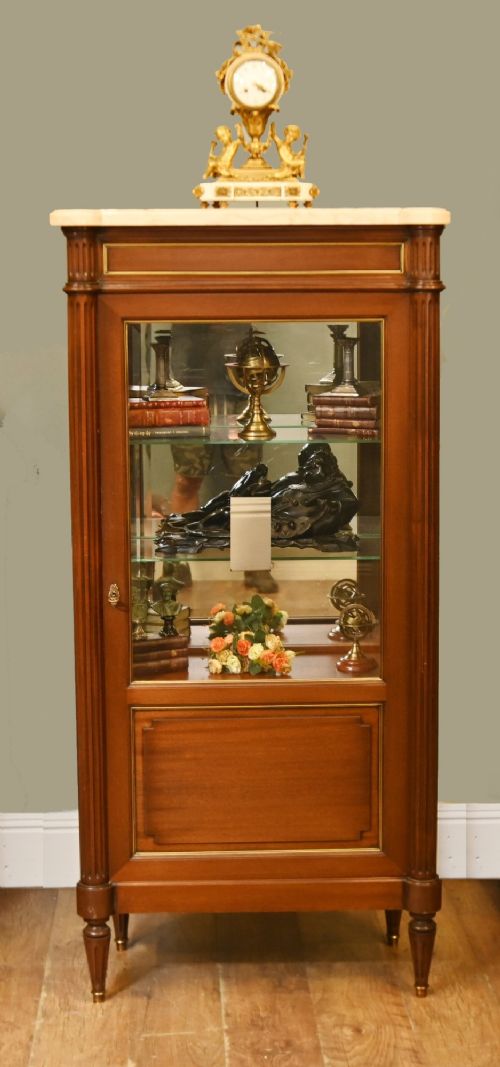
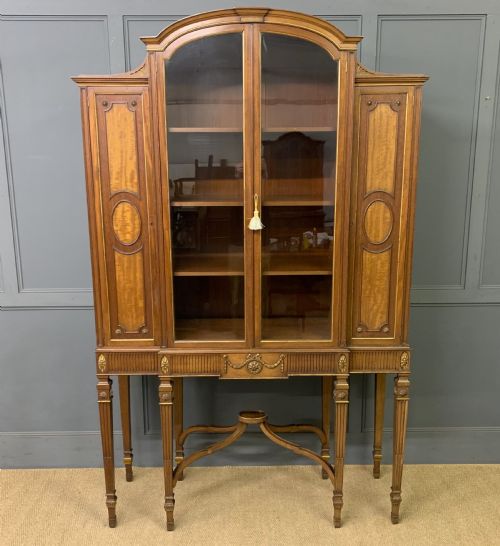
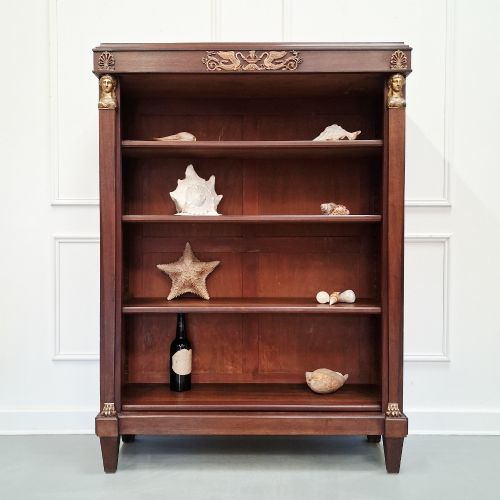
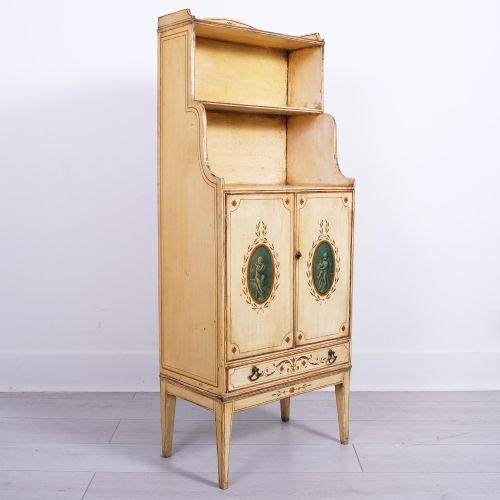
The version most commonly met on this page is the single column or pedestal, executed in marble, painted wood, or mahogany to support a bust, urn, or plant pot. Alongside these stand larger display cabinets and bookcases sharing the same strict architectural symmetry and restrained ornamentation.
Materials and Construction
Makers utilised heavy natural materials, employing solid marbles like Bardiglio, Carrara, Verde Antico, and onyx, often turned on lathes to form classical columns. Scagliola appears frequently as an adept composite technique mimicking solid stone through pigmented plaster and glue.
Wood construction relies on mahogany, satinwood, and birch, frequently shaped into fluted columns or integrated into glass-fronted cabinets with marquetry inlay. Gilt-metal mounts, ormolu collars, and gilt gesso decoration provide metallic contrast to the dark timber and polished stone surfaces.
Neoclassical Display Stands Retail Price Guide 2026
Typical asking prices for neoclassical display stands among the pieces listed under this phrase on Sellingantiques today, from the lower quarter to the upper quarter. They describe what is for sale here now, not the wider market.
Materials span natural marble, onyx, scagliola, mahogany, satinwood, birch, cast iron, plaster, and painted wood.
Evaluating the Pieces
Quality rests upon the authenticity and weight of the materials used, distinguishing solid carved marble and dense hardwoods from lightweight faux finishes or plaster composites. The precision of the turning on stone columns and the crispness of carved wooden details indicate the maker's skill.
Proportion and architectural balance dictate the visual success of each stand, separating masterworks from provincial copies. Finer examples integrate high-grade cast bronze mounts or meticulous scagliola work that closely mirrors ancient mineral specimens.
Waring and Gillow·Sandberg and Co
The Neoclassical Display Stands Glossary
- Pedestal
- A support or base for a statue, urn, or vase. These tall vertical columns lift display objects to eye level.
- Torchere
- A tall stand or ornamental candlestick originally designed to hold a light source. Today these function primarily as plant or vase stands.
- Scagliola
- A composite material made from selenite, glue, and pigments, embedded to imitate marble and other hard stones. Craftsmen polish this mixture to a high, reflective finish.
- Ormolu
- Gilded bronze applied as a decorative mount on furniture and stonework. This technique was widely favored in French Empire and Louis XVI revival pieces.
- Vitrine
- A glass-displayed cabinet designed to showcase porcelain, books, or curiosities. These pieces often feature neoclassical symmetry and delicate framing.
Neoclassical Display Stands: Frequently Asked Questions
What objects belong on a neoclassical display stand?
These stands are built to hold heavy decorative items such as marble busts, bronze sculptures, porcelain vases, and large urns. Their sturdy tops distribute weight evenly.
Selecting an object for a stand requires matching the scale of the base to the piece placed upon it. Heavy stone capitals suit classical bronze or ceramic works.
How do I tell marble from scagliola?
Natural marble feels cold to the touch and shows crystalline mineral veins running through the entire stone body. Scagliola is a pigmented plaster composite applied over a core.
Close inspection reveals whether a column is carved from solid stone or cast from plaster. Scagliola often feels slightly warmer and may lack the deep mineral refraction of natural quarry stone.
Where should I place a column in a room?
Columns and pedestals function best in corners, framing doorways, or anchoring empty wall spaces where vertical architectural interest is needed. They draw the eye upward.
Ensure the floor surface is entirely level before placing heavy stone columns. A stable foundation prevents tipping when weighty art objects rest on top.
What defines the Empire revival style?
Empire revival pieces draw on Napoleonic classical motifs, featuring stark architectural lines, dark mahogany, and distinct gilt-bronze mounts. The aesthetic leans toward military and imperial roman grandeur.
These stands often incorporate Egyptian revival elements, such as paw feet or sphinx motifs. The silhouette remains geometric, heavy, and strictly symmetrical.