

Neoclassical Bronzed Clock
A neoclassical bronzed clock brings classical symmetry and patinated metalwork into a room, offering both reliable timekeeping and sculptural presence.
Neoclassical Bronzed Clock
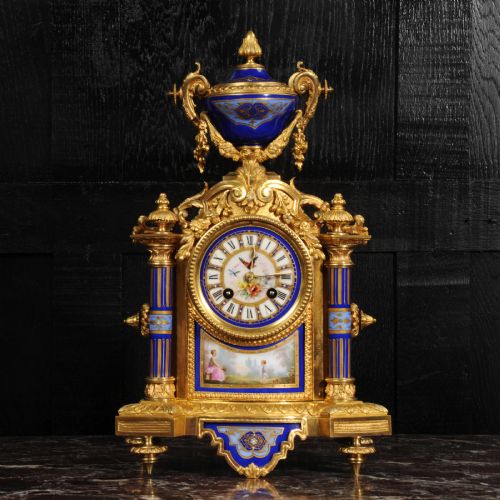
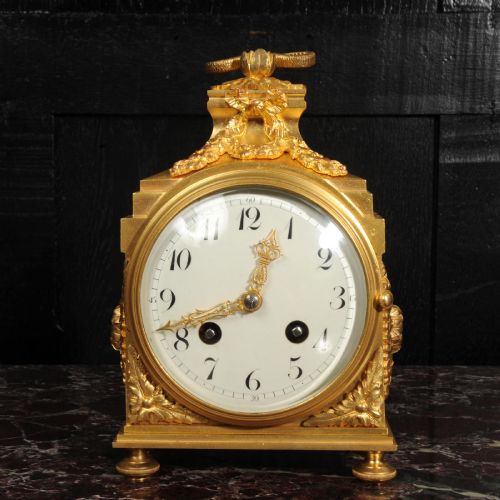
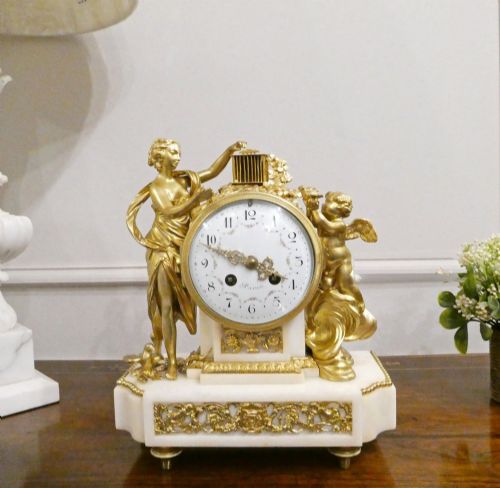
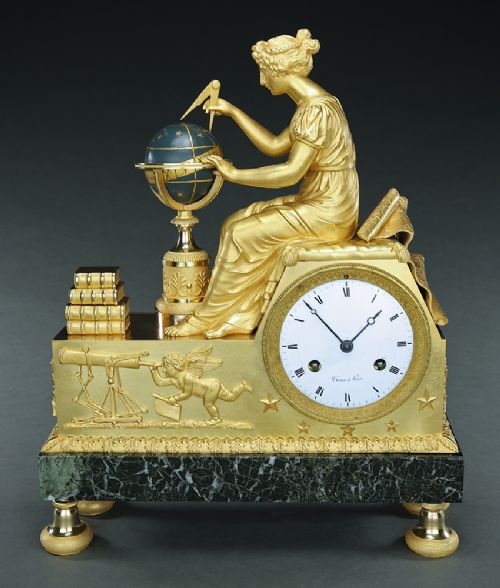
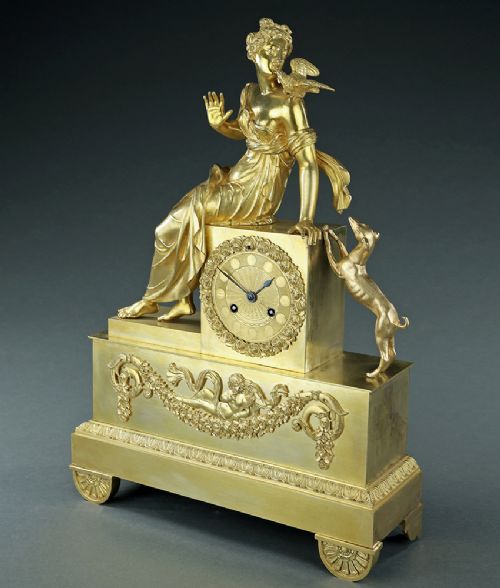
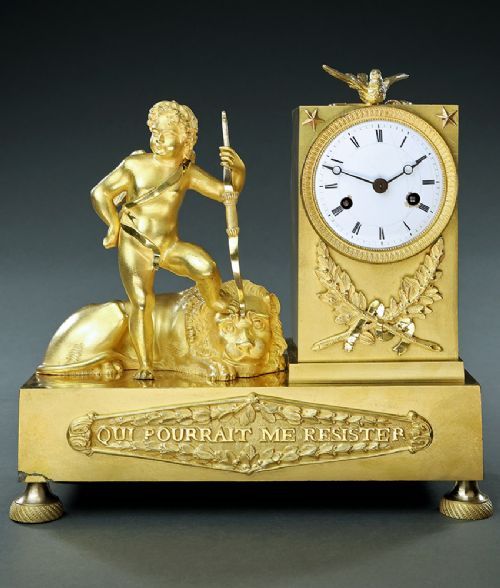
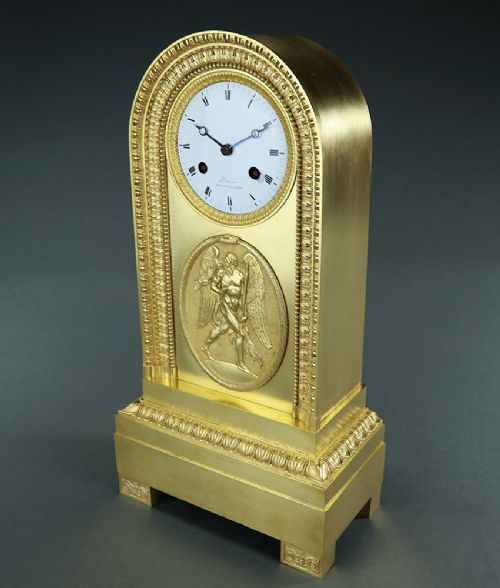
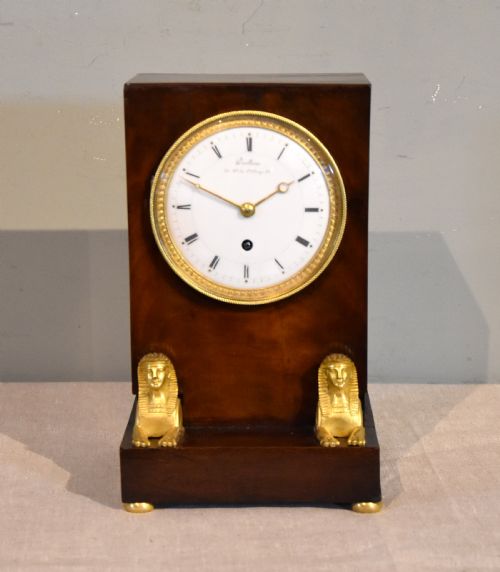
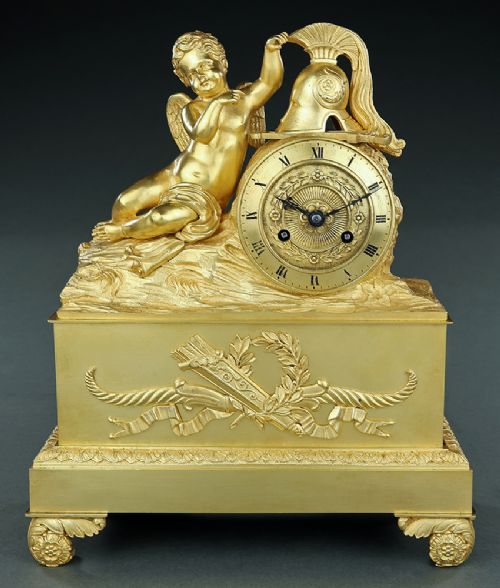
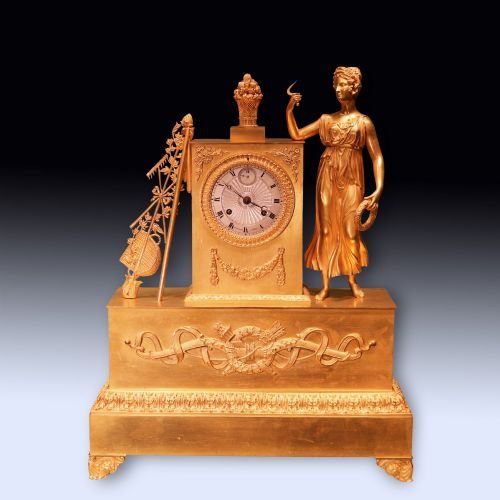
A neoclassical bronzed clock combines classical architectural proportions with dark patinated metal figures and mounts, typically taking the form of mantel clocks, wall clocks, or multi-piece garniture sets. These pieces frequently appear in French Empire, Louis XVI, and Regency styles, drawing directly on ancient Greek and Roman motifs.
Buyers meeting this phrase find items predominantly from the nineteenth century alongside late eighteenth-century examples, spanning periods from the Directoire era through to the Victorian age. The selection ranges from compact mantel timepieces to large portico clocks and substantial wall cartels.
The dominant configurations rely on symmetrical cases housing enamel dials, often accompanied by matching candelabra in garniture sets. Makers integrated mythological themes, allegorical figures, and crisp geometric lines into the standard domestic timekeeper of the period.
Materials and construction
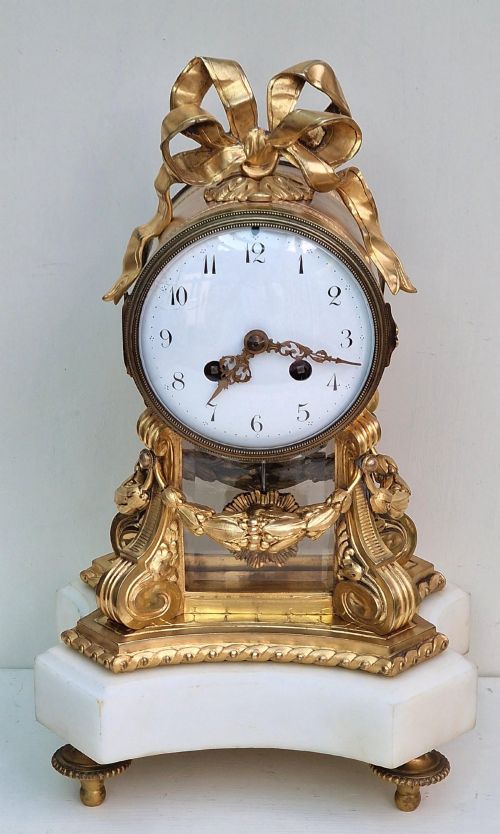
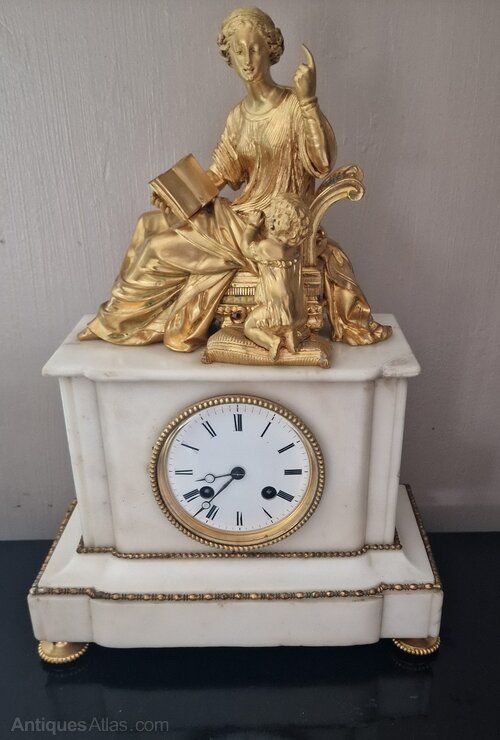
Foundry workers shaped these clocks using bronze, brass, and copper alloys, applying chemical patination to achieve dark bronzed surfaces alongside fire-gilded ormolu highlights. White and coloured marbles such as Sienna and rouge provided heavy, stable plinths that contrasted with the polished metal work.
Clockmakers housed mechanical movements - often featuring anchor escapements and pendulum regulation - within cases structured around glass panels, enamel chapter rings, and carved marble blocks. Dial faces utilised fired enamel on copper plates, painted with Roman or Arabic numerals.
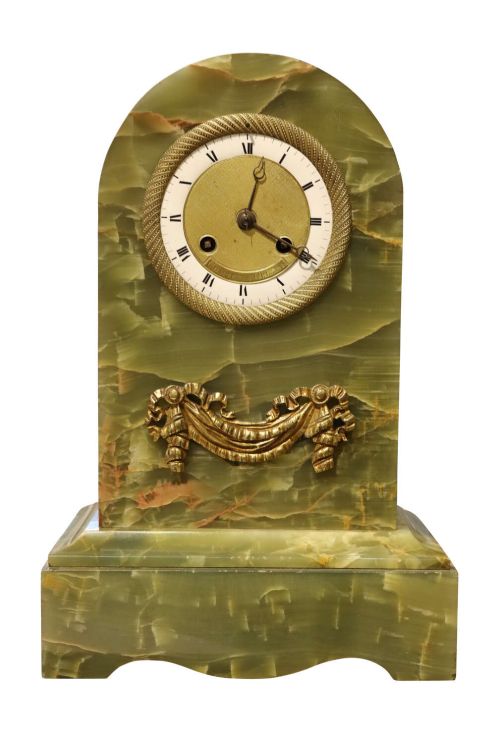
Listings feature pieces spanning the eighteenth, nineteenth, and twentieth centuries, incorporating materials such as white marble, green onyx, gilt bronze, and enamel.
Craftsmanship and design
The distinction between standard production and exceptional work rests on the crispness of the bronze chasing and the depth of the ormolu gilding. Superior examples display sharply defined facial expressions on figural mounts, deep relief casting, and harmonious proportions between the marble base and the metal superstructure.
Movement quality separates workshop output, seen in the presence of signed Parisian plates, precision gear cutting, and integrated musical or calendar complications. Cases assembled with heavy-gauge bronze and thick marble slabs retain their structural integrity far better than lighter, later adaptations.
Japy Freres·Le Roy, Paris·Louis Goret·Berger, Paris·Charles a Orleans
The Neoclassical Bronzed Clock Glossary
- Ormolu
- Finely ground high-carat gold applied to a bronze base using a mercury amalgamation technique. This process creates a durable, warm metallic lustre characteristic of eighteenth and nineteenth-century French metalwork.
- Garniture
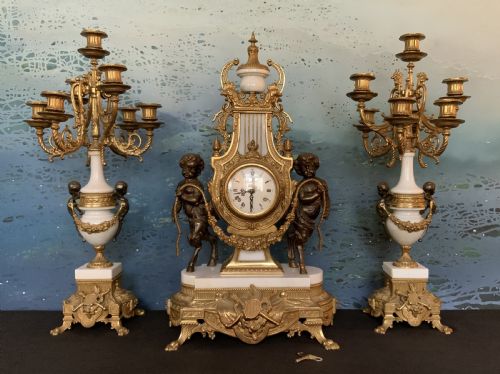
- A coordinated set of decorative objects designed to be displayed together, usually comprising a central clock flanked by matching candelabra or urns.
- Portico clock
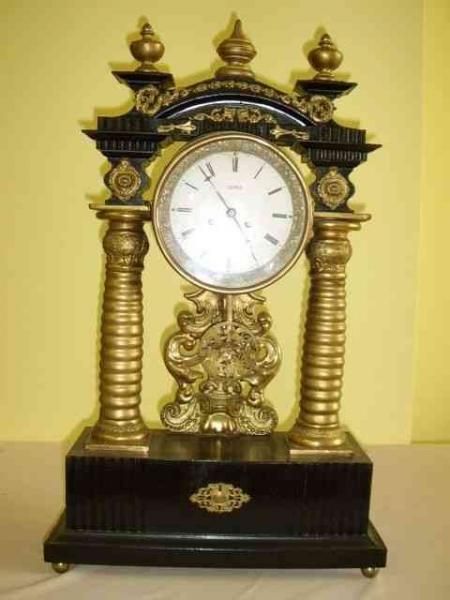
- A mantel clock featuring a architectural case supported by four distinct columns, often arranged over a stepped marble base with a suspended pendulum swinging within the central void.
- Cartel clock
- A wall-mounted clock featuring an ornate frame typically made of gilt bronze, brass, or carved wood, designed to hang directly from a wall bracket.
- Enamel dial
- A metal disc coated with fused powdered glass, fired in a kiln to produce a smooth, glossy white surface that resists tarnishing and holds painted numerals permanently.
Neoclassical Bronzed Clock: Frequently Asked Questions
Where should I place a heavy marble clock?
These clocks require a deep, sturdy mantelpiece, sideboard, or console table capable of supporting substantial weight without sagging. The surface must be entirely level to ensure the pendulum swings evenly and keeps accurate time.
Avoid positioning the clock near direct heat sources or in areas subject to strong vibrations, which can disrupt the delicate balance of the anchor escapement.
How do I tell an Empire clock from a Louis XVI clock?
Louis XVI pieces display restrained classical symmetry, straight tapering columns, floral swags, and light-hearted classical motifs. The forms are generally rectilinear or circular with delicate ormolu mounts.
Empire clocks embrace a heavier, more militaristic and imperial Roman aesthetic, featuring bold patinated bronze figures, sphinxes, trophies, and dense architectural massing derived from Napoleonic taste.
Why does my clock run fast or slow?
Mechanical clocks are sensitive to temperature changes and minor shifts in positioning, which alter the effective length of the pendulum. Regulation is achieved by adjusting the small nut at the base of the pendulum bob.
Raising the bob shortens the pendulum and makes the clock run faster, while lowering it slows the movement down. Small adjustments made over several days will calibrate the timekeeping.