


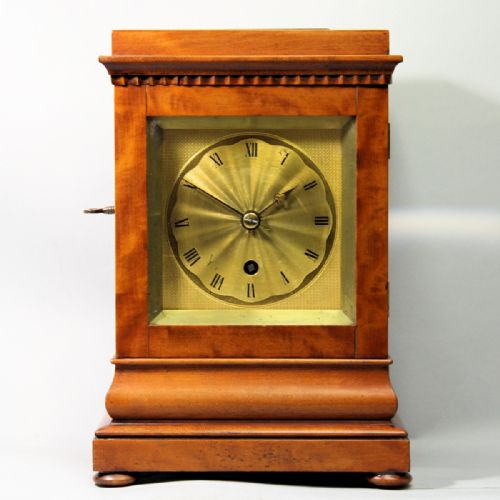


Chain Fusee Mantel Clock
A chain fusee mantel clock brings precision mechanics and striking metalwork together on a mantelpiece.
Chain Fusee Mantel Clock
A chain fusee mantel clock uses a fine steel chain wrapped around a conical pulley to equalise the declining power of the mainspring as it unwinds. This mechanism ensures consistent force is delivered to the escapement throughout the running period, resulting in superior timekeeping compared to standard spring-driven movements. When searching for a chain fusee mantel clock, buyers will encounter pieces primarily housed in architectural or figural cases dating from the nineteenth century, including the Regency and Victorian eras.
The material selection for these clock cases reflects the high status of the mechanism within, spanning polished hardwoods such as mahogany and satinwood alongside cast metals like ormolu, gilt bronze, and patinated bronze. Formats vary from substantial library clocks with glass panels to decorative mantel pieces styled in the Rococo or Egyptian Revival taste. Most examples seen on this page date from the nineteenth century and carry the signatures of notable London makers who specialised in precision domestic timepieces.
How they were made
Makers housed the intricate brass movements inside heavy cases formed from cast ormolu, gilt and patinated bronze, slate, and timbers such as mahogany, satinwood, and walnut. The distinctive fusee mechanism relies on a miniature steel chain linked between a barrel and a cone-shaped pulley, which required advanced metallurgical skill to cut and assemble. Gilded surface treatments and cast mounts completed the exterior, often incorporating fine engine-turned details on the metal dials.
Cabinetmakers and bronze-casters worked alongside horologists to produce these high-grade clocks, combining precision gear-cutting with decorative chasing and wood-inlay techniques. Glass panels were integrated into library clock cases to expose the moving parts, while figural mantel clocks united cast bronze statuary with the central clock housing. This collaborative approach ensured that the exterior ornamentation matched the mechanical complexity housed within.
Period styles represented include Regency, Victorian, Edwardian, and several variations of the Rococo and Egyptian revivals.
What varies in quality
Quality in these clocks rests upon the crispness of the cast bronze ormolu mounts, the density and figuring of the timber case, and the execution of the hand-engraved dial. Higher tier pieces often feature detailed figural elements or complex architectural cases by known makers, where every surface displays deliberate hand-chasing and fine finishing. Lesser examples rely on standard commercial castings and plainer timber housings without the same depth of decorative detail.
The sophistication of the movement also dictates the standing of the piece, with double or triple chain fusee configurations indicating higher complexity than single chain variations. The integration of striking or chime capabilities adds mechanical weight and desirability, marking out pieces destined for the most prominent rooms. The precision with which the chain winds onto the fusee cone remains a key indicator of the original horological ambition.
Goldsmiths & Silversmiths London·Barraud & Lund London·Payne London·FB Adams London·Fisher Braithwaite·Perigal & Duterrau·Baetens London·FATTON ELEVE DE BREGUET LONDON NO 35·Bently & Beck London·Payne & Co London·Fisher Old Bond Street Bath·Winterhalder & Hofmeier·Brockbank & Atkins London·Robins Charing Cross·P Forrester Hull·Granges London
The Chain Fusee Mantel Clock Glossary
- Fusee
- A conical pulley used in mechanical clocks to maintain an even pull as the mainspring unwinds. This device compensates for the loss of spring tension over time.
- Ormolu
- A gilded bronze ornament technique popular in decorative metalwork. It involves applying a high-carat gold amalgam to a bronze base.
- Engine turned
- A geometric decorative pattern cut into metal dials or surfaces using a specialised lathe. It creates precise, repeating textures that catch the light.
- Bracket clock
- A portable clock originally designed to sit on a wall bracket or table. Many nineteenth-century examples functioned as large mantel clocks.
- Patinated bronze
- Bronze that has been treated to achieve a dark or nuanced surface tone. This process highlights the sculptural details of figural clock cases.
Chain Fusee Mantel Clock: Frequently Asked Questions
What is a chain fusee movement?
A chain fusee movement is a mechanical system that uses a tiny steel chain and a conical pulley to regulate the power delivered from the mainspring. This prevents the clock from running fast when fully wound and slow as it runs down.
By evening out the force supplied to the escapement, the mechanism ensures the clock keeps accurate time throughout its running cycle. It is a mark of high-grade nineteenth-century horology.
How do I wind a chain fusee clock?
Winding requires a dedicated key inserted into the dial to turn the fusee arbor, which draws the chain back onto the conical drum. Care must be taken not to overwind the mechanism.
Most single-chain movements require attention at regular intervals to maintain tension. Owners should consult specialist instructions for their specific model to avoid damaging the delicate internal chain.
Where were these clocks placed?
These clocks were designed for principal rooms such as drawing rooms, libraries, and grand hallways. Their polished bronze cases and mahogany or satinwood frames suited formal interior decoration.
Library clocks with glass panels allowed readers to observe the moving parts, while figural mantel clocks served as sculptural centerpieces on fireplace surrounds.
How do I tell Regency from Victorian pieces?
Regency pieces often display classical motifs, crisp gilt bronze mounts, and restrained architectural lines inspired by antiquity. They date from the early part of the nineteenth century.
Victorian and later nineteenth-century examples frequently embrace revival styles like Rococo or Egyptian motifs, featuring heavier casting and more ornate floral carvings or figural groups.