


Neoclassical Bronze Centrepiece
These neoclassical bronze centrepiece items bring classical proportions and rich metalwork into a room.
Neoclassical Bronze Centrepiece
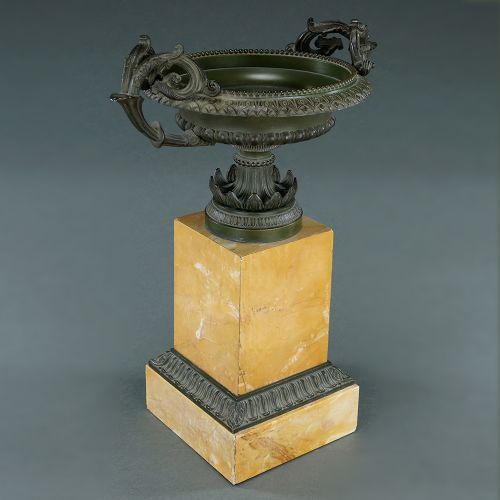
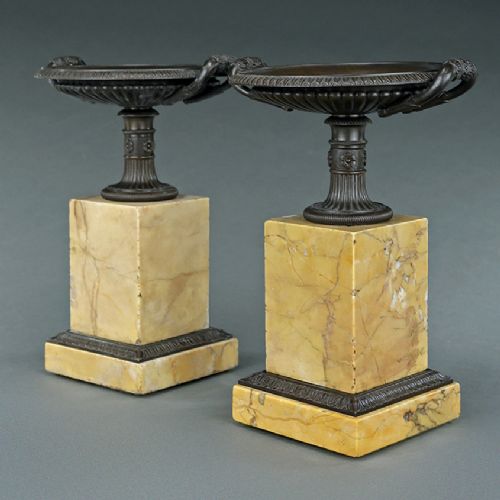
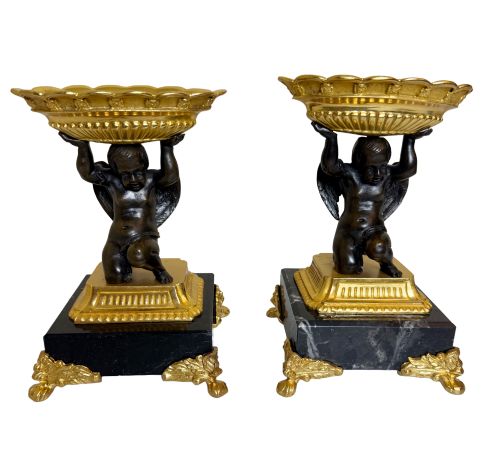
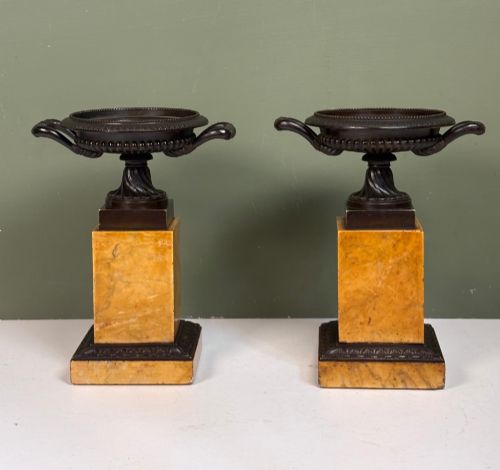
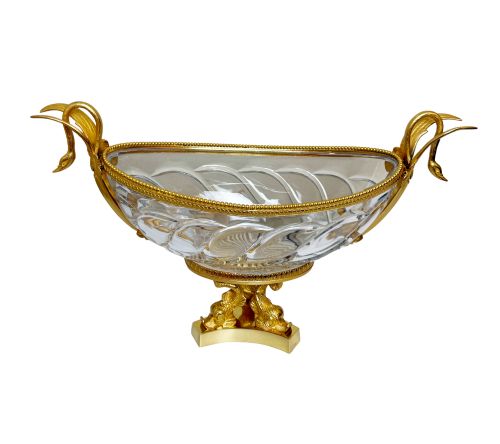
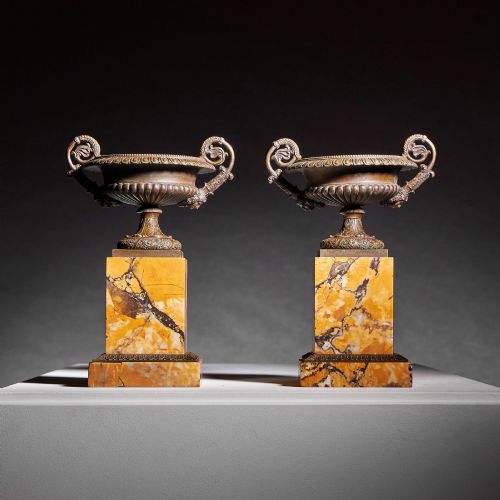
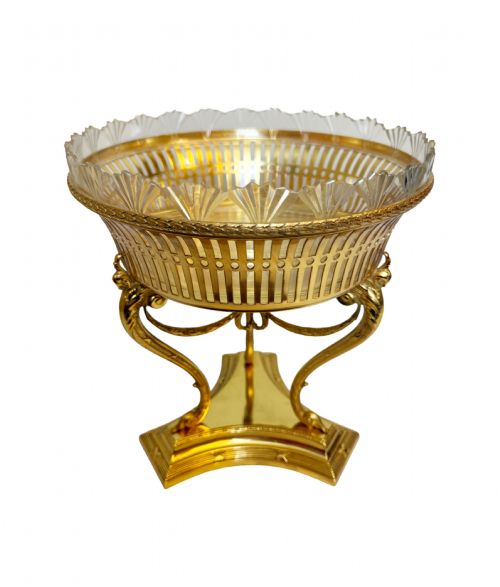
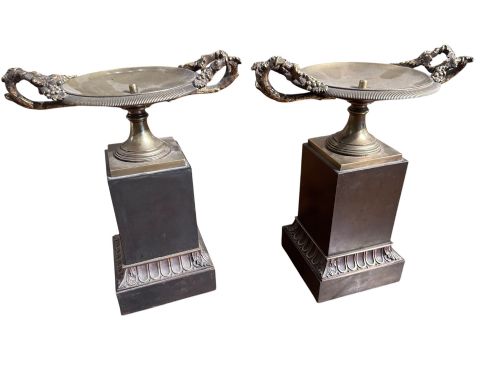
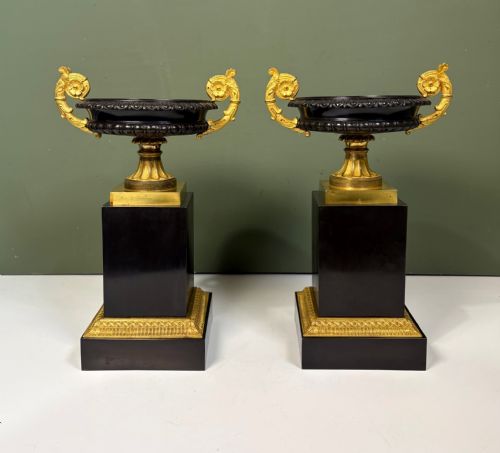
A neoclassical bronze centrepiece brings the formal dignity of antiquity into domestic rooms, drawing on centuries of classical design. These objects take the form of tazzas, urns, comports, and jardinieres, often serving as the visual anchor of a dining table or console. The version most commonly met on this page is the nineteenth-century French or Italian piece, frequently pairing cast bronze with contrasting marble bases.
Makers drew heavily on archaeological discoveries, translating ancient Roman and Greek motifs into decorative household items. Grand Tour souvenirs and Empire style designs dominate the selection, bringing laurel leaves, classical figures, and crisp cast ornament into focus. Buyers seek them to introduce architectural weight and a sense of history to an interior space.
How they were made
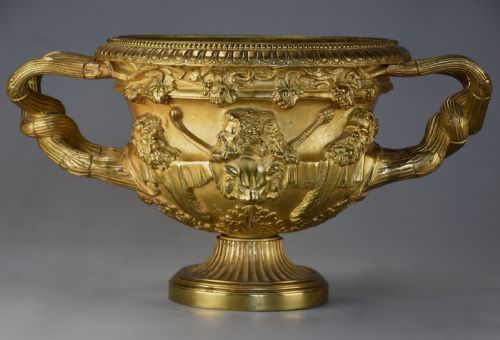
Foundries utilised traditional lost-wax casting or sand casting methods to shape the bronze, producing sharp details and substantial weight. Artisans then finished the metal by hand, applying rich patination or fire gilding, also known as ormolu, to create golden highlights against dark bronze surfaces. Cut glass inserts, mother-of-pearl dishes, and marble plinths were incorporated to add texture and colour contrast.
Stonemasons turned and polished the marble and rouge griotte bases separately before mounting the metal components onto them with threaded pins or screws. The marriage of patinated metal, gilt bronze, and carved stone required precise engineering to ensure the assembled vessels remained stable and balanced.
Listings for this phrase include nineteenth-century French and Italian pieces made from patinated bronze, gilt bronze, marble, cut glass, and alabaster.
What varies in quality
The refinement of the chasing work separates standard foundry output from exceptional pieces, as skilled artisans spent hours hand-chiselling the cast bronze to sharpen details like hair, drapery, and acanthus leaves. Crisp undercutting and deep relief indicate a maker who invested considerable labour into the final surface finish rather than leaving the casting raw.
The choice of secondary materials also dictates the calibre of the piece, with dense marbles, heavy fire gilding, and thick, hand-cut glass inserts marking the upper tier of production. Lesser examples rely on lighter brass elements, simpler patination, and unpolished stones that lack the depth and visual resonance of high-grade commissions.
The Neoclassical Bronze Centrepiece Glossary
- Ormolu
- Gilt bronze created by applying an amalgam of mercury and gold to a bronze object and heating it until the mercury vaporised, leaving a durable golden coating. This technique produced a distinct, warm lustre characteristic of fine nineteenth-century French works.
- Tazza
- A shallow saucer-shaped vessel mounted on a stem and foot, originating in classical antiquity and often used as a centrepiece or decorative dish. These items frequently incorporate classical friezes and twin handles.
- Grand Tour
- A traditional trip through Europe undertaken by upper-class young men in the eighteenth and nineteenth centuries to study classical art and architecture. Travellers purchased bronze souvenirs and miniature vessels to bring home.
- Patination
- The surface coloration of bronze achieved through natural ageing or chemical treatment, ranging from deep chocolate brown to greenish tones. It protects the metal while defining the contours of the casting.
- Jardiniere
- An ornamental container designed to hold flowers or plants, often taking the form of a heavily decorated bowl in bronze and glass. They sat on dining tables or sideboards during formal meals.
Neoclassical Bronze Centrepiece: Frequently Asked Questions
What is a neoclassical bronze centrepiece?
A neoclassical bronze centrepiece is a decorative vessel, tazza, or urn cast in bronze and styled after ancient Greek and Roman art. These pieces were designed to sit in the middle of a table or sideboard as a focal point.
They reflect the revival of classical taste during the eighteenth and nineteenth centuries, often combining cast bronze with marble bases, crystal inserts, or gilded highlights.
How were these centrepieces used originally?
In period interiors, these objects functioned as decorative focal points for dining rooms and libraries, sometimes holding fruit, flowers, or visiting cards. They signaled the owner's education and appreciation for classical antiquity.
Grand Tour souvenirs, for instance, commemorated travels to archaeological sites in Italy and served as sophisticated conversation pieces in domestic settings.
How do I care for bronze and marble?
Bronze requires very little maintenance beyond occasional dusting with a soft, dry cloth to prevent grime accumulation. Avoid using abrasive cleaning agents or polishes that can strip away the original patination or gilding.
Marble bases should be kept dry and wiped with a damp cloth if stained, taking care not to let moisture seep into unsealed stone or metal mounts.
How can I tell the period of a bronze?
Dating relies on examining the casting technique, the sharpness of the chasing, the quality of the marble, and the style of the mounting screws or pins. Nineteenth-century pieces often display specific Victorian, Regency, or French Empire design vocabularies.
Comparing the object's paturation, wear patterns, and construction methods to known examples helps confirm whether a piece dates to the nineteenth century or earlier.