
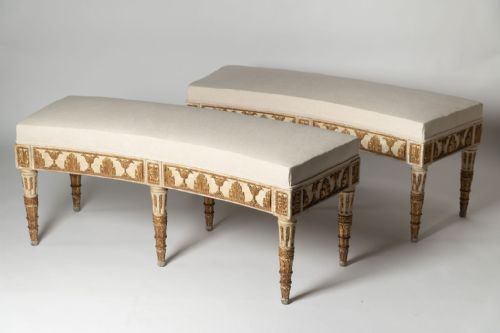
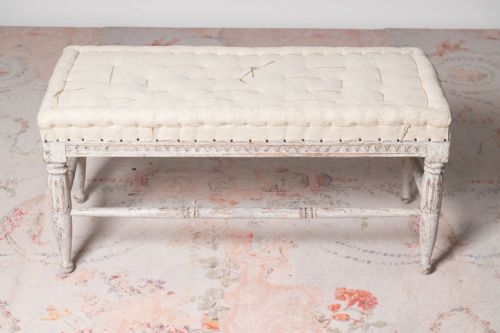


Neoclassical Bench Seat
A neoclassical bench seat brings disciplined lines and classical restraint to a room, offering a structured seat with ancient architectural roots.
Neoclassical Bench Seat
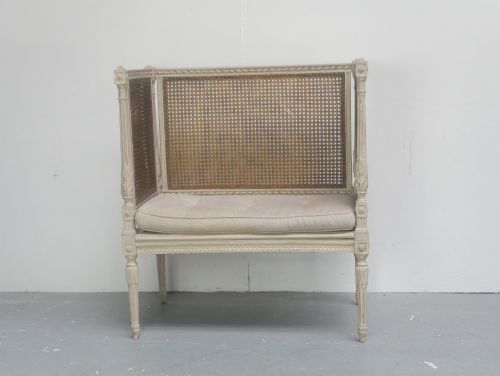
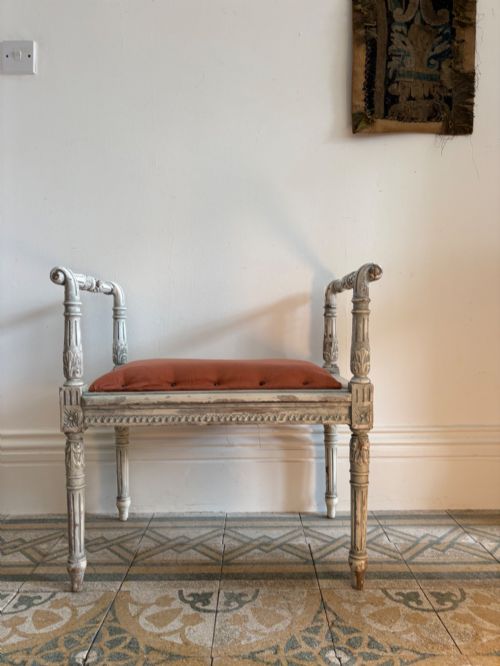
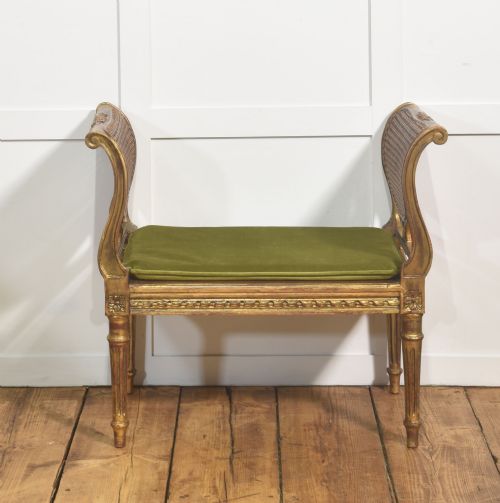
When you search for a neoclassical bench seat, you find long stools, window seats, and settees built in styles that echo Greek and Roman antiquity. These pieces appear in forms ranging from compact X-frame stools to grand multi-seater sofas.
The selections span the eighteenth century, the Georgian era, and the nineteenth century, alongside later revivals from the early twentieth century. French, Italian, and Swedish interpretations dominate, bringing varied regional flavours to standard classical forms.
Window seats and long bedroom stools represent the most common formats on this page. These seating options often combine rigid architectural geometry with upholstered comfort for daily use.
Materials and Construction
Cabinet makers utilised dense hardwoods such as mahogany, walnut, and satinwood for structural frames. Other pieces received white, painted, or gilded finishes applied over wood or gesso.
Upholstery materials range from silk and velvet to red damask, cane, and plain fabric. Canework panels provide lightweight seating surfaces on specific French and Swedish models.
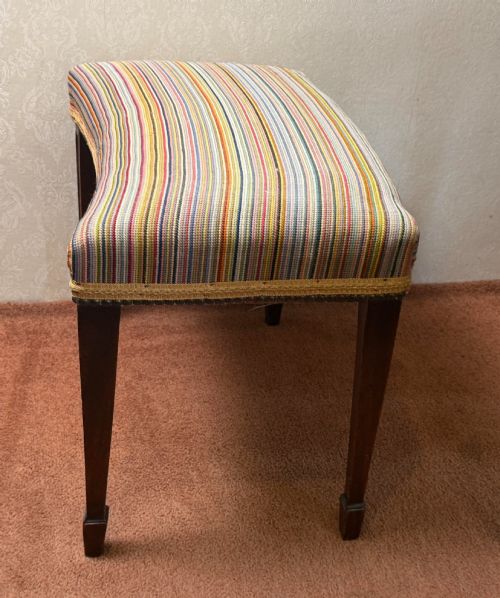
Many items incorporate carved details, ormolu mounts, and square tapering legs. X-frame structures and curule designs draw directly upon Roman folding chair archetypes.
Listings feature pieces spanning the 18th century, the Georgian era, the 19th century, and early 20th-century revivals.
Judging Quality
Quality rests in the precision of the carving and the proportional balance of the frame. Well-drawn examples display harmonious lines and confident handling of classical motifs.
The integrity of the original timber, the crispness of the giltwood or paint, and the survival of period upholstery materials distinguish superior specimens from simpler iterations.
Charles Nosotti
The Neoclassical Bench Seat Glossary
- Neoclassical
- A style spanning the eighteenth and nineteenth centuries that revived the motifs, symmetry, and proportions of ancient Greece and Rome. It rejected the exuberant curves of the preceding Rococo period in favour of strict architectural order.
- Gustavian
- The Swedish interpretation of Louis XVI and neoclassical design, known for pale painted finishes and restrained ornamentation. It balances French elegance with Nordic simplicity.
- Curule stool
- A seat featuring intersecting concave legs that form an X-shape, derived from ancient Roman magistrate chairs. This ancient form reappears frequently in neoclassical seating.
- Window seat
- A long, narrow stool or bench designed specifically to fit the recess of a window. These pieces often feature arms at one or both ends.
- Giltwood
- Wood that has been coated with a thin layer of gold leaf. This finish appears widely on formal French, Italian, and Swedish neoclassical frames.
Neoclassical Bench Seat: Frequently Asked Questions
Where should I put a neoclassical bench seat?
These pieces suit placement at the foot of a bed, beneath a hallway window, or alongside a living room wall. Their narrow proportions allow them to fit into transitional spaces where a bulky sofa would overwhelm the room.
Because many examples feature finished backs or open frames, they work well positioned in open spaces rather than pushed strictly against a wall.
How do I identify a Gustavian piece?
Gustavian pieces originate from Sweden and typically display pale painted finishes, such as soft grey or white. The decoration draws upon French Louis XVI models but remains simpler and more restrained.
Expect to find straight tapered legs, subtle fluting, and carved rosette details rather than heavy gilding or dark wood.
What is an X-frame stool?
An X-frame stool utilises two pairs of curved or straight legs that cross in the middle to form an X shape from the side view. This ancient curule design dates back to Roman times and provides inherent structural strength.
Neoclassical makers revived this form, often pairing the wooden or gilded frame with a tight upholstered cushion or webbed seat.
Can I use these seats daily?
Most antique benches and window seats are structurally robust enough for regular sitting, provided the frame joints remain tight. Timber frames made of mahogany, walnut, or oak offer dependable daily support.
Upholstery condition varies, so check whether the webbing and internal padding require professional restoration before heavy use.