


Regency Curule Stool
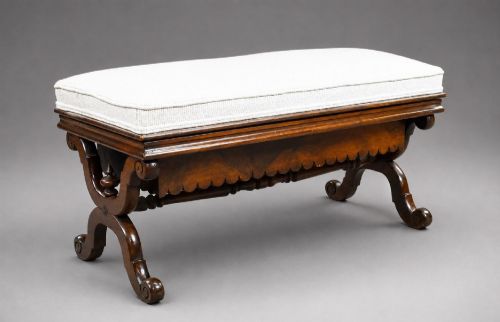
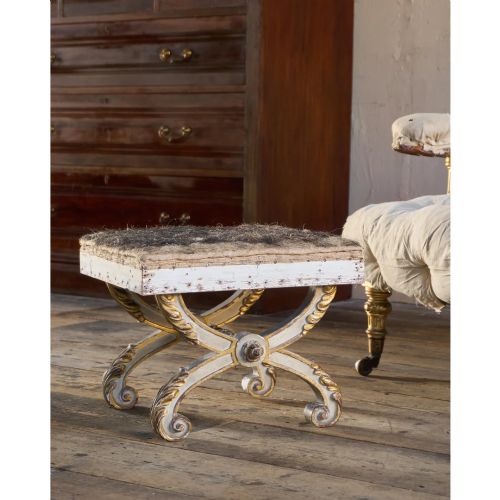
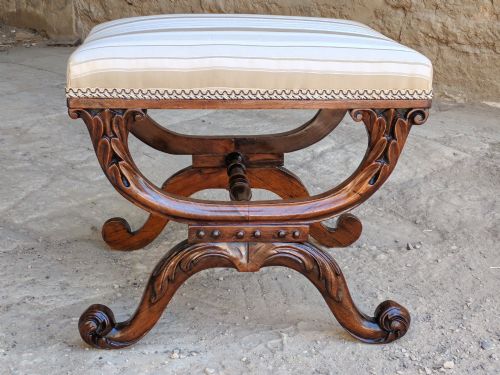
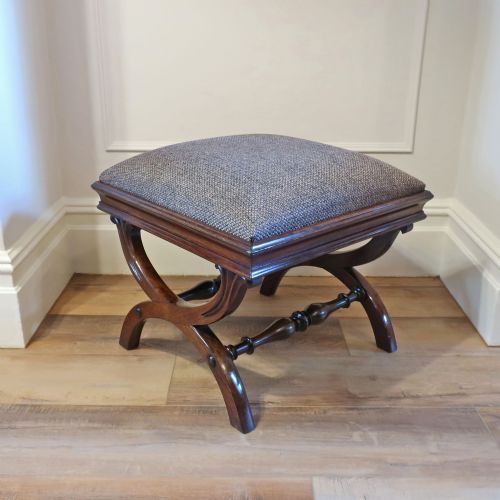
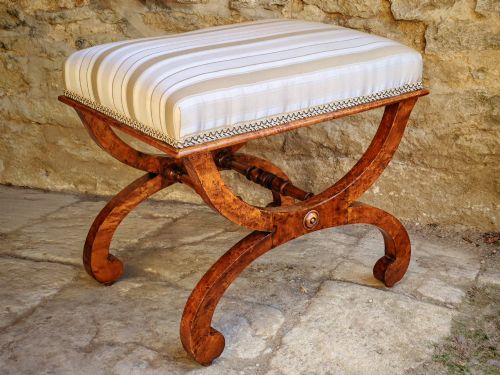
A regency curule stool brings neoclassical authority to a room through its characteristic X-frame silhouette.
Regency Curule Stool
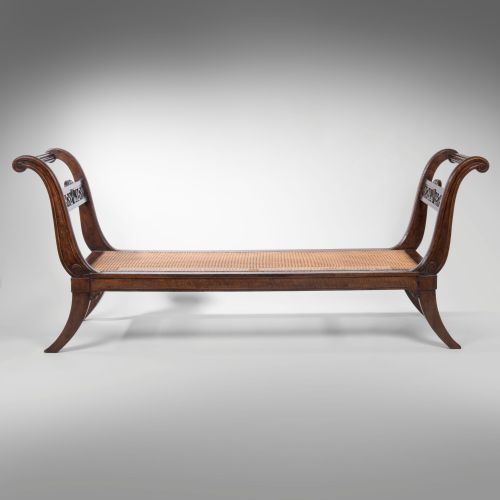
A regency curule stool takes its form from ancient Roman magistrate seats, translated into sophisticated domestic seating during the nineteenth century. Buyers seeking a regency curule stool will encounter variations including footstools, window seats, and piano stools.
The pieces on this page span the 18th century, Georgian, Regency, William IV, and Victorian periods, alongside regional interpretations like 19th-century Irish and French Empire examples. Mahogany and rosewood form the backbone of the timber options, complemented by giltwood, painted wood, and iron.
Most examples rely on the signature X-frame geometry, often upholstered in fabric or tapestry. They function equally well as footstools, dressing stools, or standalone window seats in traditional interiors.
Evaluating quality and execution
The refinement of the X-frame junction dictates the architectural success of the piece, where tight joinery prevents movement under weight. Superior examples display crisp carving on giltwood surfaces or carefully figured grain on rosewood and burr maple.
Makers such as Miles & Edwards demonstrate the higher tier of cabinetmaking through precise proportions and considered material selection. Quality reveals itself in the weight of the timber, the subtlety of turned stretchers, and the integrity of the original frame structure.
Listings feature mahogany, rosewood, burr maple, and giltwood frames spanning the Georgian, Regency, William IV, and Victorian periods.
Miles & Edwards
The Regency Curule Stool Glossary
- Curule
- An ancient Roman chair shape defined by intersecting concave legs forming an X. This classical form was revived during the neoclassical and Regency periods for formal seating.
- X-frame
- A structural furniture base formed by two crossing members shaped like the letter X. It provides inherent strength while creating a distinct architectural silhouette.
- Giltwood
- Timber that has been coated with gold leaf or gold paint over a prepared gesso ground. It was widely used on high-status neoclassical and French Empire seating.
- Window seat
- A long, bench-like stool designed to fit within a window recess. These pieces often feature scrolling arms and upholstered tops suitable for prolonged sitting.
- Tapestry
- A heavy textile woven with pictorial or geometric designs, frequently utilised for period upholstery. Floral trellis patterns commonly appear on nineteenth-century footstool seats.
Regency Curule Stool: Frequently Asked Questions
What is a curule stool?
A curule stool is a seat featuring an X-shaped frame derived from Roman magistrate furniture. Revival periods from the Georgian era onward adapted this classical geometry for domestic use.
These pieces function as footstools, window seats, or dressing stools. Their distinct silhouette makes them focal points in traditional interior schemes.
How do I identify a Regency period piece?
Regency pieces typically date from the early nineteenth century and display neoclassical influences inspired by ancient Greek and Roman design. Look for dark timbers, clean architectural lines, and classical motifs.
Proportions tend to be precise, and construction relies on dense hardwoods like mahogany and rosewood. Maker attribution or specific regional traits can further narrow down the date.
Where should I place an X-frame stool?
An X-frame stool suits positions at the foot of a bed, beneath a window, or beside a fireplace. Their open frames maintain visual lightness in smaller spaces.
They also serve as flexible seating in hallways or dressing rooms. Pairing them with complementary mahogany or rosewood furniture anchors the arrangement.
What woods were used for these stools?
Cabinetmakers primarily worked with rich, durable timbers such as mahogany and rosewood. Exotic choices like burr maple also appear on finer nineteenth-century examples.
Giltwood and painted wood finishes provide alternative aesthetics for neoclassical and French Empire interiors. Iron frames are occasionally found on utilitarian or hall seats.
Are these stools comfortable for daily use?
Most of these pieces feature padded upholstery with traditional textile or tapestry covers. While designed primarily for formal or occasional seating, they offer stable support.
Footstools and ottomans provide a lower profile for relaxation, whereas window seats and dressing stools accommodate upright sitting.