




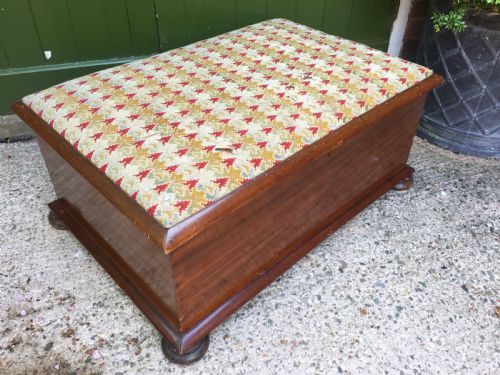


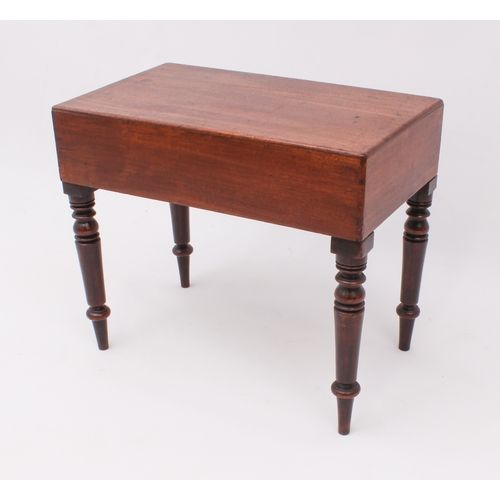

Mahogany X Frame Stool
A mahogany x frame stool brings sculptural geometry and practical seating to a period interior.
Mahogany X Frame Stool
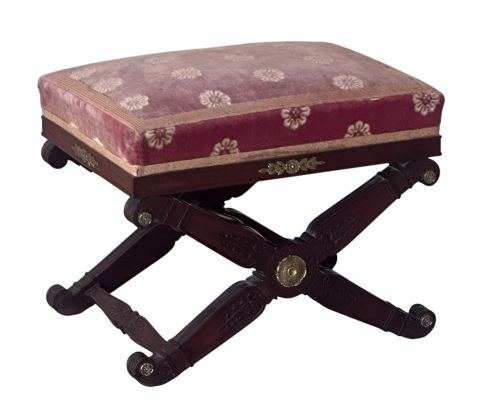
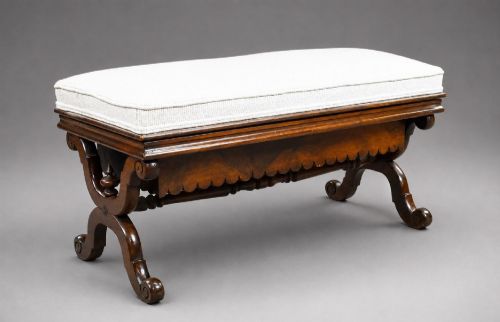
A mahogany x frame stool combines classical curule lines with durable tropical timber, taking the form of dressing stools, window seats, and footstools. These seating pieces emerge frequently from the Regency, William IV, and Victorian eras, alongside later revival interpretations.
Buyers encounter compact footstools alongside larger window seats and benches built on crossing supports. The silhouette spans simple folding campaign designs and heavily carved parlour furniture.
Materials and Construction
Cabinetmakers constructed the supportive frames using solid mahogany, frequently shaped with fluted legs, carved details, or inlaid decoration. Workshops combined the timber with traditional joinery to support the structural tension inherent in the crossing stretcher design.
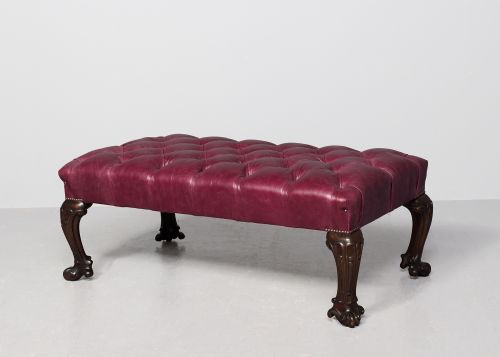
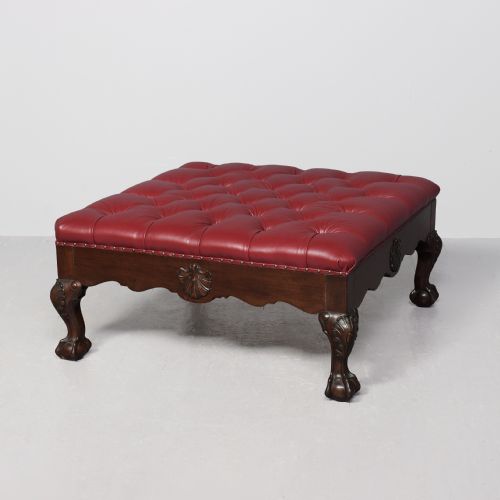
Upholstery completed the pieces, utilising horsehair stuffing beneath covers of leather, hide, woven wool, kilim, and gros-point needlework textiles, often secured with brass tacks.
Mahogany X Frame Stool Retail Price Guide 2026
Typical asking prices for mahogany x frame stool among the pieces listed under this phrase on Sellingantiques today, from the lower quarter to the upper quarter. They describe what is for sale here now, not the wider market.
Listings feature mahogany x frame stools spanning the Regency, William IV, Victorian, and Edwardian periods, alongside Georgian revival interpretations.
Craftsmanship and Proportion
Superior examples display crisp hand-carved ornamentation on the frame intersections and well-balanced proportions that maintain stability under weight. The refinement of the turning and the choice of dense, figured mahogany distinguish finer workshop output from standard production.
The integrity of the original framing, combined with authentic period upholstery materials such as needlework or hide, separates preserved historical examples from later replacements.
The Mahogany X Frame Stool Glossary
- X-frame
- A seating support structure formed by two crossing members shaped in a curule or scissor configuration. This classical form provides inherent structural strength.
- Regency
- An English design period spanning the early nineteenth century. Pieces from this era often draw inspiration from classical Greek, Roman, and French Empire styles.
- Gros-point
- A type of needlepoint embroidery worked on canvas with a heavy wool yarn. It frequently appears on nineteenth-century footstool and ottoman tops.
- Curule
- An ancient chair shape featuring two curved legs that cross to form an X. The profile forms the architectural basis for x frame stools.
Mahogany X Frame Stool: Frequently Asked Questions
Where should I place a mahogany x frame stool?
These versatile pieces suit placement at the foot of a bed, beneath a dressing table, or positioned near a window as a low seat.
Their compact footprint also allows them to function easily as movable footstools beside armchairs in a living space.
How do I identify a Regency period piece?
Regency examples typically exhibit restrained classical lines, sometimes featuring brass inlay, fluted legs, or precise mahogany turning.
Comparing the timber density and joinery methods against standard nineteenth-century manufacturing helps confirm the era.
What upholstery fabrics are authentic?
Period pieces frequently feature leather, hide, gros-point needlework, wool kilims, or woven textiles secured with traditional brass decorative tacks.
Many surviving examples retain later replacement covers chosen to match subsequent interior decorating schemes.
Are all x frame stools rigid or do they fold?
While most surviving examples are fixed frame window seats or dressing stools, specific campaign variations were built with folding mechanisms.
Folding versions were designed for portability by officers travelling during the nineteenth century.