




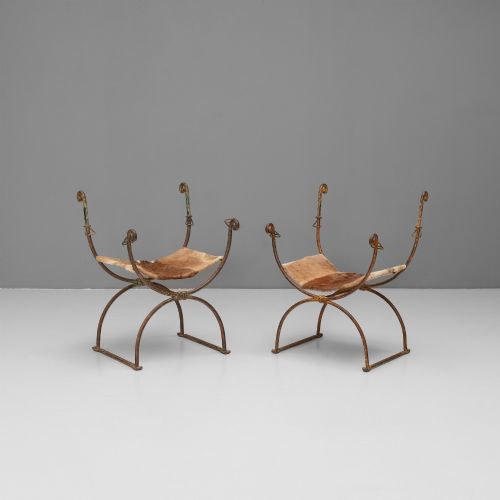


Antique Curule Bench
An antique curule bench brings neoclassical elegance to a room through its distinctive cross-frame design, offering a versatile seat rooted in ancient Roman form.
Antique Curule Bench
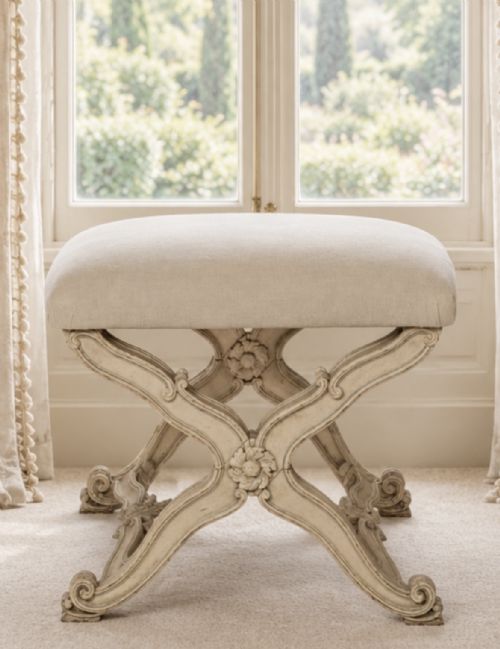
When you search for an antique curule bench, you encounter forms defined by intersecting X-frames derived from ancient folding seats. These pieces appear across various periods, from Georgian and Regency interpretations to later 19th-century revivals.
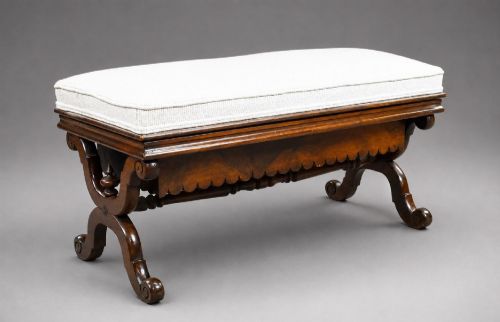
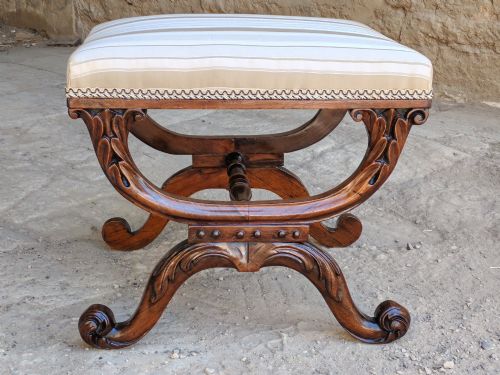
The version most commonly met on this page is the 19th-century mahogany or walnut stool, often featuring upholstered seats in fabric, leather, or damask. Makers adapted this classical folding X-frame into sturdy static seating suitable for dressing rooms, window seats, and hallways.
Materials and construction methods
Cabinetmakers constructed these frames using dense timbers such as mahogany, rosewood, walnut, and oak, frequently employing curved members joined precisely at the intersection. Giltwood, painted wood, and ebonised finishes provided decorative contrast, sometimes enhanced with gesso or carved details.
Upholstery completed the piece, utilising traditional stuffing and webbing beneath top layers of fabric, leather, or red damask. Metal components like brass appeared on specific designs, while cane seating featured on lighter bamboo hall variations.
Antique Curule Bench Retail Price Guide 2026
Typical asking prices for curule bench among the pieces listed under this phrase on Sellingantiques today, from the lower quarter to the upper quarter. They describe what is for sale here now, not the wider market.
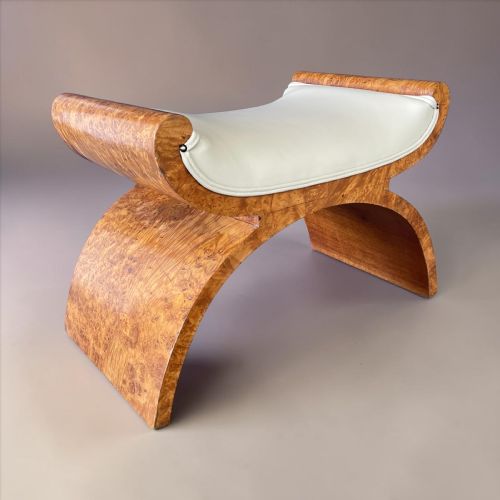
Period styles span Georgian, Regency, Victorian, Edwardian, and Art Deco, reflecting evolving interpretations of the classical X-frame.
Distinctions in craftsmanship and design
Quality rests heavily on the crispness of the timber carving and the structural integrity of the X-frame joints. Superior examples display carefully selected grain patterns, such as burr maple or finely figured mahogany, paired with balanced proportions.
The refinement of secondary decorative elements, including giltwood enrichment, gesso work, or specialised upholstery like damask and leather, separates standard production from exceptional cabinetmaking.
Harry and Lou Epstein·Miles and Edwards
The Antique Curule Bench Glossary
- Curule
- An ancient Roman magistrate's chair shape characterised by curved legs that cross in an X configuration. This classical silhouette inspired furniture designers across the Regency and Victorian eras.
- X-frame
- A structural furniture support formed by two members crossing in the middle to create an X shape. It serves as the defining base for curule benches, stools, and window seats.
- Giltwood
- Wood that has been coated with a thin layer of gold leaf or gilt. This finish frequently highlights carved ornamentation on neoclassical and Empire style seating.
- Damask
- A reversible figured fabric traditionally woven on a loom with patterns formed by contrasting warps and wefts. It often provides formal upholstery for period stools and window seats.
- Ebonised
- Wood treated with a stain or finish to imitate the dark, dense appearance of ebony. This technique gained popularity during the Victorian and Aesthetic periods.
Antique Curule Bench: Frequently Asked Questions
What is an antique curule bench?
An antique curule bench is a seat featuring a distinctive X-shaped cross-frame inspired by ancient Roman folding furniture. Makers adapted this classical shape into sturdy stools, window seats, and benches across various centuries.
These pieces typically combine timber frames in mahogany, walnut, or giltwood with upholstered tops in fabric, leather, or damask.
Where were these benches placed historically?
Historically, these benches served versatile functions throughout grand homes, appearing as dressing stools, window seats, and hallway furniture. Their compact footprint allowed them to fit easily beneath windows or against panelled walls.
They also functioned as piano stools or supplementary seating in drawing rooms and bedrooms.
How do I identify a Regency curule bench?
Regency examples often draw directly on neoclassical and classical Roman motifs, utilising dark timbers like mahogany or rosewood alongside precise, restrained carving. The X-frame geometry tends to be clean and architectural.
Details such as reeded members and classical drapery or scrollwork help confirm this period.
How do I live with an antique curule bench?
Living with these benches involves placing them where their sculptural X-frames can be appreciated from multiple angles, such as at the foot of a bed or beneath a hallway window. They provide sturdy, portable seating that complements both traditional and modern interiors.
Maintenance requires standard care for antique timber and delicate handling of historic upholstery fabrics.