

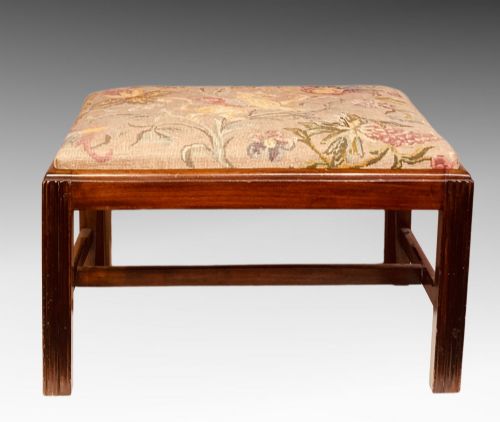
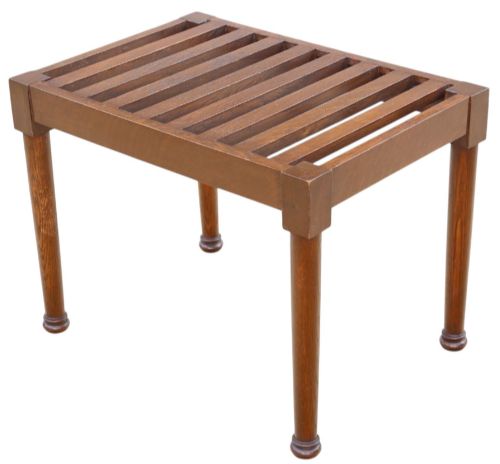


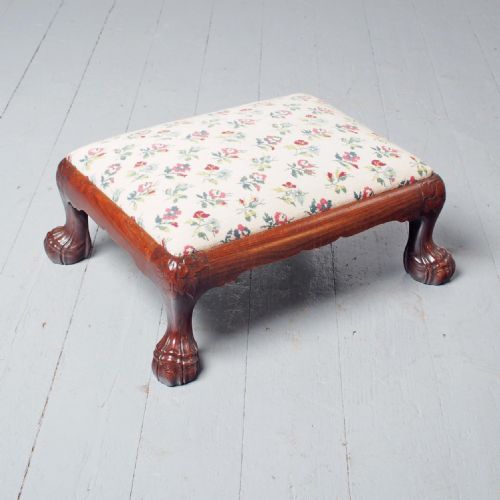


Traditional Bedroom Stool
A traditional bedroom stool brings practical seating and period character to a dressing space through timeless mahogany, walnut, and upholstered forms.
Traditional Bedroom Stool
A traditional bedroom stool encompasses seating and resting pieces designed for dressing areas, hallways, and bed ends. The selection on this page ranges from compact dressing stools to long benches, ottomans, luggage stands, and window seats.
The periods represented stretch across the nineteenth and early twentieth centuries, including Victorian, Edwardian, and early twentieth century examples. Revival tastes like Chippendale and Georgian style appear frequently alongside English country house and French chateau aesthetics.
Makers and designers worked in mahogany and walnut, often mounting the timber on solid hardwood frames. Many items feature upholstered tops in linen, woven fabric, or various upholstery fabrics.
How they were made
Cabinet makers utilised solid mahogany and walnut for the structural frames, sometimes adding carved details such as ball and claw feet or fluted legs. Open-framed designs and solid timber constructions demonstrate traditional joinery methods of the nineteenth and early twentieth centuries.
Upholstery work incorporated fabric, linen, and woven materials fixed directly to the frames of dressing stools, ottomans, and benches. Brass hardware occasionally appears on luggage stands and rack fittings to complete the construction.
Traditional Bedroom Stool Retail Price Guide 2026
Typical asking prices for traditional bedroom stool among the pieces listed under this phrase on Sellingantiques today, from the lower quarter to the upper quarter. They describe what is for sale here now, not the wider market.
Styles span Edwardian dressing pieces, Victorian seating, and Chippendale revival forms alongside French chateau aesthetics.
What varies in quality
The standard of carving and timber selection dictates the distinction between standard production and finer workshop pieces. Solid mahogany frames with detailed elements like ball and claw work command greater attention than plain constructions.
The integration of the upholstery with the timber frame marks another tier of distinction. Recovered pieces that retain sympathetic fabric choices maintain the aesthetic balance of the period better than mismatched modern alternatives.
Whytock and Reid
The Traditional Bedroom Stool Glossary
- Luggage stand
- A low folding or fixed rack designed for holding suitcases at the end of a bed. These often feature mahogany construction and brass details.
- Duet stool
- An extended seat designed for two people to sit together, commonly found in musical or dressing contexts. These usually incorporate solid timber frames.
- Window seat
- An open-framed bench designed to fit into architectural window recesses. They provide low seating without obstructing the view.
- Ottoman
- A padded seat or footstool lacking arms or a back, frequently upholstered in linen or woven fabric. These pieces often serve double duty for storage or resting feet.
- Fluted leg
- A vertical column carved with parallel hollow grooves, seen on walnut hall benches and dressing stools. This decorative detail reflects classical architectural influence.
Traditional Bedroom Stool: Frequently Asked Questions
What is a traditional bedroom stool used for?
These pieces provide a convenient place to sit while dressing or putting on shoes in a bedroom. They also function as decorative accents at the foot of a bed or beside a hallway wall.
Larger versions like benches and ottomans offer additional surface space for resting items or sitting during daily routines.
How do I identify an Edwardian dressing stool?
Edwardian examples usually date from the early twentieth century and often feature lighter mahogany frames. They tend to combine clean lines with traditional upholstery fabrics suited for bedroom use.
Comparing the timber finish and leg style against known pieces from the same era helps confirm the period.
Can I use a luggage stand as a stool?
Luggage stands are built with sturdy racks designed to support heavy suitcases rather than human weight. Using them for seating can strain the joints and brass fittings.
It is better to use dedicated benches, dressing stools, or window seats for sitting.
What materials are used in these stools?
The frames rely predominantly on solid hardwoods such as mahogany and walnut. These timbers provide the structural strength needed for regular domestic use.
Upholstery finishes include linen, woven fabric, and various textile coverings fixed over padding.